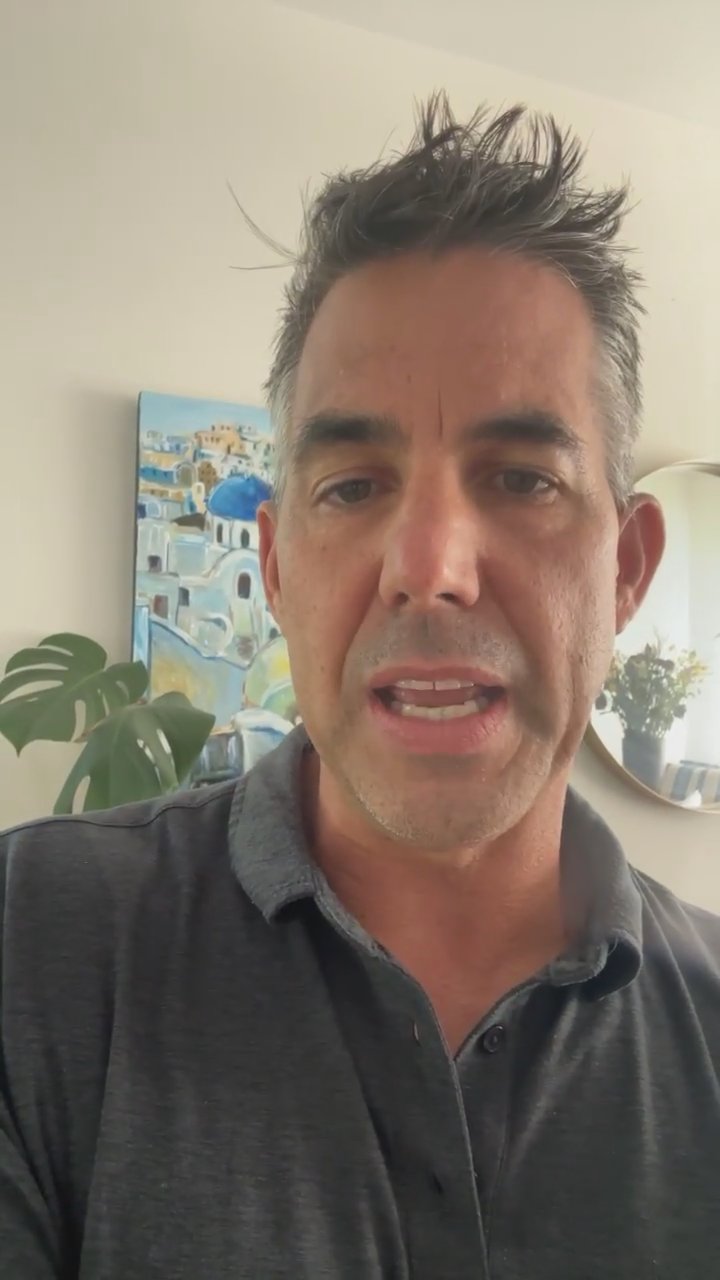
In many ways, the title says it all. But this is about both partners not just one. This is about us, learning how to take care of the discomfort and the disquiet inside of us and not making it about our partners.
And let's just say this is third times a charm for this one. Tried this on Saturday at my usual time and it didn't go, tried one more, it didn't go. But let's hopefully it's recording. I see somebody has joined, so that's a positive. So, here's the deal. This is the month where we are focusing on safety. And for me, if you know kind of my little deal, is the third week is I talk about conscious couples. Conscious coupling, conscious couplehood, whatever, conscious partnership. Hi everybody. And so, the title is No Love, No Safety.
And so, what exactly is the point of that? What do I mean? No love, no safety, right? So, I think about 22 years of marriage, okay, that I've had. And we've had our ups and we've had our downs. That is like for sure. But the thing is, is that like when we think of safety, like what is really safety? You got emotional safety, you got physical safety. And here's the other thing, I'm just gonna say this. I had a kick-ass live, okay, on Saturday. I was spouting off some serious gems and now I can't remember any of it.
So, whatever, it's fine. I'm just gonna do my best here. But I'm just spitballing. So, here's the thing. You have, let's say you have two people in a relationship. And you're constantly navigating safety. You're constantly trying to figure out safety. But the reality is, safety could be from any number of things. It could be that my partner is doing something that has me feeling unsafe. It could be my partner is doing something that triggers something from a previous relationship where I didn't feel safe and that's what's coming up for me.
Or it could be my partner is doing something that's triggering something from me from my past childhood experiences that I haven't dealt with that is causing me to feel unsafe. The unfortunate thing is, no matter what those three things is, I still focus on my partner and I still think that they're the ones that I don 't feel safe with. Now, take into some of the gender conditioning as guys, we're not taught to really think about our safety or how safe we feel or what does it look like to feel safe or what do we need to feel safe.
But, of course, constantly we are experiencing safety or a lack of safety. And then we're reacting to, we're responding to that lack of safety. And then that comes out as what? Well, it depends on our trauma response. Are we a fighter? Do we flee? Do we freeze? Do we fawn? Do we faint? All of those sorts of things kind of lead us to that response and then we create this dynamic in our relationship that eats away at the love that we have for each other, that eats away at the love that we have for our partners for the experiences that we have.
And then it goes back and forth, right? So, in the curricula I've developed over the years, there's a tool that we use. It's really basic, but I haven't really seen it in a whole lot of places. And it's just simply called a safety check. And so in group, the facilitator and all of the participants, they just go around and say on a scale of one to ten, how safe they feel. One meaning not safe at all, and ten being super safe. Like I'm really, really grounded and safe. And they just say their number.
And if it's lower than five, the facilitator does something. Like they do a grounding exercise, or if it's co-facilitated, one facilitator might go meet with somebody and just kind of check in with them, see what's going on, or the person's invited to share if they want to. I mean, there's lots of options, but it's teaching men and women to pay attention to like their safety and how it's calibrated and how we're doing. So, we learn to do that ideally in our relationships as well. And I'll talk about this more next week when I'm talking about just kind of like the individual, like I talk about conscious living on week four.
And so it's really like this idea of like, what does safety mean to us in our lives and in the world? And are we moving in the right direction, frankly, when we talk about safety and how we treat safety and how we respond to safety. But the bottom line is when there's no safety, there's no love. And without question, there is like, there are physically abusive and physically violent relationships. It can come from either partner, it can come from both partners. And of course, that's no safety, right?
But then there's the emotional challenges and the vulnerability and how we kind of navigate safety from that perspective. And learning how to build those muscles is everything. And beginning to take responsibility. This is the key, this has been the key for me. Learning to take responsibility for how I feel, how I'm reacting without making it about my partner. My tendency is to want to make it about my partner, I've been programmed to make it about my partner, to stop, to pause, to take a deep breath, to try to look at what's coming up for me, what's going on, why am I reacting the way that I'm reacting?
A good friend of mine was talking to me about a visit he was having with his mom in Florida and he was like, man, she was really triggering me. And continued talking, he was like, and I was saying this to her and I reacted. And he was kind of feeling justified because she triggered him. And I said, I hate to say it, but I don't think that's the right language. She didn't trigger you. She did things that caused you to feel triggered, or from which you felt triggered. And I said the reason being is that if I had been there on that vacation with you and she was doing the exact same things that she was doing, I probably would have had no response .
So it's not in her, it's in you, and it's not necessarily even her behavior, it 's you. You're a grown man now, and so you've got to take responsibility for your emotional response and reaction internally with your mom or your partner or your child or any of that. So that's kind of what this is all about. No love, no safety, no safety, no love, right? They work symbiotically. And so it's like we take those risks. We take that opportunity to connect. We take that opportunity to be vulnerable. We take that opportunity to put down the armor and let me tell you, man, it is hard.
It is hard. My partner and I have a history of conflict. And we've had some conflict over the years. And so we are still navigating these things, but we have such a different language now. We can encourage each other. We got something from a couples therapist that was absolutely golden. And it was, I want you to layer down. Okay, Dan, I hear that you're upset, but I want you to layer down. All right, my feelings are hurt and I feel really abandoned by Nancy. Oh, okay, well, that's a lot different, right?
Okay, Nancy, layer down. Well, I just, I don't trust Dan when he raises his voice because it's scary for me. He's not an asshole. Or maybe he is. Not always, but that's right. That's the gift of when we begin to just honestly talk about safety. Because the safety isn't always about what's happening. In fact, it's often not about what's happening. It's about what happened that we're still carrying that we need to be able to work through, and that's the beauty of the partnership. That's the beauty of these relationships.
You know, in one of my meetings that I go to, 12-step meetings, one of the things we say all the time is that all relationships are for our spiritual growth. That's a pretty cool deal. Thanks everybody for stopping in and saying hi. I wish you a wonderful day, a wonderful rest of the week. Hopefully this was recorded and I will maybe see you Saturday. All right, so take care. Have a great week. Safety and love. Bye-bye.