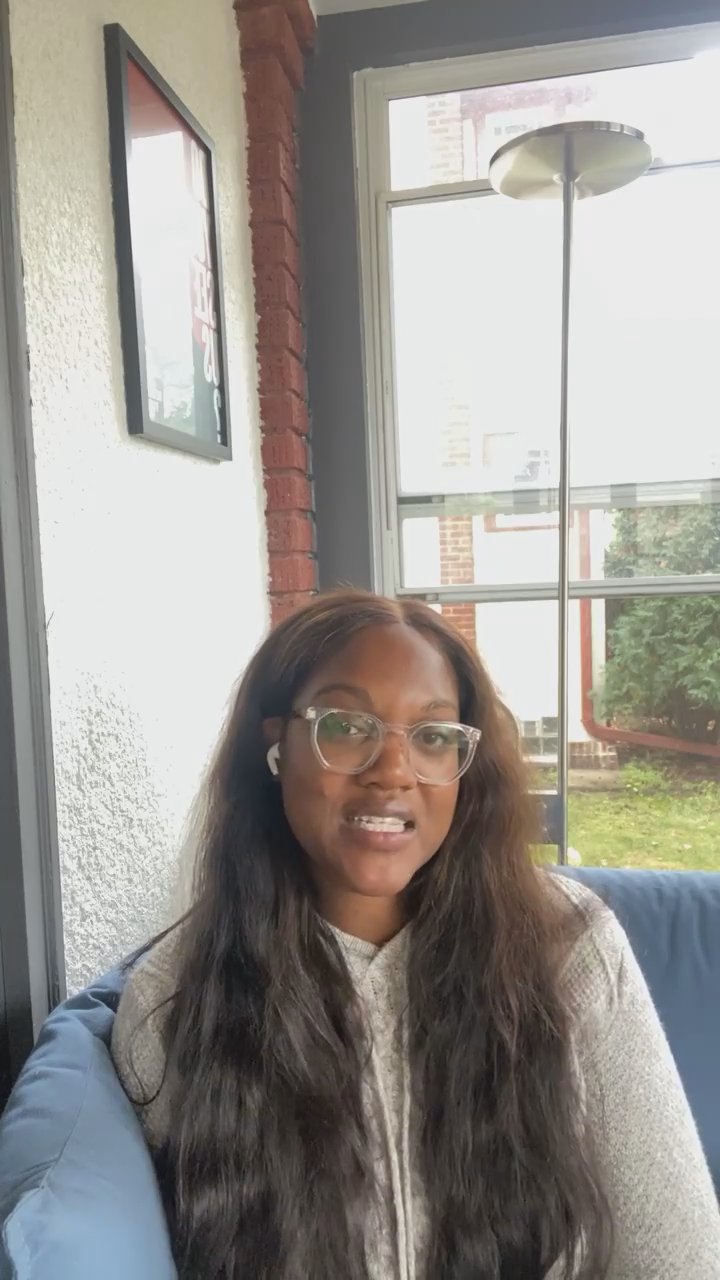
A speaker reflects on slow Monday mornings as a way to reset and then outlines how they lead organizational change, describing common human reactions to transitions and how leaders can approach them.
The speaker greets viewers, mentions a relaxing weekend with friends and family, and introduces the concept of slow Monday mornings as a way to manage stress and reset for the week.
The speaker explains their background leading organizational change and outlines how most people naturally respond to change, using the 10%/90% quote to stress that reactions matter more than events.
The speaker recounts major life events—having a baby, being laid off, starting new jobs, and undergoing brain surgery—and explains how they consciously chose how to react, advocate for themselves, and shape their narrative.
While recovering in the ICU the speaker focused on small, controllable choices—connecting more intentionally with caregivers and choosing simple meal options—to shift mindset and reclaim a sense of control amid limited autonomy.
Using a teacher's maxim that change is constant, the speaker explores how reinvention can either energize or deplete people, contrasts personal tendencies with their husband's, and prompts listeners to assess their own response to change.
The speaker suggests practical ways to manage transitions—like choosing virtual meetings or scheduling rest days—and shares observations from working with leaders about creating space to process change personally and professionally.
Through a river-jumping analogy the speaker categorizes four responses—run across, float across, dip a toe, or back away—and advises viewers to identify where they or their teams fall to give appropriate time and grace for the transition.
The speaker closes by reminding viewers to reflect on their reactions to change, to make room for rest in their calendars, and wishes them a good week and farewell.
Hello, cadre. Happy Monday morning. Thank you for joining me. Hi, Matt Hill. I hope you all had a really wonderful weekend. I had a very, you know, it was like one of those weekends that was planned. Like we had a lot of things, but it felt really relaxing because those things were with people that give me energy, they're with good family and friends. had a neighborhood gathering so it was things that weren't um taxing emotionally and it was a great weekend it was really good I have this morning this Monday morning I have a slow Monday morning which are um really just the gifts I think to have a slow Monday morning um has really helped me like kind of manage my nervous system um oh yes hi Matt Hill hi Speak Wonder um yes thank you give more love I love that that's going to carry with you the the week Matt Hill thank you hi Rose um yeah so I I really think that these like having the a slow Monday morning is um I realize for me is like a gift and it kind of turns on this lever in my week of like okay how do I stay balanced how do I stay centered how do I stay focused um and so I try to build my schedule my life around these like slow Monday mornings here and there whenever I can get them and when I have them they are truly a gift now I will say that um this slow Monday morning means I can get like 30 minutes of slow and um then have responsibilities with my family and and I think okay Cadre I'm back I think I got a little interrupted so I think I'm just going to pick up where I left off hopefully that works hopefully you can keep joining um hopefully I didn't kick you out but um okay good reset day okay good we we I think we're we're live it worked so I'm just going to pick up where where it cut me off um I'm someone who likes change and transition and I am saying that from standpoint of I've built my corporate career around helping organizations navigate change and leading transformation and helping employees transition from one approach to another or creating a new values approach or new vision, mission, vision statement and helping teams move through that journey.
And I get so much energy from seeing, okay, here's where we are. and here's where we're going to go and I'm going to help you get there. I get so much energy from that. I get a lot of energy from thinking about like who's affected by the change, when the change, when the change should happen, how we should roll out communications, how we should be transparent and thoughtful. I really love to dig into the psychology of those phases and recognizing that most people are not going to hear a change and react to it and say great I'm excited most people are going to say I'm unsure of this change and it could be that their back is against the wall and they don't want to be engaged with it it could be that they're curious but they're still unsure but there are very very very few people who hear of a change and jump and run towards it that's completely normal the job and jobs that I have had are We know that that's true.
So how do we, over time, really thoughtfully, really strategically, how do we help teams and leaders and organizations move through this change over time so that they are prepared and so that they have the right language and they have the right tools? And I often think about my work as a change transformation professional and how I can apply those things to my day-to-day life. And honestly, it's a lot harder. It's not as like, here's the change plan and here's a communication plan. It's like there's a change and you have to react.
And so in that moment, I love this quote. Life is 90, no, life is 10% what happens to you and 90% how you react. Because it is, it's like, 10% of it is like the change or the thing that life throws at you, but you can control how you react and you can control what mindset you bring to that change and how you move forward. And those are really simple things to say, but they're incredibly, incredibly hard to do. So when you have change in your own life, thinking about like how you react to those changes, you know, I, for better or for worse, have had kind of these massive changes in my life in the last three years.
I had a baby who's now almost three. I got laid off over my maternity leave. I started two new jobs in that time frame. One didn't stick, wasn't the right fit for me. So I had an opportunity to jump to another org, so I did it. So two new jobs, learning two new orgs, learning two new rhythms. And then I had brain surgery, which was obviously a major change and a major change in my whole life that changed every single piece of my life. And in all of those things, I actively had to remind myself that I got to decide how I reacted every day.
And I'm not saying in any way, shape or form that it was easy because when I was learning to feed my daughter and negotiating a severance package with my earbuds in at the same time. Was not thrilled about that. However, I really reminded myself in those moments like I can't control this has happened. This is happening to me. I can't control that. What I can control is how I advocate for myself. What I can control is how I choose to tell my story. If I choose to tell it, when I choose to tell it, who I choose to tell it with, and what the narrative of my story is.
What I can control is what I do next. And in that moment, I decided, I want some time with my daughter if I can get it. Well, if that's true, then I think I need to have some sort of severance payment. Okay, well, if that's true, then I need to negotiate a severance payment. So kind of through this process of like, here's what I can control and here's what I think I want. out of the situation that I have to react to because it's happening to me. So how can I find little levers in things that I can control?
That's the way that I found to use all of that change practice, all of that transformation work, and really apply it into my everyday life. I'll give you another example. When I was recovering from brain surgery, I had the surgery and then I was in the ICU for two weeks and um I was fully alert the entire time the first maybe five days were I was really really challenged and um mainly sleeping all day and all night but then after that I was like fully alert and watching TV and had a lot of time on my hands and You have a lot of time to think and you have a lot of time to process and you have a lot of time to like go through best case scenario and worst case scenario.
And so I had to start to control myself from going to the worst case and kind of going to the hardest thing that could happen. So what I decided, and I also didn't have much control. I'm hooked up to all these machines. I'm sitting in an ICU bed, people could come to visit me. But I couldn't really get out of bed unless I called a nurse. And so what I could control in that moment was very, very little. But there were two things that I decided to focus on. Number one was I decided that anybody who came in my room, because I'm someone who really feeds off of connection and community and I didn't, you know, my family was coming to visit me, but that was kind of it.
other people had offered, but it was also just a very intimate space and I wasn't really consistently feeling well enough to have friends come in and out. I just didn't know what my energy level would be like or my mood or how I'd be feeling. So it really just narrowed it to friends or to family really that was me in that time. But I was missing like talking to people when I did have energy. And so I decided that in that moment, every time somebody comes into my room, the nurse or doctor, I want to connect with them more than just talking about me.
Because it's the same people, you know, that are checking on me literally around the clock. And so what became of that was by one weekend I had these like long chats I won't forget with people that I had met that were caring for me, caregiving for me. That I honestly miss like I missed these people because of these relationships and so that was like one small little teeny tiny thing I could control. I could control that I can ask them a question and I can ask them to learn more about themselves as they know kind of everything about me right now and that really.
helped change my mindset. The second thing that I could control when I was in ICU was if I got cranberry juice or orange juice for breakfast. So I really took a lot of joy and delight in making that decision. And I could also control if I wanted oatmeal or an omelet. There was many other options, but those were kind of the two. I limited myself to those two because at that point I tried many options and those were my two favorites. So I had a few choices I got to make in a day. And that was really what I could control in this big change of my life, in this big moment.
There were a few things that I could control and so I just grabbed it by the reins and went with it. I think that change for a lot of people surprises them. And I'm not saying that it doesn't surprise me, but I had a teacher when I was in like seventh grade that would write like on the board all the time. I remember this. She would write, The only thing constant is change. And she wasn't a philosophy, you know, seventh grade. She was like an English teacher. And she would just write it all the time when we would be going through like different school transitions or like reading a new book.
Like it was like these really big changes for seventh grade or really small ones. And she would write, The only thing constant is change. And I think that's a good reminder because We're kind of always in this state of change. We're kind of always in this state of, whether we like it or not, reinvention. Because reinvention and change is growth. Those things are really closely connected. I get really excited by reinvention. I'll give you an example of someone who isn't really excited by reinvention or is excited not as excited as I am, my husband.
My brain works in a way that I get excited by reinvention because it's creative. because it's an unknown, because there's ambiguity. I love being in those spaces most of the time. I get fatigue from it when I'm constantly in it. But when there's, when I've been in a steady job, for example, or been in a state where like my job has been like kind of understand it, I think I'm doing a good job, I get pretty bored. And so I look and embrace and get excited about the opportunity to reinvent. Like what am I gonna do next?
What change could I learn? What new tool could I learn? what new type of work could I do? I love, which is why I love transformation. I love change spaces. My husband is, I would say, the opposite, where he is someone who is much more analytical than I am and analytical minded. And so for him, the reinvention really drains his energy. Reinvention, like reengages my energy. And so Like having those levers and questioning those things for yourself is something you could think about. Like are you someone, like here's a question, are you someone that gets energy from reinvention?
Or do you think reinvention drains your energy? And so as you go into those phases of your life where you are kind of maybe forced to reinvent yourself, take note. Is this going to be an experience that's going to give me energy? It's me. I love it. I love to like think about the possibility of change and what I can do or be or I love that. But if that's not you and you're forced into an opportunity or a place where you need to reinvent, recognize that it will drain your energy. Take stock of how you're feeling in that moment.
Identify ways that you can preserve your energy so that as you're going into this phase of reinvention, You can figure out like, how can I preserve my energy knowing that I have to go into this reinvention space? Does it look like if it's a job hunt, instead of doing in-person meetings, I'm going to do all virtual because that's going to help preserve my energy? Or does it look like I'm going to job hunt Monday, Tuesday, Wednesday, Thursday, Friday are for rest? Thursday, Friday are for me? If you can, as much as you can, the more that you can identify if these moments of change in your life, planned or not planned, are going to be energy drainers for you or energy propellers.
Recognizing how you can put some boundaries around how you manage that change, I think will, and what I've seen too, it really can help you feel a little bit more balanced in the process. When I've worked with leaders as I've helped them navigate different changes within their organization, typically I've come in as a consultant or have been like an internal consultant. So I'm working with teams for a set amount of time and then I'll go back into my internal consultant role and then be deployed on a different team.
And so I've seen a lot of different leaders and seen how they react and I've picked up some patterns over time. And I, in this moment, because I've worked with a lot of different people who are either in a transition or about to enter a transition, I can pick up on, oh, you're energized by this or you're absolutely depleted. And what I found interesting, but I don't know that anyone, I don't know that anyone has done this on their own or like brought this up. It's really been a question that we try to ask and try to encourage is How are you creating space for yourself to navigate this change?
You're deploying your teams and you're supporting your teams and you're available for your teams and you're giving them space and creating opportunities for them to ask you questions. But how are you creating space for yourself to navigate this change? Because it still has to sit with you, even if you know about the change. If you're leading the change, it still has to sit with you and you still have to really feel it in your bones to process what this will look like because it's new and it's different and change.
It's just not it's I was going to say it's not easy. Sometimes it is, but it's always a different rhythm. Even if it's exciting, it takes a while for it to kind of set in and feel natural. So I'll leave you with this. This is my favorite, favorite change example that I use a lot when I'm talking about transformation. So whatever change that you're in, you can think of yourself in perhaps some of these people. So imagine that there is a river and a team has been tasked with The change is you have to jump from side A to side B of the river and you've got to get there.
That is the change. And so, like I said, there's maybe a few people that hear that and they say, Great, jumping in and get across from side A to side B. And then that's the first group of people. The second group of people are like, I can see why we need to do this change. And so they get an inner tube, a floaty, and they jump into the river and the river floats them across to the other side in a more paced, slow manner. They get to the other side, they're on side B. And then the third group of people are unsure.
Not really interested in this change. I can see why we might need to do it. I'm going to approach the river slowly and I'm gonna dip my toe in the water and that's all that I can do right now. But I can see what I need to do is I'm gonna dip my toe in But I'm not willing to fully submerge. And then there's the last group of people, group four. And they hear of the change and they hear that the goal is move towards the river and jump across, get in, go across to the other side. And instead of moving towards the river, they back away from the river and they back up against the wall.
And they say, I'm not interested. I don't know why we're doing this. I'm not going to do it. So when you're going through a change, if you can identify in your head where of those four groups you might be on, you can also kind of give yourself some grace to recognize this change doesn't feel good, my back's against the wall. And so that means that it's gonna take me some time to inch up to the river, to even think about dipping my toe in, and then it's gonna take me even more time to get on the floaty, slowly go across, and then eventually make my way there, it's gonna take time.
If you can think about that for yourself, think about that with your teams, think about that with your peers, think about that with your family. When a change is rolled out, people are going to be on different points of the journey. And that's okay. The change can take time. Speak wonders toe dipper group. You know, I think I like to think of myself as the person that hears a change and runs towards it. I think I'm the lazy river. I think I'm on the float. I think I I will accept it, but I don't always run towards it.
That's typically where my persona lies. But it's just good awareness to have. Okay, Cadre, it has been so lovely to be with you this morning. I hope that you all have a wonderful week. I hope that if you have change in your week, change in your day, I hope that you can be think about this river of change and how you might react to it. But most importantly, as always, I really hope that you create space in your calendar and time in your week to rest. Have a good one, everyone. See you next week.