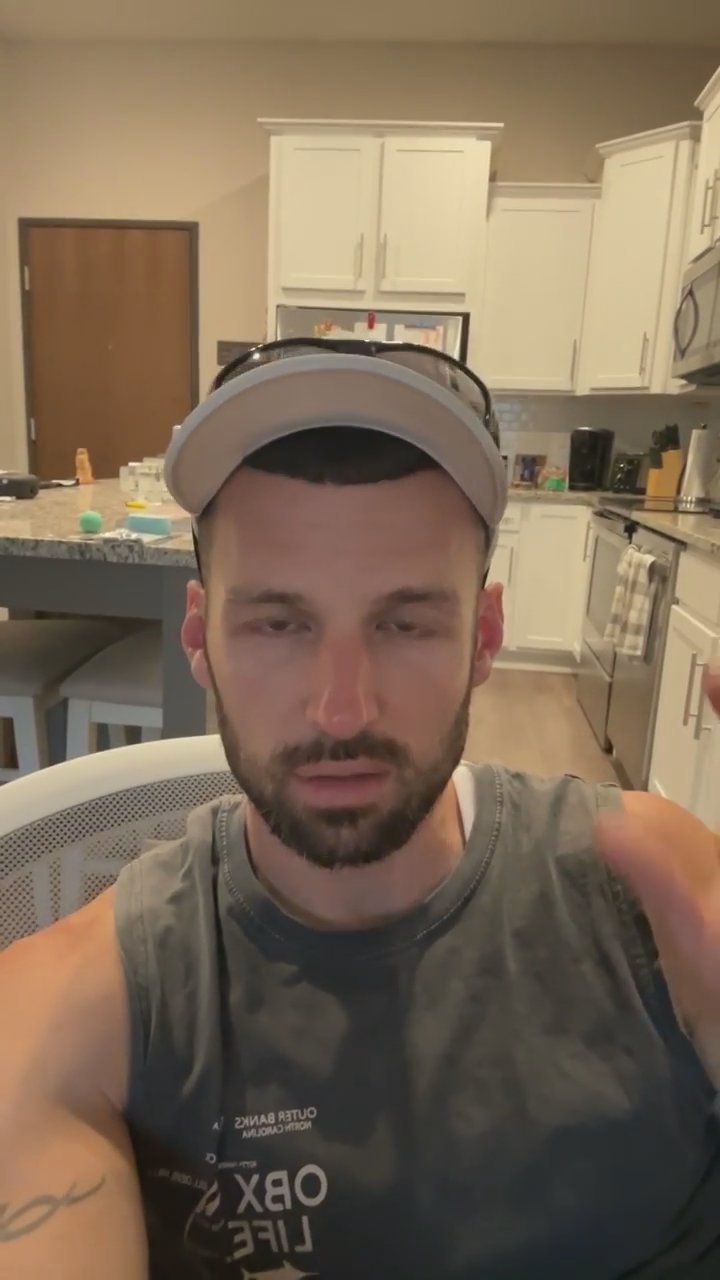
Jason greets the audience, names the episode 'Sunday Serenity,' and introduces self-awareness as the central theme he will explore through three points. This chapter sets expectations for a recovery-focused discussion during National Recovery Month.
Jason greets the audience, names the episode 'Sunday Serenity,' and introduces self-awareness as the central theme he will explore through three points. This chapter sets expectations for a recovery-focused discussion during National Recovery Month.
Jason argues that self-awareness is essential because others cannot fully know our inner experience, and notes how social pressure and outside opinions can steer us away from our truth. He introduces the idea of becoming a student of ourselves as the next step toward mastery.
Jason outlines specific tools he uses to build self-awareness — therapy, coaches, mentors, introspection, journaling, and reading — and shares a personal story about reflecting on a relationship to learn underlying patterns. This chapter gives viewers concrete approaches to explore their own inner life.
After emphasizing study, Jason stresses the importance of acting on insights: setting aside downtime, structuring exercise, and protecting energy when drained. He gives vivid examples of recognizing limits, planning recovery-friendly routines, and making choices that sustain wellbeing.
Jason reinforces journaling and self-study as ongoing practices, reminds viewers that self-awareness is personal and varied, and shares details about an upcoming 307,000-mile recovery walk and how to participate. He closes with thanks and a friendly sign-off.
Good evening, everyone in the cadre sphere. Hey, it's good to be here with you. Jason Lennox, Sunday Serenity coming at you Sunday night, National Recovery Month, and just talking all things recovery. I've been thinking a lot about recordings and videos and things that have been sharing one word. The one word I was thinking about, it's hyphenated, so maybe two words, but self-awareness is what I've been thinking about today and tonight. And I had a great friend, mentor, coach who came to town to launch this campaign that we're hosting this fall in just a couple weeks, 307,000 mile walk.
And we're really pumped, excited to get going. and self-awareness. So she came to town, she flew to town from North Carolina. Absolutely amazing. We got the team together. Hey, good evening, Jules. Great to see you. We get the team together. We spend a lot of time together, and I was having some good conversation with her. One of the things that she said was, what I really like, I've been working with this person for 2 1/2 years, and she said I really enjoy and appreciate the level of self-awareness that you have.
And so self-awareness is something I really started thinking about a little more tonight. And I want to share from the lens of self-awareness three things. First of all, I think it's so important because nobody understands us better than us. It seems obvious, seems simple, seems clear, but oftentimes we rely on a lot of external sources, whether it be social media, whether it be family, whether it be friends. to tell us who we are, what we should be doing, where we should be, what's good, what's not good.
Nobody understands us better than us. We live with ourselves. We are constantly 24-7 around ourselves with our thoughts, with our feelings and all the things. So again, there's nobody that understands us better than us. And I think that's important to note and continue to keep front of mind. Good evening, Sherry. Great to see you here. Second, since nobody understands us better than us, if we really want to master self-awareness, we have to become students of ourselves. We have to really think and be intentional about what we know about how we know it, about how we learn it, about how we find out.
And I think of a few ways that come to mind. One, I have a therapist and I get to do a lot of talking there and I get to just share a lot of things that really come back to me in reflection and in the things that she says and the things that we work on together. So I think that's important. I also have coach, mentors, I have multiple, I have advisors, people in my life who I just trust and I have conversations with them and I'm open and I'm transparent and that's great. And those are external things.
Now again, nobody understands this better than us. I need to have something internal, something introspective, self-reflective that I can really be honest with because all the people, my therapist, the coaches, they're all great. There are things that I will leave out in conversation with them because I'm human and there are things that just feel like maybe they're taboo for me to talk about. So the third thing very important for me is really understanding who I am through the use of writing, recording, just looking back at the things I've done and I remember doing this early in recovery.
I would highly recommend this. I journaled my days and I would journal what I would be doing throughout the day and at this hour and that hour and I would even have a zero to 10 rating of how I was feeling in those given moments and in those hours almost obsessive about it. I was obsessive about understanding how I felt and what made me feel certain kinds of ways because I was still a little bit out of alignment. And doing that really, really helped me understand. And so again, writing and journaling and understanding what makes me tick, what makes me up, what makes me down.
And then I think along with journaling is reading and really again, being a student of who I am. So studying who I am as a person and what there is about me. I had a relationship in 2019 that ended And it sent me in a little bit of just a place where I just wasn't sure and wondering and trying to ask questions about what were my contributions to the ending. What did I do? What can I do better? And I dove very deeply into just reading and understanding some of the emotions and things and thoughts I was having.
And I understood and I learned a whole new set of knowledge about who I was and some things that made me tick underneath and the empathic person, the empath, the person who just is kind of sensitive to the different stimuli in our world was a big part of that. So again, first I said nobody understands us better than us, so it's up to us to really grasp and understand and master self-awareness. I actually have to study and I need to be a student of Jason and the awareness process and knowing what it is that makes me tick.
That third thing that I absolutely have to do is I have to act. I can understand that nobody knows me better than me. I can understand what makes Jason tick. I can understand I can have all the conversations I want. If I don't do anything about it, most of that means nothing. I'm not going to get any better. I'm not going to do things any differently if I'm not acting. And ways that I do that, again, I told you the empath, the person who just kind of grabs on and is very easily stimulated by external things, by sounds, by people.
I know this about myself. I just spent the last week talking to a lot of people about this campaign that we're having and being in front of camera, all the different things. took a lot of energy. Yesterday we were at the Capitol, Walk for Recovery, 1500 people, a lot of people, a lot of energy. I was with people all day and all night long. I got up this morning and again got this mentor in town, we got to spend some really quality time together, get together with the community and we go and take our first walk and we do brunch and all the things, very loud place, so just all these things.
I got home this evening and I just about fell over with just being very, very drained and tired. And I know, again, I know myself and I know all the people and all the energy how that impacts me. And so what did I do? I set everything else aside and said, tonight I've got my cadre thing. I'm going to spend time with my cadre family. And after that, I'm calling it quits. I'm kicking the feet up. I'm sitting in the quiet, maybe turn a little something on that makes me laugh, but I'm just going to decompress.
because I know that that's the way that I function, that's the way that I work, and this self-awareness, I understand to a T what it is that I need, when I need it, from a nutrition standpoint, from a sleep standpoint, from a physical exercise standpoint, from a downtime, from quiet time, from being with people. I know these things so intimately, and my mentor, she reminded me of this when I took the trip up Camelback Mountain in Arizona and it was 105 and I didn't have water and everybody was kind of going, what is going on?
And you can't be doing that. And please, and I had a text message, you wouldn't believe it. But what I remember saying, what she remembered seeing is when I got up there, I said, you know, I walked past people who said, that's not a good idea. This isn't great. You shouldn't do this. And all I said was, thank you for the advice. I will see you later. And the point in all that was I understand very intimately what my body can and can't handle because I've become a student mastering self-awareness and knowing when it is that I need what I need.
And I, of course, fail to recognize some of those things, but for the most part, I know where I am. I know what I can handle, what I can't handle. And again, knowing all that is great, but if I don't act on it, doesn't mean anything. So I set aside time when I need it. I set myself up for exercise routine when I know I need it. Somebody asked, how do you What is it that allows people to be consistent in that? And for me, it's not even a thought about being consistent. It's so much a part of life that it is just baked into every single week.
I will make sure that this is what happens because I know that's what I need. So self-awareness is such a critical component to recovery, to wellness. If I can understand truly myself and really attend to the things that I know need what they need, my chances at being less irritable, less tired, less cranky, less rude, all those things go up significantly. I'm so much better off if I can do that. And look at, this is Jules jumping in and just sharing an example real time. You gotta, yes, you really have to understand who it is you are, what you need.
And so many people, Jules, sit in there 20 years and not feeling maybe the best satisfied and that's what happens. We just get caught up in this and we don't understand what it is we need. We don't understand what actions we need to take and we just get caught up in this cycle. People are just looking forward to the day that they can stop going into work. I've done what you've done Jules and I went after something else because I knew it's what would feed me and what I needed and now I look at it and I think I don't ever want to stop being able to do the things and do the work and be in the profession that I'm in because it's so meaningful and it's so fulfilling.
Would I like to scale back and spend a little more time not doing it? Of course, that's part of the mix but I will always continue to do this because it's something that I love. So Yes, we all recover differently and we have to know. So that's why, again, nobody understands ourselves better than ourselves. And so I can't tell all of you exactly what you need. You maybe don't have the same thing. You maybe don't have the same need for, you know, the downtime and the quiet time and the different kinds of foods and they all impact us differently.
So that's why it's self-awareness. It's not sharing awareness where I can tell you exactly what you need. And I don't have people in my life who can tell me make sure you do this, make sure you do this because they know I've voiced my opinion on how important these things are. But nobody knows like I do internally how it is that I tick, when I tick, and what it is that I need to do to be in a good place. So self-awareness is huge. Kudos to you, Jules, for doing what you're doing. Sherry, I know you made a big move too.
We're all here doing this and we know again what's best for ourselves. Most of the time in addiction, we tended not to, but here on this side, that's what we become a student of. And again, I'll leave you with this exercise of journaling. I journaled obsessively down to the hour. What am I doing on the hour? How am I feeling in that hour? And I could really start to see the patterns and see the things that made me go, oh, I really don't feel great when I spend a whole weekend doing this and don't even take an hour to be quiet.
So that's what I know. It's very important, journaling, reading, understanding all the different traits and things out there. Just do a quick search. That's what I did. Why do I feel this way after this and this and this? And boom, I found some content and I went, that makes sense. That's what I've been looking for my whole life to understand. And again, I just became a student of understanding myself, what makes me work, what makes me not work, and I hope to do that forever. So self-awareness, critical for us to be healthier, to continue to grow and to continue to think about how we can do better for ourselves and for others.
I'm really looking forward to a couple more weeks in National Recovery Month and sharing a little more again. We've got a big walk coming up. I would love to have you participate. You can participate from wherever you are. I'm taking a walk from West Virginia to Nashville, Tennessee. and I'm going to be raising a lot of money. We're trying to get 307,000 miles. I need all of you to help. I'm going to do 307. I can't do 307,000. So we need all of you. It's going to be for the last couple days of September, most of October, all of October.
We're going to have a lot of fun doing it. So Stay tuned on that. Go find me somewhere on the worldwide web, social media, wherever, and we'll do this walk together. So look forward to telling you a little more, but we're getting close and self-awareness is huge, especially in these moments leading up to one of the biggest things I've ever done in my life I need to understand. when and where to kind of make the right move. So, Jules, you're in. How do you sign up? com, you will find everything that you need.
You'll be able to pre-register, you'll be able to get all the details of what this is, the donations, all the things, everything lives there. It's really really wonderful. So thank you Sherry, thank you Jules, Andy, everyone who's joining, chiming in here. Hope you all have wonderful weeks and we're going to do it again in seven days. See you next week everyone. Bye.