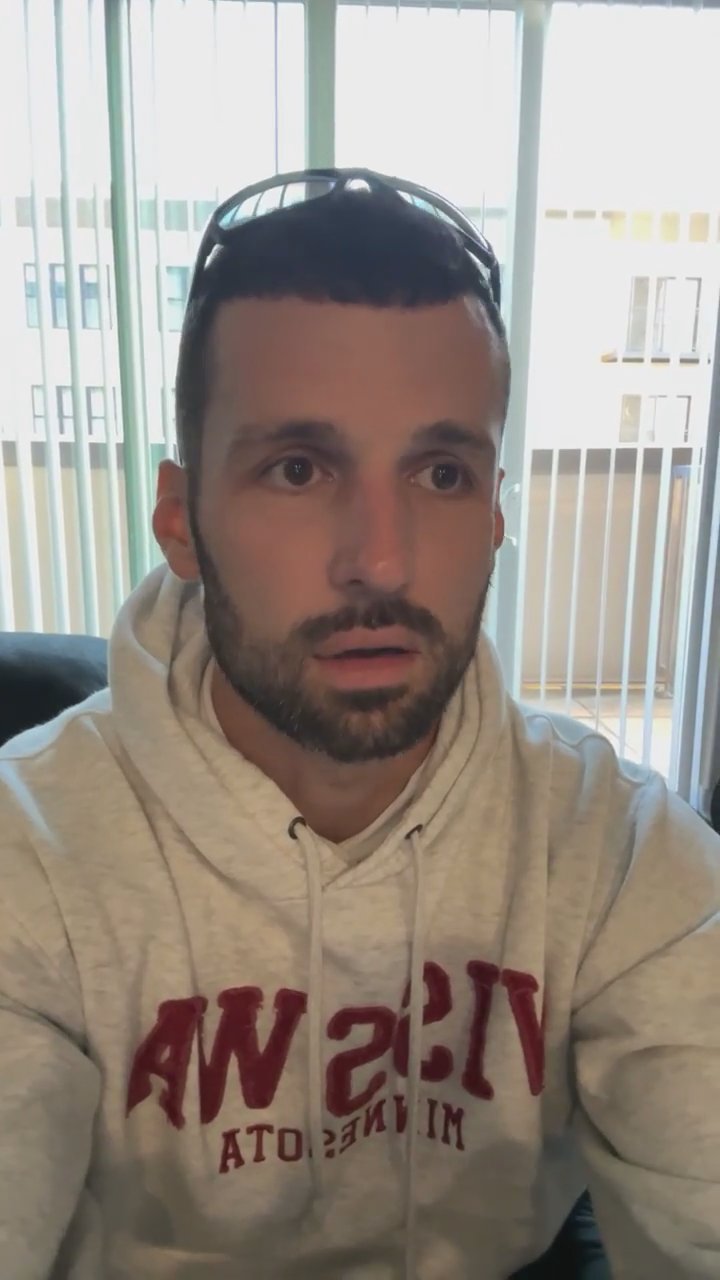
Jason greets viewers, introduces his role as a recovery champion, and explains that this Sunday Serenity marks the start of daily content for National Recovery Month. He briefly shares why September is meaningful and his plan to post videos leading up to a recovery walk.
Jason greets viewers, introduces his role as a recovery champion, and explains that this Sunday Serenity marks the start of daily content for National Recovery Month. He briefly shares why September is meaningful and his plan to post videos leading up to a recovery walk.
Despite feeling drained, Jason mentions a friend's three-year recovery anniversary and names 'judgment' as the topic he wants to explore. He outlines that he'll share three things that come to mind about that word.
Using a specific classroom incident where classmates passed a humiliating note, Jason describes how judgment and shame drove him deeper into addiction. He explains that such judgment isolates people and can prevent them from seeking help, sometimes with fatal consequences.
Jason notes that many who judged him later struggled themselves, urging listeners to check their impulses to judge. He emphasizes that substance use often masks deeper mental-health and life problems, argues against treating drugs and alcohol as the primary problem, and connects stigma to overdose deaths and missed opportunities for help.
Jason encourages setting aside judgment to understand and address the root problems behind substance use, offers ongoing support and conversation, promotes National Recovery Month activities including a fundraising walk, and closes with an invitation to join future Sunday Serenity episodes.
Good evening. Happy Sunday to everyone in the cadre sphere. My name is Jason Lennox and I am your resident recovery champion here to talk about all things recovery, mental health, wellness. And even though I'm a little bit tired, I'm excited because this is the first Sunday Serenity in National Recovery Month, September, September of 2025. And this is my favorite month of the year, actually, partly because of recovery month, but it's also beautiful weather, which I love. It's 63 outside right behind me.
I'm about to go for a walk. So I love the weather. I love National Recovery Month. I love the colors. Some of my deepest kind of transformation happened in this time of year. So there are a lot of things that just make September my favorite month, but National Recovery Month is probably the biggest and I made a commitment here to record and post on social media, Instagram, LinkedIn, daily content, videos leading up to this recovery roadwalk that will be happening at the end of the month. But Here I am Sunday, and like I said, I'm actually a little bit tired, a little bit drained, got a lot going on.
I was talking with our founder here, Luke Wendland, earlier, and he's been doing a lot for the school, the Annunciation School here in Minneapolis. And so we were supposed to go for a little walk, and turns out we both just had to kind of put our heads down and keep going. Nonetheless, I'm here, and what I wanted to talk about, I thought about a couple things, but one thing that came to mind, I was messaging earlier, messaged a dear friend of mine, somebody I have a long history with, and this is a day that she celebrated her third year in recovery.
And interestingly, it's something that I would have never anticipated. We just don't know, and it made me start thinking about this word judgment. And I want to give you three things that come up when I think about that word. First of all, I was talking to a guy yesterday, another friend in recovery, and he was telling me about work that he does with people who have other problems, maybe not necessarily drugs and alcohol, but other problems, legal, he's in with probation officers, things like that.
So he's telling me about these people and how he really can't wrap his head around what some of them have been through, what some of them have done. But he's very careful not to judge, and that's because he's been through his own experience and we just can't compare sicknesses. So that was one thing that came to mind. Another that came to mind, again, this person I've known for a really long time, just not ever really understanding or thinking that she would go down that path. It just was mind-blowing because I struggled at a very young age.
From the time I was in junior high all the way through high school, I struggled a lot with drugs and alcohol. So I really hit that path hard, early, and fast. And that kind of set me apart from most other people. Kids in high school, we did what we did. We partied and most of them went to college and then kept partying, but got jobs, started relationships, had kids, all the things. But that wasn't my story. I was homeless. I was everythingless, I'll say, by the time I was a senior in high school, in and out of jail already.
So it wasn't my story, but I can remember the judgment that happened for me as a high schooler. And I want to tell you a very specific example of something, and two reasons we don't judge. I was in this English class my senior year. I remember a piece of paper coming around, and I don't remember if it was a piece of paper we were supposed to sign something for or we were supposed to add to. I can't really remember. We were taking attendance, something, Good evening, Jules. But on this piece of paper were these notes, and one person started by saying something about a light bulb or something.
So I had, you know, struggle with methamphetamines. in my junior year and then my senior year. And if you're not aware, a lot of times what people use to smoke methamphetamines is a light bulb. So somebody writes on light bulb and then other people jump on and there are just all these condescending comments and just judgment, judgment, judgment. That's the word I keep going back to. But it was horrifying for me. I mean, I knew that these people knew who they were talking about when they were running this thing around and that note passed through every single person who was sitting in a chair in that room.
It absolutely crushed me that this is what people actually thought about me and were willing to write and just put me down. I was struggling with something much bigger and much more powerful than anything I could just say no to. Now that's not an excuse, but that's the reality. And I didn't want to see myself as any less than. But that's what those notes, that's what they would make me feel. So I bring that up again for two reasons. One, The amount of judgment and embarrassment and shame and everything that came with that really is what kept driving me back to doing more of the same and what kept me away from acknowledging that I had any kind of problems because that was a really tough thing and that kind of thing and that kind of judgment, I was one of the fortunate ones.
That kind of thing kills people. Really, it kills people. People take their problems to the grave because they're not willing to stand up against that and admit that there's a problem because of how bad they already feel because of the way that people look at it. So that's the first reason that was a big problem. The second, and I don't wish any problems on anyone, But people who were participating in them, people who made me feel a certain kind of way, guess what? There are times throughout the past 20, 25 years.
Where I've watched those people fall down into the same path and struggle with the same thing. So it's always for me, I'm always careful and I always have to check myself and go, be careful who you judge because you just don't know if that's gonna be you someday. And that's what happened again. I started much earlier than most people, so I went early, hard, fast. But a lot of these other people that I've known, I go back and I go back to my high school area communities. at least once or twice a year.
And I still see people doing the same things, partying until they can't stand up, sleeping, falling asleep in the houses that are not sure where they are, fighting, all the things. That's what happens still 20 to 25 years later. And that doesn't make them any less than me. My point in that is when the tables were turned, I was the laughing stock, I was the subject of all that judgment. And again, it just drove so much guilt and shame. So I don't look at people like that. I still try to interact and still try to just be another human.
And if they have problems, they have issues, they want to talk about them sometime, great. But it's not my space to make that determination, tell them what they need, be the person that judges any other thing. So judgment can be a very, very deadly thing. And even as people in recovery, even as a person in recovery, I'll speak for myself, Ro, it's good to see you here, my friend, as a person in recovery. And he, Rolando, check him out. He's new to this app, 830 Mondays, right after Luke, Monday Motivation.
He's got a story as powerful as anyone where he was judged and looked down on like we all are in this life of addiction. People look at us and they think and they feel and they say a certain kind of way. that can be deadly. I promise you this is part of the reason that we lost 250,000 people last year to drugs and alcohol, to addiction and alcoholism. And it's a big problem. I was at this event yesterday speaking, the event was breaking the stigma and I continued to hit home about this perception and just the misunderstanding that's out there about this about this disease, about drugs and about alcohol.
And people always thought those were my problems. And I just got done saying yesterday, those were not my problems. Drugs and alcohol actually served as a solution for me. I had a lot of problems with my mental health, with my upbringing, all the things that riddled and just didn't leave me. Those were my problems. Drugs and alcohol actually sued those, actually gave me a little bit of relief from that. It's a thing when we talk about judgment and we talk about drugs and alcohol as a problem. If I can look at drugs and alcohol as a solution that people are looking to solve a problem, I'm much more apt to go, okay, now how can I help solve the actual problem then?
Because I don't know what we're gonna do if we're trying to solve a problem that is drugs and alcohol. Yeah, we can give people treatment, we can do all these things, but guess what? There is no human and there's no institution on this planet more powerful than a little pile of fentanyl. It doesn't take much to kill people and sometimes they don't even know they're putting it in. So I think, again, if we can just continue to look at this thing and break that stigma and not have judgment and that's on us too in recovery because I'm guilty of it sometimes.
I'm guilty of looking at people and going, Oh, why can't you just get it? You know, it's just, it's right here, everything's in front of you. And I always, and I check myself, thankfully. I've got enough tools and enough experience to go, no. And I've got enough of the damage I did to other people to go, I don't have any business talking because I was out there doing all kinds of damage. But judgment's really important to me. It's, you know, it's a piece of this thing that ends up killing people and I think, It's not that hard to remove.
Judgment, we judge and we come up with these ideas because we just don't know. We just don't know what's actually going on underneath, behind the scenes with people. And we don't know what's contributing to people going after the drugs, going after the alcohol. And we sit from a distance and think we have the answers and think we know the easy solution, but we just don't. And if we can set that aside, then we can get in people's worlds a little bit more and go, What's really happening there? What are the real problems and how can I actually contribute to solving those without shaming people, without making them feel bad, without making them embarrassed, feeling the guilt, the remorse, all those things.
And I think that's critical. I'll continue to do that. And because of that, I regularly have five, seven, 10 messages going at one time with people who are just willing to reach out and open up to somebody that they've hardly ever known or reaching out for help for their loved ones. So judgment is a big, big problem in this thing and something I'm very passionate about trying to limit and remove from the way that we look at people who are struggling because there are a lot of people struggling, about 50 million, if you don't know, just in the US.
So we got a lot of work to do, but it's National Recovery Month. It's where we get to highlight this thing called recovery. It's where we get to just continue to fight on and raise awareness and You know, this big walk that I'm going to be doing, we're going to raise a lot of money along with that awareness. It's going to be a lot of fun. I hope you'll join. But more than anything, especially if you're in recovery, take a step back and go, you know, where was I sick and is my sickness any better than anyone else's?
And where instead can I think about solving, contributing to solutions that lie underneath the drugs and the alcohol. So look forward to catching up with you each Sunday National Recovery Month, we're going to keep highlighting what I think are the biggest problems and ways that we can really approach this thing a little bit differently with the people we love. So look forward to seeing you all next week. Hope you all have wonderful weeks and get outside and enjoy this beautiful fall weather. Until then, talk to you soon.