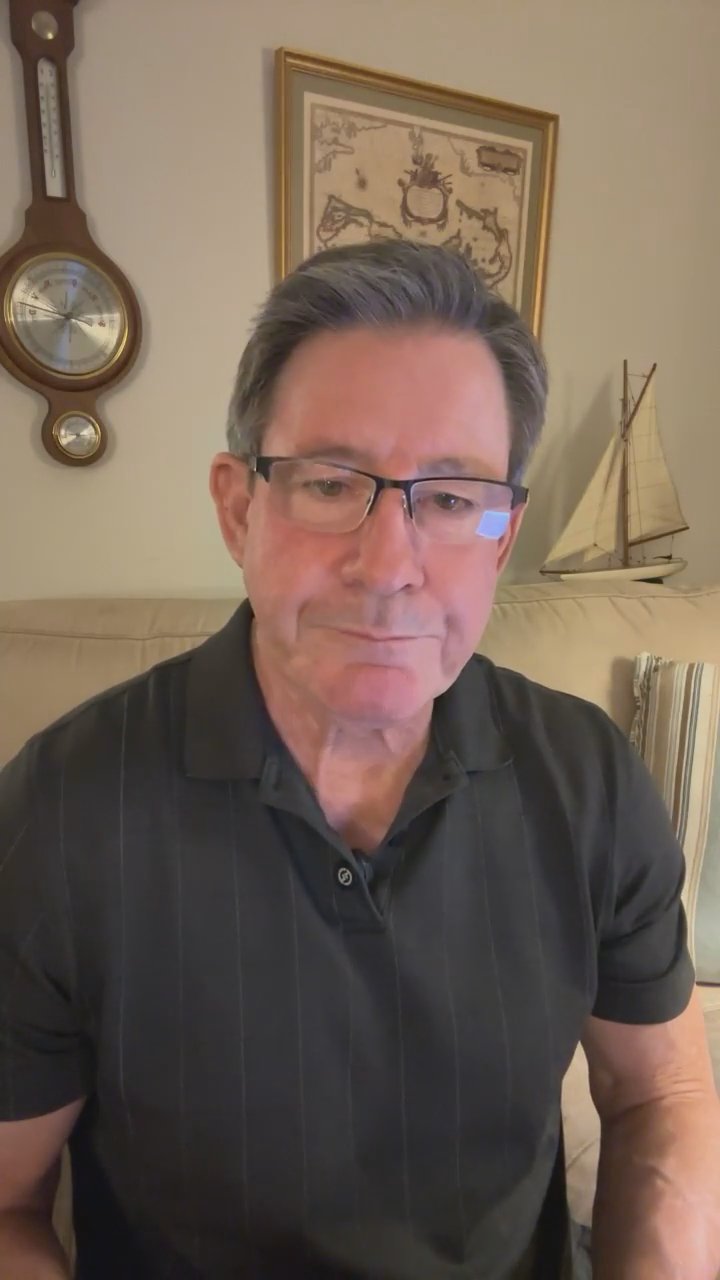
Please join me for a positive and encouraging conversation as we look at practical skills you can use to tune in, plan, and be your best no matter the challenges.
Rick Cram: Kathy, I believe that you are one of your greatest sources of hope. We're going to talk about resilient hope, what that looks like, how to grow it, why it matters. Use the three steps of resilience to tune in, plan and be our best.
There is this intricate connection between character and hope, as well as gratitude and hope. In any time, there is uncertainty. Anytime there is stress in our personal lives, the more uncertainty that shakes the foundation for hope. When we are more hopeful, it's something that's going to affect us.
Ricky Crram: Hope and resilient hope is not the kind of hope that is fleeting. He says to strengthen our character and to find ways to nurture and grow our hope, we've got to take action. If you can add a thought in the chat, that would be wonderful.
There is strength to hope. It is robust. There is energy in hope, and we need that hope. Being resilient, having resilient hope means when we do return to thinking about our hope, we experience it, we feed it, and then we can also share it.
Hope is the thing that feathers that perches on the soul. What does perch on your soul? I'm going to challenge myself and invite you to join me in this challenge. If you're watching the recording of this, I'll be coming back to see if there are any comments or questions.
We can find hope in our values, in anchoring in our identity. Another source of hope is to actually think about being thankful. Where do you turn to when you're looking for renewing and refreshing your home?
Even on my most painful days, I will say a statement that is full of hope. My best days are ahead of me. Yes, faith fuels hope. The less hope we have, if we pursue that faith, that connection with God the more hope we will have. Being deliberate, being purposeful is the key to all success.
Cadre: Often these discussions about hope include hope in the midst of pain and grief. Reframe, challenges, his opportunities, pivot. Every time that we harvest hope for ourselves and others, it's worth celebrating.
The best hope is resilient hope. Hope is not a luxury, it's a necessity. One of the things that will serve us well is to have something to look forward to. The more we have a goal, the more we can envision something in the future.
Have you ever found that when you're going through a challenge, maybe it's a significant change, maybe there's a real problem, some form of pain, stress might be some kind of mental strain or emotional upset or physical pain, which means you experience all of the above. And it seems as though you question, what do I hope for now? Where is my hope? Where are my sources of hope? Hi, I'm Rick Cram, and welcome to your Resilience coaching studio, where we're going to talk about resilient hope, what that looks like, how to grow it, why it matters, and all of the good that comes from it.
Welcome. It's good to see you. I'm at the point where I need my glasses a lot more. Hello, everyone. Hello, Kathy. So glad that you're here. And I just want you to know that I am a holder of hope for you for a couple of very specific reasons. One is that I believe that you are one of your greatest sources of hope. I believe it's important for us to remember exactly that there are in each of our lives numerous or at least several key sources of hope. But you are one of your greatest sources of hope because you have these wonderful innate abilities there within you to both be purposeful, deliberate, to be deliberate about growing your character.
Because after all, when our character grows, so do we then find an increase in hope. We also have an innate ability to be our best. When you put those two together, hope can not only be a seed that's planted, but it can grow and you can harvest it. What do you hope for right now? What are your hopes? Or if you would like, as we use the three steps of resilience to tune in, plan and be our best as we explore what it looks like to nurture and strengthen resilient hope, what might be getting in the way of your hope right now?
Are you experiencing something or perhaps a number of things that are affecting your sense of hope, your hopefulness. And it's wonderful that you're Kathy, that you're here from Erie at this particular time. And for each of you, please let me know where you are. Geographically, I am about roughly 20 miles west of Boston and what we call Metro West. These are the suburbs. There are suburbs, of course, all around Boston to the northwest and to the south. And I've been here since 1988. I thought I'd be going back to Connecticut and working in New York City after a few years here, like I was in Chicago when I loved traveling, up to Minneapolis a couple of times a month.
I miss Minneapolis I miss Murray's, a wonderful restaurant there, all the wonderful people as well. But here I am in the metro Boston area, and the tree outside my window is golden and yellow. The fall colors are changing, the leaves are falling. And I'll share with you as we talk about this topic, about hope, resilient hope. Have you ever found that you are asked to talk and you give a talk and you're doing it for others, and then along the way, perhaps while you're preparing for it or just before you give it, you realize, you know what?
I need this talk myself. I need, and I could use a dose of hope. So what are your hopes, or what's getting in the way of you feeling hopeful at this particular time? We're going to spend perhaps more time in that first of those three steps of resilience by tuning in such as this, because there are a number of things that can get in our way of being hopeful. I've heard it said that the further away we are from our source of hope, the less hope we have, which is one of the reasons why I wanted to begin with making that point that you are a source of hope and you're always right there.
You've got strengths. Even when you're exhausted, you've got strengths to build your character and to choose hope. There's this as we talk about this, there is this intricate connection between character and hope, as well as gratitude and hope. And Kathy, you hope for more peaceful days, less chaotic right there. These are. In any time, there is uncertainty. Anytime there is stress in our personal lives, within our families, at work or in our region or in the country, in the world, the more uncertainty that shakes the foundation for hope, and therefore all the more reason why we need it and why there's so much goodness that comes from chasing hope, from building our character, for example.
And there are numerous studies that show this, that being deliberate in this way, being purposeful, actually improves the quality of life, the sense of hopefulness, less stress, less difficulty, more a sense of thriving in life and in relationships. So when we are more hopeful, it's something that's going to affect us and help lift us up as well as it's going to enhance the work that we do. It's going to enhance the way we communicate, it's going to enhance the way we relate to others. So this topic of hope is so key.
What other things are in the way of your feeling hopeful? Or again, where might there be hope, uncertainty in your life that is affecting your hope? And then we'll take a look at I've prepared some notes that I'll share with you as I've researched this and prepared this for now, as well as for a conversation that's an ongoing conversation at something called Take Heart. I started this over 12 years ago, but I just started it up again the first and third Sundays of every month, 3 o' clock Eastern on Zoom.
It's a free gathering called Take Heart. Encouragement and resilience in action and at the foundation of it all. For the half hour or 45 minutes or so that we we talk, we'll explore a quote, something from the plan to be your best as you navigate pain pages and we will experience and feed our own hope and the hope for each other. com let me share a couple of thoughts in terms of how we can cultivate and then help that seed of hope grow, how to harvest it, what that looks like. So hope and resilient hope is not the kind of hope that is fleeting.
It's not the kind of hope that is tied to our circumstances. It's not the kind of hope that comes and goes. It's something that is more foundational. And if I may, I quote Picasso, the artist quite often. And the quote of action is the foundational key of all success. And if success for us in this moment talking about this conversation is to strengthen our character and to find ways to nurture and grow our hope, we've got to take action. If we take a look at our character, that means we're taking a look at our values.
One way to take action is to be deliberate about our values, to write them down, to think about them, maybe even challenge them, even think about what new values might I add? Let me just keep up to date on your wonderful thoughts. Whoa Nelly. I love your name. If you can add a thought in the chat in terms of what's behind that, that would be wonderful. I'm so glad you're here. Another way to take action is to think about again this tied to character because character the strengthens of our strengthening of our characters strengthens our hope.
The idea of what are our perspectives thinking about them. I help my clients walk through the process. We actually talk about them sometimes we write them down and then we even challenge them in two ways to reframe our perspectives in a way that serves us and others more so as well as even take a look at other people's character and their perspectives. And if I may, I just literally before tapping the go live button here, I got A text from one of my boys who included a photograph and just one word biopsy with no explanation.
The photograph was not pretty of his hand. And this is something entirely new. And the idea of all right, focusing on hope. I have another reason to be focused on hope and to fuel my hope in this. It was quite a distraction, as you might imagine. So it's helpful for me to think in terms of how do I be hopeful? What do I hope for? How do I share with him? I quickly texted him a reply that I'm a holder of hope for you. Because I'm sure to just the idea that the doctor saying let's take a biopsy of this was very upsetting to him.
So the take heart Sundays are filled with hope. Yes. I'm so glad you've participated. One of the reasons why there is so much hope. There is because of your participation. Kathy, you bring hope. There is hope within you. I think that's one of the things to even recognize within ourselves, even when we're not necessarily feeling it. If we're not thinking and feeling our sense of hope, it is there and it is something that we can tap. That is innate, resilient hope. But and just as we are affected by circumstances, by stressors in the world, in our families, accidents taking place, issues to take care of, challenges that we weren't expecting, all the things going on in the world.
Being resilient, having resilient hope means when we do return to thinking about our hope, we experience it, we feed it, and then we can also share it. So thank you very much. Thank you. So hope is not wishful thinking. That's the other thing. There's a confidence in your hope and my hope, especially when we strengthen it on an ongoing basis, when we take action, to think about different aspects of our character. One other way to grow our character is through acts of service. One of the things that I often refer to are there's the three steps of resilience and there are the eight paths of intentionality.
And in each path we go through, there's the essence of what each path represents. The Prepare path of intentionality is where we focus on our values and we focus on our identity. Two fundamental and sources of fuel for our hope. But hope is actually like a string through all eight aspects of those paths of intentionality. The more we are purposeful in the way that we navigate whatever is challenging, that's going to be one of the keys to being able to remember our hope, to let that hope fill us and to share it as well.
Hope can be muscular, robust. I like that. Great words. There is strength to hope. It is robust. There is energy in hope, and we need that hope. I was looking at, and I'm curious to know, do you have any favorite quotes about hope? There are many that I have and a lot that I've been reading, preparing for today, thinking about. All right, what quote? Actually, the quote I really wanted to hone in on was that thought that action is the foundational key to all success. And yet there is this other one by Thoreau, Henry David Thoreau, and it's basically having to do with what we're doing right here.
There's hope in community. Community can strengthen hope for each other, but it's also a place where we can share hope and encourage others in community to help lift up someone else's hope. And there's this wonderful quote, friends. They cherish one another's hopes. They are kind to one another's dreams, one of the ways that a community will thrive. Just like we are here, we are kind to each other's hopes and to each other's dreams. And when we experience that, and therefore it means thinking about who we're spending time with, are they holders of hope for us?
Are they kind to our dreams? Are they providing fuel for that? Or do they do something that's more negative? Hope is the thing that feathers that perches on the soul. Oh, I like that. Hope is the thing with feathers that perches on the soul. Emily Dickinson. That's beautiful. And there's this wonderful string of words that create this image. What does perch on your soul? Let me actually challenge. I'm going to challenge myself and invite you to join me in this challenge. What is making it more difficult, perhaps in this moment or something that you've been experiencing over the course of time that makes it difficult for hope to perch on your soul and let it rest there, let it live there, let it be a source of food for your soul, for your spirit, for your mind, and for your emotions.
Or perhaps is there something else that's perched on your soul that is awfully heavy? Perhaps one way of looking at hope and letting that of how I'm getting a message. The live stream cut out and it says, I'm back. Kathy, if you wouldn't mind letting me know that you're still there or that I'm still here. And whoa, nelly, if you're still with us. Love to hear your thoughts. Any questions that you've got. If you're watching the recording of this, I'll be coming back to this often and checking to see if there are any comments or questions and I'll be happy to answer them in other posts.
Every one of your questions and thoughts, your curiosity matters and I'm here for you. So Kathy, if you wouldn't mind. Okay, thank you very much. So what are your other sources of hope? That thought that the further we are away from our sources of hope, the less hope we we might have. So we can find hope in our values, in anchoring in our identity. We can find sources of hope in each of the dimensions, or at least most of the dimensions of life. Everything from, let's say, emotionally and mentally.
We've been through challenges. We can be hopeful, and because we've gotten through those, we've grown through those. One dimension might be the family. My kids are a source of hope for me, including how I want to be a model of hope. I want them to see hope in me. Another source is if you're looking at your different dimensions of life, there can be hope. In your vocation, in your work, the people you're working with, in your spiritual life, there can be hope. And that's one of the key sources for hope for me is in my faith walk in God.
What are your sources of hope? Where do you turn to when you're looking for renewing and refreshing your home? Fuel for maybe it's a single thought, a nugget that's going to give you, bring you back to hope. Another source of hope is to actually think about being thankful, putting on an attitude of gratitude because there's this wonderful tie. Just like there's a connection between our growth and character and our growth and being able to be hopeful. Also when we are thankful for something inherently that includes hope for more of it.
It's something that when we're thankful for something, that means we can be thankful for some future thing as well. I'd like to share one particular thought for you. Even on my most painful days, I will say a statement that is full of hope and something that I've been saying more often to myself. The last couple of months have been especially challenging. When I say my best days are ahead of me, that is coming from my the character in me that is hopeful. I that lifts me up in the moment. And let me invite you to say, especially if you're ever having a tough time, whisper to yourself, maybe even say it out loud or write it out.
My best days are ahead of me. And watch what happens. Yes, faith fuels hope. And so in effect, by virtue of that idea further away, we are from our source of hope. The less hope we have, if we pursue that faith, that connection with God, that connection with others, the more hope we have. That's one of the reasons why Cadre exists, because we are a community. And community is a source of hope where. A place where we can encourage each other, share it, and experience it as well. Let me see what else I have in store for us.
So in a way, we've spent most of this time so far really in that tune in step of those three steps of resilience. Tune in, plan and be your best. Let's now move into plan. What are those things that we can do to identify those sources of hope and things that we can think about and work on? Being deliberate, being purposeful. We can look at those perspectives and reframe challenges as opportunities. We can take a look at even such things as. And these are those things, those actions, those. And action is the foundational key to all success if we're going to nurture our hope.
What might work for you in this kind of category of things to do? Journaling, praying, talking to friends about hope? What else comes to mind? Kathy, for example, you, the other day, you talk to a group and you've got other groups that you're a part of and where you're sometimes where you're bringing hope, messages of hope and you experience, I imagine, as I do, each of those occasions are opportunities where I'm modeling hope, I'm sharing hope, ways to grow it and feed it, help that seed grow so that you can harvest it.
It is a process that is enriching. Reframe, challenges, his opportunities, pivot, because that is typically especially for me and what I see with the people that I care for and lead through the plan to be your best approach is that whenever there is a reframing of a perspective is always something like at least 90 degrees or 180 degree turn. It is a significant pivot. And that's when I love to see it, when there are aha moments, because we can actually be really anchored in certain perspectives.
We can be dug in. And yet there's this freedom that comes from giving ourselves permission to look at our perspectives and inviting ourselves to say, let's give this a new thought. Often these discussions about hope include hope in the midst of pain and grief. Absolutely. We need each other. We need people like you, Kathy, to talk to others. And is it fair to say that they've come together and they've invited you to speak, for example, because they need hope, they want their hope fed what's unique to observe about a group that invites you in like that?
That's a good picture of what it means to one way of taking action. They are on a journey of perpetual learning. They're being fed stories, fed examples of not just stories, whether it's from the Bible or from your life or a story about someone else who has shown what real resilience looks like. But they're living and writing their own story, which includes hope, the hope that you're raising up for them to harvest. That's when we need it most. Exactly. And I can tell you when I said earlier, this is one of those talks when I've been preparing it.
And then there's this realization I need this message myself. The pain that I've been in since the seventh surgery in 2019. Without a doubt, there are waves of time when I'd say I do lose. Not a complete loss. I don't lose a complete sense of my hope. But it's time in the pit and time in the pit, or time. Lamenting is always a process, a very purposeful process to regain hope and to come out of the pit time and time again. Sometimes it's almost daily, sometimes it's weekly. I'll share with you that I'd say for the past maybe two and a half years, I've been honest about saying that I live in a very desperate state.
The kinds of solutions that we're looking at now are pretty severe. And I am honest with the doctors that I am desperate, but at the same time, I am. My character has grown. So in some ways, I'm able to say that mentally and emotionally, while the pain is taking a toll, mentally and emotionally, I think I'm the strongest I've ever been. Because even with this, I'm able to say my best days are ahead of me, come what may, partly because I know that I am so intentional. This line of intentionality in me is going to pursue and act to be my best in so many different ways.
And that means my best days are ahead of me. I know the days ahead are going to be filled with my being my best. So what's really cool is when the message that you prepare is just as much for me as it is for them. Yes. And perhaps in that way, in this way with Cadre, this message is that I've developed and I'm sharing with you, that we're talking about is feeding me. It's a gift to my own character, a gift to my own sense of hope, and I celebrate that. In fact, let Me jump to the third part of those three steps of resilience.
We are well served to celebrate every hopeful thought, every way that we are growing, our character and our hope. Every time that we harvest hope for ourselves and for others, it's worth celebrating no matter how small it is. One other thing that we can do is to. Let me just read through my notes here. Just knowing that the hope is something that we can grow. And in a way, there's this constant growth to it. We may have planted a seed, but it's forever growing and we can forever harvest it. It's always there for us.
There was a dark season. When I said the best days are behind me. Now I say differently. The best days are ahead of me. I rejoice in reading that and just letting you know that I know how it is, I know how it is. And that pitch can be very, very difficult. And there's no shame in expressing that, that my best days are ahead of me. I've thought the same as well, thinking about some of the things that, you know, Kathy, that I'm looking into. Although I see it and I see everything that I'm pursuing as options, as opportunities.
And yet I made a phone call today to see if my. A physical therapist that I haven't been able to go to for years because the insurance company has said. What's the term they kept. Keep on declining my being able to get more physical therapy. No, no functional use of the left knee. They say it's not going to work more PT won't work and that's why we're not going to. It's kind of tough to read a message like that from a. An insurance company. It's as if they have no hope. But I do and I'm going back to physical therapist.
I think I can get insurance to cover this or I will try something called myofascial release. I've had it done numerous times over the recent years to no effect. Actually. It usually causes more pain, but there's a different approach to it that I want to try. It's very passive. It's not a massage. It's a very passive holding of the leg in a way to let the energy flow, the vibration, if you will, flow where it might help release any pain that's being held in the fascia. I had this done after my total knee Replacement number six in the year 2000 and after having the physical therapist had one hand underneath my heel, the other hand was underneath my, my calf for about an hour.
And I may share this with you but from my waist down, after about 20 minutes, my body was humming like a tuning fork. And I got up from that session and immediately had more flexion in the knee, which usually takes several days of hard PT to To get those extra degrees. There was a release of pain in the fashion I want to see if that. That might help again. But going from that. So harvest, you know, in effect we go through painful times and yet something in that journey, it's something in you that goes through that journey that comes back to hope.
That's one of the reasons why again, going back to the beginning, I'm a holder of hope for you because you, you are one of your greatest sources for hope. And I'm so thankful for you, I really am. Thank you for all that you're sharing. Any particular thoughts before I wrap up? The idea that hope is not wishful thinking. The best hope is resilient hope. Hope is not a luxury, it's a necessity. It's a part of life having an ebb and flow. Especially when there's a tremendous amount of pain, heartache, whatever it might be that we need each other for helping to.
Helping each other both navigate, to grieve, to go through the processes that in effect will strengthen our character and everything from. As you know, that difficulty produces perseverance, perseverance, character and character hope. I believe we're in a time when we need, we all need our country and the world needs more hope. So two things as we go from the tune in and plan steps and now be your best, two things. One of the things that will serve us well is to have something to look forward to.
And by having something to look forward to, I mean something significant, maybe even fantastic. The more we have a goal, the more we can envision something in the future, including being our best and taking joy in that thought that our best days are ahead of us. What does that look like? Picture it, pursue it, practice it. And the bigger and. Or maybe it's some significant objective. Maybe it's something that you've started, maybe it's something you have yet to start. Having that future hope in place creates hope for us.
It gives us something. There are certain speakers who use terms like an unforgettable future or a fantastic future. We need those hopes in the future that feeds a moment in the hope we have in right now. It also gives us things to work towards, to take steps towards, to be action oriented. And because taking those steps, taking action is on one hand coming from hope, but it's also growing our hope. So I ask two things. What fantastic future lies ahead for you? And what one thing might you do in the days ahead that's going to perhaps even daily feed your hope, feed your strengthening of your character, looking at your character and spending time maybe journaling about it, writing about it.
And what are you those things? What's the big idea that will give reason for your hope to rise up? And what might something small be that you do in the days ahead, such as journaling, talking to friends, maybe contacting other organizations to see if they'll invite you to speak for you, to share hope to feed their hope? Yeah, journaling is numerous times a day and sometimes it's sort of on the fly. I've got a thought, then I capture it. I haven't been in the routine of just sitting down and letting thoughts flow.
And we although working on the book this past weekend, I will say I had two marathon sessions of being productive and I came across some things, some journals, journal thoughts that I captured over the past couple of years and just to read it again and if perhaps there's something Kathy and for any of you watching, go back and take a look at what you've journaled in the past. Just digest that in some moment in the past, you captured something, maybe something hopeful, and it's refreshing to read it again.
Something small, write it down. Tiny things, even slice. Sometimes for me it's even one word that you notice, such as the way the light changes throughout the afternoon and evening. What a wonderful image. Yes, that light change. Sometimes it's a slightly different color or certainly in brightness. And without a doubt, whatever, the brightness automatically alters the hue, the colors, noticing the textures of people's voices. Yes. With so many of the things that we've talked about, I've become more aware of my voice.
I've been more intentional about. You could probably tell when since I hold stress and strain my throat so much when I show up and it's the tightness is obvious. But I I'm here feeling hopeful and more much more relaxed. And as this conversation has progressed, especially after seeing that message from my son, the idea of I've been observing a wonderful progression of my voice becoming more and more relaxed and my being more and more convicted about all of these points, the facets of planting the seed of hope, a resilient hope that does perpetually grow so that you can perpetually harvest it for yourself and harvest it for sharing with others, especially family, friends and community.
Thank you. Thank you very much. I'm probably, as we all are, more self conscious and as someone who was brought up by communicators, I and professionally and personally consider myself a communicator that the the tenor of how I communicate matters a lot, as you can imagine. Well, here we are gone longer than the usual and the expected. But I must say thank you so much. You've been feeding my hope just by being here, so thank you so much. Any particular final thoughts or questions before we sign off?
I'm eager to check in with my son and see how he's doing. And one last especially for those of you who might be watching the recording of this the Take heart, encouragement and resilience in action. It's the first and third Sunday of each month. That means we'll be meeting this particular Sunday morning. com all are welcome. Whether you're in pain or you're dealing with stress or just need a lift, we will lift you up. And by you being with us, you'll lift us up as well. So I'll sign off for now.
I want to say thank you to all of you who are here or watching this at all. I am a holder of hope for you and I wish you well. Have a good night.