How do I help people feel safe talking mental health in their faith community?
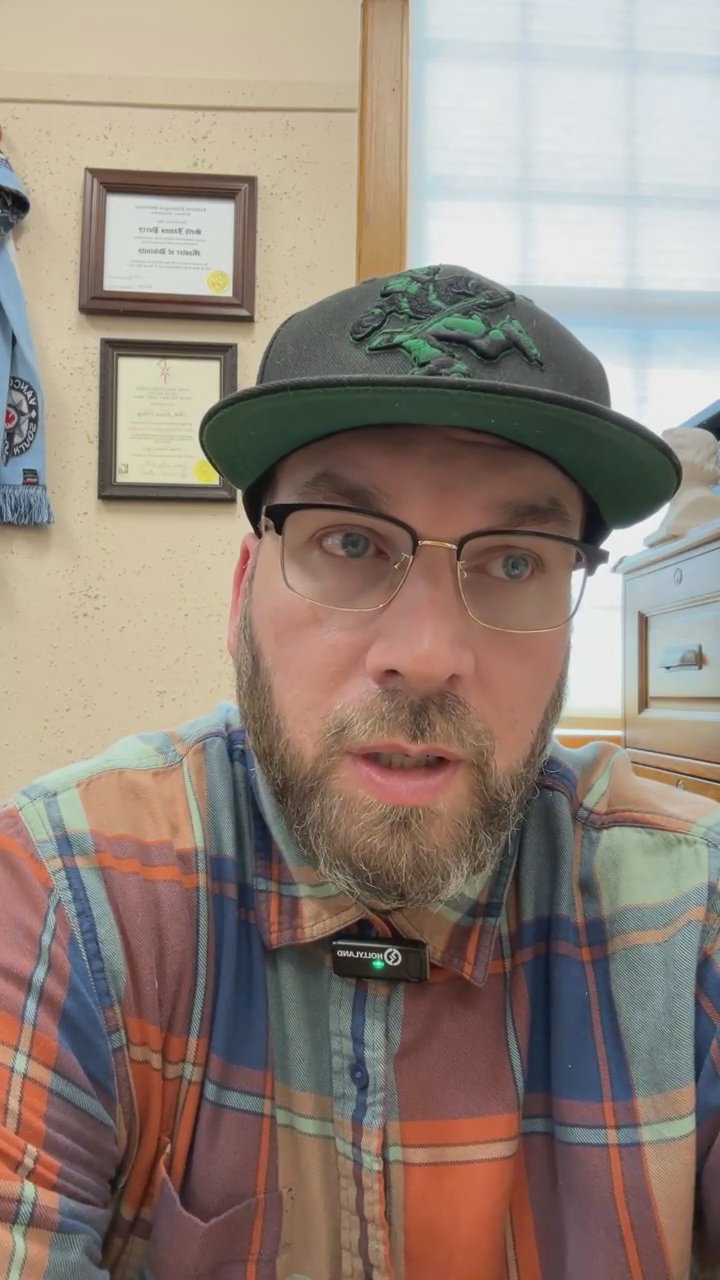
Pastor Seth Perry greets viewers and explains Talk Stigma's theme: conversations about faith, mental health, recovery, and stigma.
He explains that a recent high-profile incident of gun violence changed his planned topic and that he wants to discuss how a pastor can help people feel safe amid such events.
Pastor Seth describes starting his service with a neutral stance rooted in compassion and says he emphasized listening objectively to people's histories as a way to foster conversation and understanding.
He recounts conversations after church, including a teacher's experience in speech class and interactions with congregants, illustrating how sharing backstories creates common ground and healing.
Using a cemetery photo and recent hospice visits, he explains how end-of-life conversations prompt storytelling, provide comfort, and require active listening skills.
He advises viewers to pause during societal tensions, breathe, and look for the person's story and history to grow mutual understanding rather than focusing only on why they act a certain way.
Hello, good afternoon. My name is Pastor Seth Perry, and I want to welcome you to Talk Stigma. This is the time where you get to sit with me in my office, and we talk a little bit about faith, mental health, recovery, and stigma. I had a plan on what I was going to talk about today, but this week has been difficult week for many people across the country. And there was another incident of gun violence, very high profile. And so I think I want to talk a little bit about what a pastor can do to assist people in feeling safe in this.
And hey, Andy Mack, welcome. So, I'll start off by saying, I made people in my church, I'm in a purple congregation, so people from both sides of the political spectrum had come to me with concerns. So I started our service today with a statement, and Sometimes people are hard on me for being neutral, but I think I'll just say, leading into the neutrality of human compassion, I think there's really nothing wrong with that. Sometimes I'm criticized for doing that, but I believe that I can help people have conversations if we approach our faith from a very objective space.
So that's what I did when I started our service off today. I developed a whole message today in the service about listening to people's back stories. I don't really go too much into the theology part of this, but I'll give you the message. I think that What I see missing in people's life when they come into my office or when they share with me what worries them most about the world is that maybe people haven't taken a little bit of time to pause and listen to understand where they are coming or where other people are coming from.
So what is the specific backstory in someone's life? And so that was the focus of this. And here's the interesting part, is that after church, I get to sit down and have coffee with people and talk to everyone who's come in. And I had a few conversations about pieces of people's lives where they see that happening. And that's really where the hope comes in all this. I sat down with a school teacher where he said, He teaches a class on speeches. It's speech class. It's debate class. And in the last few weeks, he's seen people of many different backgrounds and even many different faiths.
And hello, Jules, welcome. He's seen those people come together and share their stories at speech class. and he's seen them find common ground. Doesn't matter if they're Muslim, Christian, Jewish, he's seen that happen. That's what the message about listening to others' backstories meant to this teacher. And that was a good place to be. And good afternoon to you, Jules. Jules, I'm talking about people's backgrounds and maybe the therapeutic and spiritual value of sitting down with another person and learning a little bit about them and their backstories.
Think about that in your own life and maybe give me an example. Another thing that reminds me of people's backstories and learning about someone's life is a picture that's on my desk. So Here's the picture. This was taken this summer. And this picture here is out in the cemetery. And I'd just done a relatively emotional service in the cemetery, a burial service. And so it was taken during an internment of a 90 nine-year-old woman. And this is a great-great-grandchild asking a question if heaven was in that hole that great-great-grandma had been interned in.
And I had to give him my own answer around that. I had to give this little kid hope. And that was another moment where I sat and had a conversation and listened to someone who was curious and to hear where he was coming from and what he was all about in that moment. And I said, so okay, this hole is just a hole. But this whole process, this whole reason we're here is to remember that Heaven is somewhere, right? He was okay with that. It was his first time just sort of considering what happens when life is over, right?
So that's one other thing. And the other thing is, and another moment of hope for you all is I got an e-mail this week from someone I don't know, and I'm heading there right now. Someone I've never met, they said that their father is on hospice and they're asking me to drive half an hour from where I am to visit with the family. And there's gonna be seven people there. And the whole family's gathering so that they can be together maybe one last time. with a dying family member. And so sometimes my job is slowing things down, going into someone's home, and listening for the greater story.
Whenever I do a visit like that, inevitably, people are going to start sharing moments from the dying person's life. And again, That's something that I want to suggest is incredibly healing. I know it is, and it may be frightening to some people who've never been in a situation like that. Because before I had ever done end of life care, I know that I was quite frightened of working with people who are approaching death and the loved ones that surround them. But what I discovered is It's all storytelling.
It's learning the skills, as I have as a pastor, to have active listening, to not ask questions, but to make statements that invite people to share the stories that they need to share when their loved ones are still alive. I have done it enough where I just know that where I'm going today is going to be a time of storytelling. There may be tears, there may be laughter. But I am just about to go to listen to another story, which is what I do every week, weekend and week out. I was at the hospital just yesterday visiting with someone who's near passing and there were stories being told.
So my encouragement to everyone is when things look rough on a societal level, when your social media feed is full of divisive rhetoric and when things devolve down into an argument, it's okay to take a step back, take a breath, and look for the story. Look for the history. It is not so much why is someone acting the way they are acting. It's more who is the person that is speaking. whether they're speaking divisive words, whether they are showing that they are in distress, whether they are ashamed or whether they are depressed.
My encouragement is not why they are the way they are, but more who they are, and maybe they will be able to share the broader story. You won't get a definitive answer, but heart to heart, I believe you're going to grow and they will grow as well. So that's all I have for this week and I want to thank you all for tuning in.