Feeling safe being open about a mental health diagnosis in your faith community.
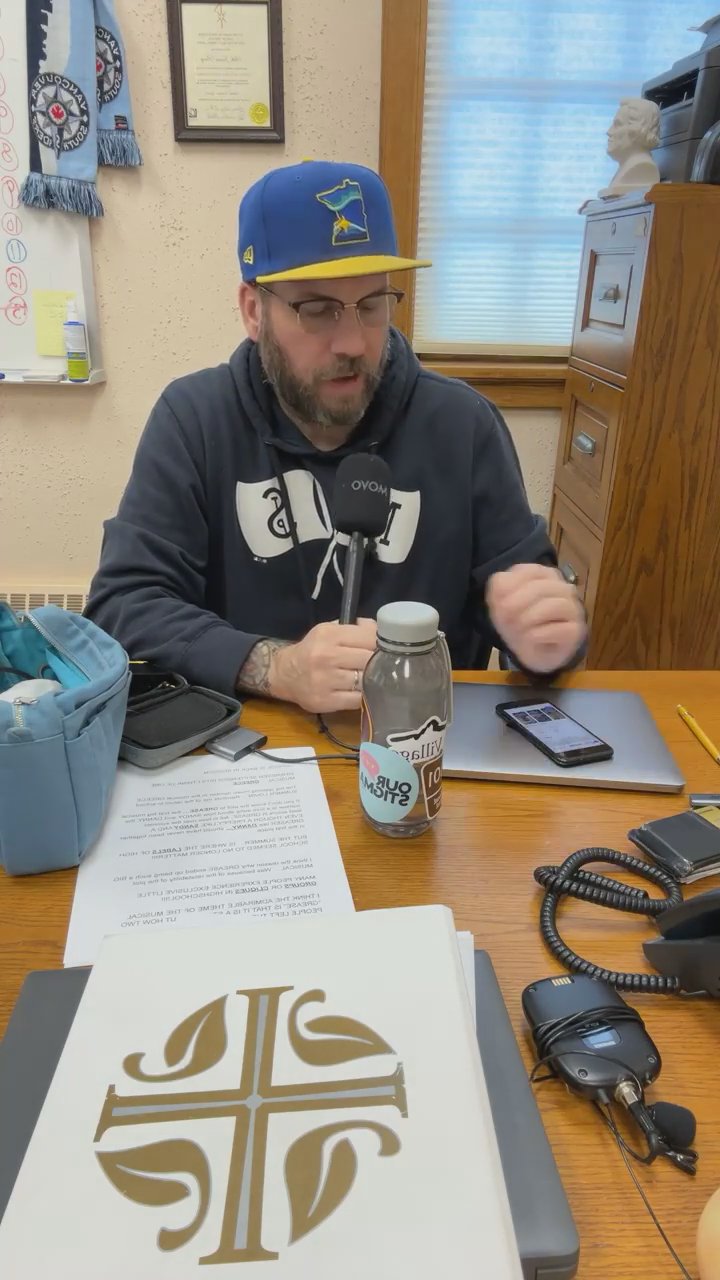
Pastor Seth Perry greets viewers, explains he's returning from summer break, and sets the scene by describing the office configuration and purpose of today's livestream.
He addresses concerns about safety at church in light of recent events in the Twin Cities, recounting a conversation with a parishioner whose nephews were affected and reflecting on the emotional impact.
Pastor Seth emphasizes that investing time in listening and offering hopeful speech lays the groundwork for change and a safer community.
Using the analogy of construction, he explains relationships and social change demand long-term investment, planning, and materials—requiring sustained effort.
He connects church dynamics to wider societal patterns, thanks viewers for tuning in, announces his regular service time, invites topic suggestions, and signs off.
Good afternoon everybody and here I am. My name is Pastor Seth Perry and I am the pastor of Elim Lutheran Church in Scandia, Minnesota. I want to welcome you all to my Sunday afternoon live stream and I'm back after taking some time off this summer. I've had a good break and I'm grateful to be here and I'm Doing this from my office, you are sitting normally where someone would sit when I normally do an office visit. So consider this an office visit today. This is just like the view that someone would see if they came in to see me in my office.
Now, I do want to talk about a few things specifically with this dynamic. And the big question is, how do you feel safe? at church? And that's a tough question given the state of things in the Twin Cities area. And what I want to talk about is that I'm doing this from right here. And hello, Shannon. I'm doing this in this configuration today because on Tuesday I came back from vacation. I had someone sit right across from me and they talked about how they received a call when the annunciation tragedy happened.
And they have two nephews that were actually there when it happened. And today's question about how do we feel safe at church? I mean, I think the biggest thing that came out of the conversation that I had with the aunt of her two nephews who were at the church was this. I think we feel safe when people seek to change things when a tragedy like this happens. I do truly believe that was the lament of of this aunt. She said, I don't want to feel this way and I don't want to feel this way about my kids or my nephews.
And that has been such a big challenge for me as a pastor, to lead people to think about change, to lead people to think about having a safer world, to leave people to think about leaving things behind that don't really serve us or serve our communities. So I'll tell you this about church. And this is kind of my big lesson for today. Churches are a place where, like society, things stay the same. And if nothing changes, nothing changes. And I think that the key with this kind of one-on-one communication that I have with people is that if I give myself the time as a pastor, and you can think of this in your own life, in your own vocation, whatever you do for a living, or just in the communication that you have with other people in your lives.
If you invest the time to listen and to speak hope into someone else's life, then I believe those are the roots for change, that's the groundwork for change, that's the foundation for change. And today we had a wonderful service here today I blessed all the kids that were heading out to school, them starting school this week. I blessed the community, blessed everyone in their vocation. And I talked about that foundation that I just spoke of. The foundation for giving us a new world, giving us hope for a good future.
It all starts. with this. It all starts with this. Listening and then speaking, not taking away when you speak, but giving when you speak. I taught a lesson about the value of thinking about how much you need to invest into a foundation, how much you need to plan ahead when you're building something about how much the cost is. How much materials do I need to build? And I think that's something that we work out when we're in relationship with people. Relationships with people are projects, and they're projects that are a long game, which means on a meta level, in the macro, it means that we're all on a societal project, right?
I think that that's something that Unfortunately, I get distracted, others get distracted, we get distracted throughout our day. We get distracted by the fragmentation that social media, politics, even other types of divisive subcultures that just sort of split us off for no particular reason and set us into being labeled as. where we can't think of ourself interacting with other parts of society. I mean, yeah, that happens. Even the way that some people try to drive a major wedge around gender, it is a societal project, right?
So we have to think about when we are giving, when we are receiving in communication, we're building something and it's greater than just two people, right? So That's what's on my heart today. I didn't really know that I was going to say all this, but I think that the important thing to do is remember that Cadre and the Cadre Sphere is a complete mirror of what we see happening in the world. And also it's a way to be inspired about thinking about the larger project and what it could actually be.
So I just want to thank you all for tuning in today. And I also am grateful that it's back to church and I can be here. You'll see me every Sunday, 1:00. Yeah, let me know what you want me to continue to talk about here. You can just do put a comment down. What are some topics that I should be covering over the coming year? And I look forward to continuing to connect with you. And look, just have a wonderful Sunday afternoon. And whenever you're watching this, peace out. I appreciate it.