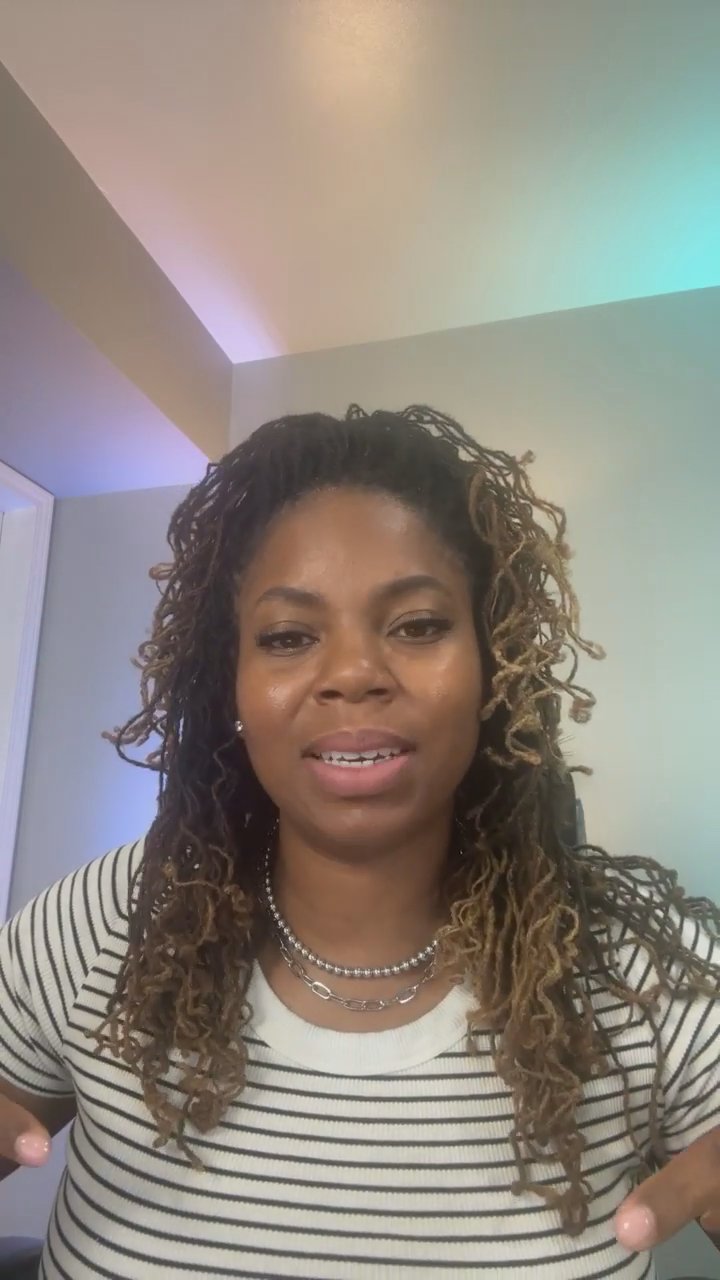
Hello, cadre. Hello, good morning. Happy new day. Hello, cadre. Hello, hello. Come on in and welcome. Come on in. I have my tea with me. My water with me was always in hydrated. So I hope you have your water with you and you are nourishing your body and your sails down to the deep levels within your body with nutrients and water. So come on in. Hello, speak wonder. Hello. Hello , Latanya. Welcome. Nice to see you all. Happy September. Hello, Rachel. Nice to see you. Hello. Good morning. This is a new day.
This is a new hour and I do believe something amazing is going to happen to you in this day because I have hope. I do. I have hope for goodness. I have hope for blessings and a hope for prosperity for all of us as we connect here on cadre. Well, I want you to drop in the chat. What does the word safety means to you? I literally looked it up. So our theme here for cadre is all about safety. And I said, what does it mean for safety? I use this word often with my kids. I will say don't do that. That's not safe.
Don't do that. That's not safe . Don't walk that way. That's not safe. Don't climb that tree. It's not safe. It don't look safe. That don't even sound right. You know, like, I would say I always use that word about that's not safe. That doesn't look safe. That doesn't look well. That doesn't look good. And I'm happy that cadre picked this theme because it's causing me to really take a deep dive in. So today we're going to define it. And we're going to talk about the importance of creating a safe space for ourselves.
Yeah, because as a parent as a caregiver, let's think about this. We are always trying to make sure the place is safe for our people, right? If you're a mom, a parent, a father, a caregiver, if you are caring for an elderly individual, you're always looking at how to make a space or a room conducive for them to thrive. Think about it. So for instance, my best, one of my good friends, she's the best friend. She has a little baby and he's starting to move. He's starting to crawl. And she's noticed that one day he was in one place and she turned and he was underneath the table.
Okay. And I said, Oh, girl, it's time for you to baby proof your home. Right. And so she was, I've been trying now putting pillows here and pillows there. When my father was living, my mother had some make some hard decisions to make sure that he's safe. Right. So she took his keys from him. He wasn't allowed to cook without supervision. And so we, she had to do things. We as a family, but my mom really had to make some hard decisions to make sure that he's safe. And sometimes that that came with resistance.
Mm hmm. So sometimes it comes with resistance when we're trying to make sure there's someone else's environment is safe. So yes, speak wonder safe, safe feels like being among comfortable friends and a blanket for eating. I love that. Yes. We're going to talk about all of that. Rachel said, some of these is become more of a feeling being protected and comfortable. I guess something I feel often. Okay. Maybe she said not that I feel often. Okay. But yeah. So think about this. When we try to make someone else's environment safe, sometimes it could be met with rejection or they could receive it.
Right. So kids that receive us being cautious and aware of danger and warnings and, you know, that that law looks kind of too loose to walk on or that road is too dark. We shouldn't drive down that one or, you know, this way, it looks uncertain or kind of gloomy and do me. Let's not take that way. We're on a hike. Right. So we are so, we are aware, like our bodies, our minds are so our spirit . We are hyper aware of when things are safe and when they're not safe, when they're right for us, when they're not right for us.
Right. Okay. Thank you, Rachel, for clarifying. And so it's we're so aware and sometimes when we perceive threats, our bodies, our bodies let us know even even if we don't even think our bodies have warned us when we don't feel safe. And so I want to give you the definition that I wrote down. And I want us to intentionally, over the month of September, talk about the various environments so we can create space for ourselves that is safe. Right. That Rachel, it becomes a norm where we feel comfortable, where we're feeling accepted and love and cherished and without threat and without harm that we can create that space.
So let me first give you the definition and then let's talk about it. Safety means the condition of being protected from or unlikely to cause danger, risk or injury. Safety means to prevent injury or damage. I'm going to read that one more time. Safety means the condition of being protected. It is the prevention of injury or damage. Let's take a deep breath. Let's settle in on this truth right here. If we're considering building a space or environment where we can prevent damage or injury, I'm curious to know from your perspective, what would that look like for you?
This is deep, y'all. Think about your heart. Think about your mind and your mental well-being. If you could create a safe space where it prevents damage, risk or harm. What things, what items, what standards, what boundaries do you need to put in place to create a place where you can prevent damage, harm, risk or injury. Man, that's deep. I think about my own heart and I think about how people make really interesting decisions to prevent harm. They build up walls in relationships or they find themselves distant from people to prevent harm.
I don't know if isolation or withdrawn is always the solution. I'm curious to know, speak wonder, what would you put in your space to create safety? What boundaries expectations would you enforce to prevent your heart from injury? I'm sitting here with you and I'm thinking one is for sure is that boundary of checking in with self-first. If someone asks you for something or if they are requiring or requesting something of you, you first check in with self to ask, do I have the capacity? Do I have the time?
Do I have the energy, the will to prevent damage or harm to you? I think it's about having some kind of filter that you don't allow yourself to be put in vulnerable situations where your time, your energy, your peace could be at risk of injury. Let me hear from you. You guys said risk harm isn't completely preventable, though that's where I get stuck like. Okay, so tell me more Rachel. Yeah, it's not completely preventable, but we can prevent. Let me say that in a different way. It's not that we can completely eradicate harm.
That's not realistic, but if I can put buffers, if I can put some things in place where I can reduce, maybe that's the better word, reduce harm or injury. Yeah, it's to protect, right? It's just to protect ourselves from injury, so maybe reduce the impact of harm. So for instance, to prevent burnouts in my world, right? To prevent feeling overwhelmed with managing the different things, mom, work, school, all those things, I have to be prevent ative and reduce overwhelming feelings by monitoring my schedule and monitoring what I say yes and no to.
That's how I prevent or reduce harm or injury. So let me hear from you. Okay, you say there are things you can do to lessen the likelihood. Yes, but we can't control people. Correct. Okay, prevent is right. I'm feeling you, Rachel. I'm feeling you. I'm feeling you. Yes. Okay, that does make more sense. So we can reduce it. We can prevent we can't prevent because we can't control outside external forces, but what we can do is risk is reduce certain impact, right? Yeah, we can reduce certain impacts.
So for instance, like this week, my husband's out of town. And so it's me and the kids and they both have games and practices back to back . And so that means I have to look at my schedule and say, you know what, I have to be off a work by four. Normally, I see clients from four to five. And I had my whole week was scheduled with a client four to five, four to five, four to five. But I said, no, to prevent and to reduce damage or harm or burnout or missing someone practice or forgetting somebody, right?
I had to reschedule my appointments. So that was for me, right? So I want you to look at your life and look at what it looks like for you to create space and buffers to reduce harm and to create more spaces of safety for you. What would that look like in relationships? What would that look like at home? What would that look like at school? This is what this month is all about is us for us to take a step back and think about our safety. Think about our safety for our environment, our community, in our world.
Some things are within our control. Some things are without our control, like we can't, we can't even touch it. But the things we can control, that's what we're gonna focus on. So I want you to just take this little nugget with you today, just like, take it out, just extract this nugget. You are responsible for your safety. You are responsible for your safety, for your mental, your emotional, your physical, your spiritual, your financial. You are responsible for your safety. m. To think about if I'm responsible for my safety, what am I doing?
What will I do differently? What buffers? What safeguards can I put in place to reduce injury or harm? That is so good to me, y'all. That is, that is blessing me. And I'm gonna do it with you. I'm gonna literally take all seven areas of our lives. We all have seven major areas. And I wanted to think about that. I'm responsible for my safety. Thank you. Thank you, speak under. I'm responsible for my safety in every area, my mind, my body, my sleep, my finances, my relationship, my career, my faith.
I'm responsible. So let me create pockets of safety where I feel love, nourish, protected, cozy, in a warm blanket with popcorn. I get to choose to be safe in my life. I can't control other people's, but I can't control my life. So I hope this makes sense and I hope you are walking away with something today that between now and next Wednesday, we begin to explore how to create safe places, safe spaces in and around my life. That's so good. Speak one of you are so deep. You are, I love listening to you on your, on your shows.
You are really deep. Yeah, it's the absence of panic. So to me, that sounds like calmness. Yeah. Yeah, that sounds like calmness. Sounds like peace. All right, my good friends. Thank you for this dialogue with me. This has been very helpful. I know for me and I pray and hope that it's been helpful for someone else as we pause and think about our responsibility of creating safe spaces for ourselves and for our world. And if you would like to have more conversations, let's come back next Wednesday.
Rachel, thank you for joining. Speak one day and all other people who come in and like and drop hearts. Thank you. I wish you the best and blessings today as we're gonna walk in safety. Thank you. All right, I see you next time. Thank you for your input. Take care. God bless.