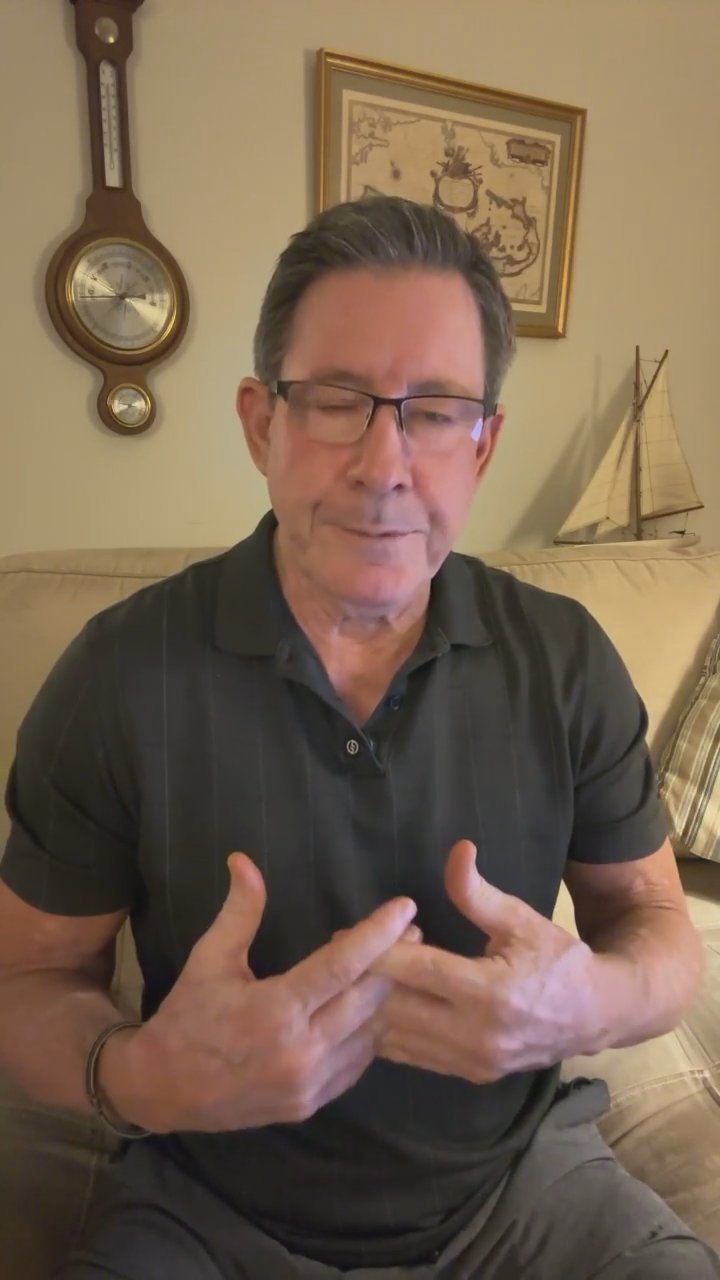
Please join me for encouragement and practical strategies to help you tune in, plan, and be your best no matter the challenges.
I'd like to actually start by thanking cadre and thanking Nikki in particular for the theme for both this month and particularly for this week. I think it's very timely. And I've found that as I've been preparing for our time together for your Resil ience Coaching Studio that it's been very enriching. There have been dots that have connected for myself and therefore I'm hoping that our time together will connect some dots for you as well as we explore this whole idea about personal safety and community.
I am Rick Graham. If we're meeting for the first time, if we're connecting for the first time, I 'm glad you're here. I look forward to getting to know you. And I'm a holder of hope for you. It's a phrase that I love to say, I love to hear it too. It's so encouraging. And as I welcome each of you here, I'd like to share a few thoughts in terms of what we're going to experience together in this, which comes from the pages of plan to be your best as you navigate pain, a way to transform a journey of pain, whatever the pain may be, to a journey of resilience.
And Jung Fujaki, I love that. And you're the best. I'm so glad you're here. Good evening to you as well. I'm here in Metro West Boston, Massachusetts, where it's been a chilly but beautiful late summer day. And speak one or a Kathy, good evening to you as well. Hello to the entire Andre family as well. So what does it mean? And I'm going to look at some notes periodically because I found, and Kathy and I were talking about this, there's something quite powerful about the experience, the time that we spend preparing for sharing a message, preparing something that's going to have some life application for us.
The process of preparing can be extremely rich. It can be very energizing and be very fulfilling. And I hope to convey some of that have you experienced, some of what I've just experienced as well, I've been preparing for this. It's really been very timely. And I've got this question for you. What does empowerment is safety mean to you? What does that mean to you? Empowerment is safety. Let's take a look at those two words. Let's start with safe. If we're not feeling safe, and let me ask you to join me in picking one word and sharing it if you would, or give it some thought, tune into this.
And when you're not feeling safe, what is the, what is that position? What is that emotion? For me, one of the first thoughts, it means I'm defensive, I'm in defense mode. If we take a look at, are you familiar with both the sympathetic and parathic nervous system in the way that they interact with each other? If we're not feeling safe, we're going to be in that fight or flight state. And I feel, I'm aware of how I'm being in a defensive state, I feel defensive. I might even communicate, and we'll think in terms of being defensive.
What word comes to your mind? Yes. Now, back at you, Kathy. Thank you. The preparation phase is a gift, isn't it? Each of you are gifts. Our time together is a gift, our community is a gift, and what we will see is that when we are empowered, this is the primary point. When we are empowered, we're empowering not only ourselves, but there's a way in which we can bring that into being with each other and into community that provides a lift, a strengthening, a greater resilience for the community in general.
The fear of the unknown, absolutely. That's, for example, when our sympathetic nervous system is triggered when we are startled with something new, or there's something maybe even offensive coming our way. We all of a sudden are in a state where we don't know what's going to happen. And as we tune into this, thank you so much for that. What might there be right now in this moment? Let's tune in using the three steps of resilience, tune in, plan, and be your best. And through the plan step and be your best step, we'll see practical ways that we can empower ourselves and empower our community at the very same time.
What one word might describe or a phrase is there something that you feel unsafe about? It might be an emotion. It might be a circumstance. It might be something that is unknown about the future. Is there something that comes to mind? The idea of feeling vulnerable, so true, that in that state of feeling unsafe and vulnerable, we can have fears, we can worry. And the idea of all of those emotions and thoughts that come along with that which makes us feel unsafe to begin with becomes additional layers of complexity and more to navigate.
That fragility is on top of that initial spark of whatever or trigger of what makes us feel unsafe. So as we tune into, let me share a couple of stories with you, and then let me know, share a story with a phrase or a paragraph even if you'd like to. Surgery number seven on my left knee, I went into it with almost no fear compared to the first three, first six surgeries. I remember in particular going in for number six, it was going to be a total knee replacement. I had a lot of fear. This is obviously going to be a major change in my life.
And I remember being in the prep room before going into, even before they gave me medications through the IV to calm me down. I was getting more and more nervous, more and more afraid, and I started getting to the point where I feel like I'm on the edge of the cliff about to completely freak out. However, some years later, for surgery number seven, I went into it with a tremendous amount of calm primarily because of one particular thing that I did. And we talked about this recently, and it completely changed that whole dynamic .
It triggered the parasympathetic nervous system in a way so that I modified, I changed the environment inside and it changed the environment outside. I'll share that with you in just a moment. Can you relate? Is there anything that you've experienced that is that you can relate to? That is something that you have experienced yourself, Kathy. Thank you, anger. I feel unsafe when upset, very true. The more upset we are, the more out of control we are. The stronger those different, what do I want to use?
The way the brain is firing, the different parts of the brain is firing, can create an escalation of that sense of feeling out of control. The stronger that sense of anger, the less control we have. It's probably fair to say that there are a number of different things that we can point to. For example, whether it's fear or worry, and the greater the pain, if you will, the more out of control, the closer we can get to being out of control. As you've heard me say often, the level of pain needs to be matched by the level of intentionality.
How do we become intentional with this question, of looking at ways of empowering ourselves that leads us to feeling safe, and in such a way, live that out, that when we bring that to our families, our friends, our community here at Condre, we're actually lifting up the community, we're bringing resilience and we're sharing in the resilience as well. And I'll get to exactly what that looks like, a couple of different things that you can do. While I will keep on putting my glasses on and taking a look to see if you have any questions for me as I progress now from the tune in phase to the plan phase.
This is where we actually go into taking a look at two of the eight paths of intentionality, especially if you're a contributor and perhaps a resilience coach or a coach or a counselor like myself. You're getting a first experience in terms of how this communications professional takes a look at navigating as I'm making progress with the book, navigating how I communicate different aspects from the plan to be your best method. And I've just recently changed, I used to call the eight domains of thriving, and yet I've been doing some work on the book in such a way that I wanted to make sure that I'm being as clear as possible.
We're all on a journey, I refer to the journey of resilience, trading our journey of pain for a journey of resilience, and therefore, instead of domain, what is a domain ? It can raise more questions than it answers. So I wanted to simplify. We know what a journey is, we know what a path is. And so instead of a domain of thriving, if we have to answer those questions of how do we be more intentional, if indeed, the greater the pain, that pain level needs to be matched by a level of intentionality, that means we'll find out how to be intentional.
So there are two of the eight paths of intentionality that gives us very clear resources for insight and for energy of how to be intentional when we are feeling angry, when we are feeling unsafe, when we are even perhaps feeling unsafe by what other people are doing and saying around us. One of which of the eight paths of intentionality is to serve, plan, invest our acronyms and the S in best stands for serve. If we are intentional about being service-oriented, servant leaders, all of a sudden we are actually acting and thinking in a way, thinking and acting in a way, and even feeling that all of a sudden it's not about me, it's not about us.
And this was the key to my feeling very calm going into the seventh surgery on my knee. I went in and I was, I shared with you recently, instead of talking about and thinking about the surgery and what I'm about to experience, all the pain that comes from it and so forth, I went into that being service-oriented to virtually everyone that I met, beginning with the very first administrative person who was checking me in at the hospital down in the lobby with a question. That question was, as some of you heard me say before, what do you choose a path in healthcare?
All of a sudden I've reframed the focus, it's no longer on me, it's now on someone else and I'm showing interest in them. By virtue of doing that, I'm practicing not just in that sur path of intention ality, I'm practicing detachment, I'm getting out and away from me and all of what I'm thinking about. So Jungfu Junky, thank you for sharing this, let me read it so that I can take up every word, you had both of your knees replaced, the left knee was your first, I was nervous about that afterwards and I wouldn't be able to walk but the second one, my right knee, I didn't have that fear, I'm very good, there you go.
You certainly had the experience, it was no longer a first time experience for you and you were able to go into it, so let me read further, you learned by trials, yes , that my left knee had helped me know what was going to happen with my right knee. So there's a lot of insight, thank you very much for sharing that, there's a lot of insight and just to share with you, perhaps I don't mean to repeat myself but this was a partial revision of the total knee replacement from 20 years before and it's been about six years of these six years next month and the knee is basically in a state of trauma.
I experience random blasts of agony every day and it's usually my baseline is where it's perhaps one to two dozen times a day, it's absolutely overwhelming pain, it's heightened lately, sometimes it can be close to, lately it's been sometimes about a dozen an hour and so it's overwhelming, hopefully one of the next things I'll be trying will be a solution for me, it's going to be a one week trial of a spinal cord stimulator, we'll see how that goes but I'd love to stay in touch to know more about your story and how you're doing, we can encourage each other as survivors where we thank you very much for that, thank you for that encouragement, that was, if I may, word encouragement and encourage is another one of the paths of intentionality is an art form, you have a gift for encouraging and that encouraged me which feeds me energy, the idea of doing more encouraging, sharing it, giving it, elevating the way we encourage ourselves is something that's part of something that just began this past Sunday, the first and third Sundays of each month, it 's free via zoom at three o'clock eastern, the take heart, encouragement and resilience in action, we take a look at one or two brief facets of the plan to be your best method and then spend half an hour to 45 minutes simply experiencing the goodness that comes from, elevating and strengthening the way we encourage ourselves, we feel the lift of encouraging others and each of us feel the lift of receiving encouragement, thank you so much for that , let's, the nice thing about saying that you are a survivor, you're making a statement, this is one of the most powerful forms of encouragement, it's an identity statement and we are connecting in that, Kathy shared with me is something that I like to share as well, I'm a holder of hope for you, this is who I am in a relationship to you and the way I am in our connection, I'm a holder of hope for you and so as we move into this, are you experiencing pain now, I'm actually quite uncomfortable, I can tell that a blast almost came in about 10 minutes ago and we'll see how I'm doing, I want to see a couple of clients today, about 15 minutes from here and I'll tell you very candidly, it was an overwhelming pain, I was having in one particular meeting, I probably had about 10 blasts of pain where I am doubled over and moaning and writhing, I quickly come out of them, the pain leaves, I am in those moments incapacitated and I, about half an hour before our starting, our time together, I had just spent an hour in bed, I needed to, I was at the point of just about collapsing, but that was a very refreshing hour and so I'm here good and as I often share with you, it's actually in the course of doing this, you know, encouraging you and the conversation that we have, it really lifts me up and so I'm feeling energized from that.
Take Heart is, you know, thank you so much for attending Gabby, it was a powerful time and it's, I've actually had felt the lift from that sense, you know, of course that was Sunday, that was two days ago and thank you again for that, the idea of how we were comparing notes on the value of the goodness, the goodness of what happens when we are preparing for something, we are immersed in it and so Jungfu Junky, I love saying that, Rick here is some insight for you getting both knees replaced, was the best decision I ever made, I, best decision I ever made, I no longer have the pain in them, that's wonderful, waking up with my knees, a ching like, like a too thick, I know it, I know it well, the, I am, I am full of hope, the, my, what I'm experiencing, I generally don't like to use labels but it's acute high impact chronic pain and, and I'll say this, it's profoundly affected my, my life, my quality of life, I, I get out truly just once a week to see clients on Tuesday, otherwise I may, sometimes I can't even walk over to my mailbox, to get my mail but I will generally get there once a week, so the, the, the physical limits have been profound, and that means there are layers of them with a mental journey and the emotional journey that I am practicing daily and sometimes minute by minute, some of the different facets in the plan to be your best method, so this is a journey of, of more than just resilience, it's a journey of not wasting the pain, it's a journey of using my pain as a form of purpose and mission and there is healthy pain management in that, I'm so glad you've got your success story and, and that then, more and more people need to hear your success story, Kathy, your success stories, my success stories, that's one way in which another way in which we can be practicing agency and showing up, and this is really creating those connections of the dots I wanted to, hopefully we would all see that by, we, by approaching our being safe, on our safety, with agency, with intentionality, with detachment, with some healthy objectivity and emotional maturity, we're able to bring that resilience into community and experience stronger connections and that can flow right back to us.
What else might you do that actually does that? That, that is, how do you empower yourself? What works for you? How do you empower yourself? Are there certain things that you say to yourself? Certain things that you practice, certain emotions that you, you pick such as an attitude of gratitude, it's a journey of not wasting the pain, you know, and that, you know, I, I could go any number of different directions on this. I talked to a family member yesterday and with this particular family member, I'm very candid.
This person is very compassionate, knows how to be em pathetic. There are some people, including family and friends, that I can't talk to about , I can't describe the pain to, because they, some of them will react in different ways, ranging from recoiling to not saying anything. If I have pain and people see it, most people don't know what to say, and it's, it's very disruptive. So part of one of the things that I practiced in, in, in my resilience toolkit are different strategies and next steps.
As I apply the three steps from resilience to keep everyone and myself not stuck in the moment, which is so easy, but going with the flow and moving things forward. I want to share with you, if I may, another, yes, prayer is, is powerful. So Kathy, thank you for that. One thought I'd like to share with you, if we look at different religions, whether it's Islam, if you look at Buddhism, Judaism, Christianity, they all share a very common thread when it comes to this topic of safety. And let me put it to you this way.
If we look at our, the worry that we have, when we're not feeling safe, inherently, we are worried. And if we look at what the Bible says about being worried, the answer is to trust God more. There are some who would say that our, our worry is a reflection of the lack of trust in the moment, in our God, our Lord, our power. And so the answer is to anchor in that faith, to anchor in the trust. And that is a step, sometimes it 's described even in the Bible or in other religions, has that step towards exercising emotional maturity and detachment.
If I put my trust in my God, my higher power, my Lord, I am taking what I feel I'm, I'm safe about, I feel worried about, I'm giving it to my Lord, and then I 'm no longer carrying it. I am now detached from it. And that's a form of practicing agency as well. When we bring that confidence, when we bring that faith, when we bring that resilience into our community, we are able to share that and it empowers everybody and empowers our relationships and community. Being outdoor, outdoors in nature is so true.
I was enjoying just this gorgeous blue sky, sort of a unique, uniquely clear blue sky here in Massachusetts today. And it was very common. Let me just read so I capture everything that you're sharing with me and I'm so grateful that you say to yourself, get up out of bed to go see and hear Mother Nature. Yes, very good. m. morning walk. That's awesome. One of the things I look forward to getting back to, if I can, is getting up even before sunrise and going fishing. It starts the day in an entirely new way, especially if I'm on the saltwater frog down in Cape Cod.
I will tell you, if I may, I'll post this photograph of, I think it's a 42 inch striped bass. Yeah, it's this big in Cape Cod canal and I went on to do some more fishing in Cape Cod Bay in the town of Dennis. It's a suet harbor. I was out on this jetty . It's about 100 yards long, 150 yards long. I was halfway out there. And perpendicular to me, there is a stirring in the water. It's not yet sunrise, about 15 or 20 minutes before sunrise. It was a great white shark and it was a predation taking place.
It was probably chasing the best that I could tell a striped bass. The one I was hoping to catch was on a remarkable site. There was one other several years later, just a few years ago, I was on the beach of Cape Cod Bay in the town of Sandwich and I saw about 200 yards off the beach. A great white shark breach at a 45 degree angle or a remarkable site. It's also one of the reasons why I'm more hesitant about swimming. I don't feel safe swimming like I used to. So, getting back to this, I didn't come here to tell you that, but thank you for letting me share that.
And let me take a look at your notes. So, that morning routine, what a foundational way to start the day. It stays with you, doesn't it? Can I share with you something very personal? There's been a person in my life who has, for years, harassed me . I severed ties with a person about 15 years ago that that didn't stop the harassment, the abuse, the personal attacks, sometimes online, most of the time directly. And then the person finally stopped a few years ago. 30, I had my phone, made a noise, an alert came through, and there was, for the first time in a few years, an offensive message.
And I had that same emotional reaction that was so familiar with experiencing this for so many years. But one of the things that I applied was something that I've learned to practice more and more. While I was having those mental and emotional reactions to that come with anyone being offensive. And I thought about, basically, more than just detachment, but a recognition that what that person is doing, what this person is communicating, has absolutely nothing to do with me. Is there anyone in your life who says things acts a certain way and it's a trigger?
That breaking out that pain that that person is trying to create is saying only things, revealing only things about that person, their pain, their need for acting out a certain way to try to create pain. It's been said that hurting people hurt people. And so this topic was very timely for me because it helped me get to that point of embracing that reality, the truth, that someone who is acting like that and whatever they're saying, whatever they're saying, whatever they're communicating, has nothing, has absolutely nothing to do with me.
And likewise, this is a way of going from trading that feeling not safe, for empowering myself to feeling safe. And I share this as an example, a reminder for myself to describe this reinforces it for me, but also to raise a question for you as well as a suggestion. What would it look like for you to empower yourself in that way for anyone, for yourself, who you might have someone in your life who has or still is or ever does say things act in a certain way that triggers a feeling of your being unsafe?
Did you need a bigger book, Jaws? That's excellent. So fortunately, I was on this jetty. Great line, thank you. That's awesome. I think my favorite line in that movie and probably the best, most popular line in that movie, you're going to need a bigger book. But I should tell you, even being on a jetty, only a few feet from the waters, one of these massive jetties that's built by the Army Corps of Engineers decades ago, and it shapes this Sussuet Harbor, I still felt somewhat unsafe. I kept an eye on that shark.
And it was about 100 yards out from the beach, as I'm about 100 yards out from the beach. There was a fisherman about maybe 20 yards into the water, wearing waders, fishing, and I was keeping an eye on the shark to see if I needed to warn him to get back onto the beach. But sharks will breach, and I thought I could potentially be in an unsafe situation. It's not impossible for a shark to leap, even enough to get to my legs in that situation. But thank you for that. Light moment and good laugh, that's excellent.
This makes my heart heavy for you. You're right, that person is in pain. I know a great amount about this person and the pain that they are carrying, and doesn't know, unfortunately, it is someone I pray for. And in fact, one of the things that I did was pray last night as well as I looked at it again this morning just to see if there's something about it and I wanted to check to see if it was public enough for my family to see it. And the idea of praying is a form of taking that worry and that stress and putting it in the trusting hands of God.
And I pray for this person because this person is so hurt and so unable to address what hurts, therefore unable to be as intentional to empower themselves to practice agency, to be able to navigate life for themselves. It's sad. It's a shame, yes , that there isn't an awareness for verbal bullying because it's the worst. It's worse than physical, only because it plays on a person's mind exactly. That's the thing. It is a trigger. When it's verbal, it is verbal and emotional and mental abuse all in one.
I have been physically threatened and to hear that verbal, I think I'm getting too personal here, but I will share with you something that I practice. It's something that I know others have come to me and say, how do I get that detachment? I believe actually it is considered the highest form of emotional maturity to be able to practice that. And while I believe I understand the concept, I prefer to use the term either attached detachment or graceful objectivity to be still attached to an aware of my feelings, to be able to be connected to other people's feelings so that I can care for myself and care for someone else in the moment.
There's one particular time when this person is standing and threatening me and I was able to embrace that attachment, to such an extent that I felt completely unfazed. But I want to go to your point and I'd hope that maybe we can address this in a series, that kind of awareness that you're referring to, it is needed. There are so many needs that we have. In my imagination, I can draw a circle around the offending person like an invisible force. Yes, this is a great visual. It's a pity, a pithy little poem I love.
He drew a circle that shut me out, but love and I had the wit to win. Oh, I love this. We drew a circle that shut him in. Yes. So that's fantastic. Please, what is that from, Kathy? I'd love to know. Can you read the poem in your next live? Please, yes. Ow. So that, that pain is real, but my resilience is alive. And this gives me a chance to say, what does your resilience look like if you think of it as being alive? And if it's alive, if it's a living thing, how do you feed it? If any living thing needs energy, any living thing needs water, any living thing needs food, it needs homeostasis.
What, what does your, and this will actually be the part of the three steps of resilience, where we're still in the plan step, what are the things that you can choose, you can embrace, you can apply that empowers you to strengthen your resilience in the moment. I feed my, the energy of anything alive needs energy. Then I, that's what I go to first and foremost. Everything about feeding my energy, the energy to deal with the pain is exactly what we're doing here. It is putting on an attitude of gratitude.
Sometimes it is saying a prayer. Sometimes it is just simply saying, I've done this before. I can keep doing it again. And that 's breathing breath into my resilience. So one more thing before we go into the beer best, the out of the paths of intentionality, the idea of one other, one other path to mention, there's the serve one, but then there's also the triumph one, where we celebrate the true, even the smallest victory. And if, if in the course of looking to empower ourselves and celebrating resilience, just as I had that shot of pain, but I'm able to quickly keep on moving forward, I'm going with the flow, I'm not in the fight.
I don't, I stay away from the fight. And there's energy that comes from that. It's also creating patterns, new patterns of repetition that makes my resilience more confident and stronger. So, and then my question to you is this. And let me just catch upon your wonderful notes. I wish I could give credit to the author. No idea. Why don't you take credit for it? I never heard it before. My main resilience is to let nobody steal my happiness with thunder. Good. Good. That's all yours. That's all yours.
So true . You know the idea, I made a few notes here. I just want to take a look and see whether it's from the serve, path, or the triumph path. Perhaps just like your example of the calmness that you had going into the second knee replacement surgery. In so many words, let me know if this rings true to you. In so many words, you're saying, I've done it before. I can do it again. There 's a confidence, just like saying, in any situation, any situation, what if we put on and wear it like a coat, the idea that we can approach it saying, I trust myself to know what to do in the moment.
Come with me. You are able to go into that second knee replacement surgery with the knowledge and the experience and that boosted your confidence. You knew you've done it before. You can do it again. You've got the confidence to be able to say, I can go into this. And if you can go into that, that kind of confidence, there's a tremendous amount of life experiences that you'll have where you can go into confidence, into it with confidence that in the moment, I'll make the right choices that I need to make.
Come with me. Good intention. This is so much about intentionality, absolutely. And the one thing, Kathy, the idea about that circle, without a doubt, nothing's easy. And there's no perfection in this. There's no perfection in pain management. There's no perfection in resilience. But as I like to say, but it's in the practicing that your best gets better and your best is greater than the pain. It's in the practicing that we realize a strengthening up we can get through it. And then when we bring that resilience into a community with intention, with that sense of service, we're lifting up the entire community.
The idea of that circle, Kathy, in that one particular moment that I was referring to went on, I'm being threatened in that wonderful calm that I've had. It was a circle around me. I felt safe in that circle. I didn't feel detached from this person. And I knew that the more calm that I was, it was going to help calm this other person. It was a horrific moment. But the calmness, the peace, the empowerment was creating safety for both of us. So what more might you do to moving forward? We spent most of our time together in the plan step with thinking about different options, what works, what might work for me.
It might not work for you. Your resilience, your empowerment is uniquely yours. And the answers to some of these questions, maybe the answers to all of these questions, the best answers are going to be your answers. We learn from each other. We share and encourage each other. But as we move into be your best, what might be one's wall thing, some nugget that you'll be practicing for the days and weeks ahead to empower yourself? For me, I'll be thinking about this time together, this conversation, because it's reinforced in a very particularly good timing.
This other person might keep coming back again more frequently with abuse. I'll name it for what it is. But I'm sh ored up. This is going to last for me. And actually, I have not written for the book much on this. I'm still at a point where I haven't written everything that's to be written about the serve half of intentionality. It's all outlined. I've got so many little pieces of content that are coming together. You wouldn't believe it. And so I've got a lot of work ahead of me, but this conversation, the time I've spent preparing for this, is basically written a good portion of another chapter too for the book.
So, Nikki, I thank you. And speak wonder and junk food junkie. By the way, I just bought Tostitos. Tostitos? A flavor that I think might be their new flavor. I try not to eat too much junk food, other than dark chocolate. And scoops and pepper jack cheese with jalapenos. But it's a flavor that's like super loaded taco. I had read some months ago that I think Doritos came out with a new flavor. Do you know what it is? Are you a nerd on junk food like Kathy and I are on words? So, that's actually, I would think, your choice to not retaliate is disarming to the offender.
Yes. In that, it worked that time. I will say I know , and even with other people who can be more excited and aggravated by someone else not getting into the mix and agitated, part of what they're trying to accomplish is agitated to trigger some or action that feeds certain types of people. And it gives them a sense of, in part, a lot of it has to do with control. Sometimes being calm will magnify, amplify. They're the problem that they have with controlling themselves. It worked up that way. So, all I like that word, short up, that's good, that's good.
I'm going to do something very uncomfortable. Look in the mirror and speak affirmations over my own self. I want some of the courage to do that. I do, as well, have you ever looked at yourself? I believe, I got this from Brian Tracy back in the 90s. I looked at myself in the mirror, started practicing it, and it was remarkable. I just looked in the mirror and said, "I like myself. I like myself. I like myself." I believe we ought to say even I love myself. If we are to even do what is that greatest command of God and love others as ourselves, that's what's good and honorable.
It's worthy to begin right there. I love myself. I'd love to know, Kathy, what you say to yourself when you do and what you experience. And so, the junk food junkie name all good. I wanted to read this by grandpa because I was going around singing Larry Croci song junk food junkie. That's priceless. That's a great story. And so, it reminds me, I'm thinking of, I want one nickname I had back. I loved physical humor. I still do. Like Dick Van Dyke. I used to love to do physical humor. People started calling me stunt and especially back in my high school and college.
Sometimes, just like a fish story, I'll share with you a couple of some stories I can't tell, but that's great. I need to get back up, not familiar with the song. So, is that Larry Croci's or is it Jim Cro ci? I'm not sure if I know Larry Croci's. I know that song. That's going back aways , isn't it? So, let's wrap up with this. In terms of now we're in that, we tuned in, step one. Step two, we planned, did a lot of planning. And the planning process for us here this evening has been rich. I believe that there's more goodness that comes from planning than there is in simply having a plan.
But I believe in both. I need a moment for her, like this past. The be your best is about taking action, choosing something from that plan step and following through on it. We are at our best when we are in action. And there's that wonderful quote that action is the foundational step and all success, something like that. Picasso, perhaps, I can't actually recall. But when we take action, then we are exercising our best. Our best can only happen in an active time, in the now. Okay, good. I'll find that on YouTube.
Thank you very much. Excellent. And let's be sure to connect. I'm not sure if we are. And keep this conversation going about junk food, chocolate, empowerment, and resilience. So, take that, be your best. Be resilient. I believe in there is empowerment in sharing your, your being your best in action within the sense of in community with others. I believe there is growth and strength that comes from it. And there's something contagious about it when you talk about what you're doing to be resilient.
Both when you speak of it, you're experiencing it. When you're acting on your resilience, you're also modeling for, for not just others , but your own inner sense, your soul, your spirit, your mind and your emotions. They are watching the actions that you take and forming reinforcement for it. And even to the point of as in the triumph path of intentionality, celebrate it. You'll be more able likely to repeat it over and over again. So, I wish we could drop DMs inside the contract. Oh, yes, absolutely.
Absolutely. Good idea. So, here we are. I thought, all right, maybe this will be for 15 or 20 minutes, but I want to thank you both so much for, for being here, for this wonderful conversation. Now, you feed me and like to, for those of you who are watching, or if you watch the recording of this, I want to invite you to take heart, the encouragement and resilience in action, the first and third Sunday of each month and three o'clock Eastern in the afternoon, half hour, 45 minutes of experiencing what it's like to enjoy and strengthen your own encouragement and feel the lift of others encouraging you and the way you inflow, you encourage others and have that flow right back to you and feel that lift.
com. I'll post some some information about it with links to it. Sign up and you're able to come anytime you want as often as you want or as infrequently. I just invite you to come as yourself and then leave encouraged. Let me just check your notes. Speak one or nose. This is the cadre fear. Yes, I do post on Tuesday's good. Tuesday's food for thought. Oh, I like that good. So I'm sure I've seen some of your recordings. Tuesdays are tough days for me, but I'm one of the things I want to do and I'm open to ideas.
I want to be more and more supportive of everyone on cadre. I'd love to know what works for you. I started in June and it's been a transformative time and I know that positive transformations are going to continue because of cadre and because of you. So thank you all very, very much. So I've been parked at DQs and Dairy Queen. So I could interact in this live stream. Oh, I haven't been to Dairy Queen and so long. Do they still serve brazer burgers? Yes, definitely get yourself a treat and have a wonderful, blessed evening and rest of the week.
Thank you all so very, very much. I'm going to sign off now. My knee is saying get up and move a little bit, so I need to do that. And I'll again say thank you and sign off for the evening here, speed pointer. Their fall blizzard pumpkin. Oh, it sounds so good. It sounds, I can't believe it. I love, you know, autumn is beautiful here. As for all of us in the northern part of the US, it's a fantastic season. Cool of nights, warm days, the fall foliage and it's a splendid time. It really is. I'm going to sign off now but not without saying again.
Thank you. I think you're the best. Remember, your best is greater than the pain and I look forward to seeing where your resiliency and where your empowerment takes you. You take good care now.