What happens when you hold it all in to make others feel better? How might we heal, share and show up
On Friday, every other Friday, I come out here as another conversation point for us to have a discussion around grief and the grief process. What does grief look like? And how might we redefine what that means for us?
Our conversation every other Friday is around the grieving process. Jean: How do you feel? Take a deep breath in, allow yourself to expand your chest and heart space. There are many ways that we can feel.
When we think about grief and having a new definition of what that looks like, there's a lot less stigma today about talking about sadness and grief and that loss. It's really hard to talk about grief to someone who has yet to experience grief in a big way.
Andy Cohen: I lost my mom and dad. He says the grieving process sometimes happens and starts early on, redefining grief. Cohen: How we have those conversations allow us to evolve our relationships in a way that goes from something real to something real.
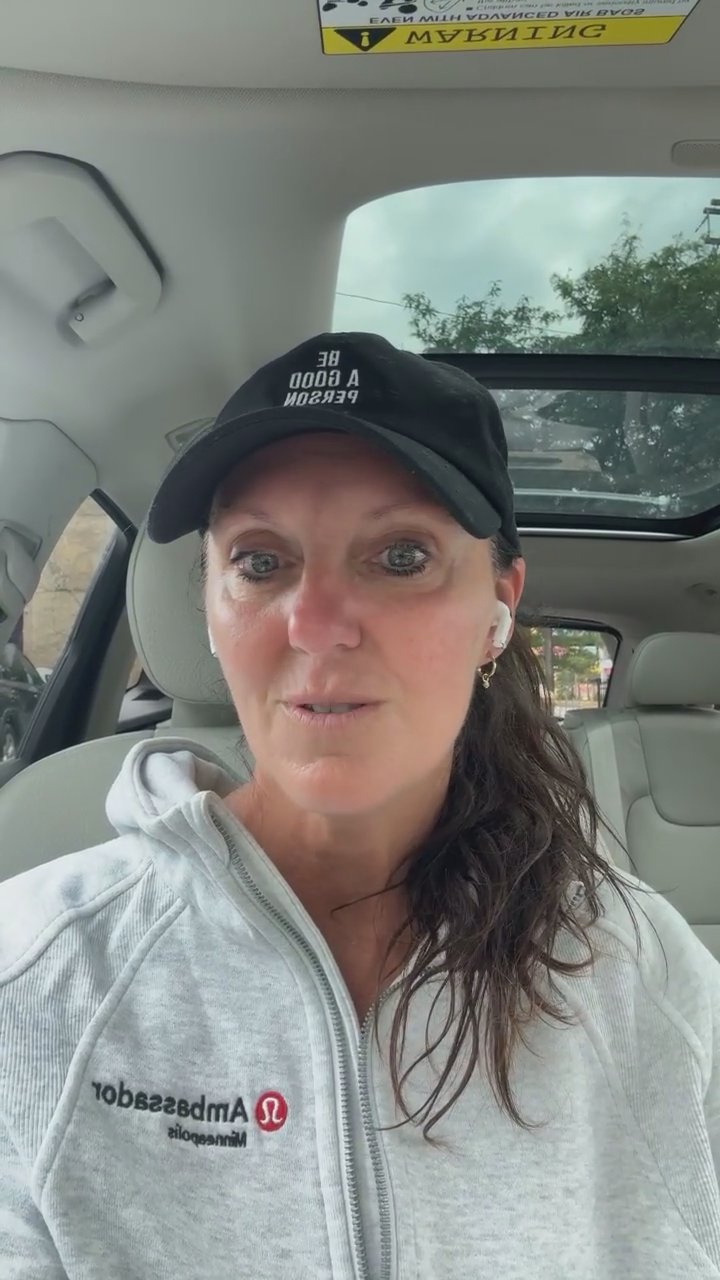
Hello, everybody. Happy Friday. We're here. We've made it. We've come a long way. My name is Jean. If we haven't been together before, welcome. Welcome. To be on the journey of the car with me right now as I load up and load in. So on Friday, every other Friday, I come out here as another conversation point for us to have a discussion around grief and the grief process and really make it a safe, open space for us to talk through. What does grief look like? And how might we redefine what that means for us?
Hi, Jerry. How you doing today? Happy Friday. We're here. Hey, Zach. Happy Friday. Hi, Katherine. We're here. We're here. Happy Friday. My name is Jean. My name is Jean Nichols. I'm excited to be here with you guys. If we haven't been together before, welcome. I am where we all wear many, many hats. I'm out here on Sundays and Mondays, both with personal development and professional development. And it's great to see you, Andi. Mack, you're back. Hey, what's up? How you doing? So great to be here.
So when you come into the chat, my first invitation to you is to type in the chat. How do you feel in this moment? Like literally right now? How are you feeling? What are you feeling right now? I, Jean, am feeling a couple of emotions. I feel joy. I always, or not always, but often feel joy after teaching spin classes and working with our team and having conversations and ideas about what we can do for our community. And I also feel a little frazzled because somehow on this Friday, I've over scheduled a little bit.
So there's that. But for the most part, how do you feel? Take a deep breath in, allow yourself to expand your chest and heart space and exhale. I'll let it go. So our conversation every other Friday is around the grieving process and for some transparency, I'm not a psychologist, I'm not a therapist. I'm not any of those things. But I am a daughter who has lost her parents, her mom and dad, a father in law, brother in law. You know, we have lost people throughout time, and sometimes those losses can create holes.
But losing a person that we love isn't the only type of loss that we can feel grief for. We can feel grief for the closing of a business. We can feel grief for the loss of a job. We can feel grief for a friendship that doesn't serve us anymore and has disappeared. So there are many ways that we can feel. Now, I heard a statistic yesterday about emotion, and emotion is a feeling that happens in our body for about 90 seconds. It's what we do after the emotion that allows that emotion to have more life, to have more girth, more breath.
And when we think about grief, right, that grief can come in waves, comes in in different periods of time. I remember when I was a little girl, I'm not a stranger to losing family members. As a little girl, I remember I marked some ages. Ages were defined by the loss of different people from my parents. So I lost my grandfather when I was six and that was really, really hard for my dad and I. I didn't know how hard it was until I lost my dad. I'll explain that as a part of our story today as well.
Was 8, my dad lost his sister, so his sister passed away. And then when I was 10, we lost my grandpa, so my dad's dad or my mom's dad. And then when I was 12, I lost my grandma, so my dad's mom. So by the time I was 12 years old, my dad had lost his mom, his dad, his sister. That was pretty much his whole family. And then shortly after that, he lost his brother in law who he was really close to. So grief and watching people grieve is. I'm not a stranger to it, so it's a big part of my life. But what is fascinating about that is most of the time, and especially during the era of my parents, right, people didn't talk about that stuff.
We didn't talk about grief, we didn't talk about loss. We had this whole, maybe didn't even talk about emotions that much in that era. If I think about my mom and dad and my childhood memories of it, you know, it's not something that we've invested time in learning in how to process emotions. So we might see childhood behaviors as an adult. If we see a child stomp off in a, in a, in a fit as an adult, when they feel an emotion, they might stomp and slam doors because we're just bigger versions of a child, right?
But when we think about grief and having a new definition of what that looks like, redefining how we have that conversation, there's a lot less stigma today about talking about sadness and grief and that loss. And here's what I'm starting to discover. When I lost my mom and dad, as Zach can attest, I went really quiet. But I didn't go quiet because I didn't want to share my grief. I went quiet because I really wanted to feel my grief. I wanted to know what it felt like to grief and feel that loss as an adult.
Because as a child, I don't really understand it. And as a child, I didn't understand the observation of what was happening with my mom and dad, right? But I wanted to feel it. I wanted to feel all. And I wanted to give myself the gift of being sad if I was going to be sad on a given day, or happy if I wanted to feel happy, or space and time to breathe and be by myself and process and understand. Now, that doesn't always work for everybody, right? Because oftentimes we're not a party of one, we are a party of many.
And so we still have to show up to work. We still have to show up in our families or our spouses or friends. But here's what I have also noticed. And if you've experienced grief, you may have noticed this too. It's really hard to talk about grief to someone who has yet to experience grief in a big way. So in this example, it's really hard to have a conversation with someone about the loss of a mom or a dad if they've never lost a parent. It's. It's almost incomprehensible. But also it's the thing that we don't want to have happen, assuming we have good relationships with parents.
And that's not always the case. So if we make that assumption, whoever that parent figure is for you having the. The conversation of a loss and grieving that loss, our brain blocks that because it's. It's probably one of the few things we don't want to experience. So I found in my grief process that having those conversations, there are so many times people wanted to help me feel less sad, and I love them for that. You may have experienced that too. I love that also. But it's not about the absence of the grief.
If we don't feel it at some point in time, what are we doing? We're just packing it down. And if you think about a sink and a drain, you can always pack so much long hair in a drain before the drain gets clogged. And then what happens? You have to call a plumber. You use some really bad Drano to get it out, to let it go. So you have to use something to clean it up. It's the same thing with our griefing process, right? We as humans get really good at packing it all in because maybe we're afraid to share, maybe we're afraid to cry with somebody, or maybe there's just so much stigma around feeling sad that we don't feel Comfortable.
So when I say redefining the conversations around grief, what if we started to have that conversation with ourself about what it means to have the conversation and what is it that we really want to share? What is it they're asking for? And what if we said what we're asking for first? Hey, insert person. Hey, Zach. Hey, Andy. I need to have a conversation with you today. I'm feeling really heavy. And here's my hope is what you can do. Can you just listen? Because I just need to externally process and get it out.
If you set up a framework for a conversation, I found that people's norm to try to protect you, take care of you, fix it for you, falls by the wayside. Because now I've just said, here's what I need. So redefining the conversation, maybe it's a. I know you haven't lost your parents yet, but would you mind sharing with me what are the things that you would miss the most? Because here's what I'm missing. So it's a way to allow yourself to have a conversation with someone and allow them to be a part of the conversation with you, even if they haven't experienced the loss with you.
So I found that I had some friends. I felt like I was coming out of my grief phase. And I started to re engage and come to things. And one of them said to me, oh, thank goodness, you've been in the dumps for a long time. And I was like, taken aback because I was like, wait a second. I lost my mom and dad. Like, I'm sad. But what I recognized was the person that said that wasn't shunning the fact that I was sad for so long. Two things happened in that conversation. The first thing was they hadn't lost their parents, so they didn't understand yet what was happening.
And the second thing was is they find so much joy in my light that they were happy to see me breaking through. And Andy, I love that you said that even in your early 50s, you still feel like you're taking care of me. And they live in another state. I love that. Yeah. So it doesn't matter. Like, our parents will always be there to take care of us until they can't take care of us anymore. And you know that for me, there was a turning point. There was a transition point for Zach, I know there was a transition point where there's a point where sometimes you have to become the parent.
And that role reversal is really hard. And there's a reconciliation that says, here's what I want. Here's what it was before, and here's what it is now. I kind of miss what was. And so that grieving process sometimes happens and starts early on, redefining grief. And having that conversation, I went to a circle with people where every single person that was there had lost their mom. I'd never sat in a circle like that before. But what was beautiful about it was it didn't matter what age we lost our moms, we all lost our moms.
So we could share the stories of our moms in a way that still supported and lifted each other up. And it reminded me that no matter what, our parents or the people that we lose are with us. It reminded me that whether you lost a business or a job or a best friend or a relationship changed that. Grief happens. But the cool part about it is that will always be a part of our story. It will always be a part of me. My mom and dad will always be a part of me. My grandma and grandpa that I haven't had in my life since I was young will always still be a part of me and my story and a part of who I've become and who I've yet to explore.
But if I don't allow myself the opportunity to have that conversation, to share the memories, to share the tears, to share the joy, the laugh, to be okay laughing and celebrating life again, even though they're not here. Because here's what I know to be true or believe to be true. Whatever happens next, we always get that choice on what we get to do with our emotions. But the more we pack it down, the more it's going to get stuck. And when it comes out, it's going to be explosive, and it's going to require something big for it to break.
But also, humans have a greater capacity to hold empathy and have that conversation with us, more so than we give people credit for. So oftentimes, we find that we're an island of one. But really, on that island, there are a bunch of pebbles, there are a bunch of rocks, there are a bunch of oceans crashing in and pulling things off from us. Those are our family, our friends, the people around us. And while they might not yet understand, it doesn't mean that they don't want to hear their stories.
It just might mean that maybe it's a fear that they have that they're not ready to address yet. So redefining how we have those conversations of grief allow us to still remember, but also allow us to evolve our relationships in a way that goes from something surface to something real. It allows us to have that connection. It allows us to walk into a space or a room of maybe cosmic Cadre people coming together in person for the first time ever and sharing something that feels like a loss, like a grief, and allowing that to happen in a safe space.
So how might we break our own stigma and our own fear around that conversation? And how might we maybe create something that people can feel safe in coming into the person that I went to, they created a daughter's brunch for people who had lost their moms. And then we celebrated our moms. I'm starting grief circles that will be sound baths. And we will do a cacao ceremony, which is a deep chocolate to honor people that we have lost as a way to help us feel gratitude for what they gave in our lives and feel grateful for an opportunity to refill that loss with something that might help us feel more alive.
So changing the dialogue, changing the conversation, allowing ourselves to really be in a space, feel seen, to, feel able to share in a way that allows people to connect with us. And maybe sometimes that just means that we have to change how we start the conversation. Because maybe the people that mean the most to us in our lives, that can help us heal, that want us to heal, maybe they just haven't experienced a loss in the same way that we have. So we need to help them a little bit to know how to serve us, how to hold space with us.
So I love you all. I'm so grateful that you came here today. I will be back on Sunday for some me time. I've added in secondary themes so that you can see a little bit more specifically what we'll talk about. Will be doing some coaching sessions this month, but mostly, mostly, if you need somebody to talk to and you just want to have a conversation about something you're sad about or grief or a loss, reach out, send me a dm, send me a note on here, add a comment or a post in the Cadre sphere, tag my name, and I'll come answer some questions for you.
Or I'll find a way to reach out to you. You want to find me on Instagram? I'm dream big 30. Come find me, send me a DM. But just know that we can have these conversations. But also recognize that maybe sometimes you need to take the time first before you have that conversation and give yourself permission to do that. Take what you need and then ask for what you need next. I hope you all have the best Friday. Get outside. Move your body be a good person. Be there for someone and just know that you're loved.
And later today, there are great people here to talk to you.