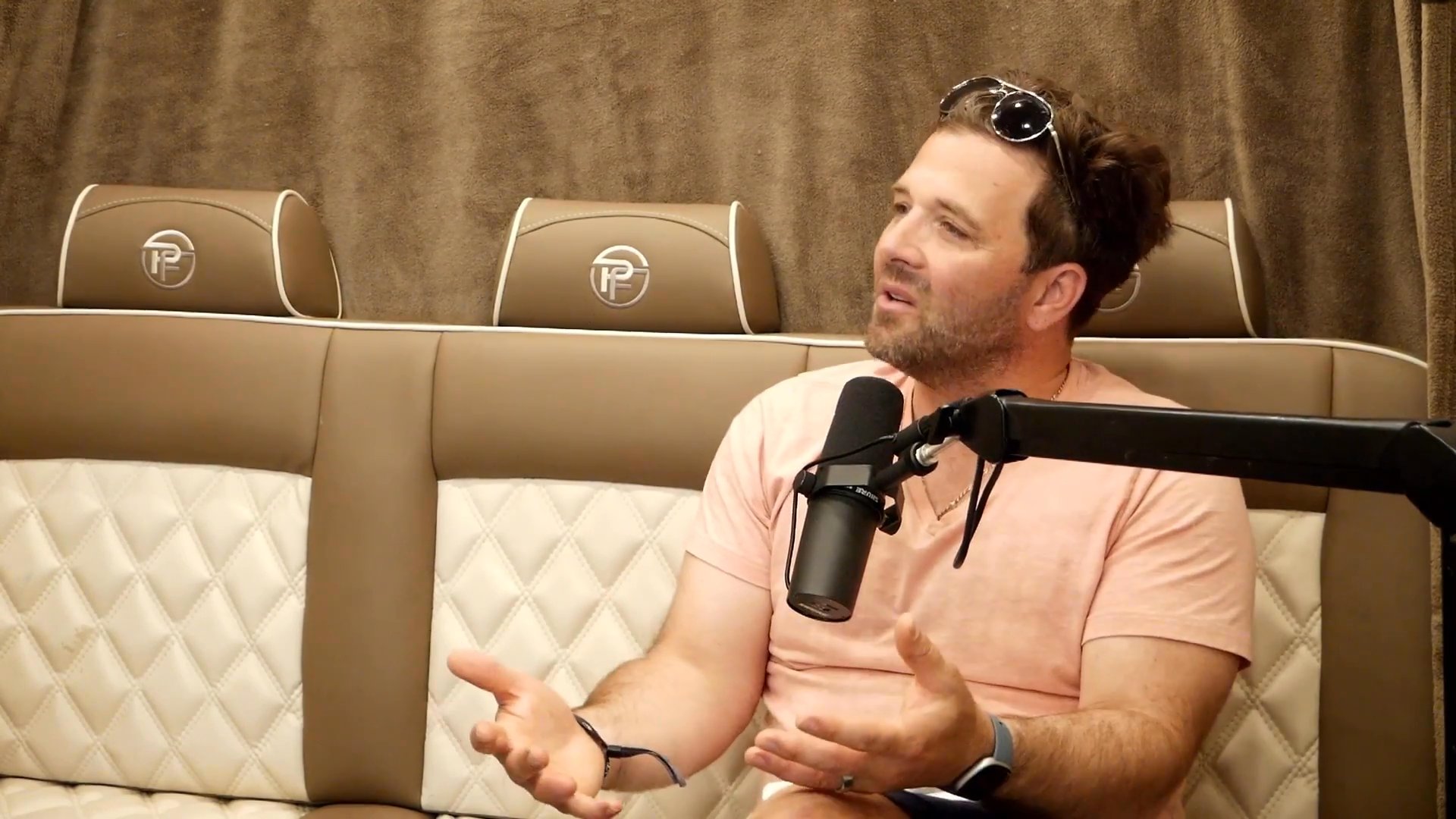
Join Luke and Jen in a conversation centered around sobriety, corporate drinking culture and their personal experiences navigating those territories.
This is season one, episode four of the Mental wealth podcast with the amazing Jen Virale. Jen is a powerhouse in the community. You are building this beautiful business that is, like, five years ahead of its time. I can't wait for you to share all about it.
In three words how do you describe yourself in your twenties? Edgy. Stubborn. Why edgy? Because alcohol gave me permission to be a little bit more out of my shell. By 30s, I landed what I had for a role with a professional organization. Alcohol became ingrained in my life.
Last year, it became so closely tied with anxiety and knowing that coworkers saw me in some of these experiences. There just wasn't a path or an avenue for me to get help other than be sent away. And that's what kept me kind of returns to use as I tried to get sober.
"I was so out of it with anxiety. What Am I going to say? And it was a topic that I wasn't sure on the subject matter " She says it's almost like imposter syndrome too. "You start this vicious cycle every single day "
She went the route of AA and it had its benefits. It also had some things that didn't work for her in terms of the sponsors. When did you turn this into saying, like, this is my lifestyle? And not only my lifestyle, I'm going to build a business around that.
I never went to an AA meeting for 20 years. When I first went, I cried. I often revisit that because I go every year. If somebody has a bad experience at a meeting sometimes, you know, try a new one.
Luki: What is one behavior that you still have today? That you would do anything to change, tweak, alter? Luki: Blame. Impulsiveness. Trying like hell to continue to be better for family, wife, kids. Those behaviors still arise.
Well, as you were talking, I thought of this, the one that comes to mind. And it's more of a feeling because I'm a cancer, and the feeling is not enoughness. It's good to be aware of feelings and behaviors. After my first year after becoming sober, it was. My word was attention.
Peace is my word and attraction is mine for this year. I find when I'm peaceful, I am so productive. The sober, curious movement, Gen Z coming into the workplace. It's ripe for the conversation of change.
You can have all these ideas and be like visionary, but you have to be willing to have the conversation of where people are at. And I think the mental health conversation is such a connected way to do that. It's not like your workplace needs to go alcohol free because that's going to get shut down.
Jenvorale: Is it in our purview as a corporation to address alcohol use with our employees. Her call to corporate would be event planners, HR leadership. She calls it non alcoholic advocates or people who want to speak up and have this conversation. When do you go live on Cadre? I am Tuesdays at 4pm Sober.
We had a sauna, sauna and sobriety event out at Back Channel Brewing. Right next to us, there were people having an alcoholic beverage. Josh's whole point is he created that space for community. He is disrupting in that space and. breweries should be looking at that.
I'm wide awake yeah, I was in the dark I was falling hard with an open heart I'm wide awake hi, my name is Luke Wetlandt. This is season one, episode four of the Mental wealth podcast with the amazing Jen Virale. I am so excited to have you here today. I want to share a couple things to the audience prior just so you're aware of who Jen is. Jen is somebody who shows up, who shows up consistently, who does everything in her power to make sure other people can be accelerated as fast as humanly possible.
You are a powerhouse in the community. You are a connector, and most importantly, you stand for what you believe, and you are building this beautiful business that is, like, five years ahead of its time, and I can't wait for you to share all about it. I'm lucky and fortunate to call you a friend, and it's also great to see your involvement in things that really matter, truly matter, whether it's the sauna community, whether it is the sobriety mindfulness movement that you're a part of and developing and building.
So I just can't wait for you to share all the above. Oh, wow. Thank you so much. What an introduction. Wow. Wow. So let's start with this. Take me to why you wanted to record the podcast right here on. Help me out with the name of the lake one more time. Okay. It used to be. It used to be Lake Calhoun. When we are in our 20s rolling through this area. But why here? Why was this important to start here? Yeah. Well, first of all, we were visiting an amazing new sauna community right on the west side of Badmakisa, and.
And I just felt like coming back to my 20s could be really fun. And when we looked for a location, I was like, let's revisit that. I mean, those. Those days, the 20. My, you know, drinking career in my 20s and how that intertwined with, you know, growing up and. And just being here in the Minneapolis, like, amazingness of this city. Tell me in three words how you describe yourself in your twenties. Edgy. Edgy. Stubborn. Okay. When it comes to alcohol, adventurous. Why edgy? Because I always felt.
Well, and this is. We're gonna get into this with alcohol, but I felt like alcohol gave me permission to be a little bit more out of my shell. I was actually pretty shy in my 20s, and I felt like I wanted to be this person who had an edge and was interesting and, like, I liked heavy metal and all these things in my 20s still. Yeah. And, like, a carryover from high school, like, small town. But Yeah, I just, I felt like I wanted that and I was always seeking something a little different than like the corporate career that was laid out in front of me.
I was like, I don't want that, but I don't know what else there is. Your, your corporate career, when did you start working in that? And just like take us through like your background of working, getting into corporate career, how long you were there, what did that look like for you? Yeah, so in my 20s, I think I had two different roles. One was at an insurance company, which is like why, you know, why was I drawn to that? But I was in the marketing department and there was a lot of travel involved and I loved that.
I did that for three years and then I left to go to like a dot com, like a, you know, know, startup within an advertising agency. And I loved the fast paced world of that. But that also kind of got me into kind of the corporate, I don't know, the drinking, I guess the piece of that, because that just seemed to be more prevalent in the ad agency world and the entertainment piece of it. And then by my 30s, I landed what I had for a role I had for a decade with a professional organization. And I was like the marketing and events person.
So I was always the person planning the events and making sure people had a good time, which meant, you know, drinking is like, you know, after hours conferences. And I think it just really became ingrained in my life. So it wasn't just drinking for social, it was like integrated, you know, ingrained in my work daily and events. Right. I was. When you were just explaining that, I was just kind of like replaying the tape in my brain and of corporate America, my experience in corporate America. And I was just saying like, if I wanted to be seen, I needed to be part of those events.
Yes. And not only if I need to be seen, I need part of those events. I needed to play the part. And more often than not, the culture was alcohol. Alcohol turned from happy hour to maybe a late night dinner to later happy hour. I've talked about that. Yeah. All of a sudden, before you know it, like showing up to work the next day became more and more, increasingly more difficult. But it felt like something I couldn't not be part of. Right. And then alcohol, like Red Bull, gives you wings. Like alcohol also gave me wings with my social anxiety.
Yes. Did you kind of sense those same things for you or. Absolutely. Did you see it from other people? I did. And I would say my last year in corporate was probably the most intense ever. And it was just because there were more events and with my coworkers, you know, coming into the office the next morning, everyone had experienced like the same party. So everyone was hungover and it was kind of like, oh yeah, last night. And it becomes like playing the tapes and it becomes like this accepted thing in corporate, which is different than drinking on your own and having like a night out with friends and coming into work and really trying to hide that.
So I noticed a lot of that. But I just felt like in that last year and the anxiety from the workplace culture I was in, I was dropped into just was not a good mix for me. And it immediately triggered daily alcohol use. I was, I was just going to say. And then life changed. Yeah, and life changed substantially. So take us through the. That you talked about your last year, which was really difficult and working through to ultimately then playing like six months forward and a year forward. What, what did that look like?
You know, they talk about like your pain to purpose. Right. Help us like understand from an audience like what that really felt like and what you went through to, you know, even be here today. Yeah, well, I think one of the things you just mentioned, social anxiety. So in my early drinking days, my 20s and 30s, up until this year at corporate, I was socially drinking, just having fun. I was like one of the drink. And my fun level just goes way up. But that last year, it became so closely tied with anxiety and I had never had that experience before is absolute panic and like knowing going into the work day, I'm going to make it through the day, but at five o' clock, you better bet, you know, I'm going to have a drink in hand.
Because it just was the cycle that. And I didn't understand the anxiety piece that was so new to me because I had sort of kept it together as a high functioning alcoholic, I guess, which is another term we can discuss. But that, that whole piece of it and knowing that coworkers saw me in some of these experiences. So like in the past I had kind of had those individually with friends. But when that was happening in the workplace, I felt ashamed, like next day after a big outing. And that piece of it was also a little bit.
What did I say? What did I say? Yeah, coming to work the next day just like in your cubicle going, oh, please don't come and tell me I said this to my boss. Or you know, I had a lot of. That was new to me and that was, you know, late 30s, like 39ish. And then I always cite at age 40 I just had like, just this corporate, like, a breakdown from just being in that space and just being at the end of my rope. Like, like just complete burnout. And at that point, I was like, how do I get help? And this is a lot of what I do now in the work that I want to do is that there just wasn't a path or an avenue for me to get help other than be sent away.
In my mind, I was like, I can't tell my co workers that I have to, like, go away to a treatment center for three months. I will never have a career. Like, my career is just over. And these are the things I told myself and. And huge part of the reason I never reached out. I mean, my husband at the time, he didn't. He didn't even know I was going through this extreme. Like, I shared it with no one. So that's. That isolation was horrible. And that's, I think, also just what, you know, kept me kind of returns to use as I tried to get sober, because I just didn't have a support network, nor did I know how to rely on other people.
I didn't really get that. Talk to me a little bit more about the social anxiety part and ultimately leading into the anxiety. And then you talked about, like, this vicious kind of cycle. I guarantee there's somebody that goes to work every day that does exactly what you're talking about and doesn't know what's going on. Right. Why is this happening? What is this going on? Like, just go a little bit deeper on that 8 to 5 of like, take somebody through, like the roller coaster so they can actually hear you to go.
Me too. Like, what is that make me go there? Okay, so I'm just going to pick one specific day that stands out in my mind where I knew something was extremely wrong. I was. It was a larger firm that I was the marketing person for, and I needed to present. It was like first Tuesday of the month that I needed to present, like, a marketing update. And I was driving to work. You know, I'd been on this road, you know, eight months, every single day. And I actually was so out of it with anxiety. I didn't.
I missed my turn. I didn't realize where I was until I was like a mile north of where I was supposed to turn. That has never. Had never happened. And I was just absolutely panicked. And what happened when I finally. So it was like an 8am meeting. So it's all early morning. And I had been nervous the whole night before. Just tons of anxiety. What Am I going to say? And it was a topic that I wasn't sure. I didn't have the confidence on the subject matter. And what I ultimately decided as I walked through the doors was I wasn't going to talk about that particular topic because I didn't have the confidence.
And ultimately no one noticed because I had several other updates. But I still felt that anxiety afterwards. Like I should know this. And why, why is this? Just the sharing of what my job is and what I know. Why is that so difficult? So it's almost like imposter syndrome too. Yeah. Yes, absolutely. And then after my share. So it was like an hour and a half long meeting and my share was maybe 15 minutes at most. But after I had anxiety about people coming up to me or just like not, you know, either not saying anything.
Like you would like a coworker, your boss to say, great job. None of that happened in this workplace environment. And it just was like a silent like, you know, and I put that pressure on myself. Well, no one said anything good or bad. It obviously sucked and I suck, you know, and you just get. You felt it. Yes, I felt it. And then you, you know, are working the rest of the day. But that heavy hangover from that anxiety. And this is like Tuesday morning, you know, like a winter morning like this.
Not a lot of bright spots. Yeah. Oh, not at all. And I, I would say this was my experience. So, um, I've told the story about working at Hazel and Betty Ford Foundation. So I had a 45 minute drive up and a 45 minute drive back from my home. And I would drive up and I would listen to meditation the entire way up. Once I would get there, I would park and I would listen to my, my boy, Michael Seeley. And I would listen to Michael Seely on YouTube for at least 15 to 20 more minutes just to give me enough energy to go into work.
And so that would go into work, I'd be like, okay, I can show up, see my boss, do all the things. All right, let's get to lunch. And I would always like, just get like, can I get to lunch? Can I make it to lunch? What's the very first thing I do out to my car? Like, my car was my safe spot. And I would do the same thing. I would listen to my boy Michael, and I would just deep breathe. And I'd be like, okay, four more hours. I did this every single day. So it's like this fight or flight mentality.
And it gets to the point where you don't know Anything different in your central nervous system is rewiring itself to say, I feel good when I booze and I'm okay, then I'm coping. Right. And then you start this vicious cycle every single day. And then even when I didn't drink, which was crazy, I would feel worse than when I did. Yeah. Morning before. Yeah. Because there was like. Yeah. Yes. But regardless, just saying like, I know how that feels. I, I've been there and it's this miserable eight hour experience.
And then you, you have to work and you have your responsibilities, you have your duties, key result areas, APIs, all those things. Yeah. So like all of that and then you finally said it. I'm going to do something about this. Well, someone said something and it was, it was more forced. It was, my husband at the time was like stressed. Like I didn't show up one night until like 3am and he was like, okay, I've had it, I've had it. We, our kids were little and that was like a point where he finally, I mean we had been married 15, 10, well, probably 12 years at the time.
And yeah, just to be like, there's, there's, you do have a drinking problem. I can see it clearly now. And also I think it's hard for a significant other to call that out because he also drank. But you know, his, everyone's drinking looks different. But I think he was kind of like, well, if I call her out on it, I'm going to have to look at mine. So a lot of couples wonder like, why does it take so long for someone that should know you so intimately to know that you have that severe problem, but it's such an isolated disease.
Again, I would tell him, you know, things are fine and from the outside I held a job down, I got a paycheck, I did, you know, we raised two kids and that was all happening. All within. That looked like success. It did, yeah. Yeah. And then from, from there you did you, would you say you went through the normal treatment path? Oh, no. Okay, let's, let's, let's. Well, so then hr, like I always say, HR didn't really know what to do with me. Yeah, they didn't know what to do with me. So it's, it was kind of up to myself to figure out, you know, what's going to be an option.
I looked at going to treatment. I was all set to go to a local treatment center. That's, everyone would know if I said the name. But my insurance didn't cover what I had anticipated it would I mean, it was thousands of dollars. And I'm like, that's ridiculous and copay. Yep. Even with everything. And we had good insurance. So that was my first red flag with like, okay. And I kind of was like, well, eff it, how am I going to do this? Like, I'm not going to pay to get sober. Like, so I did find aa and then I found a program that would cover, like, therapy sessions.
And I just really. I went the route of AA and it had its benefits. It also had some things that didn't work for me in terms of the sponsors that I was paired with. Just, I didn't realize it, but, like, accountability was actually a super motivating thing for me. Yeah. And when. When did you churn what you felt like? You know, AA is, we're giving back. We're giving back sponsorship, et cetera. But when did you turn this into saying, like, this is my lifestyle? And not only my lifestyle, this is a part of, like, I'm going to build a business around that.
Oh, yeah. That took years. I mean, I'll just take you through the whole, so ten years of sobriety. But prior to that, I had about a year and a half kind of back and forth, like stints of five months and, you know, just testing it out. Like, I don't, like, I don't know if the sober life is for me. Like, how can, how can does one do this? I just didn't see many models of, you know, women in corporate being successful, like with the label of alcoholic. So, you know, I finally kind of came around after a year and a half of back and forth.
And it was again, one of those just defining moments where I just knew. I was like, okay, I have exhausted absolutely everything. They say rock bottom. Maybe that was mine, I don't know. But that, that moment, and it was a Monday night. That's how random. Right. These moments are. And then the very next day, I just went right back in to AA and found a new sponsor that really fit with what I needed. And I didn't have that prior. I just, it wasn't. The connections weren't what I needed. And this third person.
Are you still connected today? Yes. Really? Yeah. What does that look like? What is the connection? Well, we just support each other from afar. She moved and she's also kind of in the wellness industry. Was younger than me, you know, at the time. She's like 10 years younger than me. But it's. It's just been amazing. Like, I always know that she's there, like, big, big Brother, big sister type of vibe? Yeah, for sure. What about kind of the notion for individuals that even hear the word and they just kind of, like, freeze up a little bit?
Did you, too? For a little bit. For 20 years. I feel like I knew in high school, like, when I had my first drink, I was like, I was so shy, and immediately I recognized that alcohol could be a solution for overcoming that shyness and get me out of my shell. And I felt amazing. I was like, how can this be bad? This is, like, working really well for me. And I also had a history of alcoholism in my family, so that had always been in the back of my mind. And then, so 20 years, I would have moments where I would wake up super hungover and just at the end of my wit and just be like, okay, I'm going to Google.
Where do I find an AA meeting? But yet I never went to a meeting for 20 years. 20 years. And then when you went to that first meeting, how did you feel when you left? I often revisit that because I go every year. I go back and get my medallion, and I go to the same place that I first went to. Yeah. So, like, that first. Just absolutely, like, I cried. I don't like to do that, especially in a. It was mixed, you know, men, women, mixed group. And. But it had been. It was a group that I had heard of and had known about.
So it was like, literally in my phone. I knew the hours. I just knew that I needed to get myself there and get started. If somebody has a bad experience at a meeting sometimes, you know, let's talk about the good and the bad. Some individuals will say, I go. And it feels like we're revisiting the past. Right. We're revisiting the past. Then it almost triggers me. Um, would you just say, try a new one. Try something else? Like. Yeah. What would you encourage people to do that maybe have had a bad experience at any level of reaching out for help?
Right. It's calling. Yeah. And calling a friend. And a friend says, oh, get over it. Or going to the meeting and putting yourself out there and it wasn't for you. What. What do you do then? Oh, gosh. Yeah. I had all of those experiences. I mean, even the insurance example, getting shut down for insurance. I immediately went out and drank. I was like, well, yeah, the world is against me. Right. And I think that is a very typical tape that gets played because your addiction is working behind the scenes, wanting to keep you in it.
So to break that, you just. You have to get out of that and look at different ways that might work for you and set aside experiences that are maybe felt personal or you weren't, you know, accepted. And I have felt that. I have felt that. And sometimes it had caused me to return to use. And then when you come back, you're like, it's humbling. It's really humbling. You have to be willing to do that. Here's one that I don't think you've ever been asked before, but we remove the alcohol, drugs and alcohol.
The behavior still exists. What is one behavior that you still have today? That, that you would do anything to continue to change, tweak, alter, because it's you. You remember. It's like I'm showing up that way and it. And it used to be showing up with alcohol that accentuated. Right, right, right. But the behavior still is profound. And it's like something like, oh gosh, if I could just do that one differently. What would be your behavior? Because I'll share mine when you're done. Well, maybe you share yours first.
I mean, I have a lot of ideas around what that could be. But I. I use the AA model and when I, you know, removed alcohol, I applied that to everything in my life, like just improving everything. Not to say, but I'll share mine. Okay. Blame. I still find myself as a blamer some days. And I am working like h***. Yeah. To improve that. Because when you're using alcohol, the blame game of victim, Victor, like you are a victim every day. Right. And that behavior allows you to kind of stay in that and honestly feels good.
Yeah. Like them. I'm blaming them. This is an issue. You know, Jen didn't show up. You know, so you go back to those moments and it's blame. Today. Here I am, you know, sober, don't use alcohol, drugs, none of the above. But I still find myself shifting to those moments sometime when I'm stressed, when I'm frustrated, life isn't going the way I want it to. And I'll say, well, it's because, yeah, the kids have too many activities. Right. And it's like, no, I wasn't prepared with my time. Right. But it's like, it's crazy that my first initial reaction can still go there.
Yeah. And I would say the other one, fiscally, I'm still like, my wife and I, we have our accountability monthly meetings where we go through the credit card spend, etc. Or it's like, oh my gosh. Oh, you know what? Wow. Sweet Luki boy is put. Is putting a lot of Cash on, you know, coffee. You know, and I'm doing my 784 Coffee. My 784 Coffee. Right. You get your coffee. Whatever. And why is. Because it. It makes me feel good in the moment. Makes me feel good. But the reality is I probably don't need that coffee every day.
But it's something you do. But I do. All right. Or I do. Or I do. Yes. And maybe that's the price of living. No, I'm just kidding. But. But regardless, those are some behaviors that I still find myself, you know. Impulsiveness. Yes. Where I'm still impulsive. So again, I always try to use my impulsive for good, but I do know that it can revert real quickly to a negative impulsion. Yeah. So I was just wondering if there's some of those behaviors that you have, you know, again, just authentically real.
No ego. Boy, I am an imperfect person. Yeah. And I'm trying like h*** to continue to be better for my family, my wife, my kids. But those. Those behaviors still arise. Yeah. Well, as you were talking, I thought of this, the one that comes to mind. And it's more of a feeling because I'm a cancer, and the feeling is not enoughness. And I told myself forever, the story of alcohol made me a more social, more charming, more engaging person, that I couldn't do that without alcohol. And that is a story that I find myself returning to when I feel restless and just like I, you know, like, why am I feeling this way?
I don't either feel enough or I don't feel like, fun enough or engaging enough. And I know what solved for that in the past. So as you were talking about that, I was just thinking that is just a feeling that arises. And it's good to be aware of feelings and behaviors. And I have a lot of behaviors, too. And I love that you call out the fiscalness. Right. So I do a one word every year. And after my first year after becoming sober, it was. My word was attention. And I called it adulting. I'm like, I'm going to pay everything.
Right. When the mail comes in, I'm going to pay that bill. I'm going to. And those were things that I didn't do in active addiction. I'm like. And a lot of people have that, right. Like the government, like, what do they want? I'm annoyed, you know, like, just with daily, like, healthy habits of adults. And I feel like an addiction. I just was like, I. I was above that. I didn't subscribe to that responsibility. And That I think is a common thing from what I know of people in addiction and kind of coming out of that, just rebuilding life skills.
What's your word this year? My word this year. So let's see. I should have it really top of mind. I have. I had flight recently. Flight was one where I was rebuilding. So I've been going through just unraveling of a relationship that I've had for 24 years and coming into like the idea of being on my own and coming into my own power. Yeah. Mine this year was peace. To really be at peace, be at peace through the best of times, the worst of times. Just to realize like how grateful we are when things aren't going well.
Yeah. Like this is a moment in time that you know. Jc, one of the contributors on Cadre, which we'll talk about because Jen's a contributor on Cadre as well, but he always talks about regression and progression are both beautiful. And I try to be at peace here and I try to be a piece here on both sides of the spectrum. Because what I find is if I'm ever making choices based on inspiration and desperation, both of them can be equally damning. Like if I'm so inspired and so hot. Yeah, right. It's like, oh, I could see that this is the greatest hire ever.
And then when you're making desperate choices, it's like, we got to get somebody, we gotta get somebody now. So I'm trying to find peace through the majority of my days and I find when I'm peaceful, I am so productive. Yeah. And like I'm 10xing my time. I am, you know, better around all my colleagues. Yeah, all of it. So peace is my word and attraction is mine for this year. So flight was last year and attraction. So that that's part of what we could talk about in terms of my work too. But it is like this idea of like three years and being the non alcoholic space.
The space of trying to help sober people and feeling like I'm just pushing a boulder up a hill. Like is anyone listening? Like really working hard to, you know, do the work and find sustainability and financial sustainability and what I want to do. And this year I was like, I've done so much that can I sort of just have a like easeful way of being in purpose and attract what I want to come to me versus like pushing so hard. I just got tired pushing. So in January I was like, it's going to be being present and attraction whether you like them or hate them.
I look at your movement is Elon Musk with the electric. You know, 14 years ago he made this bold statement and he said, every organization will have their own electric car within their company within 10 years. And they all laughed at it. Truly. Right. Like General Motors, Chrysler, Daimler, they all laughed and said, we're not using electric cars. Gas. Right. And here you are 10 years later, 12 years later. So I'm trying to gas. You're ahead of the time of the curve of this idea and this concept.
And leaders don't know what to do. They don't know what to do. Right. The sober, curious movement, Gen Z coming into the workplace. Gen z uses at 77% less than what we did as millennials. Right. And so you have this generational gap with the boomers, millennials and the next age group that's coming into our workforce where like, they want different things for sure. And the different things that they want you are providing. And they don't, they just don't know it's there. They just don't know it's there.
So all I'm saying, Jen, is like, you are Tesla. But like, like it's, it's kind of my favorite band. Yes. Sign signs. Everywhere the signs. But, but you're going there and you're going to these places that are ripe for, it's ripe for. I don't even want to use the word disruption because that's not right. It's ripe for the conversation of change. Right, Right. And you're there. Yeah. And so I just want to say I'm so proud of you for putting your flag in the ground going, this is how I'm going to show up and this is what I'm going to do.
Right. And I'm going to talk about the thing that's really hard to talk about. Yeah. What I've noticed in the space is you can have all these ideas and be like visionary, but you have to be willing to have the conversation of where people are at. And not everyone in different spaces is like, can do that. And I have had feedback that the way that I talk about it provides people just a little more access into it. Like, it's not like your workplace needs to go alcohol free because that's going to get shut down.
So I've done a lot of work on understanding like the resistance around why leaders may not want to address being an alcohol free workplace and meeting them where they're at. And I think the mental health conversation is such a connected way to do that, to say, well, you're kind of, you know, Providing all these mental health benefits for your employees. Let's also look at how alcohol is connected to that because solving for both of those is possible. That's a great comment. What is your biggest roadblock right now when you're talking to organizations about this topic?
Well, I think it's. Is it in our purview as a corporation to address alcohol use with our employees? I mean, is it our job in hr? Is it our job in hr like where, where does our job fall? Where? And that could be any conversation right within it could be mental health and that those conversations are being had. Correct. Alcohol is just different because some people can, you know, drink it responsibly. And it's looked at as like this core of coming together in a corporate space. And it's a ritual which is social, which can be different than mental health is like, okay, this employee has a mental health issue, they can go to this therapist and get help and then come back to the workplace better.
But with alcohol, it's more of a collective conversation. I have been at award dinners, I have been at happy hours, I have been at many of event that individuals desperately would have this conversation warranted. And I think not only do you not stop, you put the gas down and you keep helping and supporting because you're doing so much talk us through like your service offering. What do you do? How do you do it? So there's an organization listening today saying I would love to talk to Jen and with the team.
What does that look like? Yeah. So first I'll start by saying I co founded Zero proof Collective about three years ago and that was more for like bars, restaurants, events for the public. And I have moved forward from that into what I call the mindful drinking movement and the work I want to do in corporate. So my call to corporate would be event planners, HR leadership. Who are your N A? I call it non alcoholic advocates or people who want to speak up and have this conversation. Where are they at in the organization?
And those individuals working with them directly to figure out what their particular, you know, corporate like their readiness is to address it is where it starts. And then bringing that larger scale to a business or an organization that can make really tactical changes from what they offer their employees for events, for example. And then also just having benefits that mirror kind of what people need and could support the sober, curious person, not just the person who, you know is at the end and is burned out and is at rock bottom and needs to go away to treatment.
Where can individuals find you today? Right. So if an Individual organization is listening. And they'd say, you know, this conversation about Jen and her life and her story in this conversation we'd love to bring into our company. Where can they find you? What are you doing? Where are you doing it and how can they reach you? Yeah. com is my website. Everything is there. So speaking engagements. One thing I'd love to do, and I think it's important to note that there's a cultural conversation almost first and foremost that has to be had in order to make some of the changes that would impact employees.
So going to that website, I have a speaking page and I also have just a bunch of conversation starters in the workplace and then working with you in an advisory board. So through Mindful Drinking Movement that has its own LinkedIn page now those conversations are just opening up and we're going to have more like we just did at HR Roundtable. Correct? Right. It's like who are these leaders that care about this? And building some case studies to show how that can be done. And when do you go live on Cadre?
I am Tuesdays at 4pm Sober, not somber. And what do you talk about? Oh my gosh, it's been. Well, one of the things I do just in the background, always have my favorite non alcoholic beverage that I want to highlight. And so you can always come away with like a tactical win from the conversation. And then I just highlight what I'm seeing in the work that I'm doing. So if I'm serving, you know, non alcoholic beverages at corporate events, all those interactions and where people are at in their mindful drinking are really interesting.
And then we always just talk about, you know, end of day like a lot in America and corporate America. It's like happy hour just follows that workday. So interrupting that pattern. And that's why I love being at that time frame too. You'll love the. You'll love this story. So there's an individual. Oh, next Celsius. And he has the. I just want to say it's like Backyard Brewing Company or something like that. His name is Eric Letty. A sweaty. He is Josh Letty. Yeah, Josh. Josh Letty. And then his partner as Eric, who the brother is.
Excuse me, the cousin is the hockey player. Oh yeah. So yes, Matt. Oh yes, the Letty. The Letty Group. And it was a very interesting concept because we talked about 10 years ago when he started the brewing company. He said if you would have told me that even one offering would have been non alcoholic, I would have laughed. You out of the place. And here he is today with almost 50% of their offerings are N A. It's amazing. Related alcohol. Non alcoholic beers. Yeah. So he's like, we have a group of people that literally come and have NA beverages, and all I can think about is what if that would have been for us.
Yeah, yeah. Right. But okay, let's forget about that. But now we move forward and say, well, let's educate and inform. Yeah. And you're here to do this, and it is amazing and I commend you for all your work. Thank you. Well, in working. So we had a sauna, sauna and sobriety event out at Back Channel Brewing. Yes. And our community was like, well, we're a sober community. Why are you having it at a brewery? And I'm like, no, you don't know, Josh. You don't know the vision and you haven't been there.
And so when we took our community out there, we were right on the, you know, the lake and had the cold plunge and the sauna going, and right next to us, there were people, you know, having an alcoholic beverage. But Josh's whole point is he created that space for community. Doesn't even like to like, you know, so he, I think, is disrupting in that space and. And modeling, you know, breweries around the country should be looking at that because they're all like, oh, don't, you know, don't take our alcohol away.
But when you look at dry January sales. Yeah. Yeah. So, well, well, through the roof for non. Yeah. For Nas. Thank you for coming. Yeah. Thank you for sharing. That was one of the most amazing experiences with that. I said backyard, but back Channel Brewing, I was on this podcast. Yes. Sweaty Letty. I know, Amazing experience. You were in an actual sauna. Yes. But it feels like in here right now. It sort of does. But. But at any rate, thank you so much and I look forward to seeing this grow and grow for you.
You have an amazing future. And just remember, you're the Tesla right now and you will be there. Yeah. Sign. Signs. Thank you. Thank you. L.