Going through a bit of a. odd mental health patch right now. It's a kind of like an unconscious pattern that still exists. looking at how much different it is than last. Sometimes that does have to happen, like, afterwards.
Going through a bit of a. odd mental health patch right now. Apparently I'm speaking in a British accent as a way to cope. So I feel like it sounds like I'm just talking to myself. Happy Wednesday.
Amar Ahmed: Live streams have been a great way to talk about what's going on in my mental health. If there's something that you want me to talk to you about on lives, please do let me know.
I have noticed an increase in eating disorder behaviors. It's a kind of like an unconscious pattern that still exists. I'm trying really hard to intervene before it gets worse. We would really like to not go Back into a diversified episode.
LZ: It's good to have friends that are in recovery so that I can talk to those people when I'm feeling those things. She says having to educate someone on an eating disorder while I'm struggling with it is like, no, thank you. LZ: If you have a loved one who's struggling with a certain diagnosis, educate them too.
Like, I'm. looking at how much different it is than last. Sometimes that does have to happen, like, afterwards. And I think it's important to be able to reflect on that.
Rachel says, sadly, lots of people don't even want to try and understand either. Nikki: I truly believe that speaking about what we're going through is the biggest hurdle to change. For us to do that, we are no longer doing it alone.
Rachel says being on social media and filming yourself all the time is. sustainable for her with her eating disorder. She says the idea of being in front of camera is awful. But in some ways, like, it does help.
Nikki says the girl who did her bangs did a horrible job. She wants to see a better stylist today to see how they can be improved. Nikki says showing up is the work, but it's hard sometimes.
All right, my loves, I am going to get off now and do some work and then go to my hair appointment. But I will see you all, same time, same place, next week, and I'll have a little update for you on how I'm doing. Please drink some water.
Happy Wednesday. Cadre crew. Happy Wednesday. Gonna give people a few minutes to come in. I put my face lotion on my face lotion because I woke up about two hours ago and I've only just started my day and washed my face. Going through a bit of a. An odd mental health patch right now. Apparently I'm speaking in a British accent as a way to cope. Hi, Rach. I'm not saying hi to myself. There's another Rachel here. Rachel, Every time you're in in my lives, A, I'm so grateful you're here. B, I always feel like it must be weird for people to hear me talk to you because I'm literally just saying my own name.
So I feel like it sounds like I'm just talking to myself, which I do do sometimes. I really do do that. So how is everybody doing today? Hi. I don't want to pronounce your username wrong. Amar Ahmed. Let me know if I said that correctly. I know you can't, like, tell me, but Rachel says she feels the same way. Amar Ahmed, where are you located? You said good evening, so I'm guessing you're somewhere either on the east coast or different time zone. I'm in Seattle, so it's 2pm where I am. Also. I'm so sorry.
I feel like my live must have not worked last week because I went to go see if it saved my page. It is not there, so I don't know if that means it didn't work or if it just didn't save, but. Oh, hang on. Sorry. My dog is eating something he's not supposed to. Milo. Milo. Nobody. No, no, no, no, no. Milo. Come on now. Sorry. Milo is eating stuff he's not supposed to. Milo's having a lot of anxiety right now, and it's causing him to, like, do a lot of barking and eating. So I'm trying to figure out how to support my little baby because he's also struggling with his mental health, but I can't talk to him, which is really sad.
So. Okay, let me get to the point. Hi, T. North. The point. What is the point? So lately I have noticed that these live videos I do with y' all have been kind of, like, a really great way just to kind of talk about what, like, what's going on in my mental health. A lot of my, like, static videos on my Cadre page are kind of more like tips and tools and, like, ways to kind of, like, manage mental health. But I feel like the live streams are an opportunity to. To kind of just, like, talk to you about what I'm dealing with because I also struggle with my mental health and I, I feel like it's just a better way for us to kind of connect like on maybe some things that we're, we're all going through.
So I hope that that is okay with you. But as always, if there's something that you want me to talk about on lives, because it's a chance for you to like, ask questions in the real, in the flesh, please do let me know. Hi Jules. Good afternoon. So right now I am like, I would say I have exited my like, depressive episode. I was definitely in a pretty heavy depressive episode, high t north at the end of May, like a pretty bad one. And I am no longer in a depressive episode. But I have noticed an increase in eating disorder behaviors and oftentimes that's a pretty typical sort of like, path for me.
Like my eating disorder will kind of come in as a way to help me get out of my depression by seeking control or sort of like, like without like there actually being like a voice saying this. Like, it's sort of this pattern that I've had in my life that's sort of now unconscious of like if I feel, if I'm feeling sad or not good about myself or my self esteem is low, then if I just change my body, then I'll feel better. And so it's a kind of like an unconscious pattern that, that still exists. It definitely is not as extreme as it used to be.
And I don't kind of, you know, those, these periods don't last as long and they're not as debilitating. And at the same time they still exist. Those cycles still are ingrained in my brain. And so that's kind of where I'm at right now is like kind of a heightened ED state. And so it's something that I'm aware of and noticing and, and it's definitely been you know, last, like, I would say like week or week or two weeks. I've just been noticing sort of like an increase there. So I'm trying really hard to intervene before it gets worse because typically when this pattern happens, like, I'll.
I end up sort of going back into the state of feeling really out of control, which then leads to another depressive episode. So I'm trying to intervene before that happens, before it kind of gets to that point to. So that I can set myself up to not go back into a depressive episode. Which would be really lovely. We would really like to not go Back into a diversified episode. So. So some things that I'm trying to do are eat all my meals. I know it sounds super basic, but if you're someone that has struggled with an eating disorder or any, you know, a challenging relationship with food or your body, making sure that like even if I wake up not hungry or if I binged or over ate the day before, that I don't.
Don't do compens. Com. Compensatory. There's the word compensatory. Things like not eat breakfast or skip a meal. So like today, for example, I had breakfast even though I did not want to. I made myself eat and make sure I have groceries in the house so that I have food available. Making sure that I'm like, like having consistent meals. Like actual. Actually sitting down and putting stuff on a plate rather than just kind of like having a bite of something here or there or like a willy nilly sort of like grazing throughout the day.
Like being really intentional about having, excuse me, actual three actual meals. It's a little bit harder when I wake up at noon because then it's like one of those things where I like, my day sort of feels like wonky in terms of like, oh, do I eat breakfast now or do I just have lunch? So again, like trying really hard to be compassionate with myself and be gentle and know that it's not going to be perfect, but that I am trying, like, I'm really trying to love on myself and not be in this pattern for the rest of my life.
Because it is truly like I actually had a dream. I had a dream about this last night also. I don't know if you guys saw. There was a really beautiful full moon last night and whenever there's a full moon, I have such intense dreams. But I just, I noticed or I had a dream that was like, I don't know who I was talking to, but I was talking about how like I don't like, I. This is like, my disorder is so debilitating. It is like the most challenging, painful thing in my life. And I've been dealing with it for 20 years, which is like more like more than half of my life, guys.
And I don't want to live with it for the rest of my life. And at the same time, it is so hard to let go of because I'm so used to it. Like, I'm so adjusted to that way of thinking about myself, about my, the world, about just like everything. And stripping that entire lens and framework is really terrifying. Like, you know, it's like what does my life look like without it? And there have been times like the first time I went to recovery in, I was like 10 years ago. I think I was like the first glimmer of like what life would be like without it.
I like, I really was in a place after that, that first treatment of really letting go of this just constant need to look a certain way, this constant fixation on my body, this constant fixation on my appearance and, and really just like prioritizing like living my life and feeling joy without needing to look a certain way in order to deserve feeling joy or doing things. And it was really liberating, but it was also really isolating because I was still surrounded by people who care ton about their appearance.
Like none of my friends were changing their ways of eating or presenting themselves and, or the way they talked about their body. So it was like holding on to that new framework while surrounded by people who are still engulfed in diet culture even if they don't have an eating disorder is incredibly challenging to the point where I was like, do I just have to like have, do I need a whole new set of friends that are like, only like, that are in sort of like a recovery mindset? And the answer is yes and no, because it's good to have friends that are in recovery so that I can talk to those people when I'm feeling those things or when I'm, when I'm symptomatic or who I don't have to explain what it's like to have an eating disorder too.
Like my friends, my friends actually right now are incredibly aware and understanding of eating disorders, which I'm very grateful for because when I let them know, like, hey, I'm ramping up in symptoms, like I'm struggling, they have enough knowledge and education on eating disorders and their own experience with some disordered eating without necessarily a full on diagnosis. That they're, they're, they know they have the language and tools to talk to me and support me. I don't have to explain anything to them, which is a relief.
Like having to educate someone on an eating disorder while I'm struggling with it is like, no, thank you. And so I feel very lucky right now. But there was definitely a time period where like my, my partner, my friends, my family, like they just didn't really understand and so like they would just, they weren't saying the right things and that's not their fault. And at the same time, like if you have a loved one who's struggling with a certain diagnosis, like even if it's like a health condition, like a medical health condition.
Like, it doesn't have to be a mental illness. Like, if they're struggling with something, like, it's really important that we educate ourselves so that they don't have to do the emotional labor of educating us while they're already struggling and while they're already unwell. And. Yeah, so I think it's important to have recovery friends so that there is that safe space of, like, I don't have to explain anything. I can just tell you. Like, I binged today and I'm feeling really distressed, or I'm having urges to restrict or I'm not recognizing myself in the mirror, whatever it is.
And they don't have. You don't to explain it to them and they don't come back with. Like, a lot of times I find that when I try to express my disordered symptoms to people who don't really understand eating disorders, like, they try to fix it or they try to, like, tell me I'm beautiful or like, I don't, you know, like, it's the way that they come. They approach it is definitely from a place of, like, they want to help, but they're saying things that aren't really very helpful. And it kind of just kind of sometimes makes me feel worse.
It makes me feel really misunderstood, which is already a component of my eating disorder is feeling misunderstood. So anyways, all that's to say is that it's definitely important to just have people that get it. And. And right now I do have friends that understand. And at the same time, like, there. There's still an element of diet culture that is wrapped up in their world and like, wanting to look cute or wanting to have a cute outfit or putting on makeup. And again, I love doing all that stuff.
I think it's so fun to express myself with clothing and makeup. And I've started to, like, really see those things as like, an expression of myself versus, like, a way to be attractive. And at the same time, there's still an element of that, like, that still plays in. Or, like, I'll put on an outfit that I love, but I'm not feeling right in my body. And then I don't wear this really beautiful piece of clothing that I've got at a vintage thrift store because I'm not feel. I don't feel like I look a certain way rather than allowing myself to still express myself through my clothing because I love the clothing and.
And it's hard to navigate. Like, other people when they talk about their own bodies in negative ways or when they're choosing to eat different things or move in different ways. And I've just noticed that I've kind of like, let myself kind of just fall back into this place of like, well, this is just how we are. We just. This is just how we operate when it comes to food and body. Rather than being like, actually I'm someone in recovery and like, this is not how I'm able to operate. Like, I have to be more mindful of like, what I need as a recovery oriented person.
Person. So I'm a little. I'm just like nervous right now because I've just noticed how strong that eating disorder voice is and how I'm just kind of letting that. That voice run the show. Like, I feel a little bit not powerless, but like, tired. Like, I'm have. I'm just feeling tired of trying to fight that voice. And that's just kind of the state I'm in right now. And I know that it's not permanent and I know that I have so many more tools available to me than I ever have. I have so much more support.
There are so many more spaces like this where I can talk about it. And all of is different than in. In past seasons of struggling with my eating disorder. Like, having spaces like this, having access to tools, just having mental health be so much more of a topic that is front of. Front of mind. Is that the right way to say it? I don't know. Like, it's. It is so much. It is so much easier. It's not easy, but it is easier. And I. I know that because of spaces like this and because of the freedom to talk about it, and because so many people in my life are more educ now than they were even like five years ago.
These periods of time where I am experiencing my symptoms, I am so much less alone, and there is so much less isolation because I'm talking to people, which means I'm accountable, which means I'm not experiencing that super private secret element of the eating disorder that was present for the first 15 years of my diagnosis where it was like, it was me and my eating disorder and nobody else was included. Like, it was such a secretive experience. And that was kind of part of. Part of it, truly. So not having things be so secret is such a.
Such a great shift and change that I want to acknowledge. I'm trying really hard to, like, notice when I go through these periods, like, well, what is new this time? Like, because. Because I'm going through a depressive episode again or experiencing relapse in my symptoms. Just because that isn't new doesn't mean that the way I'm moving through it isn't new. It doesn't mean that there are things that I am doing differently time than last time. It doesn't mean that there are things that I'm doing better than I did last time.
Yes, I'm still experiencing it, and it's different. And so, like, trying to acknowledge, like, the growth and the change within those patterns is really, really helpful. Not always easy at the time, especially if it's a depressive episode. Because when I'm in a depressive episode, like, there is no kindness happening here. Like, I'm. There is no. Like, you're doing great, Rach. Like, you know, I know that it's really hard, but, like, look at how much different it is than last. Like, there's none of that happening.
So sometimes that does have to happen, like, afterwards. And I think it's important to be able to reflect on. On that, to give ourselves a chance to at least honor our growth, even if it's this big. I'm gonna check in on the comments because there are some comments here. Okay. Nikki says, this is so helpful to hear. I'm glad. Rachel says, amen. Nikki said, same happened to me. Needed recovery. Friends. Yeah. Super important love that you can talk to your friends and ask for support. Me too. Rachel says, sadly, lots of people don't even want to try and understand either.
Yeah, that's. That's true. I mean, there will be people who just don't want to try. And we have. We have choice there. Right? We have a choice to either say, okay, these people don't want to try. And I accept that. And this is maybe just not a thing that. That this is not a part of my life that I share with this person. That doesn't mean that they can't be in my life. Or if this person is unwilling or uninterested in learning more about me so that they can learn how to love me, it's not. Maybe it's not the kind of person I want in my life.
Right. So we have to kind of our own choices then about how we proceed with those kinds of people. Nikki says, I also think doing the emotional labor to educate ourselves when our loved ones are in distress is a choice and a choice that people can make for us or not. Yeah, absolutely. I see you. You're doing it. Thank you, Queen. Thank you. It was so private and secretive for me too. Not anymore. The shift is huge. I'd love to hear that. Yeah. I truly believe that speaking about what we're going through is, like, the biggest hurdle to change once we can voice going through in the safety of other people who are safe spaces.
For us to do that, we are no longer doing it alone. And the minute we're no longer doing it alone is the minute that someone is holding our hand and helping us through. And it's the minute that we know that someone else is not watching us. But, like, it creates this sense of, like, oh, somebody. Somebody out there cares if I'm doing well, and somebody out there knows when I'm not doing well. Somebody. Somebody out there perceives me and. And my. My recovery matters. And also it just, like, it creates a relief to know that we're not dealing with it alone or, like, a relief to, like, be able to share this thing that we've just been holding inside for such a long time.
Rachel says same, Nikki, I feel much less shame now. Yeah, shame dies when we speak about what we're experiencing in safe spaces. Fully, fully, fully believe that. All right. You matter. You all matter so much. I was actually talking to my best friend last night. We, like, went to a park and looked at the full moon, and we were like, what do you want to release? What do you want to invite in? We were kind of, like, doing some mooney witchy stuff, and she was kind of sharing with me. She was like, you know, Rach, I sometimes wonder if this line of work, like, being on social media and, like, filming yourself all the time is.
Is sustainable for you with your eating disorder. And then she kind of was like, oh, God, I shouldn't have said that. And I was like, no, no, I'm really glad you did say that. That actually makes me feel really seen, because it's something I really worry about, like, every time I have to open up my camera and talk to some, like, talk to you guys. Or every time I have to film myself for content for TikTok or Instagram or Cadre, I have to look at myself on camera, not only when I'm filming something, but also then for hours later when I'm editing it.
And that is. That's hard to do, especially as I get older, especially as my, like, you know, like, my face is changing, my body's changing, which is normal and natural, but, like, having to perceive that on a daily basis for my job. And, like, like, it's. It's really hard. And there are times where, like, I do not want to do my job because I don't feel good in my body, and it's. And I don't have the opportunity to, like, take a day and, like, just. Just be there for myself on a day. You know, on a day when I'm feeling like, that, like.
Like right now, like, I'm having a terrible body dysmorphia day, like, I do not like looking in the camera right now. And at the same time, like, I'm still Rachel. Like, nothing has changed, but, like, it's. It's a. It's a hard element of my. Of my job that in some ways creates growth because, like, on days when I do show up, regardless, like, I remember that nobody really gives a. What I look like, it doesn't really matter. Like, and the people that do, like, they don't need to be here, you know, like, if that's why they're watching my videos, then they're not in the.
They're not in the right place, you know? But so in some ways, like, it does help. It does create a growth edge where, like, on times. In times when I do show up, regardless of how I'm feeling, or on days where I'm just, like, I've just rolled out of bed and, like, I'm not wearing makeup or a cute outfit or my hair is dirty or whatever, it kind of challenges that. That. That mindset that I need to look a certain way to have value or that that's the only thing people care about. But at the same time, like, it is.
It's hard. It's really hard. So, Nikki, I also ask myself that. Rachel says it's exactly what's held me back for so long. As much as I want to do that, the idea of being in front of camera is awful. Yeah, I feel that there's also, like, this negative reinforcement thing that happens too, where it's like, on days when I'm feeling like I kind of go through, like, some phases in my eating disorder. Like, I get sort of, like, a grandiose perception of myself where, like, maybe I've kind of been engulfed in my eating disorder for.
For a couple weeks, and I'm feeling like I'm just. I. I have everything under control. Like, I'm loving, like. Like, I'm just loving myself and da, da, da, da, da. And then I use, like, making a video as a way to, like, seek validation or, like, reinforce or capture on camera a moment where I'm like, oh, I'm looking my best. And so there's this other really weird reinforcement thing that happens on that opposite end of the Spectrum, which is also not healthy. Like, and. And I. I am aware of all of this, and yet, like, I haven't really figured out a solution or, like, what would be an alternative or, like, how to find this middle space of, like, showing up regardless but also, like, reminding myself, like, in that middle ground of, like, what matters is what I'm bringing to the table from here, not here.
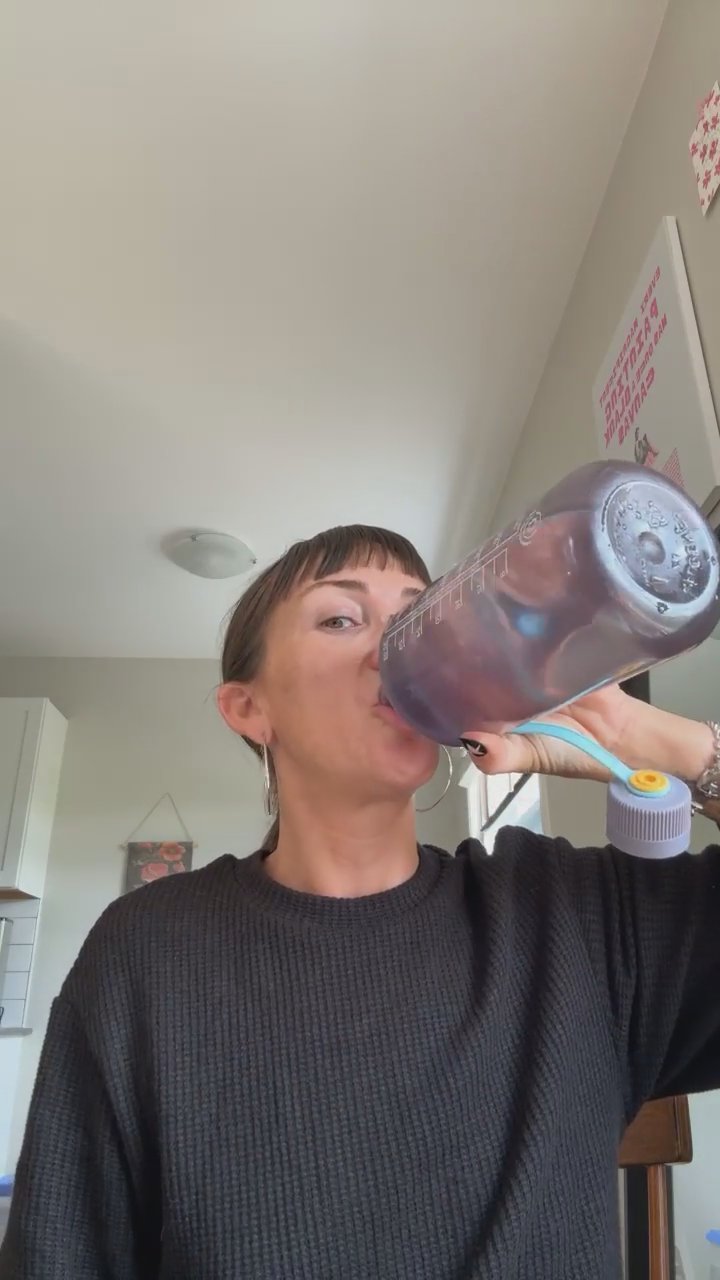
Also, wow, I am dehydrated. I need to drink water. Don't forget to drink water, my loves. Rachel says, I just noticed you got the bangs. Yep. I'm actually going in today for an appointment because the girl who did them did a horrible. Like, I wish I could show you. She just. She thinned these out so much. Like, there are pieces underneath here that are, like. I don't know if you can see. There's so much dry shampoo in my hair right now. Anyways, like, this side is, like. See how, like, thin it is?
It's because she's just, like, thinning scissors, so it's, like, really, really thin. Even though the bang is supposed to be, like, that length. And they're also, like, longer on this side than this. I don't know. So I'm going to see, like, a better stylist today for a consult on, like, once they grow a little more, like, how can we improve the. What's happening here? Because there's also, like, this, like, gap over here. My favorite, though, is, like, when I walk in the wind and they do. They start to do, like, this thing.
There's some movie character that it reminds me of. It's like some, like, villain. I think it's like the villain from Charlie's Angels. The guy that, like, cuts hair and, like, sniffs it. That's what it reminds me of. Anyways, I am happy with the bangs now because they're a little bit longer, but I definitely want them to grow a little more so that we can cut back and have them be a little bit fuller. A little bit fuller. Nikki says showing up is the work, but it's hard sometimes. I don't show up and hide, but I'm challenging myself.
Proud of you, babe. Excuse me. Your raw honesty is so refreshing. Thank you. I appreciate that. Rachel says, I don't let them use those scissors on me ever. Yeah. I never will again. Never will again. Never will again. The wind look very 90s. Yeah, I. Yeah, I was riding a lime lime bike last night, which is so fun, by the way. Like, at sunset, I was riding my, like, my little lime bike, and I was listening to. I think it was like Muna or Maggie Rogers, just like, vibing. And then I got off the bike and I looked in my camera phone, and my hair was just like two pieces like this.
Haven't quite figured out how to get them to stay here when it's windy, but we'll get there. All right, my loves, I am going to get off now and do some work and then go to my hair appointment. But I will see you all, same time, same place, next week, and I'll have a little update for you on how I'm doing. Hopefully a little bit more stable. Falling Water is the best full moon song. That is so true. We love falling water. We love falling water. Okay, baby cakes, I will see you next week. Please drink some water.
Be kind to yourself. I love you and I'm so glad you're here.