Emotional balance is being able to identify where you're at on the spectrum of your emotions. The more that you invest in learning about emotional intelligence, it's like blowing up a balloon. It impacts every single human. It's important to maintain a positive work relationship.
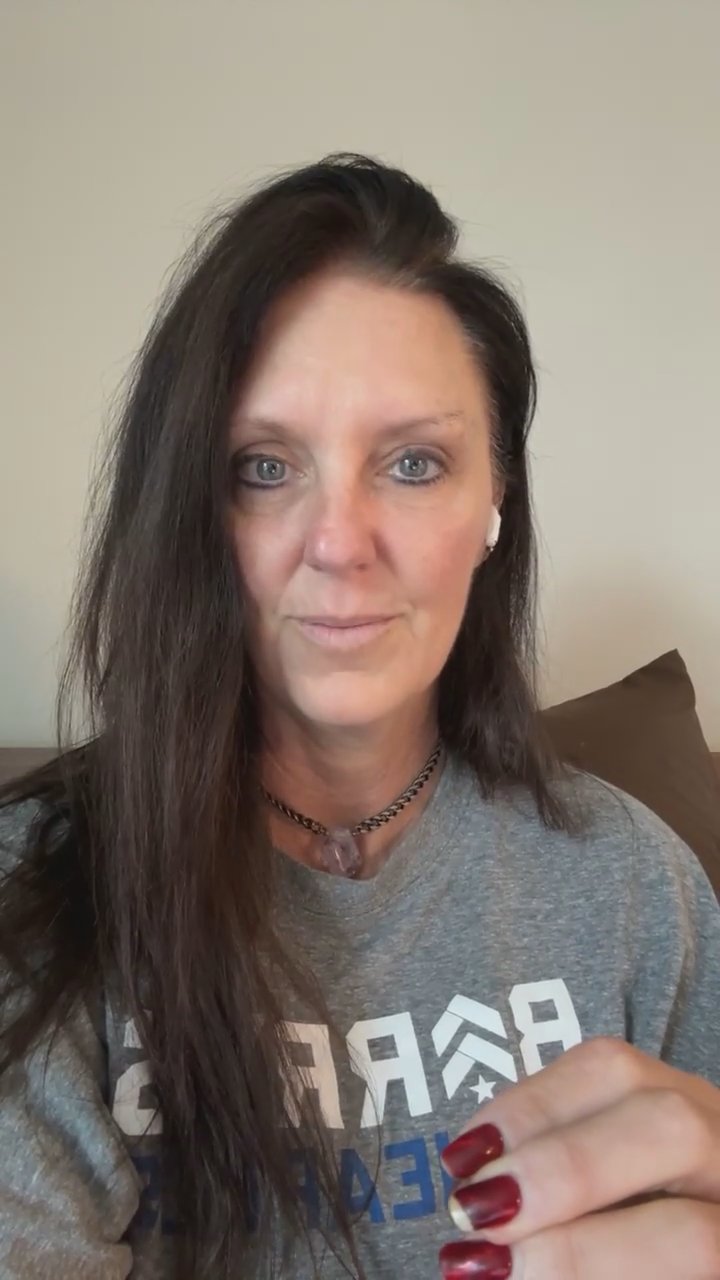
Jean Nichelle: Happy Monday. Our conversation today is going to focus a lot on leading with authenticity. Monday mornings are my day to move slow. Sometimes I just take the time to sleep in a little bit longer and give myself time to gradually move into a Monday.
Emotional balance is being able to identify where you're at on the spectrum of your emotions. The more that you invest in learning about emotional intelligence, it's like blowing up a balloon. It impacts every single human.
When I get really passionate about something, I will emotionally react. Instead of maybe saying something a little bit more short or direct, I take a sip of water. This diffuses and deflects me just enough that I can ground back in the moment. It's important to maintain a positive work relationship.
Today is really about emotional balance in the workplace. The book Emotional Intelligence 2.0 is a very light version of Emotional intelligence. It breaks it down into simple concepts that you can walk away with. If you if some of this resonated with you, type it in the chat.
Good morning, Cadre family. Happy Monday. Jean Nichelle's coming in here on this Monday. Ready for you. Just gonna hold for a few seconds. Could try to do the fun little music. Hello, Amar. How are we doing today? Happy Monday. As you come on into live streams with me, my invitation is always to take a deep breath to get present. Our conversation today is going to focus a lot on leading with authenticity. That's usually my Monday professional development topic. I'm doing well, thank you. Good morning, Jules.
Mondays I feel like are my day. This is going to sound probably odd, but I work a lot on the weekends, and so Monday mornings are my day to move slow. I don't schedule much on Monday mornings. If I schedule any meetings at all, probably aren't until after the Cadre call. Because sometimes I just take the time to sleep in a little bit longer and give myself time to gradually move into a Monday. It's what helps me to reset and balance. It also helps me just kind of prepare a little bit more for the week and all of the things that are happening ahead.
Cause I often have events at night as well. But today, in talking about leading with authenticity, I wanted to bring in the concept of emotional balance. So when I say emotional balance and you think about leading either people or leading on your own, leading through your own space as an entrepreneur or an employee or team member, what does emotional balance mean to you? I'd love if you could type in the chat, whether you're listening live or if you're dialing in on replay. What does emotional balance mean to you?
So I've done a lot of work with many groups of individuals, and there's a great book that's out there. It's kind of an older book, but I still refer to it a lot. 0. If you've read the book or you've seen the book, feel free to thumbs up or type in the chat what you think about this particular book. But here's why I like it. In the back of the book, you can go in and you can take a little inventory, but you can take the same inventory over and over. You don't have to just take it one time. You can create a little account.
You can go in, you can take the inventory, and then it'll kind of give you a guide on kind of next steps for you. But it allows you to set a reminder for three months from now, six months from now, and you can go back in and you can retake the inventory. Now, here's why I might use that with clients, but also just even for myself because I think it's really important that we can do a check in with where are we at from an emotional perspective and how might that be impacting our work? Whether we're a team member, an individual contributor, a leader, a manager, a personal trainer, a coach, this doesn't matter.
You're human. So emotional intelligence, emotional balance, it's, it impacts every single human. Doesn't matter what age you are, it doesn't matter what job you have, it is something that impacts all humans. Jules, you commented on being able to maintain stability without a roller coaster of ups and downs emotionally. Yeah. Emotional balance, being able to identify where you're at on the spectrum of your emotions. Now, emotional intelligence, here's something that's really fun and funny or interesting, if you will, when the more that you invest in learning about emotional intelligence, it's like blowing up a balloon.
So if you think about the act of blowing up a balloon, you push in a lot of air, a lot of energy, and you can create expansion in the balloon for however big the balloon is designed to get or expand to, Right? So what that reminds me is that we all have the emotional ability or the capability to expand our emotional intelligence to become more aware of the impact of our emotions on people around us. We can get more savvy with how quickly we can identify the emotions we are experiencing in any given situation.
For example, if you're in conflict with a colleague, we can feel that first. We can feel a boiling happen inside our bodies. We can feel our bodies physically change temperature. We might see a flushness in our face. We might feel sweaty palms, we might feel our jaws start to clench. They're physiological signals that help us to connect into our emotional selves, that can then help us to identify how we navigate through that emotion. So there's always the feeling and then there's the thought that helps us to identify the navigation.
So in that analogy where we're blowing up that balloon, that's us expanding our emotional intelligence, our emotional preparedness, our readiness, our strategies for how we can navigate tough or difficult situations. And then at any point in time, all the air can come out of that balloon, right? We can forget everything that we've learned about emotional intelligence because maybe on that given day we had a significant loss. Maybe we lost our jobs, maybe you lost a family member, maybe we got into an accident.
There are whole slew of real life situations, real life circumstances that can cause our emotional intelligence. The effort, the thought that we've put into becoming emotionally balanced in the workplace or in our lives can go out the window. But what happens is that just like a balloon, when it deflates, it never goes back to the original shape. So think about how small a balloon is when we first blow it up. We've pushed those that, that first few breaths in of air into that balloon. Just like we invest in our emotional intelligence, learning and understanding, but we never go back to the main, the smaller size.
Here's what's great about that. If we take that analogy and we apply it as much as we invest in our own emotional intelligence, learning and capacities and understanding about what the impact of our emotions is on our leaders and how we show up in our days. There are strategies about this. There are different categories around emotional intelligence that you can read in this book, you can Google all of it. But what happens is you never go back to the old self. You go back to the evolved version of you.
And we're consistently evolving over time, right? So that doesn't change over time. But what's great about that, what that means is that when we fall back onto our basic needs, so think of Maslow's hierarchy needs, basic needs, basic foundation. When we fall back to there, we still are evolved. We still have the capability to think differently. If you hear a little noise in the background, I apologize. My dog is asleep on the floor next to me and he's dreaming. Major, wake up. He's very emotionally intelligent.
We'll go with that. So when you think about emotional intelligence in that way, right, you think about it in ways in which we can harness that emotional intelligence and make it practical, make it really important. Understanding what emotional intelligence is and how we can improve it can impact our brain. It can help us become more grounded. It raises what's called our iq. So our emotional intelligence uses different regions of our brain. It uses different regions of our emotion. And over time, as we get older, we can get more in touch with our emotions as it relates to how we show up at work, how we show up at home, how we show up in our day to day.
When we think about and create strategies around our own emotional intelligence and our own emotional well being, it can actually have impacts in our work. So statistically speaking, we can have 30% higher work performance in our workplace. Based on different studies that have happened in 2024, they've been doing a lot of research on emotional intelligence for data dozens of years, decades of time to understand how mindfulness practices, understanding our emotional intelligence, our emotional wellness, being able to regulate our emotions in the Workplace can help increase our work performance.
It also can help us reduce our stress. So if we have mindfulness practices, I often invite everybody, when you come into a call with me to take a deep breath. Breath, why? It's a mindfulness practice. Breath work can regulate our systems. So even by jumping into this call. Hello, Update. Jumping into this call, whatever happened before this moment and whatever's happening in this moment or after this moment, if we can allow ourselves space and time to take a breath, to get present, to get grounded, it's an emotional regulation, not regulation regulation.
It allows us to regulate our heart rate, our mind, our breath. It reduces the stress that happens in our bodies. So just by taking a little bit of time each day to focus on our breath can increase our emotional wellness. 0. I'm gonna come back to that. I'm gonna post in the comments the book as well. But if you haven't read it, maybe consider using up one of your audible credits or looking for it. I think there's a sale right now. I like some books that I can write in, but at the end of the book you can get access to this, this quiz that you can take to just check in and learn strategies.
Again. This is important because as we go throughout our days, we have and carry a lot of stress. Whether it's personal stress coming into our days, whether it's stress that's happening in our jobs, maybe we got new project. Maybe we have to be the person to tell people on our teams that, that we're doing layoffs. There's all different scenarios that could play out. So being able to address that, being able to understand that is really, really important. Here's what I find. I find that when I know I'm going into conversations that are going to be a little bit more tense and if it's virtual, I have a bottle or a glass of water on my desk.
Because what happens is if I take a moment to take a sip of water before engaging in a conversation, it allows me just enough time. Water, if it's chilled, can cool down my body. So if you are feeling stress, you're heating up your body. But I find if I take a sip of water in those conversations, it allows me to take a little pause so I can collect my thoughts and not respond in a way that might not be the best for that situation or circumstance. So consider those instances. I'll give you an example.
I had to be on a call recently and I knew that the call was going to be a very tense call. I knew that the person that I was getting on the call with was going to have very opposing views than I did. And I knew that there was a team of people that were going to be on this call. So I needed to really check myself so that I showed up my best self and I wasn't emotionally reacting to the conversation. Now I know myself well enough to know that when I get really passionate about something that I will emotionally react.
And it's not because I devalue or discredit the other person's perspective. It's that my intention is so focused on how do we create the best environment for people that sometimes I work with people that are so linear and logical that they forget to think about the people side of change or the people side of the equation. And so for me, I can feel my body temperature start to rise. I've invested a lot of time in really understanding emotional intelligence so that in my own emotional balance and how I show up so that I can step into that conversation in a more present way, so that at the end of the conversation, I can walk away from that situation feeling strong, but feeling strong in how I showed up, that in that moment.
Now, the conversation that I had recently was with a team member who is also someone that's emotionally charged. So when they get feedback that they're not that they don't like, they get, they. They stomp off and they walk away. And I know this. It happens every single time. No matter how much coaching I give them and they've gotten, it will still happen. And so I have my bottle of water ready because I know that when I say the words, a reaction is going to happen. And I don't want to inflame that reaction.
I want to diffuse the reaction. So instead of maybe saying something a little bit more short or direct than I would intend, I take a sip of water. If it's fruity flavored water or water that I've put some electrolytes in, I try to focus on the flavor of the. If the conversation is just that intense or that emotional response back was that strong because it diffuses and deflects me just enough that I can ground back in the moment and continue on with the conversation the way that. That the conversation needs to happen.
I hate giving hard feedback. I hate giving feedback that I know is going to cause somebody to react negatively. But it doesn't mean that the feedback isn't important. What's important is that I maintain the integrity of that relationship and I maintain the trust of my team member so that we can have the hard conversations. So if I know one of us is going to be emotionally charged, and I know that I can also become emotionally charged because I'm very passionate about our work, our team, what we do, then I know going into that I need to have a strategy so that I can stay grounded as that leader and present.
It doesn't mean I'm not going to overreact. It doesn't mean that I might not slip up. But it does mean in that moment I'm doing my best to show up as emotionally balanced as possible to help ensure that my team members feel safe. They feel like they are heard, they are held in that space and all of the things to maintain a positive work relationship even when there's not so great conversations that are happening. So today is really about emotional balance in the workplace, identifying a tool or a resource that you can look into.
0 is a very light version of Emotional Intelligence. It's a simple version. You may or may not agree with everything in the book, but at the very least it breaks it down into simple concepts that you can walk away with. And it has a nice little quiz that you can take and you can check in with yourself. I shared with you an example of a strategy that I use drinking water to maintain some of that emotional balance. And I shared with you the analogy of the balloon. So we will always bottom out if we lose our job.
As an example, we will always go back to the bottom of Maslow's hierarchy of needs. I need to feed myself fe my family, have shelter, have safety. But we will always get back to that emotionally evolved self version of ourselves because we've expanded and we've grown in that way. So the emotional intelligence that we learn along the way doesn't go away. It just sometimes becomes a lower priority when we need to take care of ourselves first. So if you if some of this resonated with you, I'd love to hear type it in the chat.
If you have questions, let me know. I will always come back, especially if you're listening on replay. 0 with some of my thoughts. I hope you have the best day and we'll talk to you soon. And remember, one of the best ways to navigate is breathe.