Funday Comedy center coming at you live. It is a rare, early 80 degree day. Hope you had a great weekend. a comedy brunch for moms. A sense of entitlement is common in people that have either been raised by someone who is on the spectrum of narcissistic personality disorder or is one themselves.
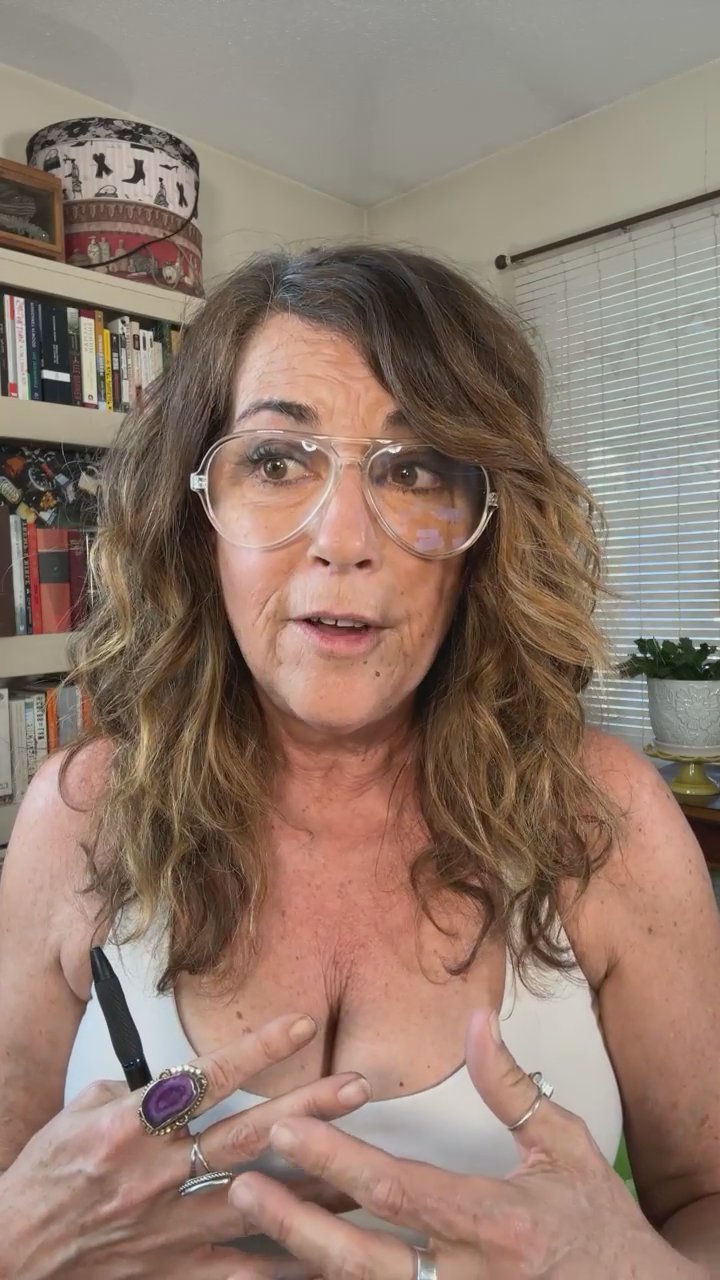
Tiffany Norton: Happy Sunday. Funday Comedy center coming at you live. It is a rare, early 80 degree day. I am hot. That's why I'm wearing my tank top early. Hope you had a great weekend.
I've been thinking a lot about invisible contracts lately. Invisible contracts that we have that we kind of develop with others. For me it's something I'm really trying to work on in my recovery. I think people should know what I want.
Next weekend, next. Sunday, I will not be doing comedy centered on Mother's Day. That's because I am having. a comedy brunch for moms. Let's talk about sense of entitlement and invisible contracts.
A sense of entitlement is common in people that have either been raised by someone who is on the spectrum of narcissistic personality disorder or is one themselves. Childhood experiences being a big part of it right now, you can develop asense of entitlement a couple of different ways.
Tiffany: There's a lot of different factors, personality traits. Other factors. Feeling that you have been dealt a bad hand. Resentment is one word for it. But also fear. We can very easily fall into the trap of envy and resentment.
When we have resentment towards children, we're having envy towards children. The psychological factor, if there is that narcissism and, and we can all. have narcissistic traits and behaviors at times. If this is coming from a toxic family dynamic, that rivalry, that resentment can be devastating.
I will not be on next Sunday because I am producing a comedy show. Although, fun fact, there are less, there's less crime and on Mother's Day than any other day of the year. Have a great week, and then I will actually see you in two weeks.
Hi everyone, it is I, Tiffany Norton. Happy Sunday. Sunday, Sunday. Funday Comedy center coming at you live. How are ya? It is beautiful where I'm at. It is a rare, early 80 degree day. I am hot. That's why I'm wearing my tank top early, my signature tank top. It up telling you, tell you I, I bought this place. I, I love my little house but it doesn't have central air and I thought, oh come on, I'm not that bougie. Like, I don't really need central air. And you know, actually sometimes you do, sometimes you do.
Hey, welcome on in. I'm just getting started at Comedy Centered. Happy Sunday. Hope you had a great weekend. So I, you know, it's funny we've, I've danced around this topic a couple of times and I think I need to dive into it further for myself, for the group, for those playing at home. But I've been thinking a lot about invisible contracts lately. Invisible contracts that we have that we kind of develop with others. Right. If this sounds familiar, maybe not, I don't know. But for me it's something I'm really trying to work on in my recovery.
I, I have found often that I, I, I think people should know what I want and like they should just know, like they should just understand that this is probably what the way I would like to do it, the way that the schedule I would like, you know, and I've discussed many times I am neurodivergent and so I'm kind of in a late diagnosis one as well. So I'm kind of coming to terms with some of this stuff and I feel like, for me at least, I feel like I spend a lot of time going out of my way trying to figure out what other people are, are going to feel comfortable with.
And sometimes I expect that that level of consideration is going to come back. Right. But who am I to say that it's not, you know, it's, it's, it's interesting. So I've been thinking a lot about invisible contracts. Mother's Day is coming up. I'm a mom, Avi. Well, not obviously necessarily, but I've talked about it and you know, my kiddos in his mid-20s or mid-20s and things are a little strained, you know, doesn't need me, doesn't think that I know too much and I get it. I, you know, I've been that age before, but I found myself having this conversation earlier today, kind of an imaginary contract, like, well, I mean, I'm his mother, so like he knows you better reach out soon and make plans with his mom, because otherwise.
And I'm like, wow, Tiffany. Okay, slow down. Slow down. Let's slow down a sec. You know, he works on Sundays. There's things like that, you know, Maybe, maybe. Or maybe he doesn't really feel like talking about making plans right now. Maybe there's something else going on that's more pressing in his life at the moment. But I found myself getting worked up. And honestly, I think it was because I saw some stupid commercials talking about Mother's Day and then my mother asking me what we're doing for my.
For what I'm doing for her for Mother's Day. So, anyway, so visible contracts, perfect topic. Next weekend, next. Next Sunday, I will not be doing comedy centered on Mother's Day. That's because I am having. I'm hosting a comedy brunch for moms. Yeah, it's gonna be kind of fun. I. I hope it is, but it's one to three at New Hope Cinema Grill. And, yeah, it's a happy Mother's Day brunch with comedy and drag and drinks and full but full menu and all that stuff. I will be taking in the drinks, but I'm definitely gonna challenge some food.
But anyway, so let's talk about sense of entitlement and invisible contracts. Okay. All right. Jump in on a light topic. Right? Oh, welcome in our stigma. Thanks for joining. So, sense of entitlement, okay, so that's kind of where, you know, there when we're looking at our. Something as complex as our. As our family unit, our original family, in context with our own interaction with that unit and interaction with, you know, the whole world. Right? Like, there's a lot going on and there's a lot of parallels, but really what it felt like to me when I was having my little humble talk with myself, that I felt like I was.
I was coming from a sense of entitlement, like I was entitled to time from my son. I was entitled. You know, I mean, I raised him. I paid for everything. I raised him. I nursed him. You know, I, you know, 30 hours plus of labor. Come on, where are my goodies? Right? But that, you know, right there, that comes from entitlement. And why do I feel entitled to that? Why do I feel entitled to access to the Mother's Day plans a week in advance right now? Why is that important to me? Right? Well, I was feeling lonely, you know, and anyway, so I looked up these.
This article, and it was in Psychology Today. It was good article. And I'll I'll cite the source at the end, but they talked about the social influences. Right. Me seeing the commercial, that kind of triggered it. And also, a sense of entitlement is very common in people that have either been raised by someone who is on the spectrum of narcissistic personality disorder or is one themselves. Right. So, because what do we think of, like when we hear someone who says, oh, you're a narcissist or you're a narcissistic.
Well, the sense of entitlement is kind of the hallmark thing. Like, I'm the greatest, you're the worst. Right. But where do these things come from? They come from somewhere. They don't just appear in our little minds generally. Right. At least not in my belief. I believe I'm a be. I'm of the behavioral psychology school of thought more than anything, so. But childhood experiences being a big part of it right now, you can develop a sense of entitlement a couple of different ways. And what's interesting is they can be absolutely opposite.
You could be raised in a situation where you are spoiled as a child, everything you do is amazing, and everybody loves you, and there's never any problems in anything you want you get. Right. That can lead to someone feeling entitled to the world, treating them as special as their family did. Okay. The opposite, though, that can also generate an appearance of a sense of entitlement is like a terrible childhood where you have really low self esteem and so you feel like you've been wronged and that you've gotten a bad shake in life and now you're entitled to for, you know what you want.
So isn't that strange how those, when we, when we see people's behavior and we are having a conversation, it's very easy for us to say, oh, well, they have this, or they're like this. But of course we can't know that because we can't know why the behavior is their fallback. And with people who have an actual diagnosed narcissistic personality disorder, they are almost on a level that they are so unaware of other people that they just don't have empathy for them. They're really just wholly, you know, circularly focused on themselves.
But the opposite of that is just having. Is being so terrified and so insecure that you feel that you have to protect yourself at, at all costs. Right. Okay, so some of the things that complain of this too, if you have childhood experiences where the parents that were raising you or your family unit, there was like, there was a very, there was a lack of Boundaries, Lack of boundaries is a big one. Because when we as parents, and I'll keep it on me. When we as parents interrupt our children's boundaries as they're growing now, of course, you know, they don't.
Kids don't get to have boundaries, you know, like, I mean, when they're younger, you know, but, you know, when they get into the teenage years and that, you know, they, they, they deserve privacy, you know, but when we don't honor our children's boundaries and we demand the attention right now, or I'm whipping that door open, you're talking to me, this mom. And we don't let them have any autonomy for themselves, you know, we're saying to the child, we're entitled to you. I'm entitled to you. Whenever I want, I'm entitled to you.
I own you. You're mine. You do what I say, you know, and to a certain extent, yes, the child does. If the child wants to continue to be loved and fed and supported in the family. Yeah. I mean, they've got to go along with it, right? I mean, who wants to risk that? No one wants to be rejected or excommunicated from their family. You know, I got kicked out of my family a bunch of times and then they would, you know, bring me back mostly because I'm fun at parties, everybody else kind of a buzzkill, just saying.
All right, so other things, right. There's a lot of different factors, personality traits. We touched on that a little bit. The, the narcissism being one of the, like the hallmark signs of that. Someone very self and someone entitled, someone who just thinks that, you know, they just deserve it. And it is often coupled too with this. And this is, you know, in the article. I disagree a little bit. They're like, well, social media has made it really seem like people can have this lavish, wealthy lifestyles without much work.
Yeah, but I think that was always there. I think, I think we've all movies are like that too. I don't know if anybody's as much of a movie nerd as I am, but whenever I see like a, like a single woman out in the woods in a beautiful cabin on a lake by herself, I'm like, what did that broad do to be able to afford that? That's what I want to know. Right. Anyway, See, there you go, nerd. Divergent moment. Okay, but again, the narcissism can be one thing, but the other thing, the other flip side of it is extreme self loathing, extremely poor self esteem, and you're constantly comparing Yourself to other people.
And so then you constantly feel like you're getting the short end of the stick and you're not getting the stuff. And that. That makes you. Leaves you feeling more entitled again. Right. Other factors. Feeling that you have been dealt a bad hand. Now, this is one I have to, you know, talk about for myself because I, you know, that if you come from a background or had experienced any kind of medical trauma, physical, emotional, blah, blah, blah, whatever it may have been in childhood, it's hard not to feel like you've been dealt a bad hand.
Right? And I'm like, I for many years worked with an organization, and we raised money every year for children's cancer research and for a local children's hospital. And, boy, you can just be really feeling like crap about yourself and kind of thinking about your child and at least for me, going, and then here comes a kid who's. Who's been under 80 surgeries, you know, and they're just happy to be there. They're happy, you know, so keeping that in perspective, of course, we don't want to ignore our own trauma and say, of course someone always has it better.
But. But I know for myself that I have to interrupt those feelings, those grudges. That's what you. That's what I need to call it. It's a grudge. Because there's nothing that can be changed about it. And even if the people that I, you know, have p. That I perceive wronged me, and if. If they had an epiphany and suddenly confessed and said, oh, my God, Tiffany, you were so right and I was so wrong, and how could I have ever been so blind? You know, that would be great, but unlikely. And so I'm left with the grudge.
I'm the one carrying the grudge. That's why they call it carrying a grudge, because it takes work to not let. Just set it aside anyway. But, yeah, feeling you've been wronged, overlooked, you know, you. You end up harboring resentment and resentment. It's. Resentment is one word for it. But I would also say underneath that, that's. Oh, excuse me. I would say underneath that, that's also fear. You're resentful. Because. And we've talked about it many times, but in a capitalistic society in which we exist when others are rewarded with good jobs, a nice home, nice family, money, a boat, vacation, trips, we.
We can very easily fall into the trap of envy and resentment. And. But it's some. It's stemming from fear. It's stemming from fear. At least for me, that maybe the reason why I'm not getting it stuff isn't, is because I don't deserve it. Maybe I don't. Maybe they are better than me. Maybe they are all better than me. And then where am I? I mean, because if. If we're not comparing ourselves to each other, well, then if I'm not better than someone, what am I? You know, it's easy to get and, and it's not like we do that consciously.
Least I don't. But all we can kind of do is when, for me at least, a lot of my feelings start in my stomach first or I feel like I almost. I'll wake up in the morning and I almost want to cry. And I don't know why. Like I'm chok. I wake up choked up like I want. And then I'll. And I'll just have to like, ask myself, like, what are you ruminating on? What are you ruminating on? And a lot of times it's, you know, it's loneliness, It's. It's fear. It's. It's. Did I make the right decisions? Should I have gone to a different college?
Should I have married a different man? Should I dyed my hair? Should I have not dyed my hair? Should I cut my bangs? I mean, like, you just. Right. What if. What if. What if it won't help. It won't help. If. What if behavior was going to help at least me, it would have helped by now. So. Okay, all right, let me take a sip here. So the psychological factors, and we're, We've covered this, but I'm just going to make a couple quick ones. Circling back to the aspect of narcissism, one of the reasons why, if you expect that one of your caregivers, you know, actually falls within the range maybe of being on a narcissistic per.
Or having a narcissistic personality disorder for real, because that is a medical diagnosis, I am here to tell you, more than likely you will never get the satisfaction of them getting a diagnosis. Because generally speaking, if you have that disorder, that disorder just makes you think you're always right. In essence, you're just always right. And if you're not right, then that's because someone else is wrong or you're going to make them wrong, right? So when we're having resentment towards children, we're having envy towards children.
The psychological factor, if there is that narcissism and, and we can all. We all have narcissistic traits and behaviors at times, that does not mean that we have a diagnosis of, of this. There are real measurable things that go into that diagnosis. It's not just, you know, you didn't call me back in time on a Saturday night, you know, anyway. But a narcissist, if that's the situation, they can only really see their image on to the child. They don't actually see the child. The child doesn't really exist other than the extension of the parent.
It's like an army of the parent. And that's why they get incredibly upset if, if you do not act in the way that they want their right arm to act. Anyway, other reasons why we can maybe feel a little nutty about this and resentment, resentful towards our children, insecurity on our own part, low self esteem and viewing our child as a rival. Yeah. And in these toxic family dynamics, it happens. Bowen's family theory when he talks about the concept of triangulation. Triangulation is essentially a dyad, is a relationship of two people.
And there's the most tension in a two person relationship. So if the tension is getting too high between the two parties, they will bring in a third one. They will triangle triangulate in a kid, a best friend, a therapist, a pastor. Now it's not always bad that someone triangulate someone and to try to work out the tension between the two. But if this is coming from a toxic family dynamic, that rivalry, that resentment, if the parent and I think it's very likely to happen more so not in the parent that is the direct narcissist, but the, but the codependent parent on that narcissist.
And when they, when they see the narcissist praising the child around them and the child and that parent seem closer together and the other person, the nurturer, the caregiver, feels cornered out, triangulated out, it's devastating. And if you're not ready to process the fact that the, your primary relationship is where it's really stemming from, you can inadvertently start resenting your kid and seeing your child as your own rival to your relationship, which is really dangerous, but also really, really normal.
Very, very normal to have feelings of rivalry towards your own child. Especially, especially if you were raised in a high conflict or a toxic family environment. And why would that be so? Well, contrast seeing that for me, I want to, you know, I felt like at least my motivation was other people's opinions may vary, but I really wanted my child to have a relationship with their father better than I did. One that completely different relationship than what I had with my father. And I remember many times watching them get along and play and, you know, and, and, you know, the, you know, and, and, and the love and, and the getting along and I'm sitting on the couch and, and, and I want to cry.
I'm like, well, I never got that. I wish I could just ask for a hug. I never could have. Who would hug me? You know, they'd be like, what do you want? So, because there's that contrast and it's comparison again. And comparison comes from fear. Fear we're not good enough. Fear we're not worthy of love. Fear we're not worthy of whatever it is that we, we think we're missing or whatever it is that we're working on or towards. But so I encourage you if you end up feeling some of those feelings around Mother's Day, and maybe you are grieving the, the, the childhood you didn't have, the relationships you didn't have, or maybe the relationships you don't have anymore because those parents have, have passed or they are estranged from your life.
You know, estrangement's rough. I'm estranged from family members. And it's, it's, it's, it's absolutely devastating around the holidays, you know, because you, because you want it to be easier than that, you want it to be different than that, but it isn't. It isn't. So then what are you gonna do? You know, you have to, you have to. Only, I mean, you really. There's a, there's a movie. It stars Al Franken, the writer for Saturday Night Live and former senator for Minnesota. But he has this character called Stuart Smalley, who is a, a self help guy.
It's a guru. And there's a movie and you gotta buy it like a dvd. It's so great. But what it was saying is he's like, you can't carpet the world, but you can wear slippers. Okay, so let's make sure we're putting on our slippers. We can't change the world. We can't carpet it. We can't change what's going on out there. We can't change what happened in the past, but we can wear slippers. But, and if you, if any of these things are kind of triggering for you or you're, or you're looking for something to maybe journal on or help process any feelings this talk might have brought up or brought up.
Here's some considerations. And this is from Psychology Today. And I. Oh, gosh, where did. I wrote down the. I'll I'll put it in the post, the name of the article. But use these feelings as a catalyst to begin your own grieving process of what you didn't receive. And that can be journaling, dance, singing, whatever, whatever. But start making a list, you know, but purge that out. Start grieving, being proud of yourself that you're trying to break the cycle as hard as you can and give your child what you didn't get.
You're trying to be the opposite of selfish, right? You're trying to be the opposite of being entitled. And so when those negative feelings come up, you know, it's, it's hard, it's hard to process. But if you, but if you end up feeling that way, it's probably because you care, because you care so much about it's. But if you're constantly making those decisions based from your own fear that your, your child's childhood would be as terrible as yours, again, you're operating from fear, too. And so you've got to go back and you've got to give some love to that little kid and remember, whatever you did to survive, you did it.
You know, we're all just really a series of coping mechanisms and defense mechanisms, and these things can be really icky and not fun to unpack. But if you've ever felt like, I don't know why I'm feeling these feelings towards my child, I'm their mother. I, I, I, I feel shame even admitting it or whatever. Don't, don't. I've, I've felt that way many times. You know, I'm sure, and I'm, and I'm sure dads feel it that way too, you know, especially at the beginning when the baby needs everything and then the dad gets triangled out.
It's the baby and the mom, and then the dad's like, well, oh, what, I'm just a piece of meat now? And I just make the money and come home and have to go and do all the errands and all the not fun stuff. And I get it, you know, it's, it's, it's not easy, so. Well, hopefully, hopefully that helped. But one more time, I just want to mention again, I will not be on next Sunday because I am producing a comedy show and, yeah, I'll probably be pooped after that. Be pooped. So many people celebrating me.
I don't know. We'll see. Although, fun fact, there are less, there's less crime and on Mother's Day than any other day of the year. It's the, it's the. It's the lowest crime day of the year, so enjoy that. All right. I don't know why I added that in anyway. All right, stay centered, everybody. Have a great week, and then I will actually see you in two weeks. All right, Take care. Thank you. Have a good one.