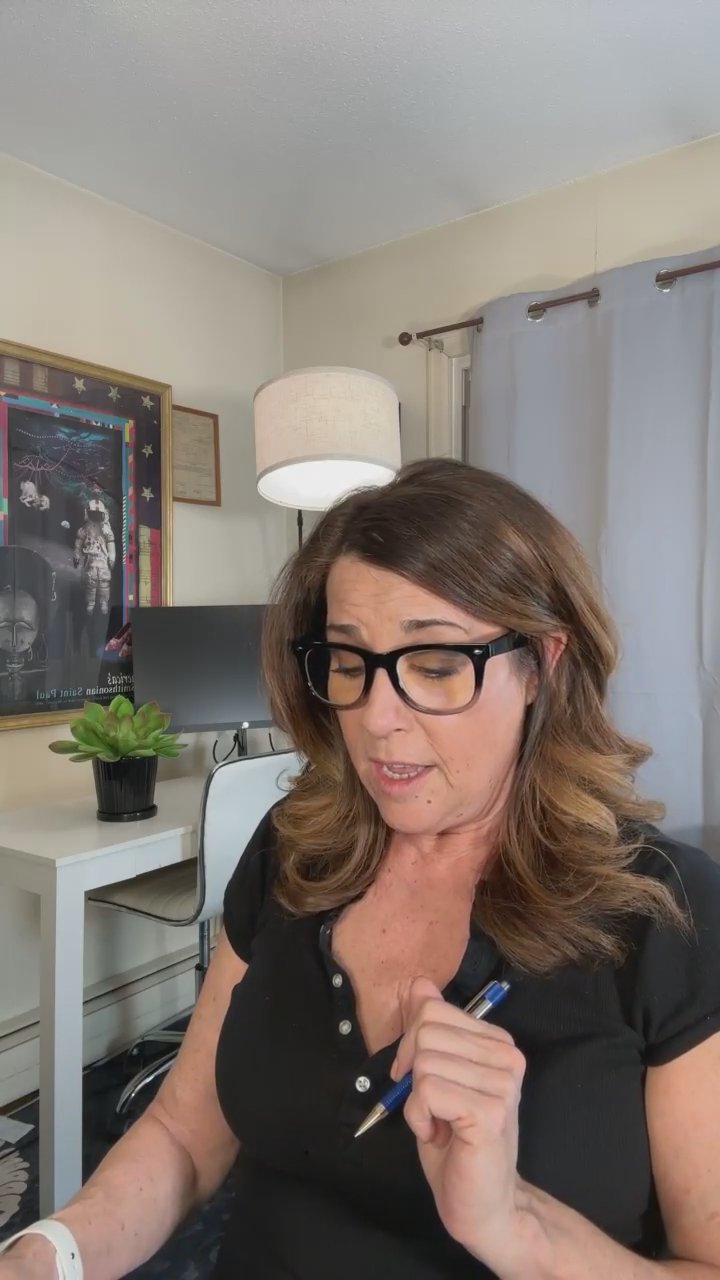
Tiffany Norton is a stand up comedian. One year in April next month she will be doing Comedy Cent on Sunday nights. So fun stuff to unpack. He says narcissists essentially operate on envy. When you run into this type of personality at work, it can really have some big negative consequences.
Tiffany Norton is a stand up comedian. One year in April next month she will be doing Comedy Cent on Sunday nights. We talk a lot about recovery, psychology and group psychology. So fun stuff to unpack.
Jules: It's the place where you're most likely to run into someone who is a narcissist at work. He says narcissists essentially operate on envy. When you run into this type of personality at work, it can really have some big negative consequences.
Last chapter of the book is specifically about narcissism in the workplace. Since our culture is based on the capitalistic principle of competition, the workplace is the arena where getting ahead is first and foremost. In such an atmosphere of toughness where all is fair, you will see that NPD individuals flourish and rise to the top.
Jules: If there's a relationship or in your current work life or past work life that was just really, really difficult, just a difficult person and situation to navigate. Here's a list of questions that you might ask yourself to determine the intensity of the narcissistic dynamic.
Do you get emotionally drained, preoccupied or upset after your contacts with this person? Why do we become people pleasers? The narcissist is drawn to anybody who's got some codependency issues. Corporate America loves a codependent and a narcissistic personality.
You are receiving only a fraction of the support you give or recognition you deserve. You are given conflicting or double messages regarding your responsibilities and performance. You may be feeling set up as a scapegoat. If these feelings are occurring with some regularity, you are possibly recognizing an NPD dynamic.
Your number one ally in the workplace is to keep a daily log of your efforts. Never let the narcissist know that you have a list, that you're writing a list. Have all of your financial ducks in order before confronting your narcissist.
She also gives us some suggestions on how to deal with the narcissistic personality disordered service professional. No matter what service you're seeking, allow yourself to thoroughly interview the person whose service you need. There's only one way for warding off these disastrous business relationships.
All right. And then of course, the narcissist, the narcissistic personality disordered client. I've had that as well too, where, you know, your real estate mortgages. You're their best friend, you're their confidant. They call you all the time.
The criminal narcissist is a far more predatory individual than meet. Here are some things to watch for in the workplace with the NPD individual. If we don't confront unhealthy degrees of narcissism in ourselves as well as others, we may fail to catch a destructive tendency before it does significant damage.
Today is World Teen Mental Wellness Day. Luke: We need so much more mental health for our teens, especially for our young. He says the most dangerous times are during breakups. Luke says you can always reclaim your power.
All right, everybody. Have a wonderful Sunday. Go Oscars. I hope Demi War wins for substance. No one clapped back with me. Anyway, we'll see you guys.
Hello. Hello. Well, it's 6:00 on Sunday. Then that must be comedy centered. Hello, I am Tiffany Norton, your host, your guide, your comedian, your Sunday evening check in, I guess or something like that. Hi everyone. It is Oscar Sunday. Oscars big Oscar award show. Hey, welcome on in T North. I like it. That's close to my name. T. Norton. Welcome to Comedy Center. So just while people are kind of coming on in to the live stream, I'll just, just shoot the breeze for a sec. Again, my name is Tiffany Norton.
I am a stand up comedian. I am also a contributor to Cadre. It'll be one year in April next month that I've been doing Comedy Cent on Sunday nights and I love it. We talk a lot about recovery, psychology, group psychology and recovery. And I am someone with who is late to the party, late diagnosis of attention deficit disorder and complex post traumatic stress disorder. So fun stuff to unpack. So anyway, we've talked at length from a couple of different books. I've been circling around the subject of narcissism for quite a while, right?
And it occurred to me that one of the situations that we didn't really delve into all that terribly much, where you're most likely and often to run into someone who is a narcissist, it's the place where you're most likely to run into anybody at work. Right now I'm gonna start with like a little bit of an analogy. I'm gonna start with a little bit of a story, right? So if you're watching this in the replay, a narcissist. Now, narcissism is. Narcissistic personality disorder is an actual diagnosis that someone can receive.
I do not like to play armchair psychology. I am not a licensed psychologist or psychiatrist, but I have spent a lot of time studying narcissistic personality traits and disorders because I do have family members that I believe fall within those categories even though in true narcissistic form they will never, never go to analysis. Anyway, so it's something I've been studying on and off for the last 30 years. So. But narcissists in the workplace. I've been in many situations where I thought someone was my real friend and they were actually my deal friend.
And that's a quote from another book that we've talked about in the past, From Strength to Strength. But in these work relationships, it's difficult because we want to of course, fit in, right? We want to get the promotions, we want to have harmony. We want to do well. We want others to think that we've done well. Right. So when you run into this type of personality at work, it can really have some big negative consequences personally, professionally and financially. Right. So one of the things.
And I'm going to go back to a book we've covered a couple times now. The. The wizard of Oz and other Narcissists. Excuse me. And one of the things that's kind of covered a little bit earlier in the book, which bears repeating, is the fact that narcissists essentially operate on envy. That's they covet, they want what others have, and to the point that they don't think that the other person even deserves it. They don't just. If someone has a nicer car than a narcissist. Hey, Ms. Jules. Well, then it's not even that the, the, the narcissist is.
Is envious of the car or the car owner. They believe the car owner actually doesn't deserve the car and that the narcissist deserves it more, even though maybe the narcissist has done nothing to do that. Anyway, so. But I was. Like I said, we've talked about this book a couple of times, but I want to hit up this very last chapter that she has in the book, and it's specifically about narcissism in the workplace. Okay. So let's see if this rings any bells. Okay. Since our whole culture is based on the capitalistic principle of competition, the workplace is the arena where getting ahead is first and foremost.
Right. We've worked in competitive corporate cultures probably. Right. Okay. Fewer corporations and businesses bother themselves with the ethics of fair play or concern themselves with the fact that employees or are human beings trying to live a quality life. Right. In such an. An atmosphere of toughness where all is fair, you will see that NPD individuals flourish and rise to the top. Okay. I think we know that. Right. That the more ruthlessly you are, the, the more you'll be rewarded. Oftentimes in, in corporate America, I keep bumping my little stand here with my foot.
Anyway, so what I like about this is she's actually got a list of questions and these are pretty thought provoking. So I want people in the replay. And Ms. Jules, I know that you're live and anybody else who's listening in, if there's a relationship or in your current work life or past work life that was just really, really difficult, just a difficult person and situation to navigate. See if any of these things ring a bell, because one of the. The things that this woman hypothesized in the book, and the author again is Eleanor Payson.
But she suggests that we, you know, oftentimes when we're entering into a romantic relationship, we're very thoughtful about the things that we want and what we don't want. But when we approach friendships and work friendships, we don't really ask those questions. And maybe we should. In fact, her point is, we definitely should. Is it a real friend? Is this going to be a deal? Friend? Anyway, so at first, you may simply feel a sense of frustration that this person tends to distract you from your work, perhaps requiring, requiring an excess of attention and support.
Inevitably, over time, you will have stronger and stronger feel feelings of frustration and exacerbation, as well as a growing unease about the relationship. So here's a list of questions that you might ask yourself to determine the intensity of the narcissistic dynamic that may be present. And when she's saying narcissistic dynamic, that's another good point to jump into the dynamics. We all have narcissistic tendencies, and a narcissistic tendency is that we, we want to meet our own needs first.
That's survival. That's, that's instinct. That's not, that's not necessarily a bad thing. Right. We need that. But narcissistic dynamics are. It doesn't mean the person necessarily has a narcissistic personality disorder, but they can definitely demonstrate some of these behaviors. Okay, so number one, thinking. Putting in your mind a person that you have in the past or currently do work with that you find very trying. Let's just say, do you get emotionally drained, preoccupied or upset after your contacts with this person?
That's number one. Number two, do you begin to doubt yourself, your competence on the job, and feel secure about his or her true opinion of you? Here comes number three. Our work performance expectations, unclear, often changing. Okay, number four, do you frequently feel frustrated, angry or resentful after interactions with him or her? Number five, are you taking care of your own needs? Less or more in relationship with this person? Are you increasingly expecting. Well, I'm sorry, are you increasingly experiencing a confused mixture of feelings such as anxiety, intimidation, powerlessness, and inadequacy?
So that's her list of six. If someone comes to mind. Now, again, we frame this with work, but these can be romantic relationships as well, or friendships. I have a friend. I have a friendship that recently ended. And I would say in context to number one, that's not how the relationship started. But towards the end, do you get emotionally drained, preoccupied and upset after your contacts with this person? Yeah, I Did it didn't start out that way. And that is what's so confusing about these personality dynamics is that the narcissist generally is drawn to anybody who's got some codependency issues.
Right? Anybody who's kind of codependent. And why do we. Why do we become people pleasers? Why does that word codependency get, you know, floated around so much? Well, it's because when we were showing up in our family, in our original family, you know, our own narcissistic needs as the child needing to be loved, needing to be accepted, needing attention, weren't being met, but we were modeled through our family dynamic that if we're caretakers, then we get pats on the head, then we get praise. You know, if we do things that are selfless, things not for us, but for others and for the.
And for the group, the betterment of the group, well, then you get praise. Well, that's just the type of thing that corporate America loves. Corporate America loves a codependent, and they also love a narcissistic personality. See how fun this is? Okay, so you ask yourself the six questions. She's got a little paragraph, and there's a little bit more here. Okay? If these feelings are occurring with some regularity surrounding your interactions with this co worker or boss, you are possibly recognizing and an NPD dynamic and witnessing any of these behaviors.
Okay? For instance, so these are instances, behaviors to identify to see if this is maybe the dynamic that's happening. You are receiving only a fraction of the support you give or recognition you deserve for your contributions. You are given conflicting or double messages regarding your responsibilities and performance. Your advancements may have been thwarted by an unfair review or an endless delay of any review at all, giving you the message that you are unimportant. You have a sense that your credibility and competence in the eyes of others is being undermined.
You may feel. Oh, I'm sorry. You may be feeling set up as a scapegoat, a frequent result of those relationships. So one of the things that sticks out to me, and it's consistent through the narcissistic personality disordered person, conflicting answers. We also call it moving the goal post. Your goal is here. Your goal is here. Your goal is here. Your goal is here. Your goal is here. Your goal is here. The dynamic that it's designed, that even when the praise is really, really, really, really deserved, they'll move the goal post and go, well, yeah, I mean, last month there's a.
There's a. A joke we have in Sales, you're only as good as your last 30 days. And when I say it's a joke, it's actually not a joke. You're in sales. You are as valuable as your last 30 days of sales, often so. And with the competition and in the capitalistic society, I mean, what do you see? Like, that's like when we talked about going onto LinkedIn and stuff like that. It can be upsetting because you go on a LinkedIn, people are posting all the wins. It looks like all anybody else does is win and where's my stuff?
Where am I? Where. Where's my good stuff? Right. Okay. So let's keep going. I want to give you a couple of tips too. If you're. If you're. Things you can actually do. If you're in a situation with one of these people. Okay, all right. If you're a person. Now, this is a fear word. If you're a person who hates paperwork, as I do, that's her saying it. And I agree. Your number one ally in the workplace is to keep a daily log of your efforts. Now, this is private, and it can just be a notebook like what I have here, Right?
Just a planner. But keep a list of the things that you're doing. This is a good idea, no matter what, whether you suspect you're in a narcissistic personality dynamic or not. Because if you're ever called to a review or someone ever kind of tries to throw you under the bus and say, well, so and so didn't do this and so and so doesn't do that, then you have your own record, right? And you. But you never, and I repeat this, you never let the narcissist know that you have a list, that you're writing a list.
One of the things when you've identified that to your satisfaction, that the relationship is toxic and you need to leave it. Workplace, not workplace. Regardless, narcissists operate very much in the same way. It. Because they only view things as an extension of themselves. You leaving is like you taking away one of their toys, if that makes sense. So with a narcissist, it's better if you can frame it in their minds that they're giving their toy away, not that you're the toy and you're leaving, if that makes sense.
Right? Because they do view you as a thing. You're an extension of them. It could be when. When we hear the phrase trophy wife, literally, this is my trophy for winning life. I get a hotter wife than what God intended me to have because I'm Rich. Anyway, little humor. But if you're in a situation, document, document, document. And if you are getting to the point where, you know, changes have to be made and you have to get out, this is something that you have to plan for and prepare for like you would almost like a court date.
I encourage you, if you're going to stand up and confront your narcissist, work or home, have all of your financial ducks in order. If you. If they're mixed, bank accounts, either work wise or business wise, make sure that all that stuff is set up to, To. To benefit you or to at least make sure that you're protected not to, you know, not to defraud anybody. But do that stuff before you have the, The. The conversation, the heart to heart. The other thing I will suggest, and this is from personal experience, when getting ready to confront and be in a situation where you're going to assert your boundaries, you're gonna push back on some of these narratives and, you know, you know, it's not going to be received well, we'll play that out in recovery.
We talk about, play the tape forward. Like, play the tape forward. Like, if I drink, play the tape forward, what will happen? Right? Well, play the tape forward. When you're getting ready to deal with somebody who is a very high conflict individual, I would suggest writing out a list of the insults or the threats or the accusations that you imagine they will say to you, right? Like, he's gonna say, you know, that I was late last Tuesday. He's gonna say that I missed my quarterly budget. He's gonna say that I, you know, I didn't have the most team spirit or whatever the heck it was, right?
Doesn't matter. But write all those down and then prepare an answer for them. And the more neutral the answer, the better. Because the one thing the narcissist is not interested in ever, is facts. Facts get in the way of a good story. And that's all narcissists are. They're about this deep. You scratch the surface. That's as deep as it goes. It's all a story. And you have to remember that, okay? Just be ready. You want to plan ahead. Also, bring in any kind of support people if, you know, you're.
Especially if you're going in on a boss or something like that, you know, and you have that person at work that you actually do trust. Let them know what you're doing, let them know why you're doing it and what your motivations are. Because if something goes bad and they just kick you Right out and you're fired right away or whatever. There is someone there to tell the tale, to give your narrative voice, should that happen. Okay. All right. Okay. So writing a memo is. Let's see here. Okay. She's talking about documenting everything.
All right. All right. She also gives us some suggestions on how to deal with the narcissistic personality disordered service professional. Right. Have you ever invested time and energy in acquiring a service from someone and halfway into the project or process, you wish you had never met this person? I have. You discover that he isn't really interested in satisfying your needs as a consumer, but intends to do the job his way while meeting his needs first with a too bad if you don't like it attitude.
By the time you. Oh, by this time, your investment may be considerable and it may be too costly to dismiss his services. A fact that the NPD service professional knows very well. We've all heard horror stories about contractors, right? They come in, it's going to be beautiful. It's going to be great. It's going be so cheap. So cheap. Oh. Oh. It will be way under budget. No, it's gonna be fantastic. Yeah. You can have the granite. No extra charge. When. Right. It kind of comes back to those questions.
Why. Why don't we ask more questions up front? And we're entering into these relationships, these adult relationships, whether they be real friendships, real friends, or deal friends, we have to ask ourselves, what does this person want from me in this relationship? What does this contractor want from me? What does this boss want from me? And am I willing to give it? Right. That's. That's key. Okay. There's only one way I can recommend for warding off these disastrous business relationships. The interview technique.
Right. No matter what service you're seeking, allow yourself to thoroughly interview the person whose service you need. Let the person know that you're checking out your options and interviewing other individuals. That's important, too. The healthier the person is, the less likely he or she will be so defensive and impatient with you when you ask questions. On the other hand, and this is true, so true. On the other hand, the NPD individual, with his exquisite sensitivity to having his expertise questioned or to being compared to other individuals may not be able to conceal his deeper feelings of anger.
That's right. If you get yourself into a situation where you. Let's say it's a guy. Let's say I'm, you know, I'm straight, I'm on a date, I go out with a guy, maybe we talk on the phone. And he's like, well, I'm the only guy you're seeing, right? And it's like, well, you know, let me ask you some questions. And you start asking questions, and then they get really defensive about the questions. If people, when, when, when someone receives questions as aggress, as aggressive, when you ask them questions and they react like you're being the aggressor by being.
By questioning, that's a big, big, big indicator. That's a big sign right there, I think. Okay. All right. And then of course, the narcissist, the narcissistic personality disordered client. I've had that as well too, where, you know, your real estate mortgages, and I have definitely had clients where you, by the end of it, you, you know, absol about every drama they've ever had. You're their best friend, you're their confidant. They call you all the time. Back in the days of answering machines, we only had, like, so long that you could leave a message before it would, like, cut you off.
And I had a client that she. During the process of her loan, I don't know, it was six or seven times a day, and she always ran the entire tape out. And then she called back and continued the thought. She canceled on me the last minute. Yeah. And I invested a ton of time into that. Anyway, okay, so one last thing she wraps up with, and I think this is very pertinent, is the criminal narcissist. Now, I know that I get a lot of girls that watch, you know, comedy centered. I don't, you know, I don't really know the demographic breakdown, boy or girl, but I know a lot of women and my girlfriends and everybody likes to watch those crime shows and all that kind of stuff.
And yeah, criminal narcissists, they are real. Okay? We must come to terms with the fact that the human psyche is complicated and we are obligated to develop psychological understanding beyond simplistic notions of right and wrong or good or evil. Sickness that becomes so twisted it crosses over into evil does not fall from the sky like a meteor or materialize in a puff of smoke from other worlds. Ruled by the devil, Sickness evolves into evil from innumerable small, subtle and incremental actions.
Little lies like missing a road sign and then stubbornly refusing to acknowledge that we have gone awry. Likewise, as codependents, we can invest more and more in a relationship that is continually giving us warning signs. With a similar unwillingness to retrace our steps, we ignore the need to re examine the basic Assumptions of what makes an individual capable of a healthy relationship in the first place. No one is more vulnerable to becoming attracted to the narcissist than the codependent. And the narcissist in turn is drawn to the codependent.
The narcissist is unfortunately a far more predatory individual than meet. We may want to admit. If we are to utilize our skills as self respecting and self reflecting individuals, we must accept these complex and painful realities and empower ourselves to confront them. Yeah, narcissism is the last train stop before h*** is a quote. In other words, if we don't confront unhealthy degrees of narcissism in ourselves as well as others, we may fail to catch a destructive tendency before it does significant damage.
Right. Okay, so let's recap. Here are some things to watch for in the workplace with the NPD individual. All right? MPD person's behaviors. Cannot acknowledge you for a job well done. Takes recognition that you deserve. I got a lot of those. Absorbs your time, energy and attention with his or her agenda. Undermines your competence in front of others. You ever have somebody likes to talk down about you in front of everybody? That's always super fun, subtly or not so subtly. Prevents your advancement.
Sends double messages and resists clarifying matters of importance and performance. Right. They don't ever want to clarify because if it's measurable and there's really actually goals, goals that are measurable, that you can reach and achieve, that means you, that means you're a winner and you achieved your goals. Well, narcissists don't want anybody to win but them. Okay, so here are the code upon codependent responses to those, those behaviors in the workplace. Feeling emotionally drained after interactions.
Increasingly increasing tendency to doubt yourself. Feeling unclear about the expectations of your work. Becoming less and less focused on your goals and work agenda. Increasing feelings of frustration, resentment, anxiety and powerlessness. Burnout. An inability for self care. Making decisions or changing your job circumstances. Yeah, it's real. And you know, if you grew up in a, you know, in a household that was fair, you know, that was fairly healthy and you had parents that loved and respected each other and no one raised their voices and, and you know, you, you know, you were good people.
Right? If you had an interaction with an NPD person you'd probably like, you would probably run, you'd be like, that's insane. Who is that? That? I've never met anybody like that. But if you like, are like me and you grow up as the oldest daughter to a, a very Malignant narcissist where women are to be subservient and the servant of men, like from the time you're born till the day you die. Those dynamics don't stick out to me as much. They do now in my 50s and after I've done a lot of work, but they felt comfortable to me.
You know, I would see a very confident, cocky, you know, man who just seemed like he knew what he's talking about. I'm like, look at all that confidence. Like, well, he must know. He must be smart. He must know what's going on. All right, well, I'll follow that, all that. It seems like he knows what's going on. I'm. I'm clueless half the time. Right. Well, that's kind of, that's kind of the rub. Why, why do we want what we want? Usually it's familiarity and as the old expression goes, it's the devil you know.
Right. It's familiar some way. Okay, so we are almost out of time. I don't think. I think that's. Oh my God. I think I nailed all of them. All right, But I will say this, and just a word of caution when we're talking about this kind of stuff. If you are personally, when you're watching this in a situation where the MPD person in your life is dangerous and they do know quite a bit of information about you or you have children together or it's, or it's a business partner or something that's very complex.
Bring in outside resources. Bring in. Hi, Luke. Hey. Welcome in World Teen Mental Wellness Day. H, I didn't know that. I should have talked about that. Yeah, we need more. We need more. We need so much more mental health for our teens, especially for our young. We need very different mental health I think at this point for our boys and our girls right now, girls need to know, like, what can we do with all these feelings? And the boys need to know what to do with theirs. I'm concerned. You know, our kids are so d*** smart.
They see all this and they want us to be able to figure this all out for them. And I don't know, guys, doesn't look like we're doing a bang up job from here so far, but I know we're all I know around here in Cadre. We're trying, but yeah, so, yeah. Hug your teens. Those were rough years. I'm so glad I don't have to do those. People always talk about wanting to be younger again. I'm like, nah, nah, I don't Want to do any of it again? I'm good on all that. I'll take the wrinkles, it's fine. But I do want to say, if you are in a situation with somebody that is, is because, no joke, they can really, depending on the resources the narcissist has, they can really make your life out if they want to.
So as we kind of talked about at the beginning, and on a certain level, sometimes the best way to get one of them out of your life is to just remember you're not going to win anything except your own mental health back. So as much as you can do, sidestep it until you can get all of your ducks in a row. But if you're going through something like this, reach out for coaching. Talk to your therapist about it if you have access to one. If not, you know, talk to some of the, the recommendations that we have around here on Cadre.
But make a plan for yourself and stay safe because the most dangerous times are during breakups. And even the co worker ones can, you know, if you break up poorly with a boss, which I've done, sometimes they feel like they've just got to get it over on you somehow, even at another employer. So that's why you want to have everything as prepared as you can. Like when you're standing up for yourself and going into that meeting. You know, I already talked to my friends. If I get, if I, if they rent my computer out of me at the end of this meeting, I've already got my contacts backed up.
I, I have the cell phone numbers of all my good co workers in case I have to go around this boss for a referral. I, I know how to get all the things I need for my next resume if it were to go that way. But, but you can do it. You can always reclaim your power. And just the, the, the act of preparing for that battle will make you feel more empowered about it as well. So. And always reach out to the, the forum or the app if, if I can help in any way. I've been kind of crabby lately, so if someone just wants me to like, call up and tee off, tee off on people on the phone, just free charge.
Can Luke. Kid Boss. Anyway. All right, everybody. Have a wonderful Sunday. Go Oscars. I hope Demi War wins for substance. No one clapped back with me. Anyway, we'll see you guys. Have a good night.