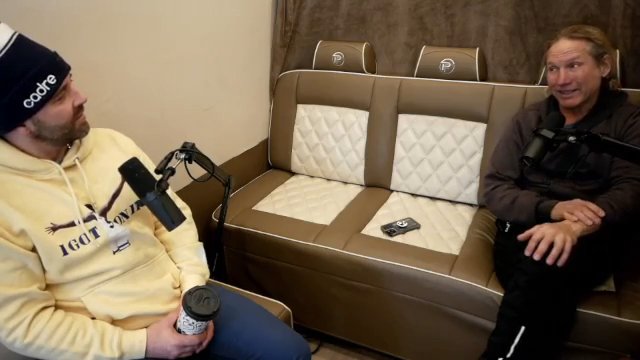
Welcome to the Mental Wealth Podcast!! Our first episode is with Scott "Ole" Olson, founder of the iconic Rollerblade company. Join Luke & Scott as they share a conversation around Scott's entrepreneurial journey. ****NOTE***** We experienced some technical difficulties with the audio on Lukes Mic during recording. In the future we promise a more pleasing audio experience. Stay tuned!
Luke: There's so much grief and loss in our world. All leads to mental health. And I think of you often, and it's only been a couple years since we were. It's been special to keep it going.
My partner lost her son three years ago, maybe two. And so she decided to see a counselor, a psychiatrist. She realized that she needed to do something. I'm just throwing ideas out for it and supporting her in any way I can.
There's this fine line also, I think, between, like, boundaries and uncomfortable conversations. And I would just encourage Elizabeth to test more waters. You have to lean more in the middle than one way or the other.
Elizabeth got hit with the flu the last four days. She's been down and out. She probably is dying to see her other best friend who's sitting in the car. We're going to go after I see my mom. And then go visit a buddy of mine who's working on a documentary on the Clash.
Outside of Minneapolis St. Paul, it's about a 20 mile radius around. All the farms start getting smaller as soon as I start going east. I'd rather drive an hour west than 10 minutes east to get something. I'm a farm boy, country boy at heart, and I just love it.
Lead has been a big cause of their decline, but they were almost extinct at one time. And now they've really taken off. It's a, it's a real success story for the bird world.
Bob Greene: 35 years at the farm, this was before, after, after Rollerblade. Greene: Tell me the lesson that you learned that was really hard. Being a young entrepreneur. Just live in the moment and make it work, he says.
I was in Canada when we won the, the gold medal. I was the only American playing in the Canadian Junior League. And so that's why I really wanted to promote this whole Minnesota hockey. Just last week you sent me this. Terry Fox story. I highly recommend checking it out.
"My mom and dad hoard, like, everything that we have " "Living on the farm makes it a little easier, you know, to raise a dog and have a dog " "Sometimes it's really cool to just look back in time "
I felt sheltered growing up in St. Louis park. My biggest growth took place outside of that. To see the world and all the world that has to offer. Has been the latest adventure? Thailand.
There was basically nobody on the island to begin with except the tourists. The cement road, somebody put it in like 10 years ago, thinking they were going to develop the island. And I could do it every day and not have to wear any clothes because there was nobody there. Is that experience just off the charts Africa?
Elton John: Africa is my go to place. I highly recommend going to South Africa. Kruger park is a couple hour drive from Johannesburg. When it's mango season, the mangoes are amazing. Get the kids there at a young age.
The one that I like coming back to, that I keep working on is my roll bike idea. I'm still continuing the development of that project of the road bike. And I'm always making new rides for the skyride. We're going to build one on the Santa Monica Pier.
Oli: 10 years ago, I was trying to pitch it to Santa Monica. Now, they're calling us up, saying they want Skyride to be one of their attraction because they're redoing the pier. I've reached out to some of my friends that live out there and told them that if you got some friends that need. a place to hang, they can come to the farm.
Oli Scott went on Shark Tank 10 years ago. What was the experience really like? As it turned out, it was a good pitch. They really do a background check on you that would blow most people away. Still gets calls from it from syndicated promotion.
Scott is an avid swimmer and has an endless pool in his barn. He also invented motion bites that are like eating a whole meal with a bite. What are some of the things that you love to do outside of work?
For 20, 25, what's one thing that you got on the calendar? The books, Something that you want to get after this year? I want to launch my dream home on three pontoons. If there's anything I can do to help you further your Cadre, whatever you're doing, I wants to be a part of it.
You know, think about this, Scotty, right? Of. Of all the places you started rollerblade, you're renowned entrepreneur, visionary. Places that we could have met, we could have had out the farm. We could have met at Montana, we could have drove. We could have met anywhere to have this connection and this talk together. And you chose to meet here. Right. Which is in Lake Elmo, Minnesota, where your mom is in nursing home memory care. Yeah. Yeah. Right. Places that we could connect and met. Odds are that touches you.
Odds are that's something that you're going through, like you're grieving. Probably a lot of stuff going on with your mom. Right. That's just one situation. Somebody else might have depression. Somebody else might have lost. Somebody else may have lost a loved one. I literally, right now, not kidding at all, just got a text of a friend that I went to college with that's no longer with us. Right. Just literally right now, it just hit, you know, there's. There's so much grief and loss in our world.
All leads to mental health. That leads to all the other things that we deal with on the daily. So, Scotty, thank you so much. And in this conversation, I adire you, I respect you, I love you a lot. Get to, you know, connect on a deeper level, and it's great. So we're just going to riff in it though, because that's always what we do. Right on. Right on. Luke, I'm trying to thank. Thank you for those kind words. And I think a lot about yourself, too, with what you've done and what you're doing. And so I think of you often, and I think it's only been a couple years since we were.
We first met. Yeah. Probably about three year journey now and meet you at the farm. Yes. It's really been special to keep it going. And speaking of grieving, the one of the things I was going to bring up to get your take on it and honest take on it is my partner lost her son three years ago, maybe two. Three years ago. And he was about 28 at the time. And so she decided to see a counselor, a psychiatrist. Right. And number one, great for her. Yeah. She did that. That she reached out for help. Very few people do that, but go ahead.
Yeah, yeah. She. She's a, you know, she's highly intelligent person. She realized that she needed to do something. I was commending her on the. The way she was handling it, at least on the surface, as, you know, you don't know what's really going on with somebody. And she's A pretty strong headed person. And so she started hanging out on occasion and meeting this counselor psychiatrist maybe once a month. And it's been going on for about a year. So figured two years she was kind of doing it on her own.
Well, she really connected with this woman who was a younger counselor and I was always encouraging her one, to do it two, when she met the gal and had it going on to, you know, maybe try a second one because I think maybe psychiatrists have, they all may have a different take on it. And I said it wouldn't hurt, you know, since you, you got the luxury of being able to do that, try it somebody else. And she thought that was a great idea and, or go to a, a class, a group and sit with people that are doing, going through the same thing.
That'd be good too, I'm thinking. So I'm just throwing ideas out for it and supporting her in any way I can with the idea. If she's really, really hurting, you know, I'd like to be the first to know because it's number partner. Right. And but in the meantime, I'm not going to bring it up, you know, because I'm always in the, the thinking that I don't want to bring up, you know, how you doing? When maybe she's not even thinking about it, you know, because I don't want to, you know, the more you can keep your mind off it, the better off you could potentially be.
Go there if we don't have to go there. Yeah, because she's probably going there more than she should be. And she realizes that too, that she can't be going there and it's up to her to get her mental health going. I think she's done a h*** of a job. Well, anyhow, a week ago, 10 days ago, she had to call up the counselor and say, hey, I got a big deal going on today. I can't make it. As much as I want to make it, I can't. You know, she's a CEO of Trellis, which manages thousands of units building a handful of new affordable houses and she oversees all this.
Right. So this counselor and she's had to back out a couple times but you know, she's very professional. She'll tell, give the gal a call the night before or maybe that day, who knows. So I'm not going to be able to make. Yeah, who cares? Schedule. Yeah. And so this, so she, this last time a week ago, she calls in and then she, about three days later, she gets an email from the gal, the Counselor saying that we're done, I'm not going to see anymore because I can't go on, like, this type of thing.
And it's like, oh, I'd be one thing if Elizabeth was like telling her every other week she can't make it. You know, it's a very isolated time that she can't make it. So I just thought, wow, is that a, is that, is that a way that this counselor should treat somebody that's been, they've been together for a year, year and a half? You know, thank you for bringing that up. And you know what I'll say? What I'll say is this, you know, in your line of work. Right. So let's say, for instance. Well, you, you were on Shark Tank.
Yeah. So you're on Shark Tank. And let's say, for instance, you know, you were ready to go, you flew in, you flew to the show, you're all set. And then, you know, by the night before, you just let them know, I'm not going to make it. Yeah. Three months later, you know, you're scheduled and, and now you're set and you're in the night. Four, two days before you said, you know, I'm not going to make it. And then at a certain point, you know, they're just going to say, hey, Scotty, yeah, appreciate you, we love what you're doing, but, you know, just say we're not going to go forward anymore on this.
The, the difference here, and I'm not trying to compare the two, is apples and oranges, but the difference is this is like they have a percentage of, you know, no shows that usually is, is this individual work for a, you know, reputable agency? Are they an individual on their own? What is it? What does it look like? Where do they work? This, this woman that does the counseling? I think it's her own, her own practice, private agency. So she's very flexible. Got it, got it, got it. And it sounds like she's been very successful by, you know, keeping busy.
Yeah. See, like, for me, if I'm in the space or individuals I work with in the space, you know, usually what they have is they have a 24 to 48 hour cancellation policy to cancel within 24 to 48 hours. You're in that threshold and you're going to keep moving forward. If, if, if it's happening consistently, it's moving forward. Like, like, usually you work around it. Usually. Yeah. And also there's the boundary talk beforehand. Right. Which I guarantee Elizabeth did, is to say, hey, I have A tough job.
I have a lot of things going on. My days can change. Things may happen. I'm going to always do the best I can. But I want you to know you're my person and I want to continue to move forward with you. Usually if there's that level of trust and rapport, because to the flip side, the coin, man, like, maybe she's. Then not for her. Yeah. You know, at the end of the day, if I believe that I'm getting something from somebody and they're supporting me, and I also understand that it is transactional. It's not just a relationship.
It's transactional. We're paying for services and all the other things. But at the end of the day, if you've built trust, you're doing ethically and morally everything okay. And I'm gaining ground on where I need to go. Gosh, by all means, I, I just believe my heart of hearts. Like you'd be able to work around those things, but, but, and if not. And I would just encourage Elizabeth to test more waters because there's a lot of folks. I heard. Well, and that's what I was telling her day one, you know, test it and maybe you could keep the same person and you just come back to her, just try other ones.
You know, get a bigger perspective, more feedback. And it's not like Elizabeth wouldn't pay her, you know, if she missed it. You know, she. She's that way. She's not gonna, like, try to scam on a. On bailing out and not wanting to pay for it. If she was last minute, she's like, fine, take it. You know, she's lucky. She's got insurance that's covering it too, you know. No, there's. There's this fine line also, I think, between, like, boundaries and uncomfortable conversations. Right. Yeah. You know, boundaries, like saying, you know, if I miss the fourth, the fourth person that misses, you know, I'm no longer going to work with them and da, da, da, da.
Well, number one, that should have been explained ahead of time. Number two, if it actually happened, if the boundary happened, like, I really encourage always my kids the same thing. Like, you do need to talk about the conflict. Right? Like, where's the phone call? Yeah, yeah. You know, we built really great rapport. Is there something I'm doing wrong that I miss? Or, you know, are you not finding value? And I'm sure she's going to say, I'm just insanely busy. It was a tough week. I know, working with you, all of it, but.
Right. But What I, it seems like people are so conflict adverse but boundary strong and I, and I think you have to lean more in the middle than one way or the other. Right. Because there's also just conflict heavy people, we all know them, they suck in the energy out of you. And then there's the boundary people where it's like am I, am I ever crossing that? Where I just don't feel comfortable. So that's where I think you got to meet in the middle. Well, I'm, I'm looking forward to having you meet Elizabeth.
Me too. And because you guys had hit it up because one, she's a huge runner, you know, she runs every day. Every day she'll run and. Except for the last four days because she left the farm Monday and not feeling well and she have going on. Well, she left and then later that night she was like, got hit with the flu and we spent the whole weekend together. But. And she thought she was going to get over it because she's good about that. She doesn't get sick very often. Very healthy galaxy. And she's been just down and out, you know, and it's like, what can I do for you?
You know, I'll come in and help you, you know, because that's what you do for me. Right. But no, no, no, I got it covered. I got it covered, you know. And, and so then, so then, so today, Friday I figure, well, I gotta go do something, you know. Not to mention Valentine's Day. Yes. But not to mention she probably is dying to see her other best friend who's sitting in the car right now because that'll make her feel 100% better when she sees her running partner, the Four Legged Woolly. So, so that's.
We're going to go, I'm going to go after I see my mom here, go hang out with her, check her out, pick up some Thai food for her and then probably go play some Kong Pong and then go visit a buddy of mine who's working on a documentary on the Clash group, you know the Clash. And Phil Harder is, he's told me the other day, I just recently met him about a year ago I gave him my houseboat that I had on the Mississippi in downtown Minneapolis. Right. I don't know if you've ever been on that one. Well, that was a livable.
I'd go down there and live on it for a day or two at a time just to hang out. Okay, so. So we, we need to take people back a little bit. So number one, tell Folks, about the farm. Oh, the. So the farm. So imagine there's Minneapolis St. Paul. And outside of Minneapolis St. Paul, it's about a 20 mile radius around. And you get to that farm country pretty quick. Yeah. Minneapolis St. Paul, you go out 15, 20, 25 miles. Like right now, Lake Elmo, here we are 20 miles east of St. Paul. And your farmlands.
Yeah, all around here, right? I mean, yes, it's built up a little bit, but I would definitely call it like suburbia with farms. And so I just want to give people a little bit of frame of reference. St. Paul, you go outside and it's right outside Waconia. Is that correct? Yeah, I'm basically in Waconia, but on a farm right on the edge. I like to describe it whenever I start heading east into the city because I'm 45 minutes, maybe 35 on 4 in the morning when I'm driving in to meet Elizabeth for a run at 6.
There's no traffic, so I can do it. 35 minutes, maybe not a big deal when you're driving electric because it's such an enjoyable ride. And so all the farms start getting smaller as soon as I start going east. If I go west, going out towards your country out in Hutchinson, the farm started getting bigger. And so that's why I love going west. I'd rather drive an hour west than 10 minutes east to get something because I'm, I'm a, I'm a farm boy, country boy at heart, and I just love it. But I was so lucky because I bought this farm about 35 years ago and I thought, well, if I could hang out here for 10, 15 years without having the guys or the family start moving in around me, it'll be great.
Thinking 15 years would be a long time. Well, now it's been 30 years and I still don't have any neighbors yet. Beautiful. Yeah. So I've been very lucky because I'm not going to put up with that because I just, I don't think I could really do it justice, you know? So I'm lucky. I got just a handful of neighbors. They might be like a half a mile is maybe my closest one to three quarters of a mile and never see them. I can run down my dirt road 2 miles and not see a car all day long. So I'm very lucky that way.
What about that silence too, though? The silence is like huge. So huge. And I, I, I really, I get just discouraged when I hear a lot of noise and that, that I'm hearing more and more of because of the guys, I call them the A holes that are driving the Harley Davidsons, you know, and they're two miles away and you think they're down. Coming down your driveway. It's like, do we really have to be listening to this? Because that's. You talk about what goes on in your mind, that that bums out people, you know, and do we really have to.
Should we really have to listen to that? You know, so that's a big initiative I'd like to somehow battle. If I wasn't trying to innovate these new ideas, I'd be trying to get some kind of law passed that would let the private people start writing tickets out for these guys that are driving around in these loud cars and motorcycles. So I know it, I know it. So I often thought, well, I'm going to. I'm going to get my. I'm going to get a Harley. No. Yeah, Harley painted Blaze orange. Hire somebody to drive it and then spend all day long driving up and down the streets of the politicians that are hanging out at the government building.
Right. And let them hear it, you know, because they probably don't hear it as much as we do out in the country. Because these guys, what do they do? They get on the Harleys and they start heading west or they head out to the country roads and then we gotta hear them. But don't we better change the subject here? Yeah, I don't want to think about it that way, but. Because that's why I love the winner so much. I don't have to hear them. I just have to tell you. When every so often you'll shoot me a text and it'll be like, big knees.
Then you'll have the geese down or you'll be feeding the ducks. The trumpeters. The trumpeters. Luke, you gotta get the kids out here to see this. And I know I've had to get out there, bring the kids out to be able to see it. It's just majestic, beautiful. So don't ever stop sending that. Yeah, sure. No, I love to promote the. The trumpeters. And a lot of people don't. Don't even know they exist, number one. Number two, they haven't seen them. And I get the luxury. I feed them. Well, I feed them almost every day in the winter because they come to my farm.
I keep some water open recently this year, just in the last month, I shut down the water because we're getting. We were getting a lot of swans that were dying, so I had four die within about a ten day. Span and. Well, there's the bird flu. Yeah, it used to be. Well, you don't really know because they die of lead poisoning before bird flu. Ten years ago, 15 years ago, when I had them coming in, we'd pull them off every once in a while and then I'd take them down to the university and they'd do a check on them to see what they died from.
Well, most of them were lead poisoning. Really? Yep. Because lead poisoning, they, their bottom feeders, the trumpeters are. And they say as few as two babies, you know, the size of a baby that comes out of a shotgun shell of lead will. And when they ingest it. Yeah, yeah. And they. It's a slow death and they lose a lot of weight. So usually you know what it is because like I said, it's a slow death. And when we've pulled them off, they've lost like 10 pounds. You know, it's a 30 pound bird, 25 pounds, 30 pound bird.
So they're big, they're heavy and so it's never fun to see that. So lead has been a big cause of their decline, but they were almost extinct at one time. And then it was in the early 50s. Somebody got going on it and started getting them, capturing them and releasing them in other parts of the country because they were only located in a certain area of the country. And now they've really taken off. So I think we're beyond that now. Yeah, definitely. It's a, it's a real success story for the bird world.
So I got, I got a question for you. When you. So 35 years at the farm, this was before, after, after Rollerblade. So, so let's, let's, let's dive in. Before farmland being the concept came about how. And take me through the journey. But I'm gonna, I'm gonna ask you something and I want you to think about this while you're explaining. It is everybody knows about the success. Everybody knows about the success. It's like most businesses, like, everybody knows that Facebook got here and this one got here.
My question to you is, tell me the lesson that you learned that was really hard. Like, tell me about the thing that, like, nobody knows about difficult. That was complicated. Maybe you haven't shared before. Those are the things that I think people as entrepreneurs, leaders, people that are growing, you know, can really take away from the success. At the end of the day, I think you'd agree with this. It's, it's, it's just a moment in time. It's the process. It's the growth of it, it's the development.
And you probably took all these width to the next one, the next one, the next one, the next one. You know, through some of those learning lessons. Being a young entrepreneur. Well, it was a. It was. It was amazing story. In fact, I've been reliving it more so recently because there's been some chitter chatter and with discussions of making a documentary or a feature film about the story. And so I've been going back looking at videos and stuff, but going way back because I like to. I often say that I'm not the inventor of the inline skate, but the flounder of the rollerblade company.
And the inline skate goes back before roller skates. And that's. A lot of people don't realize that. But inline skating came because of ice skating, which was the first form of skating. And, and. But back in the day, the inlines didn't have the technology in the wheel development. The urethane wheels at the time, it was either wood or steel back in the day. Right. And then it wasn't up until I came along when the urethane became more popular for roller skating. So I got going on a pair of inline skates that were made out in California that were called the super street skate.
And I started selling them on. This was in 1980. So if you do the math on it, it's. What is the math now? We're talking years. Yeah, yeah. So. So anyhow, it seemed like yesterday in a lot of ways. So like, as I tell the story of the inline rollerblade business, I like to tell people that I tried to live with from an early age too, not to look ahead because it goes by so fast, even in a day or a week. So it's really. Psychologically, you gotta really train yourself to just kind of. As hard as it can be, don't look ahead or look forward to things.
It'll come. Just live in the moment and make it work in the moment and be happy in the moment. So I don't take credit for that part of it. I'm the guy that started the rollerblade company and then it was a small. I had a small part in it. But I also will pat myself on the back and say I had maybe the most important part of it by getting it started. Now where would it be if I hadn't come around and got it started? You got to believe somebody would have started the simple idea. Well, who knows is right.
But if you look at all the patents that I got what patents do you have? Well, I'm talking about the ones that are on my wall that date back to the 1800s, you know, and you realize how many patents there were on the inline skate and how many people tried to make this happen there. There are a lot of guys that just because you get a patent doesn't mean anything other than that it's a formal document that says this is your idea. Well, the, the true work and the hard work is really, you know, commercializing it and making it successful.
So I, I happen to have a handful of inline patents over the years that I've come up with, but nothing that was as important as the one that I licensed from Chicago Roller skate back in 1982 when the company Chicago Roller Skates licensed me their patent. That gave me the energy to become my own manufacturer because prior to that I was just a guy distributing or repping them from a company in California, you know, and that was California. They were in like Hollywood, California. I had never been there other than I talked to the guy that owned a company.
And so you're late teens. Yeah, late teens having a ball. Southern California. Yeah, But I had never been there and I didn't get to California till I was probably 25 or so and then 26, way after I kind of had the blade started. And then I think I went out for some show out there. And then I realized, you know, I don't ever really want to go back to California because I didn't like all the air pollution that you could see coming into the landing. It's like, holy cow, what is that? You know. And it was really disturbing to me thinking, wow, that's amazing.
Well, they've since cleaned it up, you know. But I had no desire to ever go back there because of that. And I really haven't spent a lot of time there. In a lot of ways I probably should have because that's, you know, you can be rollerblading year round or. Many of my inventions have been on wheels, you know. But anyhow, I had friends that I had come to my place at my parents place for like two or three years. I worked out of my parents basement, you know, actually assembling the new design that I came up with.
And these buddies of mine would come in, they fill their cars up with skates and they were all going to go to LA because they wanted to go and turn on the west coast to the blades because they weren't going on there. You know, I was here in Minnesota, which I call the hockey capital of the World. Yeah, for sure. And hopefully it will be after Saturday night and. But so I was a big hockey guy and in fact I moved to Canada when I was right out of high school. And that's why I could say with confidence that Minnesota is hockey capital of the.
Not the United States of the world. I actually made a bumper striker that said Minnesota hockey capital of the world that I did when I was 20 because I thought I this is this something I can sell too, you know, because I was always trying to sell stuff, right. And. But I believed it because I lived in Canada and Manitoba, Brandon and I played at the upper level Junior A. And I realized that, you know, these guys I'm playing with, they're like no better than the guys that I played with in high school.
And these guys I was playing with were drafted. They'd get drafted in the first round. I had six guys one year get drafted first round. You know, they were great guys, great players, but they weren't any better than some of the guys I grew up with. Think about it, I mean, Miracle Time, 1980, those 19s and 20s. I will go into play Russians. Yeah. Sort of been what, like late 80s? No, it was 80 when I was in, in Canada living. Wow. I was, I was in Canada when we won the, the gold medal. And I was the only, I was the only American playing in the Canadian Junior League.
I mean the whole country. C. right. And Victoria island. And then we had stops in Portland and Seattle and Billings. So we covered the ground. I mean, you talk about traveling, we'd go on the road for two weeks, you know, playing, and we just about won every game too. Yeah, we still, to this day, you know, 40 some years later, we still hold the record for the best league in the whole league. Right. And so that was a heck of an experience. And so that's why I really wanted to promote this whole Minnesota hockey.
And, and that's kind of led myself into the whole blade idea and thinking we'll get everybody rollerblading and we're going to take down these Canadians, you know, it's time. It's our time. And then we won the gold. And then surely shortly after that, you know, our players in Minnesota were getting drafted. Just kept getting better and better and better. Yeah. And it's. And we were as good as they were at the time. We just, it was an old school, you know, back then There was maybe 12 teams in the NHL.
They may have been owned by Americans, but they weren't run by Americans. They're all run by the Canadians, you know, so they're always going back to the. Their towns and bringing the Canadians back in. Right. And then I'm thinking, well, that's not right, because the Canadian Football League, that was a pro football team or league in Canada, Canadian Football League, they would only allow two Americans on each team. You know, Canadians, they had to be that way. But down in the States, you know, we had.
We didn't have a limit on foreigners coming in. Right. Which is fine. But gosh, I got. I gotta ask you this. Just last week you sent me this. Terry Fox. Yeah. Canada. And you're like, have you seen this before then? Sure have. About 15 years ago or 13 years ago, whatever it was. I want to say it was 16 years old on the YouTube clip, like the. The how long ago? From ESPN or whatever it was. Yeah. So what year did he do that? Was that 80? Yeah. Yeah. So you would've been up there when that was happening?
Oh, yeah. I get goosebumps thinking about it right now. In fact, it was. It was. It was amazing. And it's such an amazing story. I highly recommend checking it out. Terry Fox, unfortunately, he had cancer. He had a leg amputated just below the hip. And you watch his running gait, and it looks just painful, you know. And back then, the prosthetics were developed like they are now, but the guy would wake up every day and run a marathon every single day. One leg doesn't matter. Weather didn't matter.
He made it all the way to Thunder Bay. Right. You know, made it all the way to Thunder Bay, which is insane. And he would do 14 miles the morning. Yeah. 6 the afternoon. Right eye. Yes. It's still. This day is one of the greatest stories. It, like, puts, you know, our business ventures to s***. Yeah, no kidding. So finishing up, Rollerblade, and then. So Rollerblade, the growth. When did. When did it just start happening? Like, we're. All of a sudden, you're like, holy cow. Like, this is going. Because I'll.
I'll tell you my story. Yeah. At 10 years old. It's my 10th birthday. I'll never forget it. My mom and dad said, we're bringing you into the cities. What for? Like, we're taking you to this place called Finger. Fingerhole. It used to be outdoor. Yeah. Cross country skis and all this stuff. Yeah. I'll never forget it. Walking into the store, looking up to the left, and it was all. Do you remember, like, it was Rollerblades. Like, different colors or whatever. And so I. I went up and I picked. I'm like, that could get these right here.
You can. Wow. Blades. They were brown. Oh. Oh, yeah, yeah, yeah, yeah. Cool blades. And it was probably this day, one of my most memorable birthdays ever. Wow. It's like 10. 10 or 11 years old, and I'll never forget it. And, man, the method behind it was you. Yeah. So thank you. Oh, you're welcome. That's a good story. The cool blades, we need to get those for the hall of fame. Do you still have them? Yeah, but my mom and dad hoard, like, everything that we have. Yeah. Hoards relative. They have everything.
They've saved everything. And my dad, like, a lot of people in Hutchinson have extra acreage and land. Yeah. So he has a shed off to the side, and in that shed he has a lot of the old stuff. And so sometimes it's really cool to just look back in time. When I'm out there with my kids, we start going through stuff, I'm like, oh, my gosh. Like old hockey sticks, ball bats, rollerblades. You can't make it up. Yeah. That's rather amazing. Well, that's. That's good that your folks have kept it around for.
For you and the next generation to. To look at you. You. You would. You gotta come out this next year. My mom and dad have this beautiful acreage. It's about 10 acres. Nice. My mom has, and I s*** you not. Probably one of the largest gardens. Wow. Arboretum in Minnesota. Wow. It is a football field for sure. She works all summer long, spring, summer, fall, to weed it and to get everything it is. It is absolutely beautiful in the birds, the hummingbirds and the cardinals and everything that's coming through.
You just sit there and you just, like, just. Just breathe it in. And you're like, wow, I'm so lucky. Yeah, I'd love to see that. Welcome anytime. Love to see that. In fact, I was thinking to you the other day, because I drove out there a couple months ago, just I went right through Hutch, went west about 10 minutes, and went to this beautiful farm, and they brought out a couple of golden doodles for me to look at. And I'm looking at them. I'm just trying to decide which one, because I wanted to get another one.
So I didn't. I didn't grab one that day because, yeah, I would have. I would have probably grabbed one, but Elizabeth wanted me to wait because she was going to be tied up for a week to 10 days closing on a deal. And even though that day she had brought out a bag of puppy chow, I'm thinking, well, she's in for this, right? She's thinking about it because we talked about it for a long time, you know, about getting another one. And, you know, it's a big commitment, so. But living on the farm type of thing makes it a little easier, you know, to raise a dog and have a dog.
And it's the best thing, in fact. So, anyhow, I love going out to Hutch. My, I was just talking to my coworker who just drove in from Hutch as I was driving here to work on the, on my dream house on three pontoons. So he comes in from Hutch all the time, and we drive through Hutch all the time whenever we're heading out to the Dakotas. And yeah, it's a great community. You're lucky to grow up out there. It's a good childhood out there, for sure. But it was also, it wasn't the. How do I say this best, you know, in our world that, you know, we gotta be careful.
Talking about, like, equity and diversity and inclusion. You know, I, I, I grew up with, like, the same people. Right. A lot of the same people. Strictly Caucasian people is what. Yeah. Lot. A lot of the same folks and. Yeah. Which also, you know, in this world that we live in. Yeah. You know, just really kind of like, I felt sheltered growing up and going into the 19. You know, my 19s, 20s, my 25s, to, like, we'll go, whoa, there's a whole big world out here. Right. You know, heading into different places.
And so it's one of those things where Hichinson was amazing and I loved everything about it. I mean, you know, again, get, get texts from friends still from back home to this day, but biggest growth took place for sure. Outside of that. Yeah. Yeah. To see the world and all the world that has to offer, not saying it's good, bad or indifferent. Right. Saying there's a lot out there. Well, it's good that you opened, you know, you, you opened your mind to it and engaged in it, and you grew from it. You know, a lot of people don't, you know, and then you could say they're missing out on something, on that part of it.
But I was the same way. I grew up in St. Louis park, you know, and, you know, seven, eight, twelve hundred people in my graduating class was huge, you know, and there was maybe a handful of African Americans in that school, not even really many Asian people at the time. So I was somewhat Sheltered, too. But. So I love the idea, mixing it up, you know, seeing. Seeing new cultures, you know, again, like, even I'll get a. Get a text from you, Scott, and you're like, I just got back from Africa. I went on a safari.
Just went out here. Check this out. This one here. What's been the latest adventure? Oh, the latest. Hasn't been anything over there. We were actually talking about going to Africa this next month, do Thailand. Did you end up doing that? Did Thailand. Yeah, yeah, that was. I have an engineer buddy of mine that I met about 10 years ago. He helped me with skyright on some stuff, and he is an amazing guy from an engineering standpoint. But he. He brought me, told me, you got to come over, Scott. You got to come over.
And I've always wanted to go, just because I'm a. I love the Thai food, and I've always loved the Thai culture, the people I've met here. And so, yeah, I got to go for a month, and I had this grandiose idea that I was going to find this really secluded island, and it was going to be beautiful and quiet, and I never. It took me about three islands to finally find it. I'm on my own, moving around, and I get to. You know, you look online and you think, oh, this looks like a nice island, a nice resort.
You know, I didn't want anything fancy, but I just wanted something on the beach. And, well, it just turned out there just a lot of people, a lot of loud boats. They got these boats over there that basically have a car engine on the back of them with a shaft that goes out about 20ft and with no mufflers on it. You know, you hear them from 10 miles away, and it's like, oh, my God, this is too crazy. And then. So I finally got to this one island, and I got there at night, and I get off the boat, and it's great.
This is great. And then next thing, I wake up the next morning, and I was the only one at the resort. Just basically a shack was my cabin. But the beaches were just littered with plastic, and it was like. And I noticed that a lot on the other islands I was on, too. It was like, wow, this plastic man. But this island, as quiet as it was, or isolated as it was, it was still noisy because part of the island had tourist boats going to it. And so you'd hear the boats all day. But the Thai food was great, the people running the resort were great, and I was the only one at the resort.
But the plastic is A big problem over there. It doesn't even come from them, you know, it just floats in. Just kept floating in it, just like embedded into the rocks and stuff. And so they can't. They don't do anything with it. That's the thing. You think, yeah, there's enough people over there, maybe some of the islands. This guy had this resort that I stayed at. You know, he'd go out and he'd be picking stuff up on a daily basis, right? And that was cool. And then I call up my buddy Kevin, and he's a big swimmer, he's a big rower, big runner.
And I said, kevin, I found my island. It's not ideal, but because he wanted to hook up with me. So he came in to this island and then we decided to get off the beach. And we asked the guys, where can we go do a hike on the. Out in the. Out in the mainland of the beach, right. He says, well, just go down this road and head back about a half mile and you come across this nice trail. So Kevin and I do this. We head back. We had our running shoes on, and we go back, and this trail was cement. It was like a little golf cart, and it was like, wow.
And there was nobody there. There was basically nobody on the island to begin with except the tourists. You know, 10 miles down, they'd hit the island and they hang out on the beach. That's where they'd snorkel. Well, it turned out I could run this. And I kept thinking, where are my rollerblades? Because this is like, cement's always the best pavement, right? The heat doesn't bother cement. Heat bothers the blacktop. And then it turned out the cement road, somebody, they. They put it in like 10 years ago, thinking they were going to develop this island.
And it was a trek. It was like A. Almost 6, 7, 8 mile loop. And I could do it every day and not have to wear any clothes because there was nobody there. It was amazing. And I'm thinking, I'm coming back. I'm going to bring either my bike or my blades, because this is. This is ideal. There's nobody there. So if anybody wants to go do a bike trail ride on this island, I can probably assure you that you could do the same thing if you didn't like wearing clothes, right? There's nobody there. So that was my fondest memory.
And I thought, well, I'm going to go back, bring my partner along, and we're going to go check this out again, right? But if I'm going to go that far. And I'm going to go where the elephants are, you know, and go to Africa. So is that experience just off the charts Africa? Oh, yeah, yeah. Oh, for sure. Every, every time. Anytime you can see, I mean, if you can see 20 elephants in the wild, I mean, I've seen a thousand at one time in the wild. Unbelievable. Yeah. And you got to go to a certain area with Botswana where you get to see where there's, you know, I think there herds about 40,000 in bots in Botswana.
Yeah. Well, what is, what does a perfect trip look like for you, for you and your partner, Elizabeth? Oh, I'd go into Africa and just hanging out and seeing the animals, you know. So Africa is my go to place. I highly recommend going to South Africa. If you haven't visited Africa and you want to see the big five, you know what the big five is? Elephant, lion, leopard, buffalo and cheetah. So that's the. They call that the big five. And so you can see that in Kruger. And Kruger is like a couple hour drive from Johannesburg.
So you fly into Johannesburg, get a rental car, zip on up, get to see the back roads and the villages of South Africa. And then all of a sudden you're in Kruger park. And it's really, really amazing. You can drive through it if you want. And you can, it's really affordable. You know, you can stay in a place that could be, you know, $100, 150 a night. You know, people are great. If you can time it. When it's mango season, the mangoes are like the size of grapefruit and even bigger. Oh, yeah. But it's a certain season, so.
So yeah, the mangoes are amazing. So that's a great trip because you got to get the kids there at a young age because a lot of the kids in Africa are growing up. They don't have. The kids here have. But yet they're maybe even happier than the kids here, right? They are, yeah. They're all playing soccer and they're bare feet. I was going to say with shoes. If they have shoes and a soccer ball. Yep. In fact, sometimes they'll. They'll share a pair of shoes we've played, you know, because that's one of the things that we do.
We go over there because I've been going there for 25 years and with a buddy of mine and he's always getting soccer games going, you know, we'll go into a village and we'll stop and hang out in that village. And before long there's a game going on because Elton will get out and find out who's in charge of the soccer league. And then next thing we know, we're going driving down and we're going on a pitch and we're playing soccer. You know, eat a third. I would love. Oh, God. Thank you that much. Okay.
Looking through extensions, Bowler, blade, all the above. What, what, what is one of your most proud, fondest things that you've created? Well, I think the. There's a. There's a. There's a few of them. But the one that I like coming back to, that I keep working on is my roll bike idea. The R O W B I K E. Because I. I love the feeling of rolling and I love the look of the machine as it's moving across the landscape. It's almost like you're dancing on your bike, kind of a slow dance. You know, dancing is relative because, you know, you can be moving really fast, but this is kind of rhythmatic movement.
So just like skating is in a lot of ways, too. That's a beautiful movement. So that's a real. And I'm still continuing the development of that project of the road bike because I. I need to see it really become. Take it to the next generation, whatever comes of it. But for me personally, I want to take it to the next level for my own self. So that's. That's been a. A memorable project product of mine that even to this day, I'm still working it. So. And I'm working a lot of different ideas and skyright.
Well, just. We just brought on a new guy to head it up. Beautiful. Yeah. Yeah. You know, I've been working on that for a while because it's not for everybody. You know, I've had a handful of guys come in and think that they're going to make it work, but it's such a unique product. You know, skyright is so. It hasn't worked out with certain guys because when I first invented skyrite, you know, I invented the idea, you know, probably, you know, 35, 40 years ago, I came up with the idea and I went to this designer buddy of mine who had happened to be working with me because we were just kind of churning out these ideas after Rollerblades.
And he. I said, david, give me the sketch of this idea that I've got of the sky ride where it's a track that's hanging in the ceiling of a club. And he came back with this. Half hour later, he gives me this sketch. And I was like, wow, I lived with that Thing every day, the sketch that David did for me. And then I finally decided to build the prototype 15 years ago. And after looking at it for 10 or 15 years on paper and then I built this prototype. What prototypes are at the farm? Yep. So anybody you can go out and try.
And it still works today? Oh yeah, yep. It's, it's, it was. I mean there's been many prototypes actually. You know, this isn't something that you can build up and you know, and it hangs out in your shop. You got to build it up and put a track up to test it. Right. And there's one currently on one of the cruise ships. Yeah, we have three of them on three ships. And my guy that was heading it up about a year and a half ago, car or carnival, headhunted him and took him away from me. And then. So we're not dealing with Carnival right now on, on that level.
We are still working with Carnival. They took my main guy, which is fine. And so in the meantime I thought, well, it was time to shift gears anyhow to find a different application for it. And now as I said, the guy that drew this drawing for me 35 years ago is now coming back full circle and he's going to run the company. David is? Yeah. And so he's out in, he's out in Pennsylvania. And he believes in it? Oh yeah, he's always believed, he's always been with me, giving me drawings of renderings that I could pitch to people.
Right. Because this whole skyride can do so much and I'm the idea guy anyhow. And I'm always making new rides for the skyride that you could ride on and such. So we're actually working on a. We just sent in a proposal. We got a call a month ago from this company out of Canada that was hired by a Santa Monica pier. Yeah, sorry, I was just thinking like again, Manhattan, like outside Manhattan at the, at the park, you know, the big park right there. Done. You have this skyride going around there, around town.
That'd be amazing. Yeah, well that's. So anyhow, we're going to build one on the Santa Monica Pier. And when I was on a shark tank 10 years ago, I, I went down to the pier. I had seen it before. Have you been there? I just love it. Yeah, yeah. You go there and you find yourself, you know, doing a bunch of pull ups and we, we stayed literally right on the pier. Uh huh. So right up the stretch, if you go call it 200 yards up, there's this bright pink House. They call it the Barbie house. Oh, yeah, right there.
There's that. There's like 10 homes right there. Cool. Stayed on that house. Then the kids would walk down, go swim in the Pacific Ocean, and then, you know, dad, go run up and down there and then go work a little out a little bit on the thing. Muscle beach is right down the way in Venice. It was an unbelievable experience for that week. Did you go blading? I didn't blade, but there was a lot of bladers out. Yeah. How long goes. That was five years ago. Yeah, yeah. No, it's every time I go there, and it isn't that often.
The last time was like 10 years ago, and that was when I was on Shark Tank. Well, I went down and hung out at the beach because my buddy of mine, one of the friends I told you earlier that moved to California to sell rollerblades and make it big, he still lives on the beach, so I usually stay with him through. So I'm down at the pier and I'm walking. Did you ever walk underneath the pier? And I'm thinking, wow, this is where the Skyride should be, underneath the pier. You know, free space. Well, 10 years ago, I was trying to pitch it to Santa Monica.
I didn't get any traction. I had an introduction because the buddy I stayed with used to be the mayor of Santa Monica. He was a high school classmate of mine. So he's. I can get you set up there, Oli. And they didn't buy into it at the time. Well, now a month ago, they're calling us up, saying they want Skyride to be one of their attraction because they're redoing the pier. So whether or not it happens, we'll see. You know, think like where we were staying, where you're looking right over at that edge all burned down.
Yeah, the whole thing burned right down. So when you. When you look up to the corner and you see where the. The cliff basically turns into Malibu. Yeah. All burned. Yeah. It's amazing. Yeah. So the. Yeah, those poor people out there. In fact, I. I've reached out to some of my friends that live out there and told them that if you got some friends that need. Some need a place to hang, they can come to the farm. You know, they can fly in. I'll give them the farm. I'll check into the condo at my gals place in the city.
They can have the place. So I haven't had any takers yet, but I pitched it again to a guy that I met a few months ago. Because they're looking at doing a movie about the Rollerblade idea. And this producer, this guy happened to be the screenwriter. I called him up today and I said, hey, you know, how you making out out there? Because I've been thinking about him and I said, you know, if you got some friends. He says, he's had half a dozen friends lose everything, you know. And then I said, well, you know, I want you to know that.
Send them my way, they can have the farm. Nobody's biting on it. And then in the meantime, when you go down to Santa Monica, can you take some photos of the pier? Because he likes to use the parkway. I thought, shoot me some pictures because I want to do a couple renderings of the pier and show the group how we'd like to see it happen. We just sent them a quote based on what we think it could cost to put up a couple lanes at 800ft just to get the, the ball rolling. So they're him and ha about it.
Just charge, you know, 10 bucks or a ride or 5 bucks a ride or something like that and just keep going. And then how high would it be up? About like 15ft, 20ft. Where, where you think you would go? Well, if it's, if it stays on the pier the whole time, you want it up high enough so they still, people can walk underneath it. That's the beauty of Skyride. So 20ft would be more than enough so you don't feel like you're going to get hit in the head, right? Yeah, yeah. Not to like, because, you know, the fear, of course, would be safety or liability concerns.
So, you know that 20ft, you're still up there. You're still up there enough, but not too much. Well, even if you're up five feet in the air and you fall down, you can die. Yeah, that's true. So if it's 20ft, you're not gonna, you can't pull out of the sky. Right. Just like in Carnival. You can't. You just can't have it. Yeah. You know. And was that question asked on Shark Tank? I don't know, but I don't think that was a, a concern to those guys at all. What, what was when that Shark Tank experience, you know, we see it and we've watched it on, you know, TV before, and the door opens and there you enter into the fort.
4. You got your four sharks and you go in and talk about and pitch the idea. What was the experience really like? Like, man to man, what was it like? Oh, it was, it was A. As it turned out, it was a, it was a good pitch. Yeah. I didn't like the idea that I had to hang out in LA for a week. So that part I didn't like at all. So. But overall, I mean, is that though, like, hang out there for a week, they want to know more, do a little due diligence, ask questions or what? Yeah, well, they, the actual setup is like they do the due diligence before you even get there.
You know, they really do a background check on you that would blow most people away and would keep a lot of people from being on the show. Right. Because the guy that was, was pitching it to Shark Tank was my guy running the business at the time. And he came to me one day and said, hey, Oli, they want to have us on Shark Tank. You know, this was 10 years ago. And I'm thinking, what? Shark Tank, I had never heard of it. Right. Because I don't watch tv. Yeah. Unless there's a. Unless there's maybe golf on or hockey on.
But there are some exceptions. But. So it's like, great, you know, go for it, you know. And then two months later, after he's going through all the background and putting the pitch together because they want to check your pitch. They couldn't do a complete background check because this guy Adam played hockey in Finland for a year and they couldn't do a check on him in Finland. Everything else checked out fine. Right. And then he's like, he comes to the farm one day, says, oh, they're not going to take me.
They want you. And it's like, oh, that wasn't the deal. You know, I don't want to go to la. And. And he's, oh, come on, you got to. And it's like, well, okay, I'll do it for the team. Right? But otherwise I didn't want to go. So anyhow, I end up go. They did a background check on me. You know, this is a six month deal. Next thing I know, I'm flying out there and there's like 12 groups, different entrepreneurs that are going to do their pitch in a week's time, maybe 15 different groups and we're all staying in the same hotel.
And they give you a call and they say, come on, we're going to shoot you today. They bring you down to the studio, you hang out. Well, they kept putting me off, putting me off. Because we were out there on Sunday, Monday, Tuesday, Wednesday. I'm not getting called now. It's Thursday. They said Friday, you were calling you Scott So they called me on Friday and it's like, holy s***, I'm finally going on. Right? It's about time because there's a, you know, there's, you got your lines, you got this pitch you got to do, right.
So you got to make sure you're ready. And, and then so I'm getting ready to do my pitch, and then they call me up and they said, well, we got a problem with your background. I'm thinking, well, I thought this was done months ago. Now there's a problem with my background check. I'm thinking, holy s***, now for sure I'm going to leave, Right? Because now they want to keep me over the weekend and do me on Monday. So anyhow, I stuck it out because I went down to Santa Monica to hang out with my buddy for the weekend.
And then they called me in and the background check was something that I did in high school. My goodness. Yeah. And so that was really weird. And then, so finally I get on and then, you know, you do your pitch and then they ask you all these, you know, the sharks are, you know, asking you questions about your company, and then they take and they edit it. And then you still don't know if you're going to get on. Right. Maybe you didn't make the cut for some reason, but I made the cut, but I didn't get a deal.
And so. No, it's great because we still get calls from it, you know. Yeah. Because they do the reruns and stuff, so we get calls. It's like syndicated promotion. Yeah. Product. Yep. And so it was a great experience. I highly recommend it for any entrepreneur. It's a great format. I mean, it launches people's businesses, you know. Did you get any one to one time with any of them? No, it's, it's in and out. Yep. In and out, in and out. And, you know, I didn't really know the people ahead of time and because I wasn't going to look at these guys any different than if I was pitching it to some investor that is off the street.
My philosophy is that you never know who your investor is or would. So I don't treat anybody any different. So I wasn't going to treat these guys any differently. The one guy that did the basketball team, what's his name now? Now I watch it. Cuban. Cuban. Yeah, I, I, I liked watching the show. I think it's great. So I do watch that show now. And so Cuban said, yeah, I'm not going to invest, Scott, but I'm gonna, I'm gonna get one for my backyard, you know. And I said, great, because I always thought we'd sell a bunch for people's backyards, right?
And we haven't yet. Cuban never followed up. Of course, I tried calling him up once or twice and never got through to him. But I've always thought I'd put one on the top of the barn and launch it like Mr. Wonderful suggested that we do. He says, that idea sucks, man. You should just take that thing and shoot that thing behind your barn. Scott, that was Mr. Wonderful. He could be a little harsh. Yeah, that's part of the show. But that's a shark, though. Yes, that's a shark. And so I thought maybe I should try to push it a little bit and get back on and at least let him know that I finally made it in my mind.
I did make it. I haven't made a ton of money on it, but at least I got it on Carnival Cruise, you know? Good for you. So beautiful. Scott, when it comes to your health and wellness, very important. I would say most of our communication the last year has been around. I mean, even like when you came in today, like, you gotta try one of these streets, you gotta see my breakfast. And you made these beautiful thing here called motion bites that have these amazing. I mean, to say real quick, what's all interesting, it's been, but with so much density, it's like eating a whole meal with a bite.
It's crazy. Walnuts, pumpkin seeds, coconut apples, bananas, cinnamon. What else do we have in that? Yeah, yeah. You're not inventing. And as a visionary, your mind goes to a lot of different places. I know what that's like. But when you're not doing that, what are those things from a mental health and wellness based perspective that you really lean into? So is it running? Is it your exercise, your kong pong? What are the things that you love to do outside of, quote, unquote, the work, which I know is your love too, and your passion, but thanks.
Yeah, it's. It's a lot of it, a lot of everything. I like to do all kinds. And I'm always inventing new fitness equipment like the Punisher and the rock and roll or some. I, we don't need to get into them, but so I'm, I'm always testing my prototypes and. But you know, I, I didn't start running until I was my early 50s, after I had my first hip replacement. And I've run multiple marathons. And so for some reason, I fell in love with running and love Running even to this day. And so I still blade cross country skiing.
Skate. Skiing is one of my favorite activities. I'm an avid swimmer. I'm very fortunate that I have an endless pool in my barn that I live in. I live in a barn and I got a pool that I got at 90 degrees right now because it's really inviting. And a lot of my friends are like, why do you have it so warm, Scott? You know, it's like. Because I like swimming in the warm pool. Okay. And it's not that big to heat, so I love swimming. I made it 8ft deep. It used to be 4ft deep. And so I love being underwater swimming and one of those swim sessions.
30 minutes, one hour, two hour, like whatever, whatever you're. I do. I, I try to get two a day at 30. Good for you. Yeah. And I'm a big proponent of even a five minute swim is good for you. I think every retirement home needs a swimming pool just to get in. If you can't swim just to get in it and move around, I think adds invigorates a person. So swimming has so many health benefits that I'm so grateful that I've got one of these pools. Right. In fact, I've had that for 30 years. And I'm creating a new pool that I'm going to make out of Plexiglas so I can swim in it and it's going to be clear and then there's going to be a pool around that one that I'm going to have fish in it.
So imagine this pool. It's. Imagine it's 15, it's 14ft long, 7ft wide, 8ft deep. So I'm going to make the aquarium like a foot wider. That'll go all the way around it. And whether or not I do it, I've actually drawn it up. I've talked to some pool people, some aquarium people. You know, it's a lot of work, you know, keeping fish around. You know, do I really want to get into that? You know, but I love the idea of, you know, making it even more engaging. Right. But it's one of the few stationary machines, if you classify it as a station near stationary machine, that I really look forward to doing.
You know, I would, I wouldn't run indoors because I can run outdoors and I, I can't stay on a treadmill for an hour, you know, it's terrible. I know. But I could stay in the pool for an hour, marathon on a treadmill before I know you're one of it's. It's the worst. It is. God forbid anybody has to. It's terrible. Okay. Yeah. Good for you. For 20, 25, what's one thing that you got on the calendar? The books, Something that you want to get after this year? Well, I want to. I want to launch my. My dream home on three pontoons.
I'm a little behind on completing that out on. Out in the middle of Montana. So that's my goal. I was hoping to have it done last spring, but ran into some trouble. Excuse me. Some troubles. So I'm hoping to launch it this spring, and so that's one of my goals. And other than that, I don't know if I really have any other goals than just enjoying the moment. There's an individual on Cadre. C. liphold, and he talks about. You know, there's this. With 99% of the time, 49% of the time, you're thinking back in time.
49% of the time, you're thinking ahead in time. And. And there's that 1% of the time, actually, right here, right now. And what I really, really respect about you, Sky, I mean, really respect, is you truly live in the vulnerability. Yeah, dude. Like, you live in the moment. You take it in, man. Like, it's like. It's. It's like 1960 hippie, but not like it's. It's like you. You moved forward to this environmental, beautiful, majestic way of looking at our future in the world. And I think you do it in such a graceful way.
And I just want to let you know that you haven't had. Had a profound impact on Neath and our conversations in our life. And the random text message that I get from you, man. Like, I just can't tell you how much I appreciate it. It means the world to me. And thanks for always being an advocate and cheerleader during what we're doing and how we're doing it. And you're officially the first guest. Oh, well, I'll let you get to your mom here at Memory Care, but thank you so much for taking time out of your schedule and just having a talk with us.
I think we'll probably do more of these. Oh, I love it. Yeah. Right on. Well, thank you for that. And I feel the same about you. You've been very inspirational to me. I mean, that's why we've stayed together like we have, because it's important to be around people that you want to be around. I don't want to be around anybody. I don't want to be around. And I can say that about even family members. You know, Unfortunately, I don't want to be around them, you know, for one reason or another. It doesn't matter to me.
You know, that was the other thing, too. What have I learned? Well, you know, I learned that, you know, it doesn't matter if it's friends or family. You know, you can have a lot of ups and downs with whoever, you know, it doesn't necessarily mean that you don't try to do engage with somebody, your family member, bringing them into the business, because it's all individuals. You know, you got to treat everybody the same, no matter who they are, how old they are. I look at people that way. It doesn't matter what color they are.
Just everybody's the same in my book, and I got to feel them out and give them a chance and being a part of what I'm trying to do. So if I can be a. If they can help me out, I want to help them out in any way I can. And that goes for you luck, Luke. If there's anything I can do to help you further your Cadre, whatever you're doing, I want to be a part of it. So this is nothing for me to sit down and talk to you about my experience, because if it encourages you or motivates you, like you said, I got to motivate you to keep going on.
Because what you got going on with Cadre to helping people out, that's the least I can do. Thanks, man. Right on. Thanks for taking the time, brother. I love you, man. Love you, too, brother. Thank you. Love you. Bye.