had to make sure his mic was the right direction. Women most often become depressed over disruption or conflict in close relationships. Men respond with depression to the loss of an ideal or an achievement related goal. Lack of safety can lead to symptoms of depression.
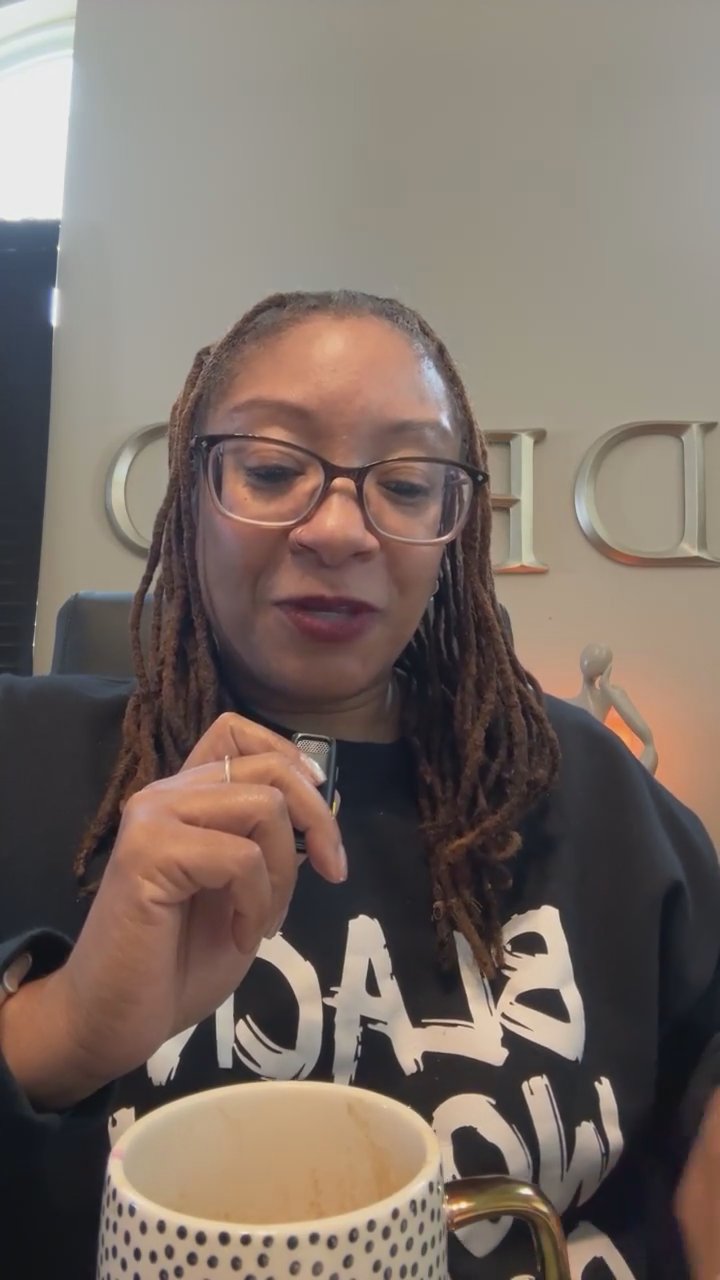
Dr. D. had to make sure his mic was the right direction. I think I just like to hold something in my hand sometimes. That's probably why I'm always with my cup of coffee.
Women most often become depressed over disruption or conflict in close relationships. Men respond with depression to the loss of an ideal or an achievement related goal. I'm curious what you think about the experiences of men and women and how we experience depression differently.
Lack of safety can lead to symptoms of depression. Your identity is connected to your sense of self. Spend some time alone in silence and really think about, who am I?
Hello Cadre, it's me, Dr. D. I had to make sure my mic was the right direction. I always do that. I don't know why I just don't clip it to my shirt. I think I just like to hold something in my hand sometimes. Yeah, that's probably why I'm always with my cup of coffee, which I got right here. So there's a another winter storm in my area today. So we got hit with some snow last night and it is so super, super cold. So if you are in any area where there's some cold temperatures, I feel for you. It is not fun at all like stuck in the house today.
But I have been digging deep into this idea of self silencing that I want to share with you guys. And I've been looking at some videos and some articles and it's just another fascinating topic that I've come across in the last month or so. And I was reading this book, which you probably won't be able to see it because things are a little backwards on this platform, but it's silencing the self. Women and Depression. And although it does focus on the experience of depression for women, I found it interesting because it goes into and this is an old book, I think it was released in 1991 if I remember correctly.
But it goes into the history of psychology where women's behaviors were seen as deviant and our experiences with depression and anxiety and all these other mental health disorders were seen as deviant behaviors. And that's why there's higher rates of women getting diagnosed with these things. So. And bipolar included. But I want to just check in with you and if you're watching the replay, please comment there. I'm curious what you think about the experiences of men and women and how we experience depression differently or if we experience depression for different reasons.
And there is some research that backs us up and what the book suggests. I'm going to, I'm going to read just that brief little section. But the author suggests that women most often become depressed over disruption or conflict in close relationships, whereas men respond with depression to the loss of an ideal or an achievement related goal or over performance issues. So women are becoming depressed because of relationship concerns. Men are experiencing depression as a loss of ideal. And to me, when I read that, it made me think about both men and women really experiencing depression as a result of loss of identity in different ways.
So I would think overall hi Pamela. That men might experience this depression because there's loss of identity. Maybe they aren't succeeding in their careers, or they're not doing anything, or maybe they lost their job. There usually is a high rate of depression when that happens, or if they lost identity with their education. So I've worked with some college students in my private practice that have struggled, and this male specifically tend to struggle with. If they can't figure out what their major should be, or if they're in their major, which they thought that they would succeed in, they're not doing well, they're not passing their classes, and because of the lack of success in that specific area, they're experiencing symptoms of depression.
And for women, which I've also noticed in my private practice, most women that come to my private practice are dealing with relationship issues, and they are experiencing not only anxiety in their relationships, but they are experiencing depression because there's a loss of connection that they go through. And I just found that interesting. So I'm just curious what you think about the ways that men and women, for one, how differently we experience emotions, but specifically the experience of depression.
And has this been your experience, if you're willing to share? So if I think about times where maybe I experienced some symptoms of depression, I just go through a few of those. Like if there's sadness or crying that is uncontrollable, or when you. Maybe you're crying, you don't. Don't know why you're crying. If there's loss of energy or fatigue, maybe you just want to sleep all day. Sometimes people that are depressed also experience where they can't sleep because they're just worried about the problems, which may seem like anxiety, but anxiety and depression, it's like a cycle.
So you might experience both. Also with depression, maybe your appetite changes, maybe you tend to eat more, you're an emotional eater, if you ever heard that term, or you don't have an appetite at all. So you might see changes there. But there's definitely a disruption with sleep, with energy levels, your activity levels, and usually there's a decline there. And when I think about times where I've experienced those symptoms at a higher rate, it was usually because there was a loss of connection of some sort.
It was a loss of maybe even in a toxic relationship, where I was in a toxic relationship and that relationship ended. Although there was this sense of relief, I still experienced this low mood because I didn't have that person in my life anymore. I had a, like a gap of connection, if that makes sense. And there's been other times where I've experienced sadness. For example, with my son, my son, when he was A baby. He has a. He still has a heart condition that's never going to go away. But when he had his surgeries and I was physically separated from him when he was an infant, I couldn't go in the surgery room with him.
And I remember feeling, even though I had peace that he was going to be okay, I still also experienced a sense of sadness. And it was a very strong and heavy feeling that I experienced because I was separated from him. And there is this fear attached to that. So again, anxiety, depression, with the cycle there, there is a fear that I experience of what if something happens to him? I won't be a mom anymore. And at that time I was very young, I was 22. But that experience of what if I lose this part of my identity that I just gained as a mother, Right.
And if you think about relationships, the identity that goes there, what if I lose this identity as a partner in someone's life or someone's lover or their best friend? If I lose that identity as that role in someone's life, then maybe I'm experiencing symptoms of depression. Is that hidden with you? I just find this really fascinating. That depression, sadness, all these heavy emotions are tied to our connection to others, but it makes sense. So I'm just going to give you a little background about Maslow's hierarchy of needs.
And I've talked about this before, but the basis there, we have basic needs like food, water, clothing, shelter, right? And above that, we have to have safety and security. But right there in the middle of this pyramid of Maslow's hierarchy needs is this need for belonging and connection. And sometimes when we don't have that belonging, we can't move towards our higher sense of self and self esteem. And so losing connection to people can bring us down where we don't feel safe. And so lack of safety can lead to symptoms of depression.
We don't feel like we know what to do, we don't know where to go. Right. There's lack of belonging there. So all of that, it's all related. It's a lot. But it all makes sense if you just kind of sit with it for a little bit. And I'm just going to challenge you to think about some of your own experiences. How depression or symptoms of depression, sometimes it's not to the point of like a clinical diagnosis, but you may experience some of those symptoms. Maybe there's not enough to be diagnosed, but it's there.
Depression still exists. So consider that when you've had moments of a low point, like low depression or Maybe you start to feel sadness that is like, why is this so heavy? I don't even know what this is. Was there a lack of identity or a loss of identity that creeped into your life at that time? So if you're struggling with this today, I just want to encourage you that your identity doesn't always have to be connected to. To another person. Your identity is connected to your sense of self. So who are you by yourself?
And that takes some time to discover that. Sometimes we don't even sit and think about, who are we? That's a challenge I have with some of the teens that I work with to ask them, you know, someone says, who are you? The first thing we usually do is we go into, I'm a mother, I'm this, I'm that. We talk about the roles we play in our lives, but we don't think about who we are at the core. I am strong, I'm independent. I'm kind, I'm loving, I'm gentle. Right? That's who we are. So if you're experiencing this.
This lack of identity, sit with yourself for a little bit. That's your challenge for the week. Spend some time alone in silence and really think about, who am I? Without attaching a role to yourself, who are you at your core? So I hope that helps. I hope that's encouraging for you today. Please share this message with someone. Even if you just write down some notes and take some nuggets from it. I would love to spread this wide because it's so important that we identify who we are so we can help others identify who they are, too.
That's where the connection happens. All right, so I hope you guys have a wonderful day. Stay warm if you're in the cold area, but, yeah, have a wonderful day. And don't forget your coffee. All right, bye.