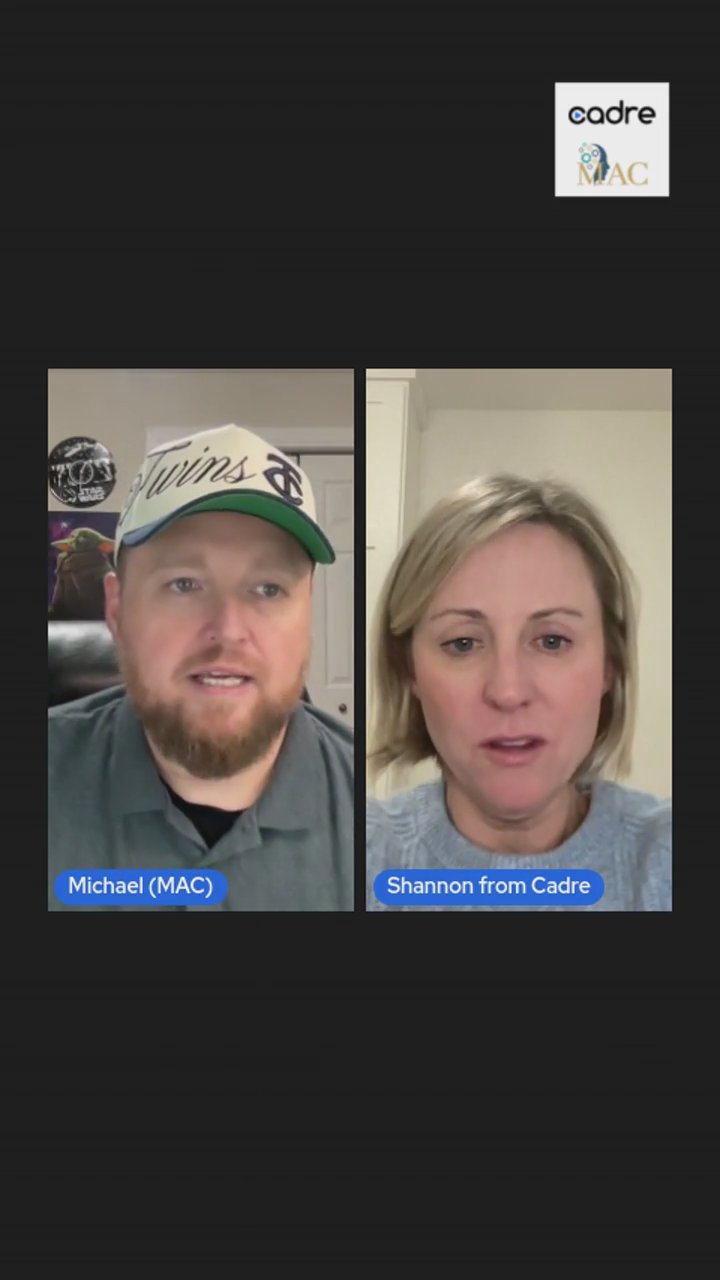
A Deep Dive into the Science and Practice of Compassionate ABA: Applied Behavior Analysis (ABA). Featuring, Michael Laverdiere, BCBA Director at MAC Midwest who will share the evolution of the approach and the compassionate lens MAC applies in its work.
Tonight we are talking about autism. Shannon is an autism mom. Michael is here to bring the professional perspective. This is a place where we cover all kinds of issues.
Michael is the BCBA or Board Certified Behavior Analyst Director for Mac. Also the current president of the Minnesota Northlands association for Behavior Analysts. Applied Behavior Analysis is mixing environment and behavior.
Because this is a live Q and A, that that means that you can actually ask questions. Please, please, please just pop your questions in the app and we will see them on our screen and we'll get to them.
ABA can be controversial in the autism world. Can you talk about why and how that's changed? What ABA is, is. It's a science. We're starting with the foundation in empathy. And we're really taking the perspective of the individual that we're working with.
Mac: Where do you start with an ABA journey? Mac: The first thing, obviously, is a diagnosis. From there, we look at, okay, now what. What type of treatment do you want to pursue for your loved one? And ABA is not the only one.
Is there an age at which ABA applies and doesn't apply? What ultimately what each individual kiddo needs and start to weigh out. What we want to do is have everybody be successful in the most in what we call the least restrictive environment.
How long, on average, do you think it takes parents to get what that means? Well, it depends. Even typical kids, you have to learn the new version of your kid. It's not something you. get overnight.
Aaron's behavior has to be carried over into the home. How much are the parents involved in that process? I honestly, I am more so soaking up everything that I can from them. Initially I'm learning as much as I can about the family. Then I put it together to form a treatment plan.
Full time or part time? It really can depend a whole lot. In Minnesota, we can potentially get like, when I say full time, you know, I'm referring to like a 40 hour schedule. If someone chooses to do this in lieu of school, how does that work with the school system?
I do think there's just like a learning curve with all of that. If you can't duplicate the efforts at home across environments, feeling bad about that. That's very normal. I would encourage no one to be dis.
The science of ABA is applicable to all ages. Do you expect to see the level of care decline over time, or is it very dependent, again, on the intensity? It can be very different for every person. What other questions?
The incidence of autism continues to rise. It's really creating challenges for families to access services. One of our strategic goals at Mac is to expand and bring our services to, around the state. Do you believe that there's going to be a, an evolution in a positive way?
Michael: I just want to thank everybody for showing up here. I hope this was helpful to everyone watching and replay. And thank you all for being part of the Cadre sphere. So have a great night, everybody.
SA Hi. Hello. Happy Thursday. Welcome to the Cadre sphere. Welcome Michael from Mac. Hello. It's nice to see you. So welcome to everybody in the Cadre sphere. Thank you so much for being here. For those of you who it's your first time to Cadre, if you are first, if you are, if it is your first time here in the Cadre sphere, this is a place where we cover all kinds of issues and talk about all kinds of topics that human beings live through. And tonight we are talking about autism. I'm an autism mom.
I live in the autism community here on Cadre Mac Minnesota Autism center or Mac Midwest as they now are known as one of our beautiful partners here. And Michael is here representing them tonight. I am going to just briefly introduce myself. I'm Shannon. So I'm actually part of the Cadre team. I'm also an autism mom. I have a son, a 15 year old with autism, ADHD and anxiety. So this is a road I have been down. I'm continuing to go down it, but it started 13 years ago. So I'm, you know, I'm in it.
And so I definitely, I bring the parent POV to the conversation. And then tonight Michael is here to bring the professional perspective. And so Michael, if you're willing to tell us about you a little bit, including what does a BC be a mean, that would be great. Sure. Well, I'm Michael and let me first start off by saying I apologize if my son bursts in like the Kool Aid man. Probably gonna happen at my house as well. I've told them to stay out of the kitchen, but I think that's it's likely not going to play out that way.
So I would love to see your son burst in like a Kool Aid. Well, so I'm Michael. I am the BCBA or Board Certified Behavior Analyst Director for Mac. I'm also the current president of the Minnesota Northlands association for Behavior Analysts. Okay, that sounds like a big title. The second one, I mean they both do, but the big one like the Northland. So what is that? Actually, why don't you tell us if you don't mind, what do you do in both of those roles? Sure, sure. So first off, what, what is a board Certified Behavior Analyst?
And so the board certified piece comes in. We've got a national credential credentialing board. And then recently, just as of, well, January 1st, where we are now licensed through the state of Minnesota through the Board of Psychology in Applied Behavior Analysis. And so kind of what is that? It's the study of behavior and the study of the environment and how the two interactions and how things in the environment can be changed to increase or reduce behaviors of that explanation. That makes total sense.
Yeah. Yeah. So my role at Mac, I currently oversee a team of around 26 BCBAs across 22 different centers throughout Minnesota. Got one in Iowa, now one in Wisconsin. All implementing aba, or Applied Behavior Analysis, and working with individuals on the autism spectrum. Okay, that's amazing. It's interesting because. So it sounds like what you're saying is ABA in particular is mixing environment and behavior. Yeah, yeah. We were to, like, call it down to two things. It's those two pieces. Absolutely.
And. Absolutely. And environment. You know, just for context. Environment could mean so many things. You know, we. We are a part of the environment. You know, parents, a parent, a loved one is part of the environment. And. And, you know, school, obviously, home. Those are all. All environmental pieces that. That can influence behavior. That makes total sense. I'm going to stop for two seconds. And so I just want to do one more little table setting here at the beginning. So because this is a live Q and A, that that means that you can actually ask questions.
So we're gonna. We're gonna talk, and we're gonna sort of set the stage in this conversation. But please, please, please, this is an opportunity. Like why Cadre exists and why we're here right now is for people who maybe don't have a chance to ask questions. Maybe you don't have a professional services partner today. Like, maybe you're just wondering about something. Maybe you're worried. Maybe you're all the things. So that's why Michael's here. That's why I'm here. So please, please, please just pop your questions in the app and we will see them on our screen and we'll get to them.
So just wanted to let everyone know that that's why we're here. So. Not to interrupt you, Michael. Yeah. So do you want to talk a little bit about sort of like the. And I'm just going to sort of like, you know, say there's. This is sort of. ABA can be controversial in the autism world. I actually, as a parent, when my son was diagnosed, I didn't know that. I have come to know that the more that I've gotten involved in the autism community in different ways. Can you talk about why and how that's changed, if you're willing just from your perspective?
Sure, sure. You know, I. I think, you know, what ABA is, is. It's a science. Right. And, like, Many sciences. Well, well, comparatively, our science is fairly, fairly young. Right. And when we compare it to like, psychology as a whole or medicine or, you know, other branches of science. And so, you know, over the course of, of, you know, the history of aba, you know, we've, we've grown, we've developed and, you know, like other sciences and other branches of medicine and psychology. Yep, sure. You know, things were not always great when you look back in hindsight.
Right. I mean, geez, they make movies, you know, about psychiatry and some of the things, you know. And so, you know, the important part, and, you know, the important piece to note is that we're developing science, right? And historically, some of, you know, some of the controversy that surrounded ABA is, you know, it can be cold. It's, you know, can create robots, right. Out of, out of kids or out of the individuals on the spectrum that we're working with. And where that kind of comes into play is, you know, some of the, you know, the strategies and the pieces of ABA that we have utilized in the past didn't always take into consideration the, the feelings, the.
It was all based in, like, objective, observable behaviors. And it really dismissed feelings, the feelings of the individual as irrelevant. Right. And so, you know, the, the end game was, was the outcome. Right. And the behavior that we were able to see and measure and all of that stuff. And so as our fields kind of developed, you know, one of the big things that's come about is this, this idea of compassionate aba, trauma informed care. Those are some of the kind of hot button words, really, all that, that means is that we're starting with the foundation in empathy.
Right? Yeah. And we're really taking the perspective of the individual that we're working with and, you know. Right, yeah. Which I think, to your point, I think that's something that if you look at the world, and again, I'm not, I'm not a scientist, I'm a parent. I'm bringing that lens to this. It's sort of the same application of, I think, 20 years ago, 40 years ago, 50 years ago, 60 years ago, empathy and compassion and emotion in general wasn't considered in, in human behavioral interaction generally.
Right. So just again, being parented and it. For neurotypical child, it was, you know, some parents took the stance of like, you know, do what I say, don't talk back, you know, be quiet, follow the rules. And I would, I would argue, right. Like, that's a seminal, a similar POV or a similar approach. And so to your point, I think it's just the idea of allowing space for the other, for that child to bring their perspective, to hear them out, to bring their emotion to the table. Which. Which is. Which is 100 valid.
So that's it. Yeah, that makes sense. Absolutely. And, you know, it's not. It's not per se that that ABA differed significantly from the perspective, like you said 40 years ago. Yeah. The world was a colder place then, you know. Exactly. Exactly. That's right. I think you're. I think you're one. Right. So tell us, if you will, if you're willing to. So tell us a little bit about, like, where do you start with aba? Like, when we think about the therapy. And as I was prepping for this tonight, I was kind of carried back to my journey when I started.
So I'd love to hear. Yeah, tell me, if you go to Mac, if someone comes to Mac today, where do they start with. With an ABA journey. Sure. You know, the first thing, obviously, is a diagnosis. Right. You know, starting out, we start. You start with a diagnosis, and usually that's, you know, conducted by a licensed psychologist, and they're able to, you know, start that process. Right. We. We establish that autism exists. Right. And so from there, we start to look at, okay, now what. What type of treatment do you want to pursue for.
For your loved one? And ABA is not the only one. You know, there are others. There are other modalities of service, other types of service that, you know, are available. You know, ABA is. Tends to be kind of more of the mainstream one. Yep. And, you know, but there are others. And ultimately, I would encourage any parent going through that to, you know, do your research, do your. Do your own kind of investigating to see which one aligns with what you want for your family and your loved one. And so what are some of the factors when you talk about what you want, and I think it's interesting to use that word, like what you want, just because sometimes it feels like.
I'll put on my parent hat for a second. It's not about what you want. It's about what you can bear a little bit, what your life will allow for. Also, probably, I'm guessing, like, how. How complex is the diagnosis? How severe is the diagnosis? There's so many factors. Right. And, you know, you can even boil into that, like, what are the resources in your. Yeah, yeah, yeah. You know, and. And where. I kind of say, what. What is it that you want? You know, a lot of families have come across a lot of families that just don't want to, you know, Pull their child out of school, they want them to continue to go to school.
And again, that really boils down to like, what does that district have at their disposal? What resources, what intensity of assistance can they provide on a day to day basis throughout the entire day? And what we find a lot of know and where Mac specifically, we kind of come into play as we step in when the school's resources kind of become a little bit exhausted or, you know, a kiddo is not necessarily able to be successful in school. We, you know, we want to take a look at how, how can we get them school ready?
Right. How can we get them ready to go so that they can be successful in that environment? Okay. And is there an age at which aba, so we're talking about school environments, we're talking about home environments. Is there an age that ABA applies and doesn't apply? Is there, is it like, oh, if someone is a teenager, it's not valuable? Or can you talk a little bit about that or is it always valuable? I, I, you know, honestly, like, I might be a little bit biased, but I think it's always valuable.
No, I, I think that there, there are always cases where, you know, there's always work that we can do. Right. There's always things, you know, and we really just have to take inventory of of all of the different factors at work and at play and, you know, determining. And that's really kind of when we start to talk about compassionate aba. Like one of the cornerstones of it is, is really individualization and taking a look at like what each specific, you know, Learner. Yeah, we'll call them learner, we'll call them kiddos, we'll call them clients, all of the above.
Right. But what ultimately what each individual kiddo needs and start to weigh out, like you know, almost conducting like regular benefit analyses. Right? Yep. You know, I, I do it all the time. Right. What, what does this learn? Or, you know, how, how intensive intervention do we need? Are they able to go to school part time and come to us part time? Just always be evaluating that because really what we want to do, you know, we want to have everybody be successful in the most in what we call the least restrictive environment.
And when I say restrictive, I mean I really am talking more so about like the like one on one versus being like in a group. Right. So like having like a one on one para versus just being able to be in a classroom with multiple kids and a teacher. Right? Yeah, like as little support as possible, but not negative way. In a positive way. Correct. Yeah, yeah. So if you hear me say that again, restrictive doesn't necessarily mean somebody's movement, it just means level of support. Well, and it's so interesting because I think that's part of the challenge.
Again, like as a parent with the language is, is that you hear, is it just some of the words that you hear? Or again, like when you get that diagnosis of what it's going to mean for you to execute ABA as the caregiver, it feels like a lot. It feels like so much. And so I wonder, actually, could you give us, I'm going to turn this into like a little story. I think this might be a good example. Can you just take us through, like let's make up, let's say we have a, you know, a four year old named, you know, or you can go with someone that's in your head and just sort of like take us through, if you will, that story of what that means for that family, what that means for that child.
That would be amazing to just understand like what are the steps way, that would be awesome, you know, so you, you brought up something about like the language and the terminology behind it, you know, and really just as a provider, you know, the onus is really on us and we have a responsibility to ensure, you know, that we're explaining things, you know, but just as a side, one of the things that I found out, I'm, you know, obviously a parent also, and I've got older kids and a younger son, but.
Is that the Kool Aid man guy? Yeah, yeah. But one of the things as I was going through, you know, I, I, I was in the Navy, got out, did other things for a while and then decided to go back to school and learn all about aba. Right. But one of the things that stood out to me while I was going to school for this stuff, I'm like, these are all things I know and have done and have heard as a parent, you know. Yeah. They're just calling it something different. So true, you know, and so for me it's it like when I'm communicating with fellow professionals, sure I use the terminology, but as I'm talking to parents, I definitely have the responsibility to explain things as a parent would understand them, you know, I totally agree with you.
And that's why I think even like, you know, earlier when you're explaining it and you're like, it's, it's this in the environment, it's this. And it's like at the end of the day, it's like what you're Saying is, and even like for us as adults, like, we, we have an environment. It's like the life you live, it's the workplace you go to, it's the people you talk to. It's, you know, hey, loud music annoys me and stresses me out. I don't want to go to a concert. It's literally like the same sensory stuff that you have and I have.
And it is, I think it, it feels like it just, the language is so different than. It feels like you're dropped into another world and you do wish. You kind of want to say to the third. I mean, I used to say this, I think to my husband at the time. Like, okay, let's just cut the, like, let's just cut through it. Don't use the big words. Just say the thing you actually want to say. The thing you want to say to me. Say the thing you're going to say to your colleague when you finish talking to me and you go through and you're like, well, that's going to be horrible.
Or, well, that's going to be great. Like, just say that. Like, you know, that's okay. Like, and I know you can't do that as a professional, but I think you're right. Like, it's just sort of that it can be overwhelming, you know, And I, I've obviously, I've, you know, I've sat in on IEPs for my own, you know, son before. Yeah, yeah. I've been involved in IEPs and one of the things I found is like, they tend to do that a lot in IEPs, and I became overwhelmed as a parent. Like, before I became educated in this stuff, my eyes would just glaze over sitting in those meetings, you know, but, so let's go back, you know, four, four year old.
Okay, sure. Okay, let's name him Aaron Rodgers. Yeah, Rogers. There we go. So Aaron Rodgers has, you know, four year old, newly diagnosed family. You know, and I, I think it'll depend. Like, one of the first things I would do is obviously I want to talk with the family, find out what information they've received so far. Kind of just see where they're at in this journey. I mean, if, hey, they know nothing, they've never heard anything about ABA or, you know, not real sure about autism. You know, one of the first things I'm going to do is just kind of educate a little bit and work with them to better understand what autism is and what it means for their loved one.
For Aaron, right? For, for little Aaron. I'm gonna explain you know, autism is a sensory processing disorder, and they're going to experience the world differently than you and I. Yeah, right. And they're gonna communicate differently than you and I. And so, you know, throughout that process. Go ahead. How long, on average, do you think it takes parents to get what that means? Well, it depends. You know, it's. It's tough, you know, if we're talking about a new parent, first child that's kind of running into this.
They don't have a frame of reference. Sometimes that can be different. You know, I've. I've ran into it before where families didn't even really, you know, it's the first child, the family circumstances were such that they didn't really understand milestones and where their. Their child should be at. And, you know, they. They're coming in at 4 years old, 5 years old, with very, very limited skills, very limited, you know, having not hit very many milestones. Right, sure. Yeah. And so, you know, again, it can.
It can really range, but, you know, typically, you know, for. For family to kind of just grasp that, hey, this is going to be different. You know, I really think that, you know, around that two, three, four window. Yeah. I think. I think I'm asking because I want people to know that you're not supposed to walk in and be like, I got it. Like, you're not supposed to take in this information and be like, yeah, I misunderstood the question a little bit. Sure. You didn't. At all. You didn't. At all. I think that's.
I think it's just. That's. That's. You didn't misunderstand it. But I think that's. The point is that it's. It's not something you. You get overnight. It's something that. So you're not. Don't expect. I'm trying to give families grace to know that, like, don't go in there. I know for myself, I'm type A. And when this happened, I was like, I'm gonna know this thing. I'm gonna solve this thing. I'm gonna do. And that was like such a thick. That was such a knockdown for me inside because I. I had to be.
I had to realize that I cannot control it. If I can say one thing, it is that you. You will never stop learning about this stuff. Right. Even for me as a professional. And I tell this all the time to, you know, to the. Our. Our behavioral therapists, the bcba. You know, as much as you think you might know this job or, you know, it is not Routine, it changes. Yep. It's literally in the job description of behavior change that wherever starting point, we start at three months from now, we don't want to be in that same place.
It's going to change, and we have to learn to change with it and evolve. Right? Yeah. Which, honestly, it's just like human beings in general, like, that's the other thing. Like, even typical kids, you have to learn the new version of your kid. Absolutely. So, yeah, yeah, yeah. Like, if you think that you're gonna learn this stuff and know it and. And nothing's ever going to change and you're not going to have to learn anymore at some point. Yeah. I thought. I think. I thought that I was like, I'm gonna knock this thing down and I am just like, I'm gonna solve it.
And then I was like, oh, my God, I can't solve it. And I think that was such a. Like, it changed my entire life in a good way. One of the most common things we see, like, when we start trying to, like, reduce problem behaviors, problematic behaviors, is like, you reduce one, and then four other different ones pop up. Right. And then you go after those and then three. Three more come. So it's like an ongoing evolution of, like, help, you know, helping, you know, helping this individual live their most successful life.
Totally, totally. Yeah. Thank you for taking that segue with me. Yeah, yeah. No, so, you know, really, again, you know, at the start of this process is like, you know, learning about the different types of service that, you know, there, there are. And. And working with a. A clinician. Right. Might be a bcba. It might be somebody who specializes in another field. Early start Denver model is another one, you know, and so working with a clinician to develop, you know. Well, first. First things first.
You know, we're gonna do an assessment and we're gonna. Yep. And we're gonna have some eyes on and. And time to meet with the family, discuss different dynamics and different questions that we need to have answered. And, and. And then we're going to do some observation and really learn more about. About. About little Aaron and, you know, the things that he's good at, the things that he needs to work on more. And, and then we're going to work on developing a plan that's individualized for. For Aaron.
Yep. Love it. And so when the parents do that, how much of. When you go through that process, how much of. How much are the parents involved in that and how much are, like, how much are you telling them versus asking them or collaborating in that process? Of goals. I honestly, I am more so soaking up everything that I can from them. I might steer conversations to get more information that, you know, that I, I need. But, but really it's, it's a Q and A for the parent, right? Yeah. And I asked that because I think sometimes so when you go to like a physical doctor, I think we go with the understanding that the doctor has the answers and that they're going to give us the answers and then the problem is going to be solved or that they will tell us what to do.
And I think that's one. One of the interesting things again in my experience is that we walked away being like, oh, we are, we're a bigger part of this. Yeah, yeah, we're a huge, like the ratio that we're a part of this. And I think for ABA particularly. Can you talk about that a little bit like so 100%, you know, initially. Now, now it would eventually get to the point where there would be a little bit of more of me suggesting and giving recommendations and feedback for, you know, for Aaron's parents to do at home.
But initially I'm learning as much as I can about the family, about the, the history about Aaron and what his needs are. And you know, because ultimately for me personally, I, you know, I can do an observation, right? I can, I can bring Aaron in and sit with him and watch him for an hour or two hours, three hours, you know, but there's always things that come into play like, you know, the new environment, new person, what we call kind of the honeymoon phase, right? Where, you know, maybe Aaron's not going to show us his true, true colors at first, right.
During that little three hour peek into that window that we have. And so I rely a lot on, on parents information about the things that they see on a regular basis because I might not see them, right? And so I, I take that, I take that along with what I do see during an observation and I put it together to form a treatment plan right now. Now after we kind of get things started and, and figure out like what level of intensity we're going to work with Aaron on, you know, whether it be like a full time schedule, part time schedule, etc, you know, after a period of time and we're able to kind of see what's, what will definitely start working with the family a bit more on things that they can do at home, right?
And when we talk about ABA and how it's, how the environment interacts with behavior, you know, one of the huge things that we see is like hey, we can, we, we can work through all of this stuff at the center and teach Aaron to be super successful at the center. But if those things aren't carrying over to home. Yeah. Then we're, we're spinning our wheels and we're wasting our time. It has to, it has to be carried over into the home. And so if things never change in terms of the environmental factors at play at home, if they never change, then it's likely that Aaron's behavior at home won't change.
Right. If we have to take kind of some of the things that we have going on at the center and make them similar at home, if we want the behavior at the center to generalize to home. Right. Yep. Yeah, I know. I remember one of the words like across settings was one of the phrases like, okay, can he do it across settings? So how do parents and I, you know, again, like one of the things you said was full time or part time. So what, tell me what those, what does that manifest as for people? What is full time or fart?
So again, like a marriage, parents, and I have a job and I have a life and I've maybe another child. What does that mean for me? Full time, part time? Like what's it. It really can depend a whole lot. Right here, specifically in Minnesota, we, you know, funding services for, for autism. You know, we, we can potentially get like, when I say full time, you know, I'm referring to like a 40 hour schedule. Right. Where they're coming to Mac or another ABA provider for 40 hours a week. Just like they would kind of go to school.
Right. A part time schedule might look, you know, like any variation of like half day at school, half day at the, at the center, or something like that. It could look like, hey, they go to school all day and then come to us for a couple hours towards the end of the day. And so that can really vary. And where it really stems from is kind of just like that, that level of intensity that we see that they may need based off of the assessment, based off of all of the information we've collected, where their skills lie, etc.
So then is there. And this is probably too deep in the weeds. I'm just actually curious. So then how does that, how does that work with, if someone chooses to do this in lieu of school, how does that work with the school system? Is there, how does, how does that coordination work? Is that something that's meant like managed through the state? What would a parent do in that case? Sure. So because ABA is considered like a Medically necessary service. Okay. It's paid for through medical funding, like medical insurance.
We're able to, you know, work with schools and get school waivers and things like that so that, you know, attendance and all of that isn't an issue if they know that they're receiving some type of medically necessary service. Perfect. Thank you. Yeah. Awesome. Okay. So then Erin's going through that. What if a parent. Do parents struggle in your experience? Like, would Aaron. Could Aaron's parents have a hard time with this? Like, let's say, you know, ABA or with. Well, just like. I think it's the implication.
I think that it's hard. Like the implication to their life or. Yeah. Making. I would imagine there is a. Again, depending on the individual's life situation, um, not everyone may have the resources. Not everyone may have the time. If someone's working at, you know, a retail job or a fast food restaurant or whatever, they might not be able to leave their job. And so how do, how do. How do people do that today? And I know that might be just a horrible question because the answer might not be great.
Right. And, you know, it's not always great. Right. You know. Yeah. And it can depend a lot on each individual family's resources, what their schedules look like. You know, one of the big things that I try to do with working with any family is identify some of those barriers that they might have. Connect with them. Connect them with resources. Yeah, Potential, you know, social workers that can connect them with additional resources. One of the great things in Minnesota, you know, transportation is always a big issue, and there are resources through the state that can provide transportation to and from home to, you know, to the center.
There's a support system and it really, you know, identifying what those supports are and connecting families to help kind of alleviate some of that stress. And, you know, I definitely recommend, you know, depending on what a family's needs are, connecting them also with psychotherapy. That's another. Another thing that we can offer that we, we do and have offered at Mac for families specifically, dealing with this is, you know, psychotherapy. Not for the learner, but for the family, you know. Yeah, I mean.
Yeah, I mean, yes, that makes complete sense to me. Yeah, I mean, it's. It's, you know, it can be challenging, it can be rewarding. It can be, you know, a lot of different things. It can be a lot of what, you know, what we make it. Right. And so, you know, really just trying to help families educate what's out there, you know, help educate families on what's out there. So that's amazing. I mean, the fact that just to your point, educating and then giving them all of the information to make the choice for their child that they can best make.
Right. And I think too, just again, knowing that sometimes it's not the perfect. It's not what you exactly want it to be. I think that's. I think that part, that's part of this process too is like. Is grieving a bit because. Because not even just the diagnosis, but like, I. Again, like. Well, you have an idea of what it's going to be like to be a parent, right? Yeah. Well, and then you want to help as much as you can, and maybe you can't help as much as you want to. Right, right. Like, that doesn't feel good.
And maybe you. Yeah, I mean, you just. It's just a lot of things that you can't control and I think that's difficult. I do think there's just like a learning curve with all of that. And like you're talking about with aba. If, again, like, if you can't duplicate the efforts at home across environments, feeling bad about that or feeling, you know, maybe I'm doing it half the time or maybe I'm not, you know, maybe I'm not good at doing it and just managing all of that seems like a lot. It. You know, and what I.
I try to, you know, relate my own personal experience as much as possible. Yeah, of course. You know, I would, in that, in those instances, I would encourage no one to be dis. Like, no one to be discouraged because let me tell you, my son is so perfectly well behaved at school, but can be an absolute terror at home. Oh, my God. I get scared when I go to. I know. I go to school and they're like, your kids are amazing. And I'm like, who, What? What children? What? I'm sorry, who are these children talking about?
The same kids. That's very normal. I think it's very normal. So then how long. And actually, I just want to say really quick, so we have about 10 minutes left. And I want to encourage anyone out there who has. I know sometimes people are scared to submit questions they don't want to, you know, to. To put it out there. But I just want to remind you that's what we're here for. What other questions? Or. I'm sorry, what are typical questions that you get asked by parents who are thinking about Abia or.
Yeah, like, what are the things you hear about the most? You know, I think the biggest, the biggest things that come up is, you know, some of the things that are out there, the controversies that they hear about, that they read about. You know, like I said, I encourage anyone that's kind of going through this to get online and do your research. But in, in the process of doing so, they're going to see things that don't shine the greatest light on ABA historically. And you know, the, the biggest thing that I encourage any family to do is, you know, talk with a provider, talk with a clinician, find out more about, you know, the, the things, the approaches that they utilize.
Again, we, you know, we're talking about compassionate ABA and kind of the state and the, the continuation of our field evolving. And you know, where we were at even 10, 15, 20 years ago is not where we're at now. And, and you know, that's that, that's probably that one of the biggest ones that I, I hear from families and questions that they, they have. You know, is there a research around like the efficacy of aba? I've heard obviously versus versus other therapeutic, therapeutic approaches? Sure, sure there is absolutely research out there.
Again, you know, when I say it's kind of the mainstream, they, you know, you'll find in a lot of mention online about, of being the gold standard recognized by, you know, a lot of different medical journals, medical associations as kind of being the gold standard for treatment, for, for therapy, you know, and, and when you asked me earlier kind of about like is there an age that you know, ABA works? You know, really the science of ABA is applicable to all ages. And yeah, you know, but, but yeah, yeah, there's, there's lots of stuff out there.
There's lots of bad information out there too. com maybe not following that one. Like let's go to the journal medical journals, you know, let's look at those articles. Right? That makes total sense. So then if someone like I'm just going to go back to Aaron for a second as he goes through his journey in school, school. So someone like Aaron and let's say, you know how, let's say he goes through his school, he goes through his elementary school and maybe he's continuing to make progress and goes through junior high.
Again, I can speak to my experience. My son has been in full time services. He's in the autism program has been since kindergarten, and now he's a junior sophomore in high school. And so he's been an entire time, made tons of progress. Do you expect to see the level of care decline over time, or is it very dependent, again, on the intensity? Do you expect to see everyone the same, or is it just so different for every person? It can be very different for every person. Yep. Our goal and our hope is that the intensity of services can be withdrawn and that we can move them into, like I said, the less supportive, you know, environments where less support is needed.
Yeah, but that may not always be the case. There. There have been cases where really our main goal and hope for this individual is maintenance, like skills that we've taught, maintaining over time and not being forgotten and seeing regression and things like that. Yeah. You know, there's been, you know, again, cases where, you know, really focusing on those independent living skills as our main. Main area of focus. Right. So it depends a lot on each individual and where they're at on the spectrum and kind of coming up with, you know, one of the things that we utilize at Mac is we call them roadmaps, and we work with families and develop kind of a road map of what.
What we project the future might look like for their loved one and. And where, you know, where we see ourselves down the road. That's awesome. I would love one of those for my son. I don't have. So I'm like, I'm coming. That's. That's cool. Is anything. This is sort of just a broader question. How long have you been in the. When did you leave the Navy? I left the Navy in 2006. Okay. I muddled around for close to 10 years before deciding. Okay. Something different. Yeah. So you've been in this in about eight years, Six years.
Okay. Are you seeing. Is. Is the. I don't. Is the. Are things changing at all with autism over time? I know that's a really broad question. I'm sorry, but are you seeing anything that's changing? Like, with technology, with the way things are treated, with anything sort of. I just know trends in time again, like, even the incidence of autism continues to rise. Things like that. Are there any trends that you see with ABA therapy, ABA therapy, outcomes, or anything just in general, that you're like, we're starting to see something trending this direction, good or bad or anything like that, that.
To be aware of. I mean, one of the. One of the big trends that. That I'm seeing that. That jump out. Yeah. Obviously with the. The rise in diagnoses and. Yeah. And incidence, you know, of, of autism spectrum disorder. Like it's outpacing the growth within the clinical field. Right. So like, you know, it, it's really creating challenges for families to access services. Right. It's putting a higher burden on school systems because school systems, when, when a family can't get access to services and they're relying on the school system, you know, and you know, let's say that there is this high intensity need for one on one, you know, it, it's creating a lot of strain on the system.
Right. Yep. And the options are not always great. Yeah, yeah. One of the things that, you know, we're seeing, especially in, in more rural parts of Minnesota or the country in general, you know, families definitely have an, A harder time accessing services. That's kind of been one of our strategic goals at Mac is to expand and bring our services to, around the state so that anybody within the state doesn't have to drive more than say an hour for services. So, you know, that, that's. Yeah, absolutely.
And I think, I think that's something, you know, that's honestly us at Cadre, that's part of why we exist to. Because there is, you know, mental health in general, obviously autism is near and dear to me. And so that is, you know, in partnering with you guys, that's one of the things we talk about is how can we do things like this, knowing also there's wait lists. You guys have wait lists. There's people in rural areas that don't. Yeah, like you said, they don't have anything. And so we, if it's this, if this is helpful to even get one parent a little bit of understanding of like, okay, this is, you know, I don't feel bad that I didn't get it the first time or okay, now I understand what, you know, what ABA is.
Or now I feel a little less scared when I googled it and. Or now I'm going to call Mac because Michael is so awesome, whatever that is. But I think, I think the thing that makes me excited about this time is that I do think that because of tech, I think there is an opportunity for us to connect with people in new ways. And so I, I hope that that allows us to help each other in new ways and deliver care to people. But yeah, it's. Yeah. Do you have hope for that? Like, do you believe that there's going to be a, an evolution in a positive way?
I do. You know, I, I think number one, we're fortunate to to be in a state that is doing everything that they can to ease provider shortages. And I think that as other states, you know, look to Minnesota as. As really an example, I hope that they adopt similar approaches to easing some of that strain and, you know, kind of helping to. To fast track people getting through some of their training, some of their schooling, and kind of getting the people out in the field that we need, you know, and. And ultimately retaining some, you know, the more experienced people to.
To help advance the science more. Yeah, well, I think, you know, we're here to help. You're here to help, so, I mean, we're gonna get it done. And no, no Kool Aid man came through your door during this entire conversation. I know, right? I didn't have anything either, so that's a win. Well, you guys, we are right about time for tonight. But I just want to thank everybody for showing up here, everyone who watched on the live stream tonight. I hope this was helpful to everyone watching and replay.
Thank you so much for showing up. We are here for you. Michael, thank you so much for being here. Thanks for having me. Yeah, we appreciate you so much. We appreciate you, Mac. And thank you all for being part of the Cadre sphere. And we'll see you next time here on Cadre. So have a great night, everybody. Bye, guys.