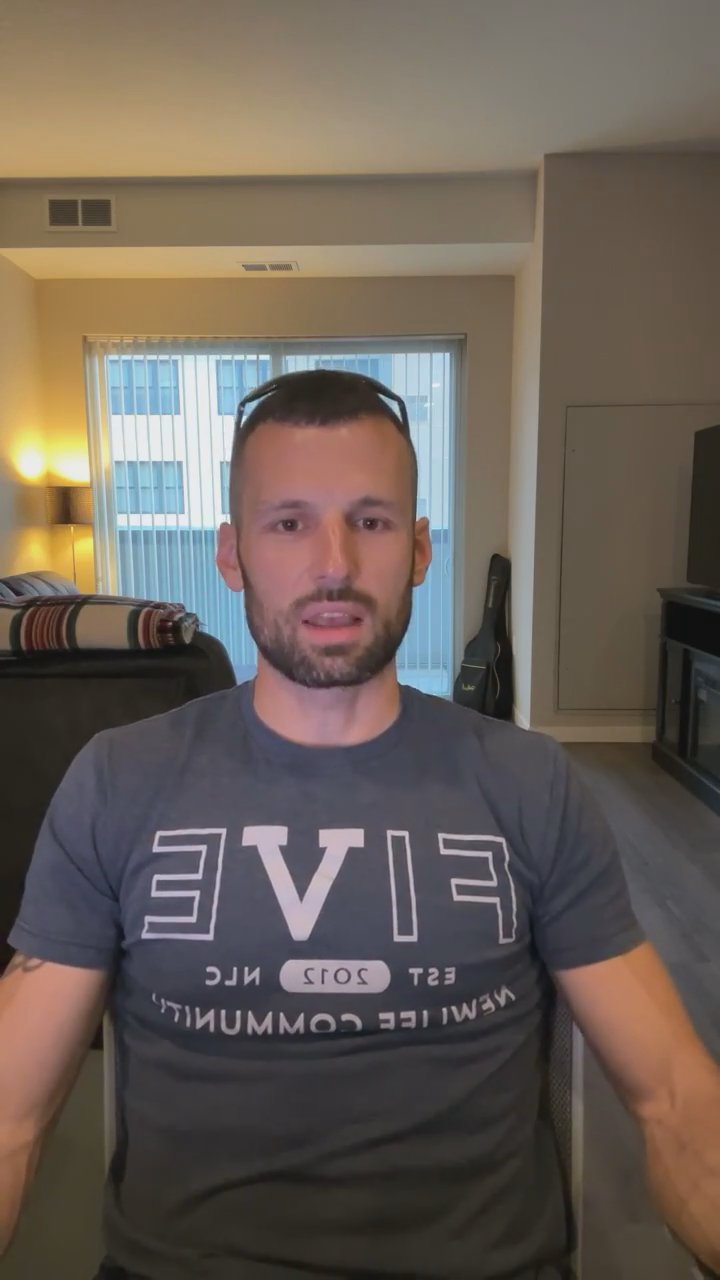
Jason Lennox is your resident recovery champion. He talks about all things recovery, mental health, well being. September is national recovery Month. He had that level of compassion because he went through the struggles.
Jason Lennox is your resident recovery champion. He talks about all things recovery, mental health, well being. September is national recovery Month. Serenity is the core of what keeps me well.
Jason Johnson: I think compassion is just such a critical component. He put up a mug shot of mine from 15 years ago now. Johnson: What do you think when you see that kind of picture? Johnson: How can it changed a person's mindset?
Ten years ago, our cousin Scott passed away in a motorcycle crash at the age of 34. He had that level of compassion because he went through the struggles. Sometimes it's just about education and awareness, and that's where I love the.
Good Sunday evening to the Cadresphere. Hey, happy to be here with you. I'm Jason Lennox, and I am your resident recovery champion. m. with Sunday serenity, where I talk about all things recovery, mental health, well being. I believe you know the title Sunday. Serenity. Serenity is the core of what keeps me well and keeps me able to go through this life without having to lean on crutches, drugs, alcohol, food, money, sex, all the things. And so I believe wholeheartedly in serenity and keeping peace in our lives.
And so that's what I'm here to talk about. I am a person that's in recovery and love sharing any time of year, but especially this time of year, September, national recovery Month. It's my favorite month. I just love sharing with the world on social media here, but again, just love talking all things recovery. So tonight I wanted to talk to you about one of the c words that I absolutely love, and that word is compassion. I think compassion is just such a critical component, both for people who need our help, like on the receiving end, to feel the compassion, to receive that compassion, but also for us as human beings who maybe found a different way of living and just in general that we find ways to be compassionate.
And I want to give you, I want to share in a couple ways about compassion. First, I spoke at an event last Thursday, and it was to a group of public health officials, people who see the disease and this epidemic and what it's been doing to our, our area here in Minnesota. This was in southern Minnesota, and so people generally have a little more understanding of what we deal with and what we see. And, you know, I'd like to think have more compassion. But one of the interesting exercises that I did was, this is new.
I speak and I do these events, and this was a little bit of a trial run. And what I did was put up a mug shot of mine from 15 years ago now. And I asked, good evening, Jules. Good to see you here. I asked the crowd, what do you think? What are the first thoughts that come to mind when you see this mug shot here? And it's not a pretty mug shot. It really is. I was in a bad spot, but I'll get there. So I put the mug shot up and people start talking like, oh, you know, defeated, and everybody's trying to be nice, and I kind of encourage them.
Now, I want you to be brutally honest. What do you think when you see this kind of picture? Because I know what I think when I see that kind of picture, I don't think good things. I think that's scary. I think that's a, you know, stay away. All the things. And as I. As I kind of created that space for people, that's what began to come out were some of those, you know, scary fear, stay away, you know, doesn't deserve another chance kind of thing. So, anyhow, I went into that. I gave people the opportunity to share that.
And so then I went to another story where I talked about, okay, well, let me tell you about the day before. And the day before was an overdose that landed me in the hospital. And I just kind of talk through that story and that part of it. Okay, then I go back to the mug shot. I flip slides, and I bring the mug shot back up, and I say, okay, now tell me what you think. Having a little bit more information about the mug shot, and people start to say, yeah, it's unfortunate, like, maybe need help, you know, where.
Where did it go wrong? Like, just feeling sad. So some of those things then start to come up. So we shifted a little, little bit. Right? And then I did something I hadn't done, and I pulled an excerpt from my memoir, and I had everybody close their eyes and kind of come through this story with me of the actual day that that mugshot was taken in the jail cell when I woke up. And I read through just kind of the heart wrenching feelings and just all the failure and the desire to end my life. And, you know, all the things that I've been feeling, which were not good, I was high anxiety, going through withdrawals again, feeling like I was worthless and I didn't belong in this life.
So I read through this very intense emotionally, and we come back out, and then I pull the mugshot up once more, and I say, okay, now you've got a little context of the day before. You've heard from me. You've, like, you've jumped into this story to understand what's actually going on inside Jason at that point. Now, what do you have to say? What comes to mind when you see the picture? And it was a completely changed mindset. I mean, people were talking about, like, how do I get in there? I just want to help this person.
How can I do this, and what can I do and what can I offer? Please just know that I'm here. Those are the kinds of things people are saying. And so my point in all that was, even when we think we have an understanding or we have a level of compassion, we don't know what's going on behind the scenes. And as people who are generally very understanding saw the mugshot, they felt this thing. But when they understood what was actually happening, because I said. I said this. When we look at, we try to put a story together about an experience.
We need two elements. One, what we know, and at that point in the beginning, they only knew a mug shot. And two then is our imagination. Because if we don't have an experience relative to that mug shot, we don't have any more information. I'm going to start creating the rest of the story. So as I transition into giving them more and more information, all of a sudden, they didn't need to use their imagination. They could experience what that was, and they could offer the support and resources. So it completely changed.
My point in that is, compassion was much stronger over here when we knew and when we were aware and educated about what was going on. The problem is we don't often get to that place, because, again, we don't have all that time for the extra information. Yes, Jules, don't judge a book by its cover. We quite literally never know. And I think one of the fortunate things for me about being in recovery and having gone through what I went through is it was much easier for me early on in my recovery and even today to have that level of compassion, because I just had to look back in the mirror.
I just had to think back to all the things that I had done in my life, all the harm that I had done, all the chances that I had messed up, all the people I had hurt. And when somebody's hurt and people are doing certain kinds of things, and I'm on the receiving end, it's easy for me to go, but remember where you came from. And so I like, naturally, when we come through this kind of life, we have that level of compassion. And that's a segue into the second part I wanted to talk about with compassion.
This is a little bit more personal. I just love telling this story and talking about this. This is a day that's very important to me. It was a day ten years ago that I woke up to. Not woke up, but I had gotten a phone call from my brother, and it said, hey, our cousin Scott, he passed away. And he had passed away in a motorcycle crash at the age of 34. He lived in Colorado. He was very young, but he was also very instrumental in my life, both as a young child. He was a few years older than me. So I always looked up to him, always wanted to be like him.
I hung around with him and his friends, even when I probably annoyed them, did everything I could to get on the baseball team, all the things. But then as we grew older, he got into some trouble, and he had some struggles with drugs and alcohol, and we kind of split apart, and then we came back together, and I really had more struggles with drugs and alcohol than he did. You know, we both kind of went back and forth, but we had a really close relationship. He was one of my best friends. And, you know, then when I got into recovery, when he passed away, I was a few years in, and we drifted a little bit, partly because he was in Colorado, partly because I was in recovery.
Nonetheless, he passes away. And it was on this day ten years ago, and I just. It crushed me, because, again, he was young, 34, but the guy was always there. He had that level of compassion because he went through the struggles, he went through the hardships, and when nobody else was there and nobody else was willing to step up and do something for me when I was struggling so badly, he was. Sometimes that just meant he said, you know what? I'll unlock my door, and you can sleep on my couch. But that's it.
That was Minnesota winter. That. That was 100% what I needed. And a lot of those things kept me in a good place. So I really, really appreciated all that he did. And when I lost him, it was pretty challenging. But the link to compassion is, again, he had been there. He had understood it, so he was willing to do things for me when seemingly nobody else would. And I'll always remember him for that. And I want to end by sharing a really neat line that was read during the eulogy at his funeral. It was an uncle of ours, and he got up there and he said, look, I can sum Scott up in this one line, one statement.
This is what Scott was about. If Scott had extra, he would give it to you. If he didn't, he would share it with you. And I just thought it was. It was such a profound statement and acknowledgement of the person he was, even in his own struggles, and even though he didn't have the best life and we didn't always get along, and we drifted all the things, but he had been there. And again, he understood compassion because he had gone through the experience. Experience. So, again, we have a couple ways of kind of getting that compassion.
One is, we live it, we go through it. And if you're watching this and you relate to some of the addiction, some of the recovery stuff, it's easy to look back and go look at the things I did and start to just, like, just feel for other people, have that level of compassion for them. But two, sometimes it's just about education and awareness, and that's where I love the. The fact that we all get to share with people. We get to educate. That's why I wrote my book. That's why I do the speaking gigs.
That's why I do those kinds of things, because I get to help illustrate what compassion actually looks like. And then people walk away from that event thinking about it completely differently, and they're changed, and they go, how can I just do this more? How can I be more aware of the people in my life that need help? And how do I not judge when I see the mug shot there, when I see the news article? Because I had plenty of those. And believe me, I was judged over and over and over for many, many years.
You know what I choose to believe today? That that's mostly because people just don't know, not because they have bad intent. So that's why it's our job, my job. I take that very seriously, to get out and share with the world what it actually is like to live behind the eyes of the person in the mug shot, to hopefully, you know, create some more compassion. So compassion is one of my favorite words, one of my favorite topics. I think it plays a significant role in recovery. Hopefully, you all can take some of this and you can think about, you know, how does compassion show up in your lives, both on the receiving end?
And also, how do you give that out to others? And, you know, none of us know what the rest are going through. So I just have to repeat that to myself sometimes. And remember, not everybody's in the best place. And at the end of the day, if I can show up, I can be compassionate. There's a chance to, you know, to really have good relationships with people and not do or say things that I'll regret in the future. So I'm looking forward to catch up with you all next week. Thank you for joining this week.
I hope you have wonderful weeks that are full of compassion, both receiving and giving. Look forward to seeing you all in seven days. Have a great.