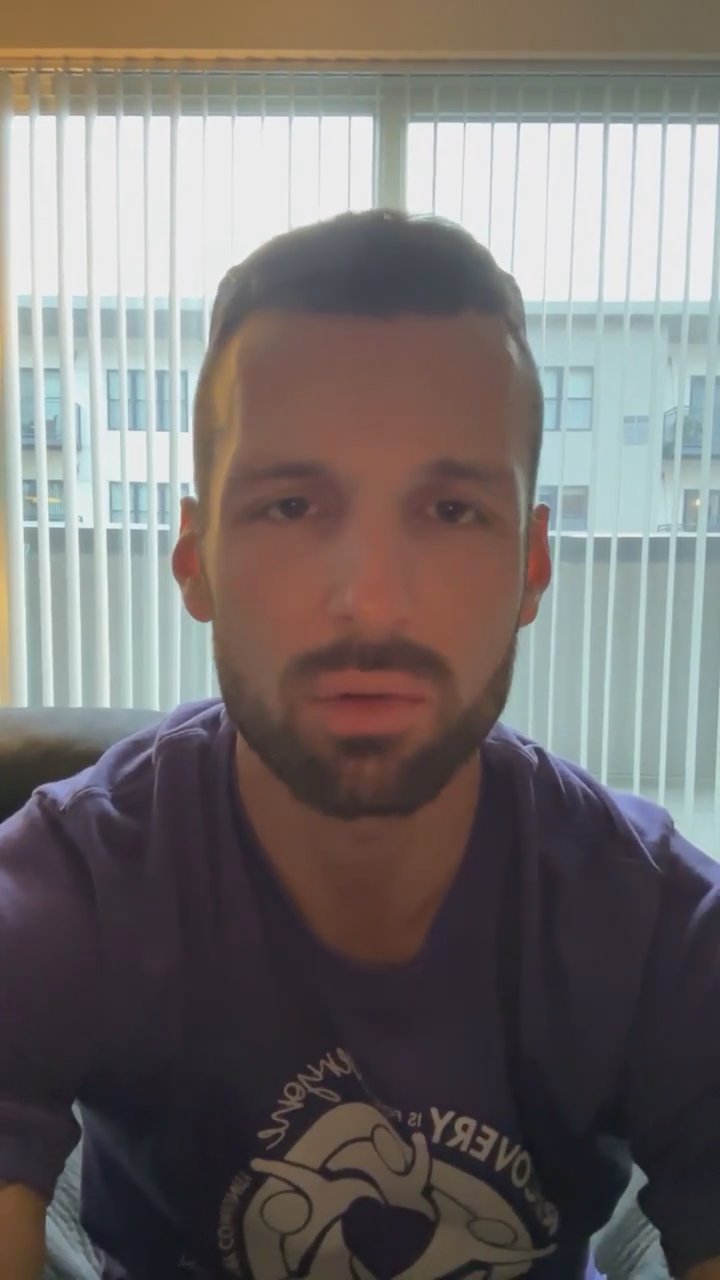
Join me every Sunday evening to set the tone for the upcoming week, with stories that bring out the serenity inside all of us!
Jason Lennox is here to talk about all things recovery, mental health. Being a recovery champion doesn't mean I'm the top of the recovery world. And I'm excited to jump on and share on a Sunday evening, as I always do.
The international association of Suicide Prevention has carved out a one day event called lived experience. It's the collective for lived experience and it really got me thinking about this concept of lived experience, what that means, why it's important.
By sharing lived experience, that could mean either somebody sharing with you or you sharing with others. If anyone wants to contribute, again, drop it in the chat. I'll share a little bit about my own.
We lost 250,000 people in the United States last year to alcohol and drugs. In fact, more than 90% of people who have issues don't actually receive any treatment. There's such an opportunity for us, through an app like Cadre, to just continue to sprinkle out there.
So I'm gonna let you all go now. Get back to your Sunday evenings. Appreciate you chiming in, of course, sharing as always. Hope you all have great weeks.
Happy Sunday to everybody here in the Cadre world. I am Jason Lennox and I'm here with you for my series Sunday serenity. I am your resident recovery champion and what that means is I'm here to talk about all things recovery, mental health. Well, being a recovery champion doesn't mean that I'm the top of the recovery world. It just means I'm a champion for recovery, with recovery, in recovery, through recovery, just everything recovery. And I'm excited to jump on and share on a Sunday evening, as I always do.
I'm an hour late. Thank you for being patient. Those of you who maybe thought it was going to be seven, I did have to update and move it to 08:00 here. So here we are. Good evening, Jules. I always love seeing you here. Look forward to sharing a little space here. And you know, tonight I, I was thinking a little bit over the weekend and Friday I had a call with a potential event that I might be speaking at. It's here in Minnesota in November, and there's an overarching entity, the international association of Suicide Prevention, and it's really a research driven conference, a lot of research educators, that type of presentation.
So they've kind of carved out a one day event called lived experience. It's the collective for lived experience and it really got me thinking about this concept of lived experience, what that means, why it's important. And so I want to dive down that path a little bit. And I was encouraged and it was a little refreshing to hear the organizer of this event talking about the evolution and how this bigger conference is again, really heavy into research. And they realized over time that in the mental health world really policies, events, education, all that really had to incorporate people with lived experience because it was just such a missing component.
And so again, it got me thinking a little bit. And so the question I posed to everybody here, and I'd love to have you drop it in the chat, is what has sharing lived experience meant to you or done for you? And by sharing lived experience, that could mean either somebody sharing with you or you sharing with others. And while I wait, if anyone wants to contribute, again, drop it in the chat. I'll share a little bit about my own. And frankly, in recovery, I went to treatment in 2010 and to be honest, the only reason I went is because I was struggling and feeling so much pain, suicidal, withdrawing, convulsing everything in a jail cell, that I just thought there had to be something that could take a little bit of that pain away.
So I dropped into treatment and at that point, in my life, I was 24, and I had lot of years to show that, you know, there was no getting into recovery and dropping the lifestyle I had. So I had given up all hope that there was a chance. But I went again because I thought there had to be somewhere that I would experience less pain. So I'm in treatment, and a point I'm trying to tie back to with the lived experience is as I'm in these recovery meetings, I start to hear people, and as I'm in the treatment rooms, I start to hear people.
And as I'm hearing them talk, I'm having a hard time comprehending what they're saying and how I might be able to accomplish what they have. And by that, I mean long term recovery. Finding a new kind of life, it was hard for me to understand, but I knew that these people were telling the truth. And so in recovery, that's what kept me around the rooms in the recovery world long enough, was hearing other people talk about their stories, because I could certainly relate to all the trouble, all the chaos, all the things that we went through.
And so if I could do that, then they could hook me a little bit in terms of this is what my life is like now, and it is good and there is something else out there. So that's what kept me around long enough to do a little bit of work, to get the experience myself, to understand that, and to feel that it really was possible to start to live a different kind of lifestyle. So that was my first experience with a lived experience and how sharing made a difference for me. And then on the side of mental health, I remember being several years into recovery and struggling still with some things that were deep and old, and I just had never really gone there.
As I was sitting talking to someone who was in a bit of a prominent position, and I respected very much, and she was running a program, and I sat, and as I talked with her, she shared about how this mental health therapist that she had been seeing had done this and this and improved this and this again. Like I would have never thought, especially being a few years into recovery, that I could have shared that there was something that required me to go see a mental health therapist. There was shame, there was guilt, there was stigma, all those things.
But when this woman sitting in the position she was in mentioned that, I thought, you know, if she can do that, then there's no reason I can't because she's certainly in a much higher position than I am. And I actually ended up going to see that therapist the very therapist that she had recommended, and turns out that I had a brother that went and saw that therapist. And today it's not that therapist, but I bounce in and out of seeing different therapists, and I do that today, too, because I believe wholeheartedly that my mental health and coaching, I have a couple coaches, just mentors.
As much of that as I can get in my life, I'll be better off. And so those are the two things on the receiving end that have really helped me from a sharing perspective and, frankly, might have saved my life. I don't know if I would have hung around treatment if I. If they just told me, this is how you do it. This is what you do. I really needed somebody to share with me. This is where I was. And, yeah, we're a lot alike, and this is actually what's possible for my life again. Even if I couldn't believe it, for me, I knew that they were telling the truth, so I hung around.
Let me see just a little more of what this is about. So, those were so critical for me and Jules. When I share, I feel like a weight is lifted off my shoulders. I feel a little lighter. Oh, my goodness. I just had an episode of this, this last week where it's, like, just this big thing and this big thing, and it's. It becomes so much, and that's what happens when we don't share these experiences. The power behind that grows and it grows and it grows, and it just feels like it's going to be harder and harder, and it becomes heavier and heavier.
I. And heavier. And so that's what we. We come here. That's what we do. We share with others. We try to practice. We have the close people in our lives so that we can. We can really, you know, step into that and make it happen sooner than the point when it gets heavy and hard and heavier and harder. So, 100%, that's when we share. And I know from my own experience, I told you how I benefited from the sharing of others, and I can tell you I've dedicated my life to now sharing with others my own situation and my own story and my own experiences.
I do that through apps like Cadre. I do that through speaking as much as I can, wherever I can, all the time. I'm thinking about where's next? And speaking once, twice, three, four times a month, and absolutely love that. Wrote a book. I mean, I have dedicated my life to sharing my own experience with the rest of the world because I know that that is the thing that gives people permission sometimes. To feel like it's okay again. That was so powerful for me. That's what kept me in it. And I want to wrap it up by sharing why I think that's so important.
So many people, so many of us don't share. I didn't share. By the time I went to treatment, I was so far into addiction. I was so far beyond anything that I ever could imagine that again. I didn't believe that there was a different kind of a path for me. And part of the reason I got to that point before I ever sought any help was because I just thought that there was something wrong with me. The rest of the world just continued to show up and say, it's not that hard. You don't want to go to jail.
Don't do the drinking. You don't want to lose your family or a job or x, y, or z. Just don't do the drugging. And that was hard. And so I never really saw it. And there was so much shame and stigma. I just didn't seek treatment. And then I thought that it was all over. But I know that not everybody makes it. In fact, we lost 250,000 people in the United States last year to alcohol and drugs. And I talk about that number a lot because it's important. That number doubled in just a four year timeframe.
I mean, it was half that back in 2019, 2020. And what's more important is we have close to 50 million people in this country who have a substance use disorder, and the last year would have been diagnosed with a substance use disorder. So many of those people don't even get help. In fact, more than 90% of people who have issues, who could be diagnosed with a substance use disorder don't actually receive any treatment. And it's not because there aren't enough providers. It's because they don't feel like they need it.
In fact, they say, like 94% of people. Good evening, Sherry. They say that 94% of people who don't get treatment don't get treatment because they don't feel like they need it or want it. And I know that in that 94%, there's a significant chunk that says that because they're not willing to admit that there's a problem because of the stigma, because of the shame. So there's such an opportunity for us, through this kind of engagement, through an app like Cadre, to just continue to sprinkle out there.
This is my story. This is Jason. This is where I've come from. This is what's happened. Not pushing anything on anyone, just sharing with you where I come from, what my life was like, what it's about today, and the tools that I use, there's such an opportunity to do that, to tap into that 94% of people, because look, 6810 percent of people, whatever, actually do get help, that is just not enough. That is not enough. We are doing something so, so far from what needs to happen, we really got to think about doing something different.
Yes. Planting the seeds of hope. That's what we do, Sherry. That's what people did for me. I know that's what you do. I know that's what we get to do in this world. We just continue to share. People aren't always going to take it and run with it. But guess what? As long as I'm sharing from a good place in my heart, a place of consideration, wanting to just help people and not put people down and not make people feel like there's something wrong with them, as long as I'm doing that, I think I'm making a difference in that 94%.
And that's where we got to spend time. Because these drugs, the things that are on the streets now, the fentanyl, they're taking people who are in that 94%. Anybody first time smoking a little pot, maybe, and you don't know there's fentanyl in it and next thing you know, somebody's gone. We really, I just urge everybody who watches this and anyone else who you speak with, I urge you to share with them as well, that we really just have to be as compassionate and understanding and just gracious as we can with all the people we encounter.
And we have to find a way to normalize this thing. We have to find a way to help the rest of the world feel like, you know what? This is similar to medical problems. We don't put people down when we hear about diabetes, when we hear about cancer. At least I think the majority don't. But still, too many times I come across articles and I come across social media posts and things where people are just looking down and, you know, saying, lock them up and throw away the key. Still, we're in 2024. We got to realize this is medicine.
These are medical conditions, and we need to. We need to treat them as such and we need to be gracious and normalize this thing. Otherwise that 94% is always going to be there. Nobody's going to want to come to the table and think that they need treatment or want treatment because there's something wrong with people who want that. That's where we're at, 94% of people go find another disease, go find another condition where you find 94% of people who don't get help. They don't do it because they don't feel like they need to or want to.
There's probably not out there. So anyhow, share that lived experience, share the compassion, the inspiration. Continue to fight this good fight and make this a little bit more normal. Mental health has come a long way. We got a little ways with substance use disorder and recovery, but, boy, when we find ways to get on the other side of recovery and mental health problems, that's where your most powerful people in this world are. That's where the world changers are. Because we've come up against something so powerful and we've come out the other side victorious.
Everything else is a little smaller. So I'm gonna let you all go now. Get back to your Sunday evenings. Appreciate you chiming in, of course, sharing as always. Sherry and Jules and everyone else appreciate when you join as well. So hope you all have great weeks. I look forward to doing it again next week and continuing on with Sunday serenity. Reach out if anyone needs anything otherwise, have great weeks. And again, go share that experience. Make it normal.