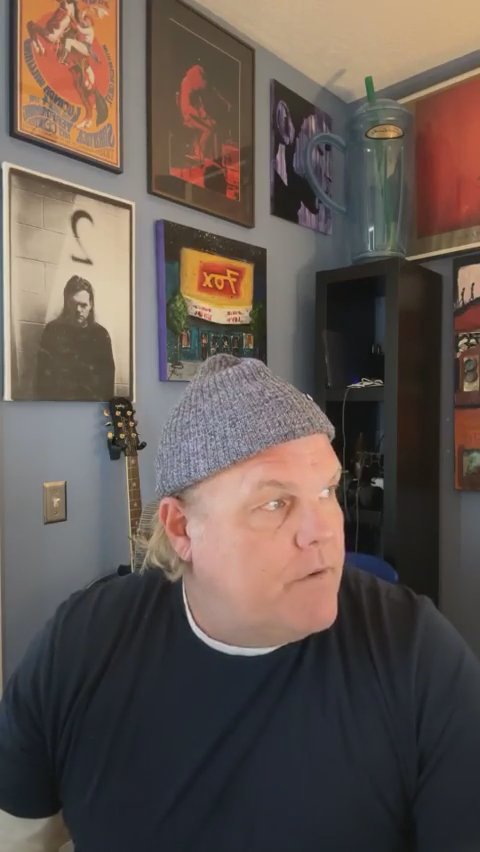
Chris Edrington has been dealing with how sober homes are allowed to exist in the community. Under the Fair Housing act, you can't discriminate against people who are disabled in terms of where they want to live. The city must have a definition of what a group home is or what a sober house is.
Chris Edrington has been dealing with how sober homes are allowed to exist in the community. Under the Fair Housing act, you can't discriminate against people who are disabled in terms of where they want to live. The city must have a definition of what a group home is or what a sober house is.
One of the most important elements to this is called critical mass. That means the critical number of people in the home. In early recovery, you diminish the opportunity for that by shrinking the numbers of people.
Sally Kohn: How do silver houses work? How come you can have so many people in one house? Remember this, people get sober. Kohn is a big proponent of sober living, all paths to recovery. She'll be speaking on the Cadre app. Sign up.
Hey, guys. Chris Edrington here again from Cadre. And of course, I got a nice one for you. What I've been dealing with recently, and actually for many years, is how sober homes are allowed to exist in the community with regard to, like, zoning laws and licensure for treatment centers and stuff like that. So it's. It's politics, it's. It's municipality, the land use, zoning codes. It's not very exciting stuff, but I'm going to try to give you guys the gist of how this works, because I've actually been through a case where I was sued by a county in Colorado.
You can look it up. St. Paul sober living versus Garfield county in Colorado. They wanted me to get out of their neighborhood, and I said no. In fact, I bought the house in November of 2007, and right before Thanksgiving, and we had a bunch of people ready to move in and some friends up there. It's up near Aspen in Colorado, near Carbondale, Glenwood Springs in that area. And we had a bunch of people up there having. We're gonna have a cool Thanksgiving dinner and open the house. And I got a call from the head of the HOA where the house is in homeowners association, and they called me up and said, you're going to open a sober house in our neighborhood?
And I said, yep. And they said, how much do you want to leave? And I said, happy Thanksgiving. See ya. And that pause was a word I shouldn't say. Anyway, the gist of it is this. Most american cities, most us cities have a zoning ordinance that says you can't have more than three, four, or five unrelated people in any one address. And that could be a half a duplex or a single family home. Typically, in order to not have these giant group homes where, you know, people are paying for their bedroom, and it overcrowds neighborhoods, and there's too many cars in front of one house, and congestion issues was the bulk of it, not to mention fire code safety, which is righteous and cool, and we don't like to screw with fire safety in 1988, and I'm not going to get this 100% right.
I have enough awareness of this, but not perfect. There was a case that went to the Supreme Court, and this is the gist of it. Alcoholics, while seeking recovery, are protected by the Americans with Disabilities act, which means that under the Fair Housing act, the federal Fair Housing act, you can't discriminate against people who are disabled in terms of where they want to live in the community. And you can, and you have to have a definition of what a group home is or what a sober house is. So in other words, if I wanted to put ten guys in this house, which is what I wanted to do in Colorado, they said, you can't have ten people there.
Can't do it. And the reality of it is they just didn't want the alcohol in the neighborhood. They literally said things like, you're going to sell crack to our kids and steal our lawnmowers. And I said, you know, we're going to steal your lawnmowers and steal your kids and sell crack to your lawnmowers. But I was just screwing with them. So the Fair Housing act requires that the city give you, the homeowner, what's called a reasonable accommodation, because there has to be a definition of a family.
And this is where it gets sort of in the weeds. But if you could live in that house with your wife and your husband and eight kids, that's ten people. And they said, yeah, no problem, but you can't have ten alcoholics. There's a reason for that. It's because they're alcoholics. That's discrimination. And that's a really simplistic version of it. You can't surpass fire safety and have 24 people in a single family home. That's stupid. Anyway, one of the most important elements to this is called critical mass, and that means the critical number of people in the home.
If you understand, like I do, what sober living, what the mission of it is and the purpose of it is, it's to create a dynamic in a living situation where people feel safe and supported and encouraged, and there's cheerleaders essentially around them structure to allow them to figure out, how do I live a sober life? You need people for that. So if you have a house of only four people, you could come home anytime during the day or at night, and you could very be very likely that you would see no one.
And so you just scamper up to your room and close the door and maybe you're having a bad day and you feel like drinking, and nobody knows. Not that you couldn't walk out your door and call a friend and say, hey, I feel like drinking. But we deal with likelihood in early recovery, and it's more likely that you're going to talk about your day, your experience, your mood, if you've been living with a bunch of other people who are really in your corner. So say you live there for several months and you really love these other people in the house and you trust them instead of going up to your room by yourself, you go into the living room or you go knock on someone's door and say, hey, man, I'm not, I'm not in a good place.
That is just so unbelievably important in early recovery, and you diminish the opportunity for that by shrinking the numbers of people. So in other words, if you, if you get up in the morning and you go down to get some coffee in the kitchen and there's four people, you know, making breakfast, or there's three people sitting on the couch, or you come home from work and you walk in the door and there's a bunch of people in the living room, they're going to see you, right? Maybe you're trying to hide something and they're like, hey, man, what's up?
You don't look right. Or maybe you're, well, here's, here's, here's one of the most, here's the dynamic that makes the most sense. If you have given them some time and some, and some of your truth and some and lived a transparent life with people, then when you do walk in the door or get up in the morning or show up at the house and you're not in a good place, they're going to know. They're going to know because they've seen you otherwise, and they're going to know because you talked about it, right?
Like a lot of us have to in this dynamic in the sober house is try to tell people, what does it look like when I use or when I fall apart, so to speak, what do I do? Most people isolate, some people get angry. Some people disappear. People get scared. In recovery, when it gets real and you start to get a few months on under your belt and you start to really pay attention to the wreckage you caused, people get scared. And if you don't have support to reach out to other people, say, yeah, man, I was there, I got scared.
You're right, it's terrifying. It's horrible. I know you feel bad about all the crap you did to your family and me too, man. And guess what? I didn't do anything. I just stayed here and it's okay. And we walked through it. So critical mass is really important. So I was actually in front of a small township about two weeks ago talking to essentially what is the city council in defense of a sober house operator who has a house in their area and has only five people in it because they won't let them have anymore and he wants ten.
And the house is huge and plenty of room, and the fire marshal wouldn't have a problem. And he wants to renovate the downstairs and put five more people in there. And I was there to advocate for him. And of course, the city council, township people, or whatever they're called, town trustees, didn't know anything about what a sober house was or what it's for. They just knew that, well, why do you want ten people? That seems odd. We can't do that. Why would we do that? And I said, could I live there with my wife and eight kids?
And they're like, yeah. And I was like, there we go. That's the issue. And their town attorney got mad at me for talking about fair housing act and stuff and thought maybe I sounded smarter than him. And I don't think that was a difficult thing to do. He got all red faced and upset. I spend a lot of time working on this kind of stuff. They're not. It's not ubiquitous. There's not every single city in every us state that does it exactly the same. Reasonable accommodation in different cities is different.
Orange County, California, has been incredibly difficult. We had problems in St. Paul, Minnesota, in 2008. We were able to get a city ordinance that dismissed or not written. That was really terrible. We're now dealing with the state of Minnesota about oversight and regulation of sober homes, which is kind of a different thing. But I just wanted to put some. Put some seeds out there about this topic, because I'm sure a lot of people hear about it. I will leave you with this. Sober living as a option, or recovery residence, which is an umbrella term for all kinds of sober living.
There's a national organization called NAR, National alliance of Recovery Residences, of which I'm a. Actually, I'm the vice president of. Now, I forgot about that. I'm a founding board member there, and we designed some standards for sober houses. Here's the reality, is that when you're seeking recovery in those early months and years, there is nothing more effective than a supportive atmosphere where you spend the bulk of your time. So if you are living in a sober house, and I'll give you this example, and you just got out of treatment, you don't know anything about aa or what you're supposed to be doing.
Your counselor told you a few things, and you're sitting. Well, say you're sitting in your own apartment and you're like, man, that meeting starts, you know, at 630. I should probably go. You might go for the first couple weeks after you get out, if you don't meet anybody and you don't get into a flow or a current of others, you're going to probably lose interest. And maybe just the job becomes more important to a relationship. If you're sitting in a sober house and you look at your watch and at 615 or 06:00 and the meeting starts at 630 and five people walk out the door, walk right in front of you saying, hey, man, let's go, you are a thousand times more likely to go to that meeting because that's what humans do.
They want to be included. It's not weird, it's not weak. It's just what we do. And if you can harness that to a degree or create a momentum for that in the house, now you've got the magic, and it's really, really, really effective and it's really inexpensive. How many things can you say that about? So when cities and states start to screw around with that, they're coming at it from sideways issues. They're coming at it from neighbors who are scared and mostly about their property values, or they're scared.
They think it's a house full of sexual predators or something. I've had every neighbor tell me everything under the sun. And in some cases, I've had educated neighbors had an open house, and they come and they're like, oh, I know what this is. My uncle's in one of these. I thought it was something else. And they're cool, right? So, you know, there's a whole lot of other context here and things that come out of this. But if you find yourself in a conversation about, you know, the, how do silver houses work?
How come you can have so many people in one house? How does it work financially or how does it work ethically, or how does it function? And what is the purpose? Remember this, people get sober. In the sober community, people don't get, you don't see people at AA meetings getting a medallion for two years and saying, hey, I got, I did this all by myself. I live in a tent in the woods. That never happens. You hear people talk about my buddies from treatment, or my girlfriends that we met in treatment, or the sober house.
It's a wee thing, and it's incredibly important not to screw around with that because you don't think it's right that ten people can live in that house and only five can live in that house. Who cares? I mean, we're not talking about any impact to the community. And if you went and you researched and you interviewed people in neighborhoods where sober houses are and said, tell me, tell me the impact. They're either lying, or they're like, it's just, you know, it's just another house. I have a women's house in St.
Paul, and I was talking to this neighbor years ago, and she said, I just thought a bunch of nice girls lived there. I had no idea it was a sober house. And there's ten girls there most of the time. So, anyway, there's a little. A little insight into that subject, which I've been dealing with recently or really for 20 years. But I love to share the knowledge, especially with other operators, try to help them figure stuff out and. And anything in the mission to help people get sober and to help do it in a way that actually works.
And I. Because I think a lot of people hear a lot of. About the stories where people don't stay sober, and you hear on the news about the people who overdosed all the time, and you don't hear about all the people who are incredibly, incredibly, incredibly better, and their lives are just unbelievably better. And if you talk to their families, they're just like, oh, my God. It's just an amazing opportunity. And I'm a big proponent of sober living, all paths to recovery. And when I speak here on the Cadre app, I hope that I give you something you didn't know or give you something, a different way to look at it or something that helps you or your son or your daughter or your uncle or your dog or your cousin.
So sign up. Sign on. There's lots of people here who know a lot about a lot of stuff. Till next time.