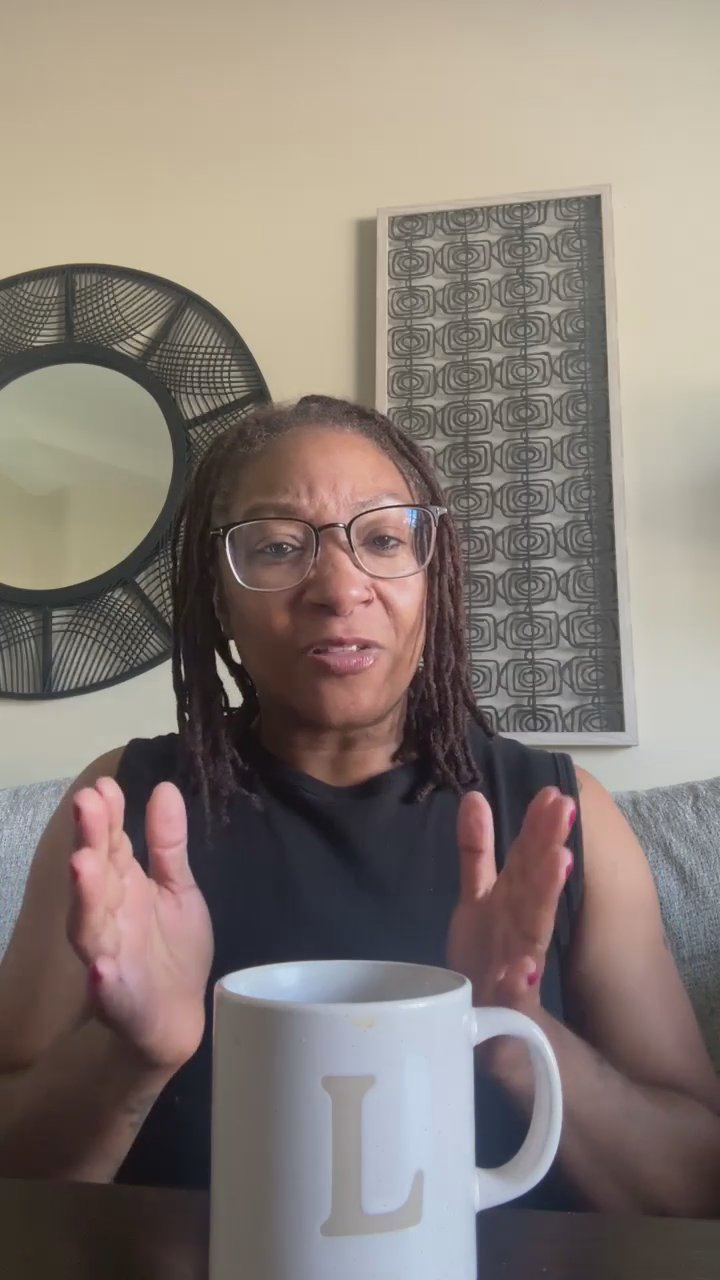
Coffee Chats with Dr. D ☕ Join Dr. D every week for real talk on relationships: romantic, friendship, or family. Come for the connection, stay for the reminder that you're never navigating this alone.
Dr. D opens the chat from home, mentions her recent jiu-jitsu injury and feeling tired, and sets the scene for the conversation. This brief intro explains why she's relaxed and transitions to the episode's topic.
Dr. D frames the episode by describing what it means to be seen—both outwardly and inwardly—and cites a quote about being loved through being seen. She clarifies this isn't about romance and prepares to share personal examples.
Dr. D tells a powerful childhood story of being labeled with a racial slur, describing how that early experience taught her about being seen in a painful, reductive way. She reflects on how such perceptions affected her understanding of identity.
Dr. D contrasts painful visibility with moments when others see her true qualities, affirming strengths she didn't recognize. She discusses the Johari window idea—when others see parts of you you don't—and how alignment feels affirming.
Dr. D talks about the tangible impact of eye contact during conversations, how distracted listening feels, and what it takes to truly sit with someone. She issues a week-long challenge to see people more deeply—physically and emotionally—and allow yourself to be seen.
Dr. D invites replay viewers to comment about whether the message resonates and to describe what being seen feels like, calling it rejuvenating like a hug. She signs off and previews the next coffee chat.
Hello, Cadre. What's going on? It's me, Dr. D. Welcome to my coffee chat and I am home today because I had some just a different schedule for the day. So I'm just relaxing for a little bit. If you see me, if I'm looking a little tired, that is true. I am. But the other reason why I'm looking kind of pale today is Last week, I think it was last Tuesday actually, I was training jiu-jitsu and I got popped in the nose with someone's knee. So I am still recovering. So my face kind of hurts right now.
It's been a week of that pain and it was a lesson that I learned that I don't ever want to be a boxer. I don't ever want to do MMA. So I learned that early. where I don't want to get hit in the face. But we're not here to talk about that today. We are talking about how it feels to be seen. And I want to kind of shout out cadre because I think this is a special space for us to see each other in different ways. And so what I'm talking about being seen, it's not just about physically seeing one another, but that is part of it.
But being seen like the inside, like who you really are. And there is a quote that talks about how to be loved is to be seen. And I really don't know who said that, but I think it's really a powerful thought and something that if we really embody that, to love someone means to see them, how loving someone can show up differently. It's not about romance, okay? So I think about moments in my life where I have felt seen and when feeling seen in a negative way, like where it doesn't feel good. So for example, racially, right, I'll use that example.
I remember being a little girl and trigger warning here. So I remember when I was about 5, five or six years old. So I had some neighbors across the street and I was the type of kid that I want everyone to like me. And so I would take candy to the kids across the street so I could play with them and I wanted them to be my friend. And I remember one day their father came outside and he saw me and he said, get that girl, the N word, get her off of my lawn. And I remember hearing that for the first time.
I never heard that word before, didn't know what it meant. But I remember what that felt like to be labeled that way. So for him to see me through my race was in that sense at the time it felt wrong. It felt bad. And I didn't know how to explain that other than to tell my mom like this is what the person said. And that was my introduction to racism. And I will never forget that day. I remember feeling being seen because of my race, not because of who I was, not because of me being this little cute girl who just wanted to have friends, but I was seen for the color of my skin.
Okay. And I know that happens for people in different ways throughout life. And that is something I have experienced throughout life because I'm a black woman in America. It's bound to happen. But let me tell you about being seen in a good way. There are some people in my life that see me at the core that serve as mirrors for me where they see me for who I really am even when I don't see it in myself. So there are people who have told me like you should be doing this thing or you could be doing these like speaking life into me because they see the qualities in myself that I didn't quite see just yet.
And that feels really good at the time when things are said like these positive affirmations are being said to me and about me doesn't always feel great because it's unknown to me, but other people can see it. And I've talked about this in other lives where there's this thing called the Johari window that talks about the different parts of ourselves and how other people can see us, but we don't see it within ourselves. And I've had moments like that. But the beautiful part is when you see in yourself what other people see on the outside as well and what they see about you.
And when that lines up, it's a beautiful experience and it feels good. Okay. But I also want to share with you what it's like to actually physically be seen with eye contact. Okay. So I want you to imagine this. Have you ever had a conversation with someone and they weren't looking at you like you're pouring your heart out, telling them what happened, telling them how you feel about something and they're looking away. They might be on their phone or they might be doing something else and you have to check in like, hey, are you listening to me?
Oh, yeah, I hear you. I hear you. But it doesn't feel like it, right? Because there's a lack of eye contact there. So I want to challenge you this week to see people not just for who they are, but to really sit with them, physically see them, making eye contact, listening to their words, but to see through them as well. Like see inside their heart and their soul. And what does that require of you to do that? And I think for me personally, when I'm in a space where I'm trying to literally see someone, see them for who they are or see where they're coming from in a conversation, I have to kind of put myself to the side, put what I want to say, what I'm thinking, what I'm feeling to the side to really focus on that person.
And that takes practice. It's not easy. It takes time and it takes repetition. And it also takes, well, you know what? I'm going to take that back, what I was about to say, because I do believe that this doesn't require you to have a really tight connection to the person. because I've also experienced this with strangers where a stranger could see me in the way that I didn't see myself. And I think some of those are like God-given moments. And that doesn't happen often, but maybe you've experienced this and it's always, it seems to be like an older lady that can do this.
It's like those wise women that can just speak into your heart and speak into your soul. And you're like, whoa, you don't even know me like that. How did you know that about me? right? And so I do believe that is something that can happen without you having long term connection with someone. So that's your challenge for the week. See people for who they are, see into them, see about them and allow yourself to be seen as well. It goes both ways. Okay. All right. Well, if you are watching the replay, please leave a comment.
Let me know if this resonates with you. Let me know if you can describe what it feels like to be seen. And if I think about how it feels, it's rejuvenating. It gives me energy, but it also feels like a big hug, right? So I will talk to you guys next week for my next coffee chat. All right. Bye.