Sauna and Cold Immersion: A Ritual to Boost Mental Health
Jen opens the episode, introduces herself and her dog, and sets the scene by summarizing her 12+ years of sobriety and why she’s sharing thoughts about alcohol-free living. She frames the conversation around moving from abstinence to a celebrated sober life and notes greater support and tools available now.
Jen explains how sauna became a meaningful ritual in her recovery, mentions her Substack piece 'Elements of Elsewhere,' and describes the social and emotional gap it helped fill. She also asks viewers what rituals support them, inviting reflection.
She reviews the limited and specific research on sauna benefits, calls for more studies, and then describes the common hot-and-cold protocol (about 12 minutes in heat, a 4–5 minute cool-down, repeated for three rounds into an hour). She notes recommended frequency and potential long-term health effects.
Jen recounts her personal experience of clarity and a sustained natural high after sauna, highlighting cold immersion’s reported dopamine spike (cited percent increase). She frames sauna as a healthy replacement for alcohol-based rituals and a way to reduce stress.
She talks about where community saunas are typically found, accessibility challenges in smaller towns, and meeting other alcohol-free people in sauna spaces. Jen shares her role as a sauna guide, observations of stress release in participants, and recent travel to Norway and the International Sauna Congress.
Jen invites listeners to try sauna as a wellbeing ritual whether sober or simply seeking stress relief, mentions an upcoming retreat she’ll lead, and signs off with thanks and a goodbye.
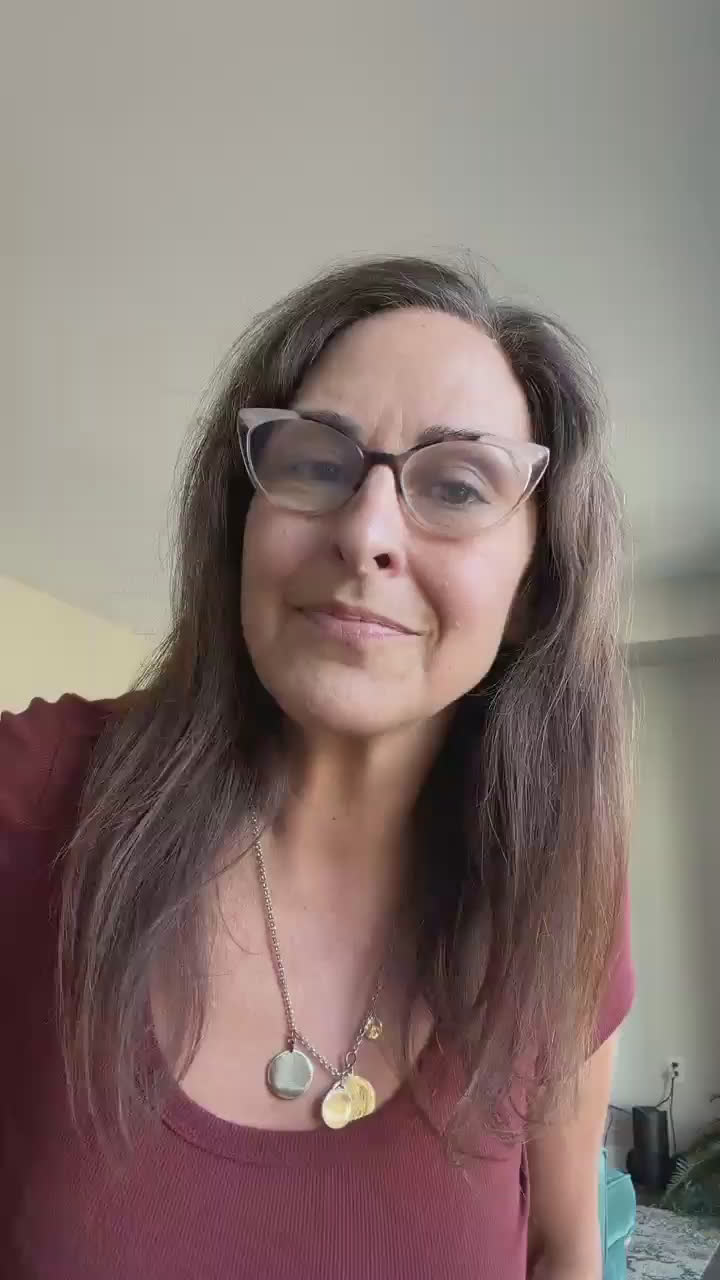
Hello and welcome to Sober Not Somber Hour. It's Tuesday. I'm your host, Jen Varale. I've got my dog, my golden doodle, Copper, here with me as always. And yeah, excited to tune in with you guys, see how the month of October is going for you and drop some thoughts in on sobriety. and what it takes to live a alcohol free, sustainable sobriety journey and life. So I have 12 years, just over 12 years of sobriety. Welcome in anyone who's joining. Lately, I haven't been able to see if anyone is joining after the fact I can see it, but I can't see if you've joined in.
Oh, yay, Rachel. It keeps skipping. Okay, well, we'll see if my Wi-Fi evens out. Thank you so much for tuning in. Today I want to share what's on my heart and mind about sobriety and rituals. So it's one thing to stop drinking and it's another thing entirely to shift your life into what I call a sober celebrated life. And for me, That took a good probably three years into sobriety. So granted, this was 14 years ago when I started trying to get sober, which would have been around 2012. The experience at that time with really no non-alcoholic options and even more stigma around substance misuse, it was tough.
It was tough. I feel like today hopefully we have more tools for understanding substance misuse and mental health challenges. So know that if you are trying to become sober or just make more mindful drinking choices, that it does feel like there's more support and more avenues and ways to do that in 2026. So that all said, partnered with CADRE, a year and a half ago, a little over a year and a half ago, February 2025. And I have been sharing weekly on Sober Not Somber Hour. And one of the continuing thoughts that seems to keep popping up is sauna, sauna, however you say it.
I'm from southwestern Minnesota. That's how I always said it growing up. And I had just recently posted an article on my Substack. My Substack is called Elements of Elsewhere, and it is specifically about how sauna helped me in my sobriety journey prior to experiencing hot and cold contrast therapy in a sauna experience. I was really searching. I was very much lacking social spaces that seemed healthy to me. And so this sauna carries a great weight in terms of being a new ritual that I could practice in sobriety.
So first of all, I will pose that question to all of you tuning in, Rachel and more. is what rituals have you found that sustain you? And this could be in a simple, small way, or it could check many boxes for you, like sauna does for me. Sauna checks physical health benefits, mental health benefits, and community benefits. So all of those three are easily checked when I enter into a community sauna experience. So the research is a little bit all over the place. in terms of the mental health benefits of sauna, because there just haven't been enough studies.
e. men in Scandinavia. So we are starting to see more interest in understanding how sauna works through the body and over the course of a lifetime, does it contribute to longevity? And without research, I just inherently know that it does. But unfortunately, the scientific community and those of us who need some sort of validation or a way to be comforted in that this is a valid practice, want to know the research. So there are definitely benefits in having research available and allowing us to understand how actually the hot and cold contrast therapy benefit us.
So just to pose that and to say The blog that I wrote about it is called Sauna and Cold Immersion, A Ritual to Boost Mental Health. And what I know anecdotally for myself and others who talk about a sauna experience is that you walk away from that hour long session. Let's say people always have questions about what does it look like to do that. And it's typically 12 minutes in a hot sauna. some sort of cold immersion or just coming out of the sauna and cooling off over a four to five minute period and then allowing your body to sort of acclimate naturally to the room temperature and then going back into the sauna and you do 3 rounds of that.
So it's generally an hour, maybe a little bit more. And if you do that, the experts say up to three to four times a week, you're going to get exponential health benefits in terms of long-term benefits and then reduction of all these other chronic diseases and things that are now starting to be studied, including dementia, Alzheimer's, can sauna improve those type of outcomes. So I am looking forward to more research being done. However, in the meantime, I will speak to the experience that I had as a sober person and how coming into a sauna experience, usually something I would sign up for on my own, truly helped me walk away with just more clarity and also like this natural high.
And in the story that I shared in collaboration with CADRE, it really is the dopamine spike that you get from going when you're in the cold immersion. So cold water temps, 40 Fahrenheit. you get this up to 250% increase in dopamine. And that is a natural high and sustaining that and feeling that after sauna is just sort of this general high, mid to high sort of vibey experience that I always leave sauna feeling so much better than what I went in. I never say, oh, I wish I wouldn't have taken that sauna.
It's usually, I'm so glad I made time for that in my day. So that has been one ritual, the ritual, I will say, that sort of shifted my thoughts around, can I do this sober lifestyle if I'm not going to the bar, if I'm not going to networking meetings, if I'm not doing things that revolve around alcohol, what does that look like? So it's been an incredible tool for me, and I know so many in the sober community, I live in Minneapolis, So many people that I meet in the sauna are either alcohol free by choice because it just aligns with their lifestyle or they have went through treatment or in recovery from drug or alcohol addiction and they have found this to be a new addiction, shall we say, a healthier addiction.
And I truly think it's, for me, and others for a long time it's been sort of the new happy hour. So it's that ritual of what do you do if you aren't leaning on alcohol after a workday to kind of release the tension and decrease your stress level. Sauna does that. It really does. So I would encourage anyone to think about that practice. Of course, you have to know your body and your limits and understand, but the cardiovascular improvement, everything that the sauna, really the hot and cold contrast therapy piece of it brings about is where I have found like most beneficial on so many levels.
Rachel, where are you based out of? She says, I wouldn't even know where to look for a sauna like that here. The only ones I know of are gyms or people's houses. Yeah, most people's perception, and I point this out in the article, is from solo sauna, maybe finding it after a workout and going into a dark sauna in a locker room. And that was a little bit unbearable for me. Texas. Okay. Yeah, there are sauna communities in Texas. But yeah, it's hard if you don't have access to community saunas. They are growing and popping up all over the country.
So interestingly enough, I think all many areas are starting to see this. I would love to see sauna more in rural areas as well. Usually you can find a sauna community experience in a larger city. So Rachel, I'd love to talk offline about where exactly you're at and what you might have access to because it it's a game changer and I think because of the stressors of the heat and. being in a space like that, it is sometimes hard to be uncomfortable. But doing that in community, most people will attest to the power of that in the ability to stay in it and then move through that uncomfortable situation with others.
And in my role as a sauna guide, I love to just see people come up against that heat and really allow it to work with what needs to be released. in their body in terms of tension or stress. And you can just kind of feel people's shoulders, their breath and everything sort of coming down to a more of a normal, natural level, maybe after a day full of stress. So it's been an incredible tool for me and I'm just hoping others will explore it and try it out in order to see the value. And so much of my community and people that I hang out and do life with, we love sauna.
So I just got back from the International Sauna Congress in Oslo and sauna all through Norway in the entire month of September. Again, the culture piece of it and the different experiences that are out there keep it so interesting. There is no one right or wrong way to do it. really is truly understanding the physicality of it, the community aspect, and then adapting it for your own ritual. which is what I'm gonna be guiding women through actually next week at my first retreat. It's called Wild Rise, Rituals of Renewal, and it's gonna be at Wild Rice Retreat in Bayfield, Wisconsin.
So I get to guide women through that experience, sauna, cold immersion, and we're also going to do some integration while we're there and artistic and creative expression. And I'll report back in in a couple weeks because I'm excited to bring this experience to a group that maybe hasn't delved into the ritual of sauna quite as much. So I hope that gives you just an idea for a little well-being tool. You don't have to be seeking it to replace or be in the sober community, it's beneficial for everyone.
So I look forward to coming back on and sharing more about that and happy Tuesday. Thanks for tuning in. Bye bye.