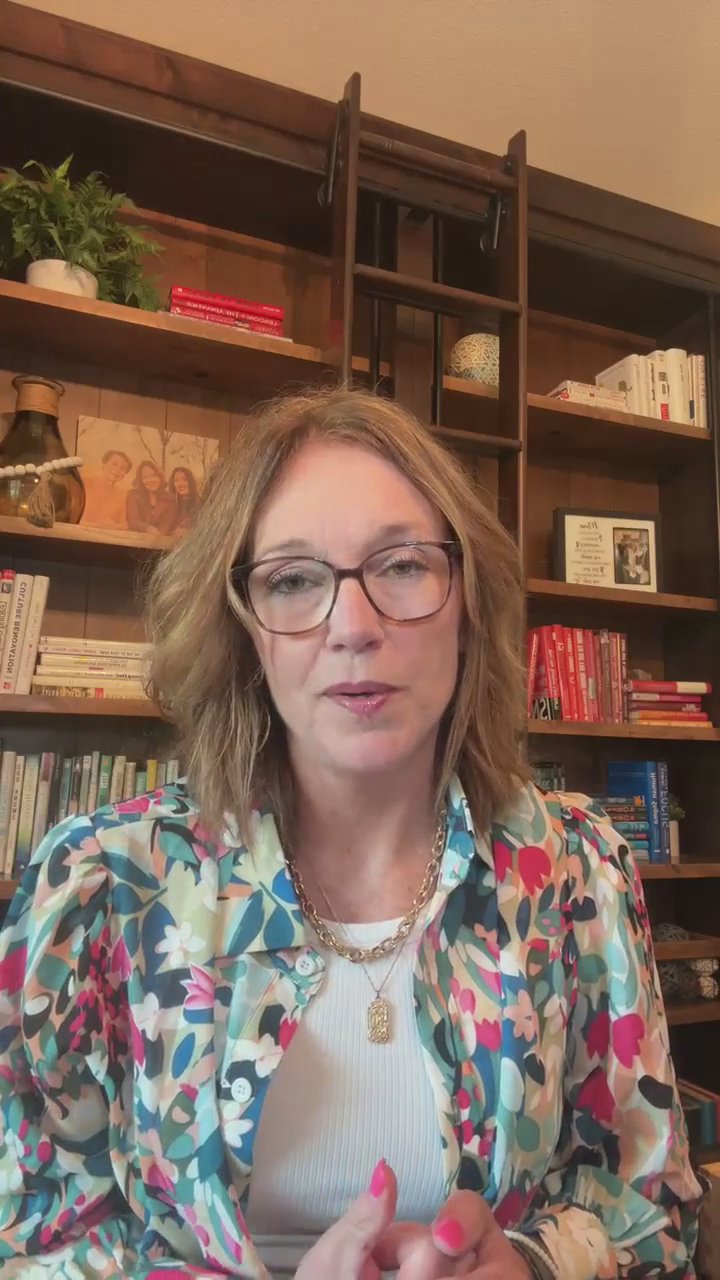
Do you find yourself stepping in before being asked? This could be the reminder you need to reclaim some of your energy while continuing to care for others.
Carrie greets viewers, introduces herself, and previews the video's subject—the fixer trap—setting expectations for a short, focused discussion.
The presenter proposes the concept of the fixer trap, asking whether you step in before being asked or feel relief solving problems for others, and notes how helpful habits can become problematic when overused.
Carrie outlines workplace scenarios (HR stepping in for managers, softening messages, resolving conflicts) and personal parenting examples where stepping in can unintentionally signal a lack of trust in others' abilities.
She explains that seeing others struggle registers as a threat in the brain, creating an urgent impulse to act and relieve discomfort, and notes that this biological wiring can be examined and redirected.
Through personal anecdotes and a Simon Sinek leadership quote, Carrie discusses how fixing can undermine others' growth, invites viewers to question whether stepping in helps or simply relieves their own discomfort, and contrasts helping with taking responsibility.
The video ends with a brief reflection, an invitation for viewers to share examples or book recommendations in the chat, and a preview of next week's topic on burnout before a friendly signoff.
Hello everyone. I hope you are doing well today. Happy, what day is it? I think it's Thursday. My name is Carrie Heimer and I am super happy to be with you today. Welcome back if you're joining again and welcome if you are brand new. So today we are going to be talking about something that resembles other topics we've covered. So last week we talked about the pressure to be the calm one. And that is oftentimes the case in the roles that we carry. And today we're gonna talk about something that lives close to home to that, and that is the fixer trap.
I don't know if just by me saying the name, any of you can relate to this either at work or in life as a parent, but I know I certainly can. So what is the fixer trap? So do you ever step into a room before being asked? Do you ever feel kind of some discomfort when a problem isn't solved and you know how to solve it? Or what about relief when you do step in and solve it, even if you weren't asked? So doing those things can sometimes be what makes you good about your job, your ability to solve problems and fix things, but it also, if overused, can be a trap.
And I think we can all think of situations in our lives when that has been the case. So let's think about a day in the life of an HR person where this might show up. So maybe we take on a problem that belongs to a manager. They come to us sharing something that happened, and rather than take the time to coach them through it, it might seem easier to step in and intervene. Or maybe it's softening a message that needs to be delivered to someone so that the blow doesn't hit so hard. It could also be solving a tension between people that are in conflict rather than helping them find ways to solve it themselves.
And heck, for me, it can be I can remember years of raising my child, stepping in and getting too involved, which was unintentionally sending a message to her that I didn't believe she was capable of doing so. So it's just something to reflect on. That's not what we intend to happen when we step in and fix, but that can oftentimes be the result of doing some doing that. So I told you before that I'm kind of a geek on neuroscience. So what does the neuroscience tell us about this? It's when we experience discomfort or we watch someone struggle, whether that's our kids, our spouse or a coworker, our brain registers that as a threat.
and it urges us to act. We feel a sense of urgency to act, to relieve that pain, to relieve the discomfort that we feel. So it's a biological response. It's something that we're wired to do, but it doesn't hurt from time to time to examine it and perhaps redirect it. At some point, the fixing stops feeling like helping. And I can remember my daughter even having some conversations with me that hit me at my core when she would say things to me like, you know, Mom, I feel as though maybe you don't believe that I can handle this.
I need to handle this, Mom. And for me, the anxiety of seeing things unresolved was high. and I wanted to step in and I wanted to help. And I can think of cases very similar to that at work. One of the people that I love to read and follow and I name drop authors quite often is Simon Sinek. And many of you may have read his book, Leaders Eat Last. But one of his quotes that he's often famous for is, Leadership is not about being in charge, it's about taking care of those in your charge. And it's how we redefine what care looks like.
And care oftentimes does not look like fixing the problem for someone else who is truly capable of doing it on their own. So as with many things, I learned this the harder way in work and in life. And it's something that I oftentimes fight the temptation to want to step in and fix. So for fixers like me, the assumption worth questioning is, does my stepping in actually help? Or does it send an unintended message that I feel that they are not capable? Am I doing it to relieve my own discomfort? Helping and being responsible are not the same thing.
And I think that if we're being honest with ourselves, we can think of many situations in life and in our careers. where we took responsibility, we carried responsibility for something that wasn't ours to carry. So when you step back from the fixer role, even if for a little, you create space for other people to grow and also space for you to breathe. So just something for you to think about. This was designed to be a real short pop in for today. to get your thoughts about this topic. If anything resonated with you or you have some examples you'd be willing to share, we'd love to hear about it in the chat.
If there are books that you read that you found particularly useful, please share those as well. And next week we're going to talk about burnout and the quiet face of burnout. So I hope you'll take some time to join us or at least watch the recording when you have some time. Until then, I hope you take care of yourself and be well. Thanks for tuning in. Bye bye.