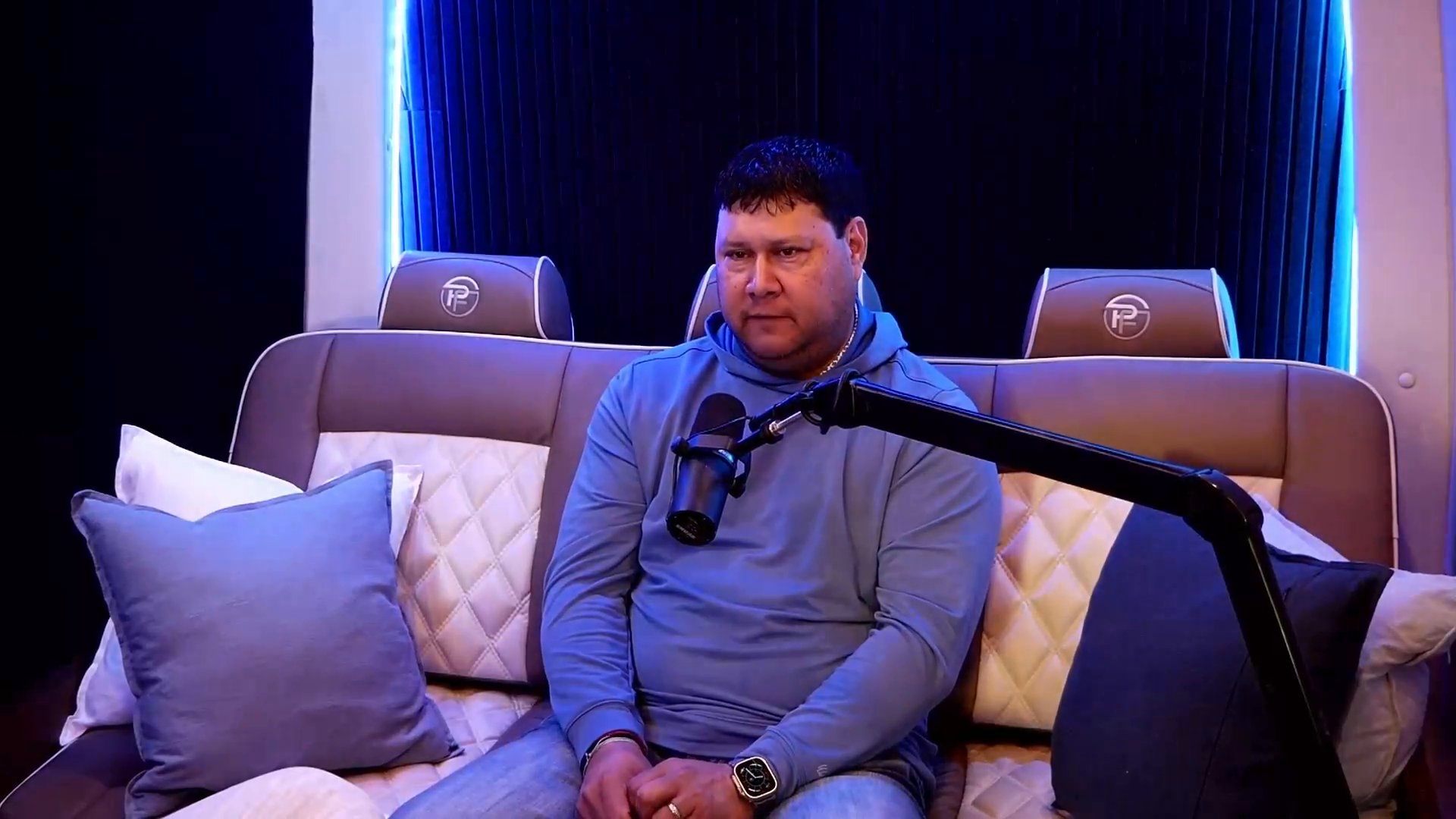
Welcome back to Season 2 of the Mental Wealth Podcast. In Episode 2, we sit down with Josh Helgesen, majority owner of Griner Construction, for an honest conversation about entrepreneurship, leadership, and mental health in the construction industry.
Josh Helgeson is the owner, the majority owner of Griner Construction. He started at grinder construction 26 years ago. Before Griner, he went to school, but quickly found out that school wasn't for him. Now he's the single largest minority member of any construction company in the country.
I was sponsored into the apprentice ship program by Griner. It took me about four and a half years to complete. The people that I was around growing through that. Those are the things that really had an impact on what my future would look like.
I ended up being a tattletale on one of them just because I felt like that. So I went back and told my. superior, my boss at the time. And my boss actually stood up and confronted this person for saying these things. That's a beautiful thing.
At what point did you move into your first supervisory leadership role at the organization? The friendship piece of it had to be set aside when you're kind of running a business. Leadership team really helps keeps each one of us grounded with those mistakes.
Josh Griner bought into the company about seven years ago. Two years ago, he bought majority of the company. Today, he owns 58%. What's next? How do I keep contributing to what I've helped build?
CNN anchor says he struggles to find balance between work and family life. Delegation was a big piece of it, he says. He's still trying to figure out how to have tough conversations with his wife. Has he made headway in progress?
Josh: I oftentimes feel like my schedule just gets flipped upside down. One of our core values is being nimble. We sell on relationships. Have these conversations, start talking about these things now. It's just going to make you a better person.
Josh: You guys are doing 200 plus million dollars of revenue. I don't think that there's as many organizations in our backyard of Minneapolis St. Paul that do as much for the community as you do. Give yourself grace. The revenue will come.
I want you to share one project in the backyard that you're really, really proud of. Project Diva is focused around African American young women. Homelessness is a big thing. How do we fix that?
Josh Greiner is an advocate for mental health in the workplace, especially in the construction industry. Greiner: Having a platform or a way for people to open up where it's okay. Mental health is like, the first thing in safety, I believe. How do we make it healthy?
Josh: When Covid hit, our company felt that burn or burden or whatever you want to call it. Josh: We've naturally just evolved throughout the years at Grinder. That platform for support has gotten broader, it's noticeable. We hope to just be a small, small part of it.
leadership has evolved from this 100% of do deliver Execute to this 5050 pendulum of do Deliver Execute. Exist on your role, but be an amazing person, and I think you just exude that at an unbelievable level. We want to continue doing what we're doing.
Hi, my name is Luke Wetlandt. I'm the host of the Mental wealth podcast. I'm here with Josh Helgeson. Josh Helgeson is our guest. He's the owner, the majority owner of Griner Construction. You are the single largest minority, minority member of any construction company in the country. Yeah. So how did this all start? How did this all begin? You're gonna make me relive it all, aren't you? How did this all start? Well, it started with an opportunity. Right. It was 26 years ago is when I first started.
I started at grinder construction 26 years ago. It's hard to believe that's been that long. It seems like it was yesterday before. Before Griner. Before Griner. You want to know what before? Right. But I'm just curious. Before Grinder, was this literally your only. No, it wasn't. So before Griner. So I went to school. Yeah. I mean, out of high school, the path to success was going to college. That was what I was told. That was how I was brought up. Whether I believe that or not, I don't know if I did or not.
Quickly found out that school wasn't for me. I went to college for a hot minute. Was it for your other brothers and sisters? Brothers, Sister? No, my sister's younger, so she was behind me. I have a. That's the only sibling I have. But my parents, they both. They both went to school. They're successful, very successful people. My family was, you know, really successful, and they all went to college, all in school. So, like, that was my meant, like, that's what I need to do to be successful, to make anything of myself.
Right. So went to school, found out quickly I didn't want to go to school. It wasn't an environment for me to. I didn't like sitting in a classroom. I didn't like getting up early to go to class. Learning in those. Those environments. I was a more hands on type of guy. So fast forward, I end up leaving school. My. My college career was roughly four and a half, five years. I ended up meeting my wonderful wife at school. So that was the biggest plus. Right. For me. Talk about the win of all. Yes. Right there.
And she ended up graduating. I end up following her back here to the Twin Cities. I'm originally from Wisconsin and just kind of had little stints in. In little areas of. I want to say, maybe not construction, but maybe in the building world. Right. So I worked for me. An example. Yep. So I work for a company that did disaster relief. Homes. They actually put homes together in containers and shipped them overseas. We could fit a thousand thousand homes in a container. They had the only patent in the world on it.
So I worked for that company for roughly, I think it was probably seven, eight months. And they ended up selling their business and moving it out, out to the west coast. So I was obviously out of a job. Do you want to go west coast? No. I didn't even ask. Right. I was just. I was one of those people that were sitting at a kind of a drawing board, drawing these things and putting them into production and making them happen after that. I work for a residential designer, home home builder. Just sitting at a desk redlining drawings all day.
So correcting things that needed to be changed wasn't a space that I enjoyed very much. I sat in front of a computer, I listened to some, some tunes on the radio. That's what I did every day. It was boring. I found myself not, not loving what I was doing. So after that I just, I went back home, kind of, just kind of reset. My wife was currently in, in the industry, actually was hiring Griner Construction to do their work. So she was at a, she was at a conference or. How big was Griner back then?
That's small revenue wise. We, we had a lot of employees because we had laborers and carpenters on our staff. So we had a lot of field people. But our revenue was in that 30 million ish mark right when I first started. But my wife is the one who referred me to Griner. She said, my husband needs a job. Got any opportunities? Wow. Yep. Send them in. We'll interview them, see if we can put them work. Went in the next day interviewed. Yep. We can, we can sponsor you into the apprenticeship program as a carpenter.
Perfect. Thought of it in a million years. Right? Think about that. Yes. That you said to your wife of like, yeah, yeah, B, let's do this. Yeah. I don't know if it was a mutual decision either. It was like, you need to go get yourself a job. We need that. We need some, some wages here to come in to help pay for what we have for our future. And like, okay, we'll start there. $10 an hour wasn't much. Like back in the day is like, okay, we're barely making ends meet. We're living paycheck to paycheck.
But what is that, what's that next path for you? So I, I was, I was lucky enough to be sponsored into the apprentice ship program by Griner. And it was a, it's a four year path. Like, here's Here's a step so you can see. And then those, those hourly wages increase. So I could see that path and like, oh, I can make more money then. I can make more money here. Like, okay, this is great. Stood the course. It was. It took me about four and a half years to complete. I can't thank the people that I was around growing through that.
Those four or four and a half years. As I was becoming a journeyman carpenter, learning skills of the trade. I want to say I had a few skills just from my dad growing up. My dad was. Has been in the trades and very skilled craftsman. So I picked up a little bit, I think more genetic wise. Was there something specific you remember from somebody or like God, that one just still sticks with me to this day. From at Griner. Yeah. Oh, 100. I got a thousand stories I could tell you there. I mean there's a lot of stories that 1.
The people that took me under their wing to help teach me some were not so great by. It was. It was just a different era. Era dealing with people. And it was a grind. And if you didn't grind, I felt like your worth was nothing. So we, we ground, right? We ground. We like, you know, this. Our heads were in a space where if you didn't do that, you weren't going to be successful. You were next man up kind of a thing. But those are the things that really had an impact on what my future would look like.
Right. And probably how you lead and how. On how I wanted to be when I hopefully was in their shoes, you know, as leaders of. Of a company and leading field and leading jobs. There was. There was right and wrong ways to do it in my, my opinion. But there I wasn't able to share my opinion. Right. I think in the trades, holistically, naturally it's been like you suck all that stuff in. You're a grinder, you grind, your opinions really don't matter. This is how we do it. And if you don't want to do it this way, there's the door.
That was kind of how it happened. And I want to say grinder was unique that way. I've only had. I only had a few experiences like that. The rest of it was so great. Yeah, right. With one teaching me the skills of the tray, like the tricks and all the things how to, you know, hang a curtain or put in a piece of base. Like there's this, there's 10 tricks to do that. Here's how you can do it right and efficient. And there's always to get 10 different ways to get there. Right. Not just one, but having people around me that gave me a chance to do that stuff versus pushing me aside and saying, I'll do this.
They let me have those mistakes, let me go through those trials and errors, and that's how I learned. Right. Beautiful. So that was awesome experience. There were some other experiences where I would. You know, there was some profanity and some things said to me, well, I was just trying to learn, or I was told to go do something, and I interacted with some people, and the response back was not great. And I didn't want to be like that. Right. I didn't want to be like that. I ended up being a tattletale on one of them just because I.
I felt like that. I don't think Griner wants to be known as representatives. Right. I don't think so. So I went back and told my. My superior, my boss at the time was what happened? And my. My boss actually stood up and. And went over to this place and confronted this person for saying these things. So I really respected that. Yeah. Yeah, That's a beautiful thing. So here you are. So this would have been about five years into Griner. Yep. And you're apprentice carpenter, and then you moved in. At what point did you move into, like, your first supervisory leadership role at the organization?
Yeah, and I would say it was about. It's probably about eight years in or so where I was given a little taste of. Of running a job. Wasn't a big job. It was small, but picking up the phone, calling those trade partners. Right. Scheduling them, working through a schedule, holding them accountable. So I was given that little bit of taste, and then it was just a little more and a little more. And then ultimately, you know, I became. I stepped up to be an informant. So I was. I was working side by side with the superintendent, running a few different jobs.
You know, I was his eyes and ears on those job sites, reporting back, keeping me on task. And then that step from that foreman position was the superintendent level. So I was a superintendent, you know, and we had. I mean, our superintendents run anywhere between three and 15 different jobs at one time. So we were running. Right. What's. What's one of the lessons you. You teach somebody or share with somebody? Going from being an individual contributor of. Of a group of 20 to leading a group or leading a team.
What are some things that you had takeaways right away where you're like, maybe it's. I can't be as friendly. I have to have direct orders. I, I have to be able to share where people miss feedback. What, what are some things that like anybody that's listening to this can take away and say these are important things. If I'm taking the next step in leadership, they're really important for me to know who I am as I move forward. Yeah. And the friendship piece, I think was probably the biggest piece for me, knowing that that friendship piece of it had to be set aside when you're kind of running a business, you know, I like to think, you know, our model is we have, you know, our superintendents are like little businesses within our business.
Right. So setting those friendships aside, I'm a people person. I love people, I love talking to people. So that was really the hardest part of it, of doing that. But that, that's one lesson that I try to teach or I have taught is, is those people that were coming up behind me, that piece of it. And I, I can see it happen and I can see where that goes back and gets in their way. So that's one of the big things. But personality wise, just teaching people about personalities. Right. We, we're always reactionary when you're talking to me or asking me a question.
We're spot on just like that, wanting to say something right away but just having that pause moment to think about what you're going to say. Because some things come out not so great sometimes. Right. And I, I've, I was, I have been in those situations. Yeah. And those are just lessons I learned. Like hopefully I can teach that and avoid some of those situations. I'm not going to avoid them all for, for those people below me or, or that are coming up, but even above me still just putting that in their heads.
Like. Yeah, just, you gotta pause just a little bit. And we're just, we're so go, go, go mode all the time, aren't we? That's, isn't that the truth? Right. One thing that I found over the years is like when I was first starting in leadership, my mistake train would have been like this on the waves. And then over the years they kind of went a little bit smaller, a little bit smaller to now I'd call it like ripples. So you have these ripple moments and so have you seen that too of like, you know, from 10, 15 years ago, your mistakes that were like massive mistakes or you felt that they were massive to now just kind of like blending them down a little bit.
Yeah, I do. I, I don't know. I credit our leadership team for that too. Like our Leadership team is really helps keeps each one of us on that team grounded, but helps us with those mistakes. We're all still going to make those mistakes, but hopefully not as larger mistakes as maybe we've had in the past. But when you say that ripple. Yeah, there's those ripples in the road. We're always going to run across those. But it's how we approach them, how we deal them as a team. There's not, there's not a hierarchy, you know, at our organization.
I don't speak for our organization, but there's not a hierarchy there where, you know, I'm. I'm the person making the decisions. We're making decisions as a group. We're talking as a group. So how many teammates are there at Griner now? Oh, shoot, we're about, I think around 130 people company wide now. Yeah, 30, folks. And your ELT team, leadership team is about how big of C suites, V suites. What is our. There's seven of us or six of us. Six of us on the leadership team. Yeah. Making some big decisions now.
And from a revenue based perspective, I know we talked about a second ago, from eight years ago, talked to, you know, 26 years of your experience here, then you moved into ownership. When, when did that take place for you? So I got ownership about seven years ago. About seven years ago. I was given, you know, bought into the company seven years ago. I was given a little piece. Can you just to take a little bit through, like, what does that look like? What did that look like for you? Was that presented?
Was that the previous owner? Was it a group saying, hey, Josh, we want to talk to you about this. Is this something, or did you kind of like put yourself out there over the years to say, I love this company. In fact, I want to participate in this company, I want to own this company? Like, where did your mind get you to say, like, I'm investing my life? Decade one, decade two. You're down to decade three now. You know, when. When did that take place for you? I think the investment into the company took place, I don't want to say 26 years ago, but I want to say it's pretty close to that.
Right when it first started. One, I was given an opportunity that I didn't have anywhere else. I was embraced with open arms. I had great people around me. I saw a path to other successes through the company. So I would, if you ask, you could see yourself there. People that have been here as long as I have or have seen me grow, I think they would say the same thing, or at least I would hope they would say the same thing, that I'm 100% invested in this company. So those opportunities, the ownership piece of it was actually presented to me, like, hey, like, here's the next step for you kind of a thing.
So at the time, there were to. Were you three, four in that conversation? I want to say no. I don't expect anything, but I expected to be rewarded somehow. Right. Whether it was ownership, whether it was increase in salary, whether it was a bonus, something because I was knocking out. Knocking it out of the park, and I don't want to toot my own horn that way, but I was. I was killing myself to do what I needed to do. Right. Which put impact on my family, put impact on everything else that I did.
Right. Those are some decisions that we had to make, you know, personally. But I saw a path. So the ownership piece was there. Bought in about seven years ago, and then over the last few years, I bought a little more. A little more. And then two years ago, I bought majority of the company. Yeah. So in the majority today is 58%. Yeah, 51, technically. But, yeah, overall, it's. Yeah. And I got four other partners. Yeah. Two of them who have. Who brought me on to ownership. And then. What an experience.
What a journey. Want to ride? Yeah, it's. It's been great. I have so much more to give. And it's like. Like this isn't where I'm stopping either. Like, what's next for me after Griner? I mean, I can see myself here for a long time yet, but there's other people that are going to deserve this as well that are coming up, that will sit in my shoes someday. But after that, what's next? How do I keep contributing to what I've helped build, but how do I contribute somewhere else? You mentioned a second ago, you said, like, you know, I grinded.
I was killing myself to get here, and there were some things that were. The expense of the family. Yeah. Can you talk a little bit about that from an entrepreneur? This is my third rodeo, and so we do entrepreneurs. But my. My. My. My first one was. I would say the D word was close divorce. It was a difficult ride because it was my first journey ever in entrepreneurial ship, and I was working on the clock, very little sleep. I don't. I don't remember for three years having Thanksgiving, Christmases.
Like, it was always, like, at the facilities, doing whatever I could to help and support around the clock. I also had, like, a control. Like, I Felt like everything I had to own and I had to. Delegation was hard, is that first one. Second one, you learn a little bit more. And this third one, I made an oath to myself, my family, and the team that I would never do that again. How do you. Now that you know what you know over the last 10 years, you know, specifically seven with ownership, to find balance, to find a way.
And I know balance is this key word, but, like, how do you find the spot where you're your best for your kids, you're best for your wife, but you also know you have a massive responsibility. You have 130 individuals that you're responsible for their livelihood, you and your other four partners. How do you. How do you balance that? Great question. Very similar story of yours. You know, that D word was there multiple times because work got in the way. I would say I'm still trying to balance that. I haven't got it figured out yet, and I don't know that I ever will.
But have I made headway in progress? Absolutely. The delegation piece was a big piece of it. I felt like I had to be there in order to see those things being done, to give me the confirmation that they were being done. Not only complete, but done in the right way, up to Griner standards, you know, how I would do it. And that really was gotten away. So instead of like, trust, but verify, you're like, I need to verify my. Myself. Yeah. And it's not that in trust the people. Right. I fully trusted those people because we've.
I've onboarded them, right? I did. And that was. It's still a struggle for me that way, but over the last couple years, now that I'm in the seat that I'm in, it was super hard to let go of operation side of things when I was in it daily, every day, you know, 24 hours a day. I would say in the list, in the last couple years, I've gotten better at being able to let that go and let my team take care of it, because they're great at what they do. I love the. And they do it, but I still struggle with it.
I. I want to be there to support my people. Right. I really do. I want to be side by side with them all of the time. I would love to be the last person in the office walking out the door, but I. I can't do that. That. That's where I got into the position, I guess. Family wise, relationship wise, in a bad spot. I wasn't giving that enough attention. Everything else came first. And I still struggle with it at times. We, you know, my wife and I still have these conversations. Conversations like this are really super tough for me to have with my wife and I.
That's one of the things I'm still trying to figure out is how do I have those tough conversations? They shouldn't be tough with your best friend, right? They usually shouldn't be. But how can we have it? I think emotions just do get in the way. I feel sometimes that I don't give enough to them. I don't know. I, I don't know if there's a, if there's a recipe for it and that is the right way to do it. I'm, I'm open and ready to know if there's the perfect pill I'm taking it with. For sure it doesn't exist.
But you know what I've. What I found is being proactive, talking about it, and being very open with the team, specifically the individuals I'm so blessed and lucky to work with every day. I was just sharing like, hey guys, just want to let you know, like, I'm over indexed. I need, I need a breather. Like, I gotta, I gotta take a break. My, I'm honest. Like, I'll have like our meetings on Monday and Friday and say I missed my kids soccer this week. I don't miss my kids soccer. Like, guys, like, I have to get it together.
Can you hold me accountable to make sure I don't miss anything this week? One that hit a month ago was my daughter had basketball practice and my job was to be there to pick her up after school and bring her up to basketball. My wife couldn't make it because she, she's been an educator for 21 years and I missed. And Em's like, I can't believe. And she, she calls me out. It was amazing. I love that she does that. She's like, I can't believe you forgot about Ada. You're your daughter's basketball.
And I was like, yep. So those were moments where I'm like, I need to recalibrate, I need to reset and get myself back. So I'm trying to become as proactive as possible. And then Em and I, my wife and I, we always have our check in on Sunday and we just stop and stop and pause and stop and talk. We go through all of our schedules together. We just look through. And what I found is those moment of time to collaborate and connect through the week has established like a proactive approach for versus.
We get there on Friday and it's been a s***** week and now it's like, let's react to this negatively versus saying, hey babe, it's going to be a tough week. I'm out Tuesday night. I have dinner Wednesday night. There's an event Thursday, I'm doing blank like. So I'm just trying to just be upfront as much as I possibly can. Have you tried to have those type of forward thinking we have in your calendar says one thing, you go into a day and it all gets messed up. Right. It's never that. So that's, that's those conversations, like having those proactive conversations are great, but I oftentimes feel like my schedule just gets flipped upside down.
So then I'm, then I'm back begging for forgiveness of, oh shoot, this thing came up, forgot about this or this happened, I'm not gonna be home kind of a thing. Right. But I, I do think setting the preface of like reset those weeks week to week, having, just having those conversations, I mean, we don't probably have them enough. We talk on Sunday night, what was the plan? Kind of thing. But it's, it's quick. But maybe, you know, we've, we've tried to, you know, go have coffee on a Saturday morning and just talk about whatever, you know, what, what's, what's, what's the plan for the weekend?
What's the plan for the week? On your heart? Yeah. What do you got going on? What do you want to do? What do you want to accomplish instead of, you know, it was always, what am I going to do? I already had an agenda. I'm going to go do this, I'm going to go this. I'm going to do this. And then left the rest of it kind of behind because, because it always has been picked up for me. And that's rewind all of that. And knowing what I know today, I would have probably done some things a little differently.
Same, same, same, same. But, you know, a couple of the core values that you've talked about and I've heard you discuss, not only in our meetings, but on a different podcast you were on, you talked about one of our core values is being nimble. We sell on relationships. So I have a feeling that there's a part of the yes factor to you that's hard to say no. It's hard to say no. It's hard to say no. You know, there's a relational component to this that somebody says, hey, Josh, let's go have a happy hour.
Let's go play pickleball, let's Go golf. Let's go do whatever that I'm sure you're like, I, I'm a yes guy to this. Is that how you feel about some 100%. 100%. It's, it's the wild game. It's super tough to say no. Um, and just you don't, I don't want to disappoint anybody. Right. That's my biggest fear is I'm going to disappoint somebody or they're going to go to the next person in line and ask them to go do it. Right. And I miss out maybe on an opportunity or an opportunity to build a relationship that I want to get started.
Right. And that's, that's probably the fear I have. And I don't think about this. And so we start talking about it. Right. And like having more of those open conversations with whoever it is. I think that's one piece of advice I would have for somebody is like, have these conversations, start talking about these things now. Right. It's just going to make you that much of a better person, a better leader, a better community staple, you name it. But that's probably the one big thing I guess that I would take away.
Thank you for sharing all that. And your role again today is CEO, leader, partner, majority shareholder over the entire enterprise. Wow. You guys are doing 200 plus million dollars of revenue. Yeah. To just, just think of this when I say this like a, you know, quarter billion dollars. Right. It's crazy. It's crazy. Absolutely crazy. Crazy where you're at and your responsibility. And so I think you need to give yourself grace too and just understand. Hard to do. It's hard to do. It's hard to pat yourself on the back.
Right. Give yourself grace. Because I, I, I, it's not all me, definitely not. You know, it's, it's our team. It's what we've built here, it's what we're continuing to build. That's, that's going to launch us into that 2 to 300, you know, million dollar a year thing. You know, we're not going to be a billion dollar company. That's, that's not our goal. Our focus is, you know, taking care of people, relationships and maintaining that, but just, you know, doing a good service, being representatives in our community that we want people to, to, to, to copy.
Right. That's what we want to do. And the more and more we can do that, the better this place is going to be. And the revenue will come. It just will. It always does. Yeah. Josh, you're not going to be the first, you're not gonna be the one to come and say like all the things you're doing for the community. So I'm just gonna, I'm gonna say it. I don't think that there's as many organizations in our backyard of Minneapolis St. Paul that do as much for the community as you do. And you give and you push and you give and you push and your team believes it, you can sense it.
The individuals that I had the privilege to meet in the office, 20 some years, tenured individuals, I have a feeling they live, eat and breathe greener with, greener with you. It's a beautiful thing that you've created in that culture that you've established and built. But I do want you to share one project in the backyard that you're really, really proud of that you've, you know, sweat equity, put in, donated, gave to the community because you've done so much. And I want you to highlight one of the.
Gosh, I would love to highlight them all. I mean they all, they all deserve props. Not because we were involved, but just the organizations that are out there. There's so many wonderful organizations, but we could, that could be a whole separate podcast. Yeah, right. And folks, it could. You've done so much for the community. Yeah. And I think one right now that really resonates with me in a different way is an organization called Project Diva. Project Diva is focused around African American young women.
Getting them a program, a place to teach them life skills, to teach them how to be on their feet, to, to be good stewards of their communities, to just be good people, to have a path to success, but teaches them the ins and outs of life. So I got to meet Nita Kellogg a few years ago where she had, you know, this is program, it's just centered around these girls and obviously not a woman. So how can I relate to these girls? But like they're our future. They absolutely are our future. So me getting behind that is like a no brainer.
You know, obviously I have a daughter who's, who's, who's seen a lot but you know, she's, she's self sufficient and doing well on her own. But like there's a program like that that I could have got her into Teacher just more than what my family could teach would have been so great. But how do I support these women? You know, like sharing my experiences through my career. Not only in my career, but in life. Right. These are the things that you may come across. Here's how I dealt with them. Not saying you have to deal with them this way, but here's, here's the options.
But then having that resource, that network of all these other individuals, these leaders sharing the same thing, different perspectives, and I feel it's been really impactful. I try to show up for all their events just, just to have that constant, like, they see my face, they see my face on their first magazine that they published. Like, who is this guy? Oh, there's that guy. He's real. I even had a little kid, like a five year old say, oh, you are real. I thought you were just a fictional or like a cartoon character.
So it's kind of funny. But those are the things that put more spark behind you and want you to keep doing more. But that's one great organization. But yeah, like I said, I could keep going on and on about these, these organizations and how they're, you know, helping people that, that, that need places, want to live. Homelessness is a big thing. Right. And how do we, how do we fix that? It's, that's one thing that, you know, at Griner, we do a lot of affordable housing. We do a lot of that stuff.
But even affordable housing isn't affordable housing. You know, how do we really get it affordable? So if I can have a part in that and how to do that, I would love to just, I mean, people need homes, people need places to go that they can call home and feel safe. And there's way too many people on the street still. Way too many. Agreed. Josh, you're a brilliant soul talking about mental health for yourself, communication with your wife, talking about the things that you're just bringing up right there again, mental health components, etc.
We know some of the data and stats behind mental health in the construction space in the industry. And number one, I just want to let all of our listeners know that Josh is an unbelievable advocate for mental health in the workplace, especially in the construction industry. Talk a little bit about what you see, what you're seeing in the market, what are you seeing in the space and what are you doing at Greiner to ensure that you can make an impact in a different way to a most notably recognized mental health impacted industry like no other.
There's only, there's, there's really only one that's even close to the construction space at this level. And you know, something's got to give here. Yeah. And I think obviously mental health is, is very, very prominent in the construction space. You know, historically, I think trades people in general Their, the attitude was you're grinding, you're hiding that stress and you're just going to keep moving on. You know, there's, there's maybe, there's maybe no support for me. And if I look for that support, I'm going to be looked upon as weaker, less than weak, less than not able to handle it.
I think, I think that's been probably the mo. The, the construction or, you know, building trades industry. And I think today that piece, I think that resilience piece of that, being able to soak that in and just keep it together is a, well, it's a thing that you, you, I don't know, you can't teach. It's something that you just, you had, you, me, I had to do that. I couldn't go to somebody and say, hey, I got an issue, I got a problem. Here's what I'm thinking, you know, working, working my b*** off all week long and I've got nothing.
I got no support. I mean, my leadership has gone away. These are just examples. Right. But in this space, like, it's a real thing. We need to have those clarity breaks for people to like, just calm down, sit. We're here to support what's on your mind. But even having those conversations. Right. But having a platform or a way for people to open up where it's okay. And I think it really starts at the leadership level, like myself sitting down with somebody having a check in. How you doing? Checking in on just life in general.
Not about what the work you're doing. We know you're doing great work, but what's, what's stressing you out? Like, what's, what's impacting your life these days? Like, where do you see that we can help you improve or help support you? But I, I do think it's at that leadership level where it's okay to do that and have those conversations, which will in turn I think drive that population to have more conversation, to talk about things that are on their mind, to talk about some of the challenges that may be going through.
Because our support network is 130 people in our company. Right? Yeah. Each and every one of us. We can, we can go to anyone, I feel, and have a conversation. That's right. But just don't shy away from that. And I think some of the things that we're doing as a company, but I think as the industry as a whole, you know, having those weekly kind of toolbox talks around mental health. Yes. Not just around safety, but mental health is a big piece of the safety, like, into the, like now and into the future.
Mental health is like, the first thing in safety, I believe. Right. I'm with you. So how do we talk more about that? And when I think people think about mental health, it's, you know, it's an addiction or it's a crazy thing that's going on. It's not. It's normal, everyday life. We're all dealing with something. Right. No matter what. And that. That's mental health. Yep. How do we make that so it's healthy? Right. And kudos to you and Cadre. Like, I mean, I'm just getting to know you. I'm getting to know the organization.
I'm. I'm so ecstatic about being introduced to you guys. Like, how can I keep continuing to support organizations like yours? But this. This is a game changer, I think, for us. How do we. How do we help get this out there? Have conversations, because it is going to make an impact. It's going to save someone's life. I agree. And if we save one person's life, it's all worth it. Total, Totally worth it. From. From call, like, six, five, four years ago, where did the shift in your brain go? Like, this has got to be a cultural component to our organization.
Was it 10 years ago? Five years? I'm just throwing out dates. Like, when did you know that? Like, this has got to change. Was it reading some data and stats? Was it some things that you're seeing and witnessing where you're like, hey, like, I don't want to be a part of this statistic for. For Griner. Right. We want to change the narrative here. Like, what. What hit home for you? And I don't know if I can pinpoint the exact time. I. I think it's where it really came to light was probably Covid time.
Right. For me, yeah. All these things were happening. Things were happening, but I felt like we've dealt with them in a way maybe that we constantly maybe did. I don't know if that makes sense, but when Covid hit, we are all looking at each other. What are we doing? What are we going to do kind of thing. Right. We were stuck at home for a week and a half, two weeks, and our company, I think, felt that burn or burden or whatever you want to call it of like, oh, my God, I'm not. What. I'm not getting things accomplished here.
Oh, my. I'm going crazy in my head. What am I going to do? How do I interact with my peers? In turn, we came back to work. Yeah, it resets. We all felt better when we did that. Yeah. So, like, the mental health side of things really put. Put that into my head of like, this isn't only happening just because of what we're going through as a country or as in a world. With COVID This. This stuff has been happening all the time. The burnout, you know, the stress levels that our people go through with.
With being. The schedules are super tough in our industry. Like, how do we get to the finish line even though we have all these ripples in between the start and finish? Right. Those are stressors. But it's. It's been. It's what I want to say. It's. That's probably really the shining light that. That like, there's something here. Like we need to do better. I think I was just maybe too young to. Stuck in my groove 10, 15 years ago where I really wasn't in a seat that I'm in to just under. To understand all of it.
Yeah, I could see all of it happening around me. But again, had I known what I know now back then, I maybe would have sparked a change of some sort. Right. And I think we've naturally just evolved throughout the years at Grinder. I'm speaking for. On how to focus more on our people, more on our culture, how we're doing things, how we're going about. About those things. And that. That. That platform for support has gotten broader. It's noticeable. Yeah, it. It. It is noticeable from your. Your new office space in La Salle.
Oh, it's amazing what. What you're doing, how you're doing it with your team and your crew. You know, I just. I just want to end with saying Josh, like my bro, my dad and my brother. My brother's still in construction. My dad was in it for 50 years. Only job. Right. His only job. 19 years old. 19 years old. Until you. Till you retired, that was it. Owned and operated construction company, Jewel Construction, Hutchinson, Minnesota. My brother worked for the organization, the company, until he transferred to his job when my dad sold out and all the things.
But if. If. If they had the capacity to work for an organization like this today, that my dad would understand, like how to lead at a different level, that my. That my. That my brother, with his bipolar disorder and everything else that he was dealing with, that he could be supported in different way. I just want to let you know, like you are, you're making ripples and a game changer for the space, and you need to hear that. No, I appreciate that. I appreciate that. I really, really mean that, and thank you.
The work you're doing around the state and beyond for Griner is exceptional. The team that you have, that you created and built is wonderful, and I can't wait to see what's next for your organization. And we hope to just be a small, small part of it. Oh, you're definitely going to be a part of it, for sure. I'm excited for what's to hold, too. It's just. It's going to be amazing. I think, you know, we're just getting started. That's right. And. And I just want to end with one last thing. Like, I think that leadership has evolved from this 100% of do deliver Execute.
Like, Do Deliver Execute. Do Deliver Execute. And I think it's shifted to this 5050 pendulum of do Deliver Execute. Be an amazing person, be an amazing human being. And if you can do this, if you can do this at 100%, but you're here at zero, what does it matter? Doesn't work. Doesn't work. Doesn't work. And, you know, or if you're an amazing person but you can't deliver at all, it doesn't work either. Right. So, like, this is. I think this 50, 50 pendulum of deliver Execute. Exist on your role, but be an amazing person, and I think you just exude that at an unbelievable level.
Yeah. Thank you. And I want you to know I wouldn't say that about myself at all. I always think I can do better in every. Any space that I'm in. So I think that's what keeps me driving. Right. It's not only for the people, but it's. It's for myself, too. It's like, what can I do that's better? And how can I be better the next day? You know, I have my bad days. We all do. Right. We all have our bad days, but on those good days, those good days are d*** well good. You know what I mean? That's right.
That's right. These are them. Good. So. But yeah, we just. We want to continue doing what we're doing, obviously, you know, this relationships is just. Just getting started. It's going to be awesome. It's gonna be phenomenal. But where do we take it? That's right. Thanks for being a servant. Hey, thanks for having me, man. Appreciate it. Absolutely.