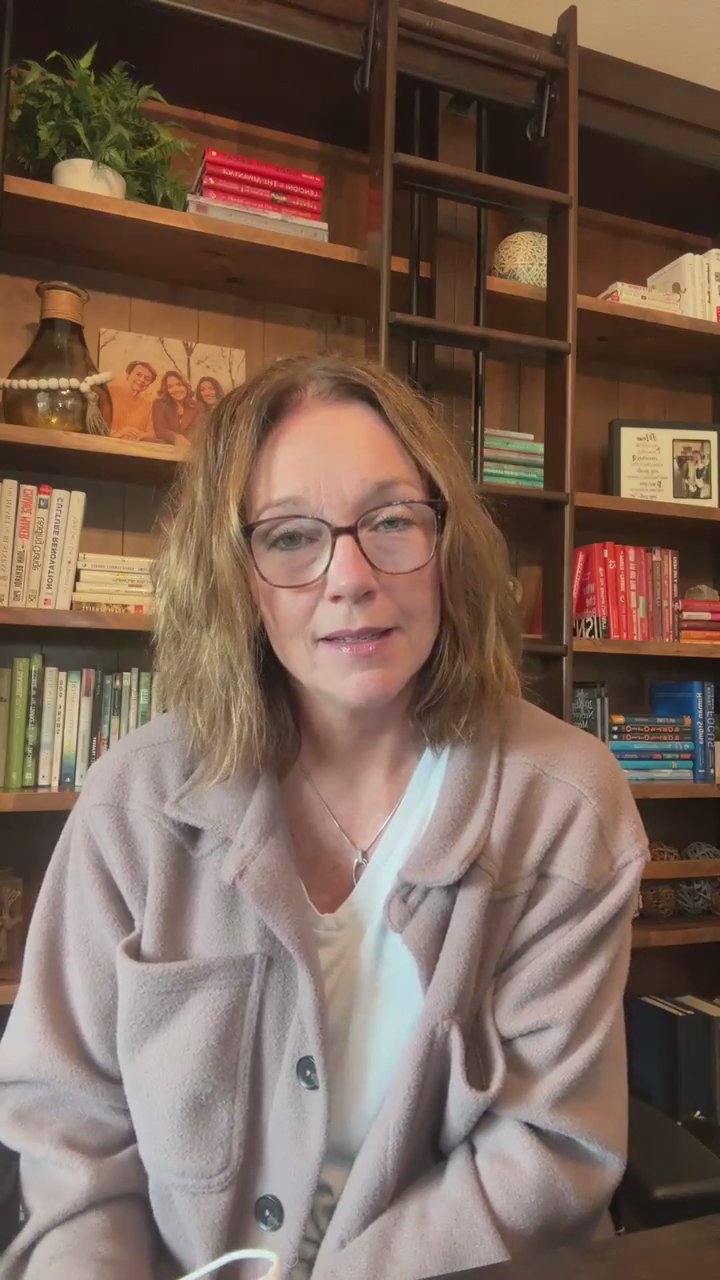
In this session we will discuss the importance of boundaries for self care and to do our best work.
Host Carrie greets viewers, explains the live stream's origin and audience, and outlines the three recurring themes (naming feelings, inner work, and renewal). This orients returning and new viewers to what the series will cover.
Carrie connects prior conversations (emotional load, loneliness) to today's topic of boundaries and introduces insights she gained from a leadership retreat focused on performance, focus, and clearing distractions. She sets expectations for sharing practical snippets from that event.
The speaker argues that boundaries are not merely self-care but enable better work, while acknowledging the common tendency among HR leaders to remain constantly available. She highlights how accommodating behaviors can become identity and undermine capacity.
Carrie recounts her experience as a single working mom and an incident when she missed her daughter's award due to staying late at a meeting to 'prove' herself. The story illustrates the lasting emotional cost of weak boundaries and motivates a commitment to change.
Using Brene Brown quotes, Carrie reframes boundaries as protecting the capacity to care and introduces retreat-backed practices like 'saying no for flow', digital resets, micro‑boundaries, response-time expectations, declining unnecessary meetings, delegation, and blocking peak productivity time. These are quick experiments viewers can try.
She outlines day design, shutdown routines, and digital-reset habits, invites viewers to reflect on recent yesses they wished they'd declined, and closes with a call to try one small boundary this week, upcoming topics, and a friendly sign-off.
Hello everyone. We will go ahead and get started in just a few seconds. I wanted to make sure that I worked out all of the technical kinks that I might have. Hi, how are you doing today? So thank you so much for joining. Super excited to be here on this beautiful Minnesota day. Wherever you're calling from, I'd love to get that in the chat if you don't mind sharing. I also wanted to mention that I am going to start a timer because last time I was super, super long-winded. I think my live went 27 minutes and I want to make sure I'm super respectful of your time and that I don't go too long.
But just wanted to welcome you if you are returning for another time. If you've been here before, thanks for coming back. If you're brand new to the live stream, thank you so much for taking time out of your day to join the HR slash leader community. This is something that Adri and I started probably about a month or so ago because we really heard a lot of feedback from people in the CADRE community and elsewhere that we needed to find a space for HR people to go and feel like they can receive the kind of same kind of care and attention that they give to others.
So just to start out, I'm Carrie Heimer and I was a former CHRO. I've spent my entire career in HR probably about 3 decades or so. most recently as the CHRO for Red Wing Shoe Company. I also am somebody who has lived mental health experience and that's why I'm so incredibly passionate about this work. When you come to the HR community, we will typically be dividing our content into 3 segments. One is trying to name some of the feelings that we're experiencing as leaders, as HR leaders. Number two, to try to talk about inner work that we can do to help us live our best lives away from work and at work.
And then last but not least, renewal. So those will be the three main themes that we follow. So far, we've talked about the emotional load of HR. We've touched on loneliness, and today I want to talk about boundaries. That's something that is so easier said than done. I think we all know, our rational minds know that it's important that we set boundaries for our own self-care, but it's much more difficult to do. I was just gonna mention the timing was so interesting. Last week I had an opportunity to attend a short retreat that was conducted by the Bolster Leadership Group.
was fantastic. It was called the Human Performance Immersion. And it's unlike any kind of retreat that I've ever been to. A lot of the retreats we go to are very focused on the latest trends and things like that. And this was focused very much on how do we clear distractions from our day-to-day lives? How do we refine our focus to be at our best? And last but not least, how do we evolve our mind and body? And it was just absolutely fascinating. And I'm just gonna give you a few snippets of what we talked about at that retreat last week.
One of the threads that wove throughout the two days that I had with other HR leaders was that boundaries are not just for self-care, but they help us perform our very best work. And again, I think we know this and we understand this. but it's much harder to do in practice. So we are the people who coach leaders and employees on how to do this well, how to set boundaries and how to live them. And yet we know that when the text comes in at 9:30, we're tempted to look at it. When somebody wants to talk to us, during the only white space-time we had available on our calendar, we often are accommodating.
And little by little, that just continues to happen until eventually it becomes our identity. We're accessible. We're the one that will get things done. We're the ones that will bend over backwards no matter how it impacts our day-to-day calendar. And we don't do this because we don't know better, but we so deeply Fear, in many cases, disappointing people. And I think for all of us, it's a basic human need to feel like we're needed. And so, you know, when we help people, they're grateful. When we're available, we feel valued by the people that we're available to.
And when we go above and beyond, we get noticed. And I think that is reinforcing, right? What gets rewarded gets repeated. Again, I'm not telling you anything that you don't already know, but our hope for these live streams as we come together is just to be a good reminder to each other of the things that we coach others to do, how we can apply it to ourselves. I'll give you a little bit of a personal story. So I, as I mentioned, my last HR role was at Red Wings Shoe Company. I took early retirement there to be a caregiver to my mom who was battling cancer.
And I was, I started, you know, that was in 2007 and I was the very first female executive, actually the only female executive on the leadership team. I was a single mom. And every day I commuted one hour to work and one hour home. I felt an incredible drive in those especially early years to prove myself that the fact I was a single mom or the fact that I had a long commute, that I was not going to let that impact the work that I did. So I, like many of you, would be in back-to-back meetings all day long.
You'd eat lunch at your desk. I'd race home at the end of the day to get my daughter, whether she was in daycare or to be available with her after school. I'd scarf some food down really quickly, put my daughter to bed, and then I'd fire up my laptop, usually sitting in my bed, and finish whatever I didn't get to that day. That cycle repeated itself for years and years. I had the chance to work for three different CEOs during my time at Red Wing Shoe Company, and every one of them was amazing in their own way.
One of them, he was, he's still a dear friend of mine. He was also somebody who worked around the clock. And one of the things he would always tell me is, Carrie, just because I send you an e-mail on a Sunday or I send you something early in the morning, I don't expect you to respond. He told me that all the time, and I truly believe he didn't, but I couldn't help myself. I couldn't break myself of the habit. If the phone would ping at 3:30 in the morning, I'd e-mail him back quick. Or, you know, if he would send something on the weekend and say get back to me on Monday, I'd carve out time to answer his questions on the weekend.
One situation that I will share and sometimes it's hard for me to share this without getting emotional because I will never ever forget this and it was almost 17 years ago. It was in my first year as CHRO at Red Wing Shoe Company. My daughter, I live in Rochester, I worked in Red Wing. My daughter was I had an awards soccer banquet on a Thursday night and I had a late afternoon meeting that was going to go from 3 until 5 and I had talked to my boss at the time about potentially leaving a little bit early to ensure that I didn't risk missing any of the soccer awards ceremony.
And as the meeting went on, as they oftentimes do, I'm sure you can relate to this. It kept getting later and later and later and I was doing the math in my head thinking I have an hour to drive. I need to be at the soccer banquet for my daughter. It's something that means so much to her and I had prided myself and really not missing important events of hers. 15 and then 5:30 and I remember asking somebody else that was there at the time. You know, I think I just gotta go so I don't miss the banquet and they said, you know that's your choice, but this is a real opportunity for you to prove yourself and to show what you know about this topic and you haven't had a chance to offer your point of view yet.
And so I stayed. I stayed and I drove back to Rochester and I walked into Century High School as my daughter was walking away from receiving her award. I will never forget that and it took me a long time to forgive myself for that. And I know I'm human and you all probably have dozens of examples like that too where you felt caught between, you know, different things that you're asked to do or that you want to do. But that left a permanent imprint on my mind and I vowed never to let that happen again.
One of the things, but let me back up. I think one of the things that I fell victim to when it wasn't easy to overcome this throughout my career was just being needed. I equated as a measure of success somehow. And that was a difficult pace to keep up with. One of the quotes I've shared with many of you that I love Brene Brown. Daring Greatly is one of her books. Many of you may have read it, but she has a great quote. She says, Daring to set boundaries is about having the courage to love ourselves even when we are disappointing others.
It can be daring, it's risky, and yes, you might disappoint people. The other thing she said, the other quote that I jotted down for this purpose was, Clear is kind and unclear is unkind. When we don't set a boundary, we might think we're being kind because we're being available and we're not rejecting anyone for the time that they need with us. But unclear boundaries often create more harm than good because I know for me, I built up a huge amount of resentment for some of the boundaries that I didn't set earlier on in my career.
So the reframe that I'd like to offer you as it relates to boundaries is boundaries, think about boundaries as they don't make you less caring. They protect your capacity to care well. You're not withdrawing from people. You're making sure you have the capacity to care for them when it's needed. So just a couple things to think about as you try to draw more firm boundaries in work and in life. So back to the retreat that I attended. It was called, again, the Human Performance Immersion. One of the topics, the phrases that sticks in my head is a term saying no for flow.
What you protect allows you to do your best work. We talked about a ton of habits and I wish I had time to go into them all with you today, but I don't. But a few I'll share with you that we reviewed. We talked a lot about how do we design our day for optimal productivity and to take advantage of when we are at our peak performance. We talked about the importance of having boring rituals in our day where we just step away from our dust, clear our minds, And oftentimes that's when some of the best ideas come.
We talked about of course the importance of sleep and nutrition and active recovery and those are all critical things that I have pages of notes that I can share more about that at a later date. But one of the interventions that we took a lot of time to go through was the concept of a digital reset. And we challenged ourselves to look at how often we are picking up our phone during the day, how many times, and I was ashamed to see how many times I was picking up my phone. We also looked at how much screen time we have.
Again, not a proud moment when I looked at the hours of screen time that I have on my phone and I asked myself what could I be doing with that time if I wasn't hooked to my screen. We also looked at notifications. Do we really need all the pings throughout the day of every single notification that comes in? Now maybe you're ahead of me in this and have already turned a lot of those things off or are really mindful of those things, but I had a lot of overhaul to do with that. So I've since turned off unnecessary notifications.
I've put some limits on my screen time. I haven't always adhered to them, admittedly, but at least I'm more aware of it. So a few practical tips that I wanted to offer you this week, and these are things that you can just experiment with. One is called micro boundaries. So what if you said to yourself, I'm going to set what I think is a reasonable response time for someone. I'm not going to, you know, I'm going to put that right in the e-mail. Thank you for your request. I will be able to respond to you within the next however many hours or days.
If that's not acceptable, please let me know and we can talk about an alternative. Declining some meetings that maybe you really don't need to be at. Maybe you just kind of automatically accepted these reoccurring meetings, but there's really not a lot of need for you to be there. Just look at it. Just look at your calendar and see what the opportunities are. The old redirect requests delegation. I know some of you listening to this call may not have people you can delegate to and I get that. But if there are opportunities to redirect requests that come in that maybe don't need to be yours to carry, it's just something to think about.
And then also, yeah, I think I mentioned the reoccurring yeses. You know, I would kind of get on autopilot and just accept meeting requests as they come in without really thinking through how does this fit within the priorities of things that I have going on this week. few longer term things that you can just jot down to consider. And there was this concept of day design. And one of the things we talked a great deal about last week at this retreat was blocking things that only you can do and protect it like no other.
We oftentimes won't miss meetings with others, but we will frequently compromise on meetings or things that we have to do for ourself. I know I was guilty of that. So as you think about your day from a day design standpoint, when are you at your peak? When do you feel like you have the most energy? And can you design a couple, you know, two hour block a couple times a week? to have that be your time to work on the things that only you can do and resist the temptation to accept calendar invites just because you have white space.
The other thing we talked about is a shutdown routine, the physical act of shutting down for your day and doing something to transition into your evening and then being committed to that. Again, I gave you the example of how I would feed the kids really quick. clean things up, get them to bed, and then I'd fire up my laptop and I'd do it all over and again. So think about what your shutdown routine could be and then the digital reset. So think about that. What are some small things you can do to figure out ways to be less consumed by your screen?
So a few deeper reflections to consider in the week ahead. Think about the last time you said yes when you wanted to say no. And this is something that I've given a lot of thought to. Ask yourself what's driving that. I said yes, but I wanted to say no. Is that because I value so much feeling needed by others? Is that because I'm afraid of how other people will perceive me? What is the root behind that? Don't have to do anything about it. Just think about it. Just reflect on it. So if this helped, I'd love to have you drop a comment in the chat if there was anything that resonated with you.
Next week, we will be talking about, well, Adria will address boundaries coming up here, I think next week as well. We kind of tag team two weeks in a row, one from my perspective and one from hers. And then after that, we'll be talking about always being the calm one. HR is oftentimes called on to be the calm. One in the middle of a storm. And what does that do to us over time? If you haven't had a chance to watch Adria's last video, I hope you take some time to do it. Many of these kind of build on each other, so we'd be grateful if you took some time to check them out.
And as always, let us know if there are topics that you are super passionate about that you want to make sure we cover. In the meantime, I hope you're kind to yourself. I hope you can take a small, small step this week to set a boundary for yourself. Until I talk to you again, have a great week. Thank you. Bye bye.