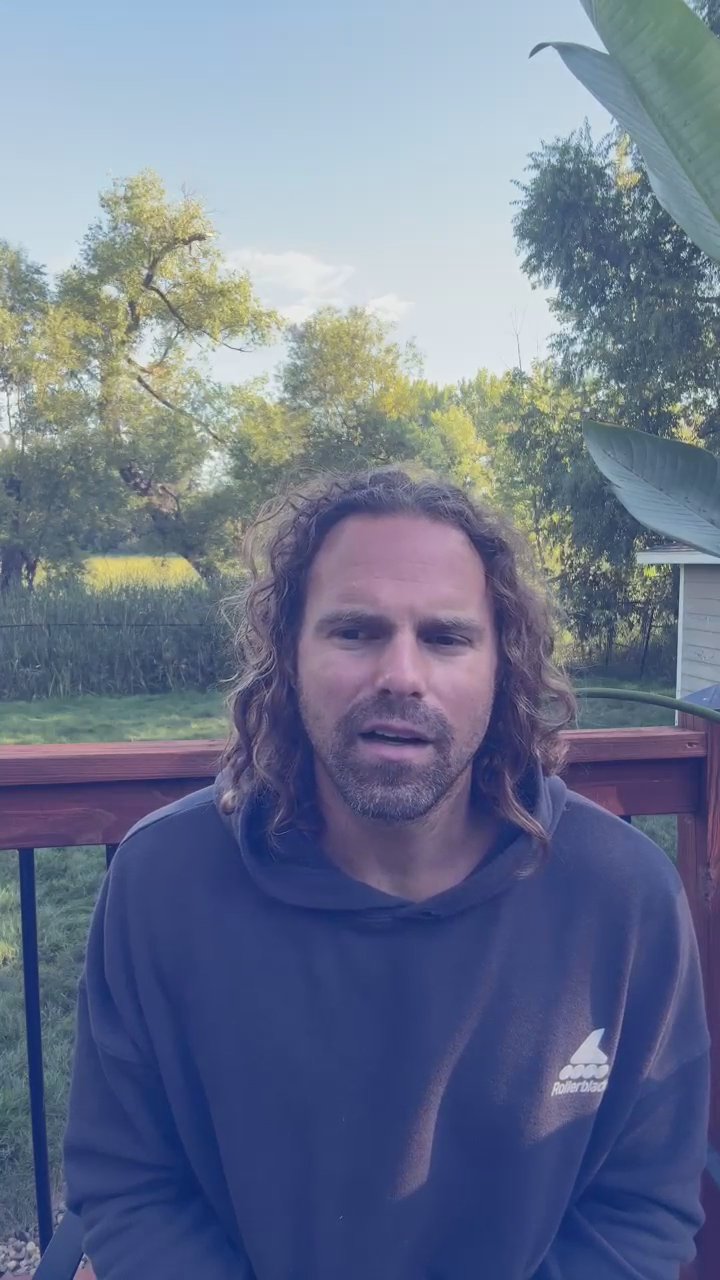
One of the most important things in my life is getting quality sleep. I’ve struggled as far back as middle school, for years in my twenties as I battled nerve pain, and now I’m still playing catchup.
The speaker opens with a casual morning greeting and states that he'll discuss sleep's role in well-being, healing, and performance. This orients viewers to the video's purpose.
He recounts middle-school experiences—pain from a sports injury, nighttime urination, and attempts to mask distractions—that led to long-term difficulty falling and staying asleep. This chapter explains the roots of his negative relationship with sleep.
In his early 20s he links deepening depression and multiple injuries to worsening sleep, then encounters the idea of a sleep diary (inspired by Steve Nash) and briefly discovers cannabis as a helpful sleep aid. This sets up how he began to change his approach.
He explains a period of debilitating nerve pain from herniated discs that caused tossing, disrupted nights, and functioning on only a few hours of sleep. The chapter ends with relief when the nerve pain subsides and natural sleep returns.
After recovery he experimented with sleeping without an alarm to let his body catch up and credits restored sleep with helping him overcome depression and pain. He emphasizes sleep's crucial roles in restoration, healing, growth, creativity, and clarity.
He talks about stress-triggered awakenings and vivid dreams, his reluctance to use synthetic aids, and how modest, well-timed cannabis use plus purposeful evening activities helps him sleep. He offers this as a personal, not universal, solution.
He describes his wife's sleep struggles and how both sometimes use cannabis as a last resort, then outlines his discipline: aiming for eight hours, making up lost sleep, saying no to late-night distractions, and balancing early-morning productivity with rest. This chapter offers practical priorities.
He encourages viewers to see sleep as a friend for regeneration, invites anyone curious about cannabis and sleep to reach out, and signs off with well wishes. This final segment offers support and a call to action.
Good morning, cadre. Yet another gorgeous sunny morning on a Wednesday. It's been a nice streak as of late and I'll take it going forward. Today I'm going to talk about sleep in relation to just overall well-being, healing, performance. Sleep is something that I really put a lot of emphasis on nowadays. And I can go back to my middle school years when I first realized I had, you know, struggles with sleep. And this may have coincided from the physical pain that I experienced as a sixth grader being checked from behind into the boards head first and breaking my back and not even knowing it, so just dealing with pain.
So pain was likely a contributor early on for me not getting the best sleep. And I also remember dealing with just peeing at night as a young kid. And that's something that has stuck with me for a very long time. back in the day, I remember trying to sleep some music to try to eliminate distraction. I remember just being up in the middle of the night, just waking up and not being able to go back to sleep. And I just dealt with that for the longest time to the point where I didn't even really like sleep.
I almost would rather stay up a little bit later and get to the point of just being really tired. And then that's how I would fall asleep. But then all of a sudden you got to wake up the next morning and I'd be so tired. It would be hard for me to get out of bed. I would remember my mom would have to always come in my room and get me up and play this game. And it was just always something that I struggled with. So I remember in my, I think it was in my early 20s when I was starting to get into a depression now after more physical pain that I had endured.
This is, now we're talking, you know, I realized that I had the broken back, my spine slid forward, fused itself together, stunted my growth, and three ACL surgeries later, and I remember reading a men's journal article that was about Steve Nash, a professional basketball player. And he talked about keeping a sleep diary and he would always strive to have 8 hours of sleep. And if he wouldn't get 8 hours of sleep, let's say he got 7, he would try to get 9 the next night or maybe 8 1/2 for the next two nights so he could get that baseline to that 8 hours as opposed to continuing to sacrifice and piling on that lost time of sleep.
So I thought I found this very interesting and I was like, oh, easier said than done. I wish I could just sleep like that. But this was, it was for me, it was around the time that I was introduced to cannabis and that actually really helped me sleep. It was a little bourgeois at the time because, illegal substance, but I was actually able to get some sleep for an extended period of time, which was kind of nice. Then I was introduced to nerve pain in the form of Just horrible pain down my legs from herniated disc issues that stem from my broken back.
And this was definitely, it was like the toughest period of my life when it comes to sleep. Because I was tossing and turning and couldn't figure out how I could go to sleep without dealing with this nerve pain. So I would lose, I don't know. hours and hours a night of sleep just by tossing and turning and trying to find a spot that was comfortable. And then, when I would, I'd wake up to have to pee and just disrupt that. So there was a period in my early mid 20s where I was, geez, probably functioning on 3 to 4 hours of sleep at best.
m. tonight so that I can make up for this sleep that I missed this last night. And that, again, easier said than done because you find yourself just doing things and I'm awake and then One thing leads to another and it's already 10, 11 o'clock and I can't go to sleep. I'm settled into the routine of watching TV, doing things that are bad for my sleep. And then I remember being able to get out of that nerve pain and being able to naturally sleep again, which was glorious. But the whole sleep diary thing really stuck with me.
And for the longest time, for a number of years after the number of years I endured with nerve pain and minimal sleep, I would operate without an alarm clock. I wanted to sleep however my body wanted to sleep. Sometimes that was 8 hours, sometimes it was 10 hours, but I had a lot of making up to do. And I really attribute being able to persevere through physical pain and a deep depression through recovering from sleep. And in our lifestyles nowadays, sleep is an easy thing to just write off because we're too busy, right?
But I can tell you that sleep is most definitely something that should not be written off. We need it to restore. We need it to heal. We need it to grow. We need it for our creativity, our clarity. And you know, my sleep isn't perfect. Stress comes into my life where I'll wake up. go to the bathroom and start thinking about things and then not being able to go to sleep. So that can be a challenge, right? For me, I'm one that's, I'm not gonna, I'm gonna do everything in my power to not take unnatural sleep aids.
So, you know, for me, I've tried going extended periods without cannabis numerous times and I'm pretty unsuccessful when it comes to sleeping at night to the point where I get in my head and I'm kind of afraid to sleep. It's like, all right, how's this going to go? And I might doze off and sleep for the first hour, but then I'm waking up to pee and then I'm thinking about being up and then I'm not sleeping. Or if I do manage to sleep, I'll have just intense dreams that are so vivid and real that I'm exhausted having to go through them.
So for me, I found that my formula is to utilize a little bit of cannabis in the evening not too close to bed. I try to make an activity out of it, whether it's cleaning the house, reading a book, setting up my day for success the next day. So I try to get a functional purpose out of it. Maybe it's sitting in nature, looking at the stars, appreciating the moon. So I'm used, I try to, I try to use it as a tool or use cannabis as a tool to help me sleep. So, you know, maybe that's not the thing for you, but it is something that works for me.
And I just know the power, the power of sleep is so important that, you know, you got to do what you got to do to get it. And my wife right now, she's struggling on the sleep front. And it's hard for, it's hard to watch someone who is just, wants to get up in the morning and be productive, but is awake at 2, 3 in the morning thinking about life and not being able to rest and recover. That is, that is, that is hard, and I don't want to go into fully, what she's going through, but at times she will also utilize cannabis to her benefit when it comes to sleeping.
She's using it more of a last resort type scenario where it's like, gosh, I'm to the point where I really need a good night's sleep. So I'll utilize this aid and help with that. So if you're somebody that is curious about cannabis and the relation to sleep, please reach out to me. Let's talk about it. I'm not here to say that it is the option, but it is and has been a good option for me. So when it comes to sleep, I just, I don't mess around anymore. I'm targeting those eight hours. If I'm not getting 8, I'm going to try to make up for it later on in the week.
And sometimes it means saying no to things. Maybe it's just saying no to yourself. Like, I don't want to watch, I shouldn't watch this TV, this episode. I know it's going to keep me up. And then there's also the discipline side of things where I knew that today I needed to get up early. I needed to jump start my day and I ended up not going to bed as early as I wanted to last night. So I had to sacrifice and I didn't get 8 hours this past night. But I'm keeping track of that so that tonight and the next night I'm going to make up for that.
Because I know that right now the best thing for me is to get up before sunrise, tackle my tasks, organize my next phase of life, and be as focused as possible. And for me, I really tap into that flow state, that creativity, early in the morning before most people are awake. So I have to balance that with sleep so sleep and productivity are working hand in hand. So that's what I got here today. I hope that sleep is not your enemy and that it can be your friend, a source for regeneration. And as I mentioned before, If you want to talk about it, send me a message.
Let's hop on a phone call and we'll make sure that you're getting your sleep right. So hope you have a fantastic Wednesday and we'll see you very soon. Cheers, Cadre.