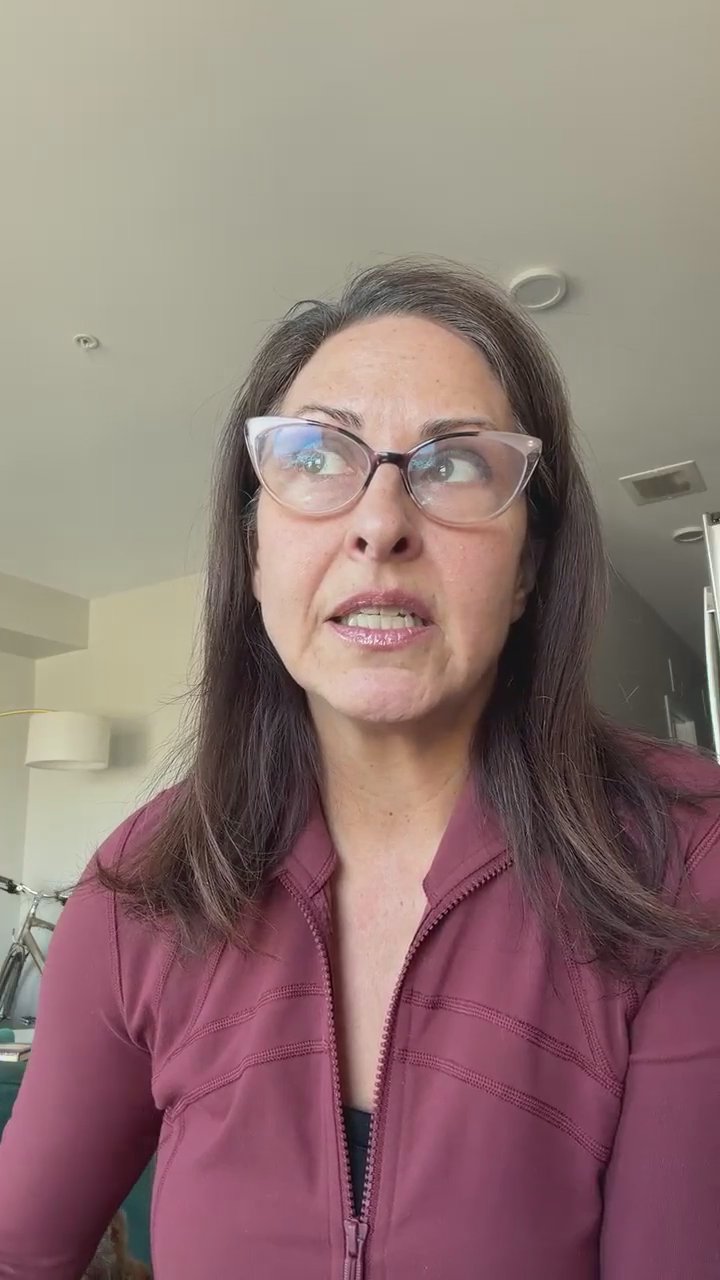
Hi, everyone. Happy Tuesday. Welcome to sober somber hour. I'm your host, Jen Vara. And yeah, so Bernard, some are our. Hour is about a celebrated sober lifestyle. And me sharing. How did I get here? Uh, 11 months of sobriety or 11 months. Oh my gosh. 11 years, 11 years of an alcohol-free lifestyle. Um, yeah, and I was just thinking about that today. Like the milestone of when I hit the 10 year mark and it's sort of unbelievable. Just to amass (laugh), um, you know, that much time. Without a drop of alcohol.
Pretty amazing. It's a gift. So, yeah, sharing, um, on some sober nuts, somber hour. Usually one of my favorite things to do highlighting. Oh, hi, Rachel. Welcome in highlighting a non-alcoholic beverage of choice. Because, um, that's what I found to be fun and celebratory about a sober lifestyle is I can. You know, partake in beverages that taste amazing. That are not soda that are not. Heavy with, you know, ingredients that aren't good for me. But actually can feel my body in a great way. This is a it's called nature's ale.
It's by utopia Borealis. Borealis. And this is a company out of ESCO, Minnesota, Northern Minnesota. Hi, speak wonder. Lake Erie cold here this evening. Okay. Well, we've got 74 in Minneapolis. And it's just, people are crazy, like, you know, shorts and swimming and it's like, (laugh). Um, it feels good. Um, showing you guys my fancy drinkware, which is all part of the non-alcoholic experience that I love. Is having a really great beverage. This one has a little bit of maple. But you guys, this calorie count is, um, it's, it's, uh, 50 calories, a little higher, but it's.
It's with maple syrup and carbonated water, but it is not. Um, super you know, syrup or sweet. It's just perfect. So I say NH. Cheers. Okay, let's get into it. Um, today, I would love to share with you. That some things on the topic of sobriety. And the importance of community. So I, uh, when I first tried to get sober, I was doing everything on my own. I, um, just wanted to fix things on my own. I wanted to like go away and so solve my problem. And I know others in recovery. Um, it's sort of the model because what happens.
If you are experiencing extreme, um, addiction as you. Traditionally kind of burn those close relationships to the ground. Like no one trusts you. They are extremely hurt, uh, by the addictive behavior. So. What often I find happens and in my experience, I am sort of shamefully what I say went away to fix myself. And did that without the help of loved ones. Ones because they were also hurting. Um, and didn't know how to help me. So for quite some time, I would say the first year. Community. Looked like strangers, who I met in AA rooms.
And those rooms were so supportive and an absolute definition of community. I never understood. I just thought. How, how does that work? How do you go into a group of strangers? Strangers and feel supported. Like I did with AA and in those meetings. And it's because we all share a common struggle and a common. Lived experience. So we didn't need to know each other. And that's what community looked like for me. In the first year or so. Um, you know, I don't know if anyone listening has experienced that, but, um, my immediate family.
My friends like that whole group didn't really know what to do with me. So community looked like AA. AA and others, um, you know, working to overcome the challenges of addiction. So I also wanna talk about. The evolution of that because. There's a thing that I call sustainable sobriety. And there's a certain element in the beginning of. Recovery. If you are with others that have experienced your same. Uh, challenges and addiction that you bond through. My question has always been, how long does that last?
And how do I integrate my sober lifestyle? Back into my friend and family groups. And that's where. I believe some things fall apart in sustainable sobriety. Um, so yeah. I I've been thinking about that a lot lately. And oh my gosh, like the. Community that I've built really through this group called sauna in sobriety. We just had a huge event on. Sunday night where 60 some people came together to sauna together. Uh, and really, um, be in community. And the question posed was, you know, what does it look like to be, um, a person who chooses a sober lifestyle in society now.
And. The overwhelmingly great response was, you know, there's more than AA meetings. Meetings, um, in places that are. You know, for early recovery, there's more than that to tap into. And I like to think that son and sobriety is a great part of that model of us sort of being out in community, doing things that are related to wellness in our health. That, you know, if you're hungover on a Sunday or you're not feeling great because of. Alcohol misuse. You're not gonna be able to partake in those things or, you know, maybe live your life to the fullest.
So I love, love the extension of that. Um, yeah. Oh, thanks. Speak wonder she likes my butterfly ring and Rachel, the recovery burnout is real. Yes. I think it just, I, I don't know. Like I felt at about year three, that AA had served me really well. But then I immediately was like, I have changed so much in my life that I am ready to. Really celebrate this choice and show others what it can look like. On the, on the upside of recovery, which I just didn't see much of. So. Yeah, I think community can change through a recovery journey and.
I, I do wanna encourage people in early sobriety to recognize that like you have your AA friends and your, you know, maybe that's your tight-knit group and you're holding your sobriety very tightly. But as you grow and expand. Um, again, I think a sustainable path is to figure out. Larger broader communities. And to me, that looks like, you know, doing things that are actually fun and enjoyable. And active with others that are like-minded and share your same goals. So it's just gonna keep you. On track, like it just there's.
There's it's just so powerful. I can't even explain it. Um, and I just, I felt that full, full on. Um, Sunday night at this event, people were just like, this is wonderful to come together in a space other than a church basement, which again serves its purpose. But like what, what's more than that. Um, you guys are gonna love this speak. Wonder, Rachel. I just have a feeling so. This feather, um, at the event on Sunday night, like we're in an urban environment. Um, standing there with at this event with two of my girlfriends who are also sober.
Sort of in a triangle sort of chatting. We look down on the ground and there's this feather. There's a feather there. Oh, my goodness. And we were just talking about this larger vision. For sauna and sobriety and, and how we could maybe bring it to people in early recovery, like meet them. Where they're at, whether it's treatment centers or places where. They already are. And looking down and seeing this, and later we had a group text where we were just like, oh, my gosh, this is. A symbol. Of being on the right path.
Being, um, supported on a path. And we just all had chills. I still have chills talking about it cuz we have no idea where this feather came from. But believe me, I am holding onto this one. These two women, Jenna and Stacy. Um, also very spiritual and had stories about. How birds. Oh yeah. Speak wonder. You're always talking about the birds and all of your birds chirping in the background of your shares. Um, the feather whispers to my hippie soul. (laugh) yeah. (laugh). Yeah, I don't know. Hope thing.
Hope is the thing with feathers. Feathers. I love that. By Emily Dickinson. Hope. Yeah, because I've been questioning. Who needs, what I wanna create with this community. And the idea of a sober celebrated life. I think people need it. What do you guys think? Sorry. I haven't been posing. Many questions. Um, but yeah, that would be where. Where is your community and where do you find. Inspiration and purpose. You know, in this month, April 20, 26. Where is your community that uplifts you. I feel like I got feathers all (laugh) me now.
Uh, oh my gosh. You have a tattoo with birds. Okay. Well, I'm gonna have to see that. That's awesome. So, yeah, maybe I will just kind of leave it there. I mean, community is just so important. And the definition of it through sobriety really. Can change and it can, again, lead to sustainable sobriety. So anyone out there in early sobriety, listening to this later. To know that community can look very different in the beginning as you get the support and get back on your feet. But. Changing that, um, the people around you and in the environment is so critical.
Yeah. Rachel says, love that. Feel like there needs to just be more that is broadened past just sobriety from alcohol. Yeah. Yep. Exactly. It's like, it doesn't define us. Like you don't wanna just go around and, and be like, um, you know, I'm a sober person. (laugh) and this is what I do. I go to church in a meetings and that's all great again, but like, there is so much more. Yeah. Yeah, for sure. So NH hears to. Y'all for chiming in today. And I get to go to the sauna again today. And that's where I have found my people.
Um, able to be in really intimate conversations. About healing and that's where I think. Sauna and the experience in that environment goes beyond. Um, an AA room. Because you're, you know, tapping into everything in the body, you're processing emotions, you're using the heat and the cold contrast to kind of move through. These deeply emotional. Experiences for sure. So I just, there's just so much more (laugh) there's so many studies, there's a lot of research, so we're just at the tipping point of like, how we just bring community together in healthier ways.
Yeah, sobriety inside a community helps keep healthy choices. Sustainable for sure. Uh, thank you both. Um, happy, uh, April 22nd. It's only getting brighter out there. Um, I'm so happy to see spring in Minnesota, Minneapolis.