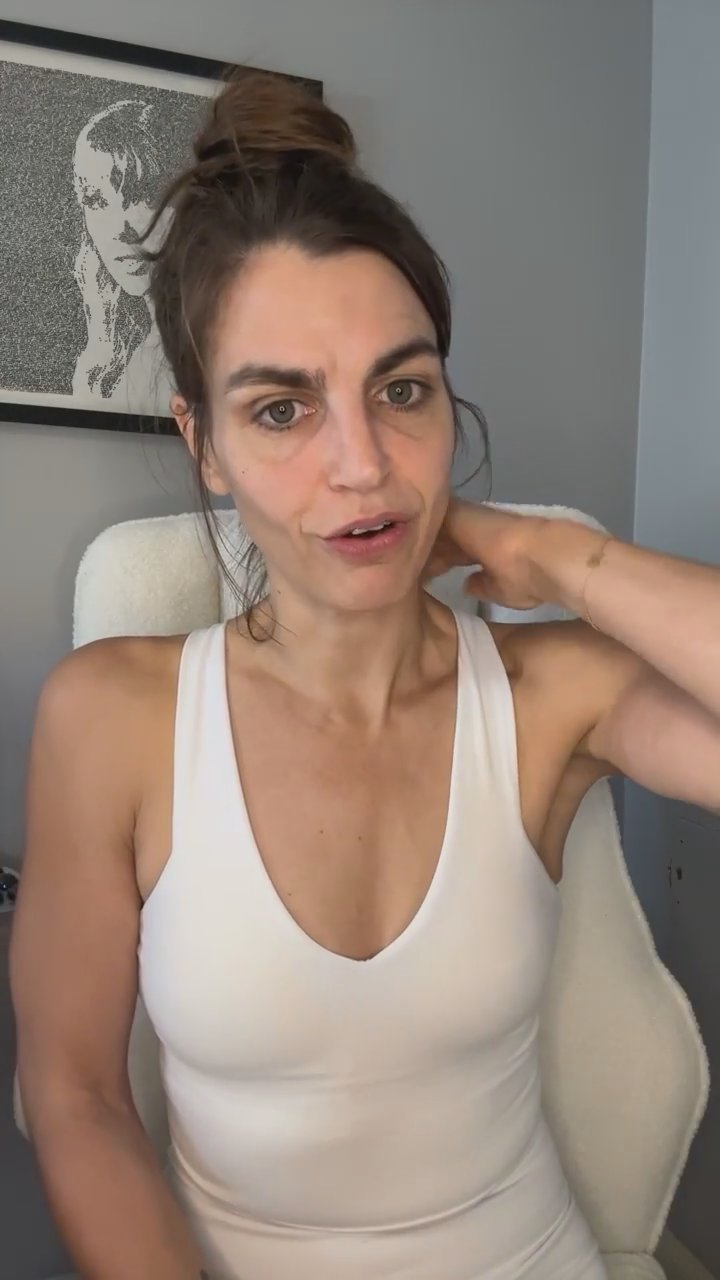
Let’s talk about our own safety and what that means to us around mental health and day to day.
Hi. Hey, cadre. I'll swear by the then like next one year I will be able to say the word without second guessing myself. It's a me thing. It's like a weird blah. Any ways, hi. I am Brittany Hagen. I am an army veteran. I am also a sober person. I have been sober for 15 years. I'm an alcoholic. I also have a radio show, not like that matters . And I talk a lot. I talk a lot in a lot of capacities. So I want to talk about safety today. Now, if you're a veteran, I threw in our reflective safety belts because in the military, you're not allowed to walk around without this silly little running safety belt.
It's like a certain time and night especially. And it's funny too, because safety, as I was a combat medic, safety is one of those things where I think us military people think of the physical, right? I think most people do . I think you think of your locking doors, good neighborhood, being protected, maybe wearing a helmet when you bike, or hopefully when you motorcycle. It's that physical safety, right? We think of that first, first and foremost, because like that to us is most prevalent. It's the whole ABC of it all.
They, what is the thing that needs attention the most, the bleeding, the all the things, right? The reality of it is, safety has so many ways that we can look at it, especially when it comes to our day to day. So let's talk about some different safeties. I have notes. So if I'm looking over here, it's where I'm not like secretly talking to somebody. It's that physical safety that we were just talking about. Am I secure where I live, work, and walk? Am I wearing padded elbows if I decided to rollerblade, which I will never, I will never rollerblade again.
Now that I 'm almost 40, we're past our rollerblading stage. And I think we should all embrace being over things that we've tried many times. Like ice skating and roller skating will never, that's just not my journey anymore. And please respect that. The other one is emotional. Can I express myself without fear being judged or a tech? That is such an important safety for us too. And we kind of underestimate that a lot is in my, in a place where I can speak my mind and not be scared. Safety is another part of that, a mental safety aspect that, oh my God, speak wonder, just said, no, you're not almost 40.
Haller, I also like to claim I'm a teen mom, but I'm not. The social, okay, what we did, the mental, right? Do I feel stable, supported, and grounded in my own head? Now that's one I really want to hit on, because I think it's so important. The reality of it is, and like, I, this is near and dear to me, because I am a veteran, and we deal with this a lot, that mental piece of safety, because suicide is so prevalent in not only alcoholism, community, but the veteran community. Do I have safety in my thoughts?
And it's funny because I can't stress enough. The only person that can answer that is you. You can't make that call on anyone else. So like, that safety around that mental health piece is probably something I will spend my whole life wondering, because I think if any of you have ever experienced somebody in your life who has taken their own life, you know that you literally don't know. You don't know what's going on in people's heads. And we, that's that self-check, and that is probably one of the most important safety pieces before you even go buy yourself a helmet, is that am I safe in my thoughts?
And that's that telling on piece. The big thing around mental health and why we kind of have to do those self-check-ins too, is like, we just constantly are in a place of you literally never know what's going on with people. I just recently found out, so as I mentioned before, I have a radio show and we will be raising money for a cause. I just found out today, the cause that our show is raising money for is to be continued, which is a suicide awareness. And again, like, man, there's times in your life where you go, there is a common thread that we are around and that might be one for me.
So let's talk about if you don't feel safe in your nervous systems on guard and you're waiting for that next threat in your life, which I know a lot of veterans, I just don't a lot of people feel that way in general. If you've come it out of something traumatic, you never really underestimate that safety feeling, right? That we've been in situations where we don't feel safe and how nothing else really matters. Isn't that funny too? Cause like, there's all these things we put into place around us.
Like, what we're wearing, what we're eating, if we're healthy, are we getting enough steps in? But at the end of the day, there's like two things that I always come back to that I go, if this isn't in place, nothing really is. And that one piece is feeling safe in your environment. The other one I always sleep, we're not going to talk about sleep today, because I think that actually then it still comes back to that safety. Cause if you don't feel safe in your environment, and if you don't feel safe in your own head and your own thoughts, really nothing else matters.
I mean, talk about the reality of your mental health is your health. I mean, of course, we have these big things that are going on with us. But how we are dealing with things up here is our reality. And so if we don't feel safe with ourselves, or in our homes, nothing else matters. You can buy all the Starbucks you want, you can buy all the fancy clothes, you can drive the nicest car, but if you don't feel safe, if you don't feel like you're in a great place, nothing else matters. And that's just the reality of it.
We got to talk about when we don't feel safe . So, let's say we're going through a hard time. There's situational problems, right? But let's talk about the day in the day out, and we're finding ourselves with unsafe thoughts. And I have to call it out, it's suicidal thoughts. When you're having thoughts of harming yourself , thoughts of things feel useless, feel like I don't see the value in every day, those are unsafe thoughts. And the only person who can ring the red alarm bell is yourself. Nobody else knows that because you could be presenting especially like I'm a Midwest girl.
I'm also a military girl. We're always presenting strong, healthy. We're doing great. How am I doing? I'm doing great. I'm doing good. Thank you. Thanks for asking. I'm doing good. You have no idea how much you're not presenting because we're constantly masking. We're constantly trying not to look something as simple as tired at work. We're trying not to look stressed. We're trying not to worry anybody. So, you have no idea what you 're putting out there. And if you think that anybody can come rescue you, it's, I don't think it's not going to happen because there are people in your life that may notice some things.
But the reality of it is, you are your own first responder. You are the person who is going to reach out and say, so I've been having these thoughts because again, you're the only person that can tell on yourself. And like, you have no idea how powerful it is to just speak something if you've never done it, if you've never verbalized that, you also, it's so valuable because most people in your life who know you and know that if somebody's saying something like that, and I think I would hope this would be true in the inverse as well, if somebody has verbalized that, it is time to do all the things.
That's when all the resources need to be called. That mental health piece, it's so important. If anybody is at a point of verbalizing where they're at, if they're unsafe or unwell, it has gone past that point. Like it is now the time to call in all the resources. So again, telling on yourself is very important around safety and mental health . I have ways that I make myself feel safe. I once lived in a house, I didn't feel safe and that took a lot of change. But now I do a lot of things control little things that help me feel mentally safe in my own home.
I have routines. I love my routines. Oh, I hold my routines near and dear. I have predictability and productivity. Those are all things that make me feel safe. I think that I still do check-ins. I just had this talk too and I know this is very relatable. I was talking to my therapist and I had this moment of if I'm in therapy, can I still be doing this thing where I tell people advice? Can I still find myself looking, I'm going for my bachelor's degree in addiction? And I kind of had this moment of extreme insecurity of, am I allowed to tell people or give advice around addiction or talk to veterans about resources if I'm still using resources?
To which like she started laughing because she goes, what do you think all therapists do? What do you think would be more like, what do you think is more useful? Somebody telling you to do something that they're not doing or if they're telling you to do something that they are currently doing, like seeking help. And I thought that was really interesting. I've thought on that for a while. I don't always know how a piece will apply in my life, but that really hit me hard because I thought to myself, yeah, of course it's important no matter where you're at, even if you feel like you're somebody who can speak on a topic that you should always be somebody who is reaching out for help, especially if you tell people they should reach out for help.
Like, what if I kept telling people, hey, tell on yourself and be vulnerable and also seek therapy when you need it or get a coach or talk to people about sobriety, but if I wasn't doing that myself, like that would feel kind of more talking out of both sides of my mouth more than me having those moments of, is it okay if I give people advice when I also need advice. I just thought that was super interesting and interesting is that we might all be in a position to help each other out in ways that like we can't really let anyone on our raft if our raft isn't secure.
So let's talk about safety with others. I think that's super important. Find yourself if you're if you ever feel this moment of being nervous to tell someone something or being situations, safety with others is such a huge piece and I think a lot of people will relate to this who've been in different kinds of relationships. It's so important to feel safe around others, right? We feel safe in our house, we lock our doors, but at the end of the day, are we feel safe around our loved ones? And yeah, they can be loved ones and scared.
They'll brick out of you. Those are all worth noting. And again, figuring out where you're at, can I be vulnerable without being attacked? And that's such a big piece of safety. Like I tell you to tell on yourself, are the people you're telling you feel safe around or like other people that you're telling that you would feel any sort of unsafety around your mind frame? Are they going to be people that do call to actions? Those are the people you want to seek. Seek the helpers. Do people respect my boundaries?
Isn't that one important? Especially as like I 'm entering the dating world, I find that it's not a given. It's not a given. And like the moment you feel unsafe, there's just nothing else there. You can't build something around, are on somebody, or build a relationship with somebody on a, like on the foundation of feeling unsafe. There's nothing to build. There's literally nothing there. The minute that starts creeping into your head, just know where do you go from there? Like are you going to build a skyscraper on shitty foundation?
Cool. Good luck with that. I say that sarcastically because I've done that. I don't mean to dump like not going to talk about you. It's very much so something I have done and gone. But if we do this, if we do that, if I'm this person, if I'm that person, no. Once that fear on safety is in, that's a hard one to rebuild. And it's hard to do on your own. So I wish you luck. It's a privilege to be with somebody who makes you feel, I mean that you're safe around and that you also open up with. Safety comes in so many different ways, but again, I can't stress enough.
Think about where you are mentally because nothing else matters. Let's talk about, let's think about in our mind where we're at. Do you feel safe in your thoughts? This is such an important part, especially because this is what we are taught as medics. If you feel that somebody is showcasing unsafe behavior, don't dance around it. Ask them directly. Do you feel safe? Or do you feel suicidal? Do you feel like self-harming? You have to ask those questions directly because any other way you ask is going to they can.
It's very impactful to ask directly because they have to be on. They at least will blatantly have to be at a place to lie to you. Does that make sense that there's almost a bigger hurdle? There's less of a hurdle if you're like, are you okay? Yeah, I'm okay. But if somebody, when I'm in a dark spot, if somebody, and I have been in my life, if somebody directly asks you, are you going to self-harm, have you had suicidal thoughts? That blatant, like blatant question is very powerful and has proven time and time again by experts is the most impactful way to ask somebody.
I hope you all safety. Safety is so freaking important. If you're in a place that you are so lucky to take safety for granted, I wish that continues in your life. Safety is one of those things where you don't really think about it much unless you don't have it. And so please, please, please, please, if you're in unsafe thoughts, unsafe environment, unsafe, you know, around people relationship-wise, nothing else can exist until those things are fixed and addressed. So I hope you safety and I hope you a good Thursday.
Thanks for hanging out with me. I'm going to end this.