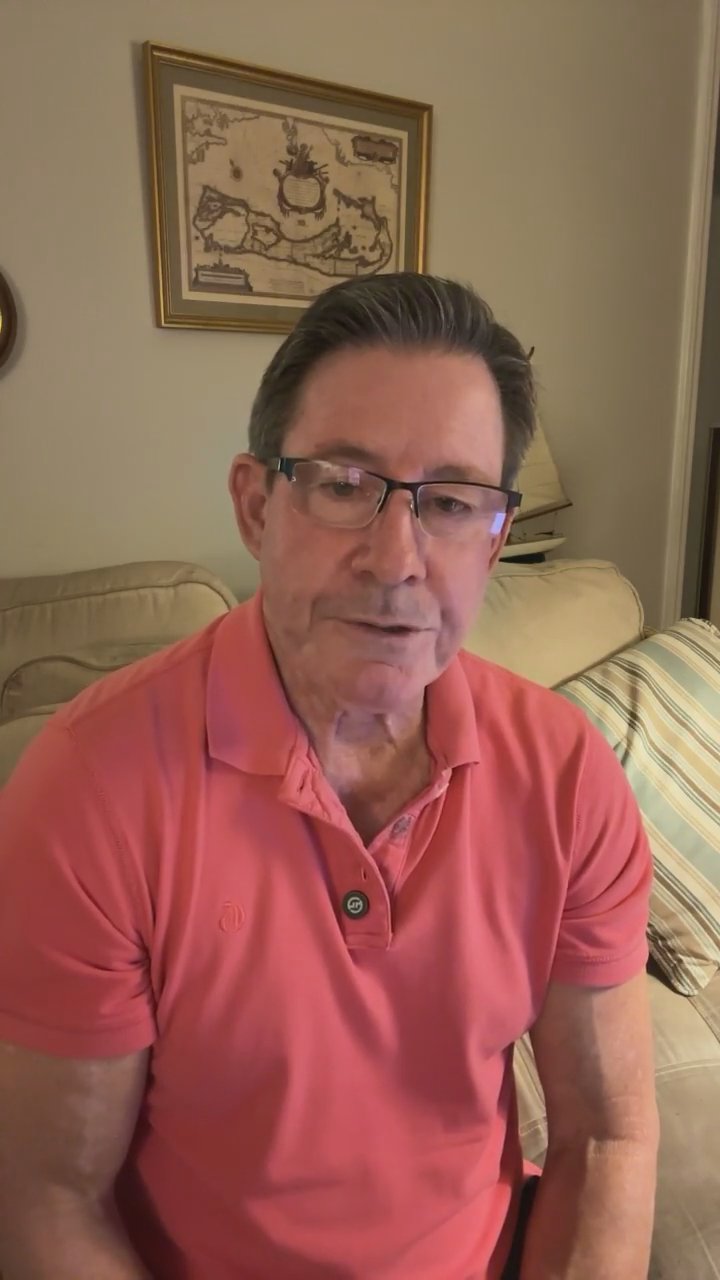
Please join me for encouragement and practical strategies to help you tune in, plan, and be your best no matter the challenges.
Rick opens with greetings and a brief internet glitch, then introduces the topic: how resilience shapes our ability to have safe but difficult conversations. This chapter sets the emotional and historical context for why the subject matters now.
The speaker links past societal divisions and recent crises (like COVID) to the current need for conversation, shares his group experience, and prompts the audience to recall what made past conversations feel safe. This section builds the case for intentional, resilient dialogue.
Rick maps out three ways to be resilient—preparation before a conversation, leadership and communication during it, and recovery afterward—and begins to explain values and self-awareness that support each step. Viewers learn foundational mindsets such as applying respect, naming feelings, and choosing who to speak with.
This chapter describes practical communication techniques—use curiosity and questions instead of declarations, employ I-statements, read the room, set boundaries, and calmly call a timeout when conversations turn toxic. It offers concrete phrases and responses to help keep dialogues safer.
Rick emphasizes that these skills take practice, notes modern distractions (phones) and generational differences in conversational experience, and invites viewers to deeper workshops or practice sessions. The segment helps viewers consider which strategies will work for them and which will stretch them.
The finale centers on emotional processing—grief, sadness, and the cost of self-censorship—while urging listeners to speak up responsibly and carry one another's burdens. Rick shares a recurring 'Take Heart' gathering, issues a call to action for conversations in community and leadership, thanks participants, and signs off.
I hope I'm with you. Hi, Rick Cram and welcome to your Resilience Coaching Studio. My internet went out just a few minutes before the top of the hour and I just saw an alert saying that there's something about my not being authorized. If someone is with me, if you wouldn't mind letting me know that you can both see me and hear me. Hello, Andy Mack. Glad you're here. Hope you're having a nice evening. Hope your week has gotten off to a good start. And as you may have heard, my internet went out right before the top of the hour and I saw an alerts.
Would you mind letting me know if you can hear me or not? And then we'll get started with this topic. Loud and clear. Excellent. Thank you so much, my friend. So back in the 60s, there was a tremendous amount of division. And there was war, the Vietnam War, there were riots, there were dangerous times, but there was one foundational message going on throughout society and was that we needed to talk about it. We needed to have conversations. In the post that I put out earlier today regarding tonight's topic, Ow!
Excuse me. That's my knee saying hello. If you know me, you know that surgery number seven on my left knee has left me with a knee that's in trauma. It says hello like that a couple of dozen times a day. And it hurts, but it's my resilience that defines me. And it's going to be our resilience that defines how we take a look at this very sensitive very challenging, but not impossible, but issue regarding having safe conversations, which are not ever guaranteed. But what we can do and part of our being resilient in approaching this in three ways, and I'll get to it, is to do what we can to create safe conversations.
So the title for this, I've been busy creating some notes to prepare. I've got a lot to share with you. I'm going to share it all, and we'll pick it apart. When the world feels unsafe, such as it does now in this moment, the thing to do is to make safe conversations, and here's how. I want to just welcome you. I'm glad you're here. Hello, is it Elle Marie? I'm Rick. Nice to connect with you here. These are challenging times and one of the questions that I, and having conversations that may be or may become unsafe or feel unsafe going into it can create a lot of fear, a lot of frustration, a lot of different emotions.
But what we're going to do now is take a look at different ways to actually approach, navigate such conversations and how to respond to them in a way so that we can, drawing from the book I'm working on, Plan to Be Your Best, Plan to Be Your Best as You Navigate Pain, is how to transform a journey of pain into a journey of resilience, your own unique resilience. And without a doubt, everything I'm going to offer today is going to be done in a way to illustrate and suggest that Each of these are going to be how you use your own unique resilience.
The question that I put out this afternoon was, have you ever had a conversation that felt safe? And what about it made it feel safe? What one or two words might you share that reflects, I had this conversation. Maybe it was going to be smooth sailing or maybe it was going to be full of traps, but it was and it ended up being a safe conversation. What about it made it safe? Hello, SpeakWinner. Kathy, good evening. I'm so glad that you're here. You poet, you, and I mean that as a term of endearment and a compliment.
What we're going to do is take a look at this moment in time when we've got major things happening. And it reminds me of something from just five years ago. When COVID arrived, we already had challenges. We already had dynamics in our country and in the world that were difficult. There were health care problems. There is political division. There was loneliness. You name it. What other problems existed and still do exist? But then came COVID, and it magnified every one of those challenges. One of the things that I did in response to it was create a group, a Plan to Be Your Best group, started that March of 2020.
People signed up. The group is still going once a week. We still have a core group that still exists from the very beginning, and we connect and get together to talk about being resilient, talk about what's going on, in our world. One of the members just had a total knee replacement, so we're encouraging him. I will tell you, my 93-year-old mother was one of the people that signed up for it, and she is still participating just about every week, talking resilience, talking strategy. And I believe this is a time when we, like back in the 60s, there should be, let me put it This way, I believe we will be all better off if we talk about it.
But how do we go about having a conversation when things feel so hot? I was working with a client today, a husband and wife team, and we ended up talking for about half an hour about exactly this. And sometimes the conversation was taking twists and turns and got to a point where one of them said, I have this need to speak out, but I've been afraid to. I've got various things I need to express and it's healthy to express. But he's afraid that if he speaks, especially if he says the wrong thing or the right thing, even with full of respect and full of leadership, that he's going to be criticized and he's going to lose everything from friends to even customers.
So I'm going to map out a series, and I'll go through them right now, ways to approach it using resilience strategies in three ways, one of which, and I hope what we'll do is get to a point where we have set a stage for you to share what's on your mind and what's on your heart. So there are three ways to be resilient in the course of approaching difficult conversations such as we are in times such as this, in moments like now. One, to be resilient by being prepared. There's no guarantee that any conversation is going to go well.
You know, there's this, we all know people that fire off with emotions. They don't regulate their emotions. They don't think before they speak. And we all know people like that. S. Wolf who said, those who get angry when we set boundaries, those are the people we set boundaries for. So one of the ways to actually go into creating, applying resilience is in the way we prepare for it. The second is being resilient through a conversation, a difficult conversation where you're protecting your safety as well as even protecting the other person's safety to the extent that you may be able to.
That means communication skills. It means leadership skills. The other way to be resilient is afterwards. By being able to, whatever happens, to bounce back from it, it might very well be an upsetting experience. But being resilient is how we can recover from that. I love it when you write notes. So I'll read each one as we go along and meld all this together. I felt safe in the conversation recently when my friend invited me to sit by the lake and said, We can talk or be silent. What a wonderful invitation.
The beauty about that, either way, as you write, Kathy, it's a time of sharing. That felt safe. Thank you very much for that. That was an invitation, wasn't it? An open invitation for whatever you need. So let's actually start with that. What if we go into, to set the stage for a conversation, where it's safe is to make it safe for the other person. Invite them to say and maybe even pick carefully the person that you're going to have a conversation with about what is on your mind and what is on your heart.
So those are the three ways to be resilient. Preparing for it, navigating the conversation with leadership and communication skills and strategies, and then being resilient in how you bounce back from whatever you experience. So some of the skills that go into creating, if we're going to make as best as we can set the stage for a safe conversation, what does that look like? It looks like you're applying your values, your values of respect, your values of honesty and compassion. That friend of yours, Kathy, extended grace and compassion to you by saying, what do you need?
We can talk or we can just be in silence. It's self-awareness going into it where you're aware of your emotions, you're aware of even someone else's emotions going into it. And then even being prepared and when you're going through the conversation is to identify and even name what you're feeling. There's a difference between saying something out of an emotion versus saying, here's how I'm feeling. This is what I'm feeling right now. Those two, that difference can make all the difference in the world in terms of how the conversation goes.
Boundaries are an important part of it, including this boundary, which can be very difficult to do, but So important, and it can make the difference in the effectiveness and the strengthening of your relationship. It's good to read the room, know your audience, so true. I would say that's really the place to begin. Pick someone you believe that you can have this conversation with. And if it's someone, for example, who is very emotional, doesn't regulate, doesn't control themselves, think twice as to whether or not that's going to, that this other person might help create a safe conversation with you.
Then there are the communication skills, such as using I statements. I'm just referring to my notes because I've spent a couple of hours preparing for this because I think it's so important. When we have kinds of, like we did what COVID revealed, were the divisions, political, otherwise, healthcare issues, the loneliness epidemic, which still exists and so forth, with everything being magnified like it is now and perhaps in different ways, we actually can come together and in that connectedness, having these safe conversations, and we can grow through this and heal and find perhaps a way to come out the other end in a way where we're all stronger.
And in effect, to a great extent, that's what our country was built on. I will reflect on one, this is not editorializing, but an observation. And Kathy, I think you can relate to this. Back in the 60s and 70s, even in the 80s, each market had a few television stations, maybe two or three more independent ones, a couple of newspapers, maybe only one, some radio stations. And that was it. There were journalists who worked for these relatively small number of media companies in each market. Today, we've got millions and millions of publishers and editors who haven't had the training of what it looks like to actually be a responsible publisher and editor, checking sources two or three times, making sure that the truth and facts are actually being shared.
These have become divided times. One friend of mine, I see him post, very respectful, but he does share his ideas. There's the same person who always responds, obviously has a very different view, but is extremely personal and critical. It is so sad to see, and I see a lot of that. Do you see that as well? And how do you respond to that? So let me continue going through the list. Another way to go into this is to ask questions before making statements. See what the other person thinks. There is something wonderful that happens in a healthy communication exchange where showing interest, respect, and curiosity in someone else is going to, hopefully, not always, but set the stage for that person to reciprocate.
Using I statements again and not anything critical, not anything judgmental. Not making declarations. There's a huge difference between asking questions and making declarations. One of the, we've talked about this before when it comes to, and let me ask you this question. What works really well for you? Two questions actually. What works well for you in safe conversations? And let's go ahead and even based on what we're reviewing now, what do you need to talk about? What is on your mind and what is on your heart?
Give it if you will a name, a subject. It might be something as simply as, yes, right, show curiosity, that wonderful, one of our first emotions in life. And the idea of being able to express, identify what it is, what do we need to talk about. My clients needed to talk about fear. They haven't actually had a conversation except between themselves, this husband and wife team, with anybody else about what's going on. And the more we all talked, the more it was clear. They had so much to say and such a tremendous need to express.
In effect, what we're seeing now to a great extent is another observation, correct me if you think I'm wrong, I think people have retreated. They're holding back out of fear and out of even anger and feeling unsafe. So what is it you think is behind people holding back? And if If we ever take a look at anything with a problem solution approach, here's the problem, here's the solution, here's the problem, here's the solution. The solution almost always involves two things, the exact opposite of what is being experienced and to have a conversation about it, to talk about it, to work through it together.
In effect, we are here together. And we can do, we are at our best when we do work through things that are difficult. Leadership behaviors, respectful tone, setting ground rules. So what to do, what do you do when a conversation turns toxic? There's a few options. One, go toe to toe. Another is to retreat and back out. Another is in between. gently, calmly intervene and say, here's what I'm feeling. What are you feeling? I see the direction this has gone and this isn't working for me. What if we put this on a shelf for a little while?
And if you want to talk about it further, let's do that. But let's call the time out. Have you ever had to call a time out in a conversation? I can definitely sense the caution the holding back, I do too. I see it, people are telling me about it. That's where we began this conversation with my clients. And yet behind that is basically in effect, especially if it's for a long, for some duration, it's not healthy. The health comes from through the working through it, talking about having these safe conversations.
And it's in those conversations that we can find what we have in common, even find that we can address the thoughts and feelings we're having and find sources for healing. So which of these skills that I went through would work for, which one of those works for you? And then here's the follow-up question, which one of them would stretch you a bit? Any one of these, whether it's being able to navigate a tough when the conversation goes south, so to speak, to be able to apply a new boundary in the moment, to address it calmly and say, let's do a timeout.
Sometimes it's when it's awkward or toxic, I leave with a question, how can you Help me understand something. That's wonderful. One of the nice things about that, Kathy, is that you're inviting someone to share and there's a nice, seems to me there's a gentle redirection with what you're serving up there. That's very good. That's very good. And it also shows your willingness to both listen and be the leader that you are. We all, to some extent, lead ourselves. We always are leading ourselves. That's our responsibility, our ability to respond to any situation.
We lead ourselves into one extent or another. We lead others, or at least model for others. But that can be interesting to consider. What is it that works for you and what might stretch you? In fact, what we've done so far is use the three steps of resilience. We tune into this particular dynamic, this issue of what's going on, this very sensitive moment in time. Then we've taken a look at a menu of different possibilities. We've been in the plan phase for most of this. And the invitation I have for you regarding the third step, be your best.
What if you do By design, using some or all of these particular strategies and skills, create anew, make anew, to the best of your ability, a safe conversation. One that you believe and you have respect for, you have a need for having this conversation, and perhaps with a particular individual to talk about what's going on. In general, I'm going to have, I'm going to do this for myself. I'm going to identify. I know there are people who I cannot even try to have a conversation with because of the past experiences.
They just have a hard time applying some of these and their best is their simply their best. And it's not going to be worth it for me to try and have a conversation with them about these times. I am finding with a couple of people who I know can be very emotional and react and speak out of their emotions are hurting as well. And finding the, creating the ground work based on grace and love and the hurt feelings that we have going on has been helpful. Your MO is to retreat, not always the best strategy.
Things remain unresolved. And maybe there's a few ways to look at it. Sometimes it might be both giving yourself praise to say, that's what I just needed to do in the moment. And we've had this conversation before when we've been talking about having difficult conversations in general. We can be prepared as much as possible. That's what it really is. As prepared as much as possible before and then be as prepared as much as possible during. But there is no perfection in creating a safe conversation.
And so we all navigate it the best that we can. It might very well be that retreating was the best thing to do because the other person wasn't going to be able to, how should I say, collaborate with you. There are seven communication strategies that are the seven most influential communication strategies. When combined, they are examples of leadership, skill and And it sets a stage, I keep using that term, but it optimizes, and that's all, it optimizes the chance to create a positive influence with what's being communicated.
It doesn't always play out that way, but collaborating and approaching any conversation in a collaborative way is like just a search engine optimization with websites. It optimizes the website to try to get in front of more people who might be interested in your product or service, but there's no guarantee. But we can optimize our conversations if we approach them in a collaborative spirit all the way through. So sometimes, excuse me, the idea of retreating is always an option. Another is to gently say, here's how I'm feeling.
And what if we do take a break from this, what if we do take a timeout or help me understand something. So in effect, you're not speaking from the emotion, but you're identifying and naming it, which might very well be especially helpful for the other person to then recognize here's what's happening. And they might think, that's not what I'm trying to do. Some people, I'm sure we've all had, I know I have had conversations with someone who is deliberately trying to be provocative and trying to get a reaction.
So we've really covered a lot of ground in a relatively short period of time for something that I know could easily be a full day workshop to peel away the layers on each of these and actually in the workshop practice them in real time and start to exercise, see what it feels like to exercise these different strategies. There's nothing that shuts me down quicker than trying to converse with a person who is staring at their phone like I am. It's unsafe environment, devoid of meaning. And we see it all the time.
I've seen two people out to dinner texting each other. And, you know, Before phones, before all these devices, the approach to communicating, the approach to relating, the approach to socialization was starkly different than what these earliest, these youngest generations are experiencing. Growing up and not knowing how to, having the practice to navigate challenging or what might seem unsafe conversations. Yes, I've been thinking about that, Kathy, that it could be. And I've put on communication workshops that go through those seven strategies.
And one thought, well, I don't see what Nikki thinks of it, but the idea of having a Zoom or StreamYard session where we are able to really do some more good work on on each of these or maybe drill into a few in particular. I don't think there's anything that I haven't left out or gotten into, but there's a lot to these and it takes practice to actually experience them and get them under our skin so that we can start to leave a workshop like that and go on to practice them. So that is my invitation to you and be your best Put this to work, put this to action.
Maybe it's to create a safe conversation, to have a conversation about exactly what is on your heart, what's on your mind. Let me actually invite you to share now, is there something that you'd like to talk about? Is there something that you'd like to say about what's going on? Using I statements, being respectful, maybe leading with a question. Because these are difficult times and I believe with all my heart that we'll be all the better for it. We'll be a stronger community. Our relationships will grow stronger when we do basically care for and listen to each other and do it in a way that's perhaps the greatest collaborative approach is to do this.
If someone's expressing something that's a burden, And as to take the approach where we carry that burden for each other. Even basic etiquette could be included. Absolutely. What comes to mind? And let me just read this. Thank you. Thanks, Rick. You're very welcome. Valuable strategies and insights. Appreciated. There's a creeping feeling of self-censorship, yes, going on to avoid being attacked and labeled. That's exactly what we see happening. at every level of society, on social media, between family and friends, maybe even across the kitchen table, but we also see it at every level of leadership, both in our places of work and in the government.
So that's actually a wonderful way to describe it. is self-censorship. And that is passive behavior. And we suffer in that passive behavior. No one is helping anyone else move forward. So in effect, my hope is that there will be more calls for, let's like that Beatles song, Let's Come Together, which I think was written in the 60s out of the need for exactly doing this because we need to come together, talk about it. Remember that song? Hey, what's going on? Who's that by? The band name has a really unique name.
Look what's going on. I'm feeling the heaviness of the current events, not wanting to make it political. simply wishing to express my sadness. I'm right there with you. And we are sad, and that sadness is heavy. And it needs to be cared for as only you can, but as only we can, as I can, care for as well, to recognize it, to be a holder of hope, to say that makes all the sense in the world. Of course you're feeling that way. I am too. This is terribly sad in so many different ways. That self-censorship is sad.
Any murder, whether it's Charlie or kids at any kind of school, whether it's a public school or a religious school, these are all tremendous tragedies. And sadness needs to be expressed and cared for. And when we do practice, as I've been doing as well, there's... The important thing for me now experiencing that kind of pain is to exercise my resilience, including being willing to speak up when I probably otherwise wouldn't, like now. What I've tried to do is approach this from a standpoint of saying, let's look at how to do this and then provide an invitation to say, all right, let's do this.
Let's have this conversation. And there's something about, no solace for me, but experiencing agony dozens of times a day that has made me, given me quite a bit of perspective. On one hand, it's tremendously overwhelming, and yet I've never been more resilient in my life. I've never been more mentally or emotionally resilient and strong. And one of the benefits is in raising the question, should I speak up about this? How do I speak up about it? But then saying, I'll do it. In effect, I'm not wasting the pain by exercising my resilience and what I've learned about it.
I'm not wasting the pain so that there can be healing, so that you can be heard, Kathy, about your sadness, the heartbreak, which is so real and so, so painful. One of the things that I know we will do, we will heal. And hopefully we'll all get to a better place and things will get better before they get any worse. That heaviness I hope that you can trade and I hope that I can trade it for turning it into good grief and grieving it. Thank you for saying Charlie's name. Charlie Kirk. Charlie Kirk.
I wish I knew the children's name at the most recent school shooting. Or anyone who's died by violence. Their life has been taken by another. And it's tragic. Here's one thought as a call for myself and if I may ask you to consider this. This is happening on our watch. Who do we need to speak up to? As we've taken a look at, we know how now. We know how. We can be resilient. We can be prepared. We can be leaders. We can be good communicators. Who do we need to say, we need to talk about this? We need more conversation, not less.
We need to be leaders. Who do we talk to? Maybe it's a family member, maybe it's a friend. Maybe we talk more about this here on CADRE, which is made, I believe, for exactly this. Because we are a community and communities, when we're at our best, are there for each other and carry each other's burdens. I think it might be true of most religions. Hindu, Buddhism, Judaism. I know it's true for Christianity. How is it said when we carry each other's burdens, we are fulfilling the law of Christ. We are at our best when we care for each other, not judge.
And if there's ever a kind of of foundation for which we can create a safe conversation. It's with bringing that to the relationship, to the collaboration, to the stage of where we'll have talks, not easy talks necessarily, but tough talks. So we are holders of hope for each other, aren't we? What more would you like to talk about? Is there a word that comes to mind Is there something else that is on your mind or something that's on your heart that you need to say? You know how to say it and it's okay.
We're all processing a lot and one of the things I've learned more than ever especially since the seventh surgery is that The greater the pain, the greater the need to talk about it. And real goodness comes from that. The alternative is that self-censorship. That means we're holding onto or carrying something painful and we're not processing it. That creates more layers of pain. Thank you so much to each one of you for being here, for letting me share these thoughts with you. Let's connect after this.
If you're watching the recording of this, I'd like to know what you think. And if you'd like to talk, let's talk about it. Talk about anything that any of us have shared here. Let's say the name, is it Irina? She was murdered in North Carolina, Ukrainian refugee. Yeah. Seeking a new life in America. Young, maybe the college age woman or teenager. Is that who that was? I'm sort of on a kick tonight, thinking of different songs coming to mind. The song about people coming to America, we do know If we're going to actually be students of and practitioners of good journalism, doing our research, knowing what's true, we do know.
The fact is the overwhelming majority of people coming to America, such as they have for hundreds of years, have been seeking not only to live a better life, but to create a better life for their families and for their brothers and sisters and their neighbor. So maybe there's the idea right there, Kathy. We start by saying their names. And maybe we can do it in a way that does invite other people to say, Say the name of the person you're grieving for. And just let it lay like that. You're an exceptional writer.
So I'd be curious to know what, I'm gonna need to, I'm sorry, I'm gonna need to wrap up because the longer I sit here when it's doing this, it's going to give me more and more opportunities to be resilient. And so I'm looking forward to more of your thoughts. I'm a sponge. I love listening to and learning from each of you. And if I may extend one invitation for those of you who haven't heard about it yet, I've restarted something that I did start about 15 years ago. It's called Take Heart, Encouragement and Resilience in Action.
It's a gathering time that's completely free, the first and third Sundays of each month, a time where we can gather and experience encouragement together and experience sharing encouragement, receiving encouragement, and let that feed our own unique resilience. It's a time of all conversation. And it's take heart, encouragement, and resilience in action the first and third Sundays of every month at 3 o'clock Eastern in the afternoon. com. Yes. So I had an interesting conversation. And Kathy, the idea of powering through your physical pain, it's no small thing.
And I suffer, but I do it in two ways. It's overwhelming. Each next one is a source of stress, part of the trauma of what I've been experiencing for the past six years now. is that inability to really relax. So there's that stress of it, then there's the feeling of the pain, and there's the compiling of each next blast of pain on top of each other. And I think you'll find interesting the conversation I'm going to be having with the woman, Diana, who you will immediately see her face and see there's an extraordinary story there.
And I think that's her left eye had to be removed because of cancer and it's very obvious. I was talking to her yesterday and a little bit of cancer has come back so she's got to get some more treatment but she and I are going to talk live sometime soon, maybe this Friday. And she had an interesting way of, and I'm always interested in the words such as power through, I like power through, she has her own resilience vocabulary. But I like power through because what is within power? It is strength, it's energy.
And I've got the energy and strength for that. And I want to thank you. Thank you for recognizing that. Thank you very much. That means more to me than you'll ever know. So many people, and this is, I think, part of the dynamic that we're seeing, there's so much pain in the world. so much sadness, so much grief. Most people I've seen, have experienced, as I've experienced pain for decades, is people will say the wrong thing or they shut up. They don't say anything. Or some people have just gotten up and left when they've seen me in pain.
Most people retreat and don't know what to say or how to act. It's a major, it's a human challenge and problem. I think it's a major one in society. But you have the grace to know what to say, even just to recognize something such as that I've powered through this is rare and a gift. Thank you so much. I will wrap it up now by saying thank you again. I hope you have the best night. for all of you over here. Kathy, I know you're still here. Thank you so much. And I'll look forward to talking to you again real soon.
Have a blessed evening. Bye-bye now.