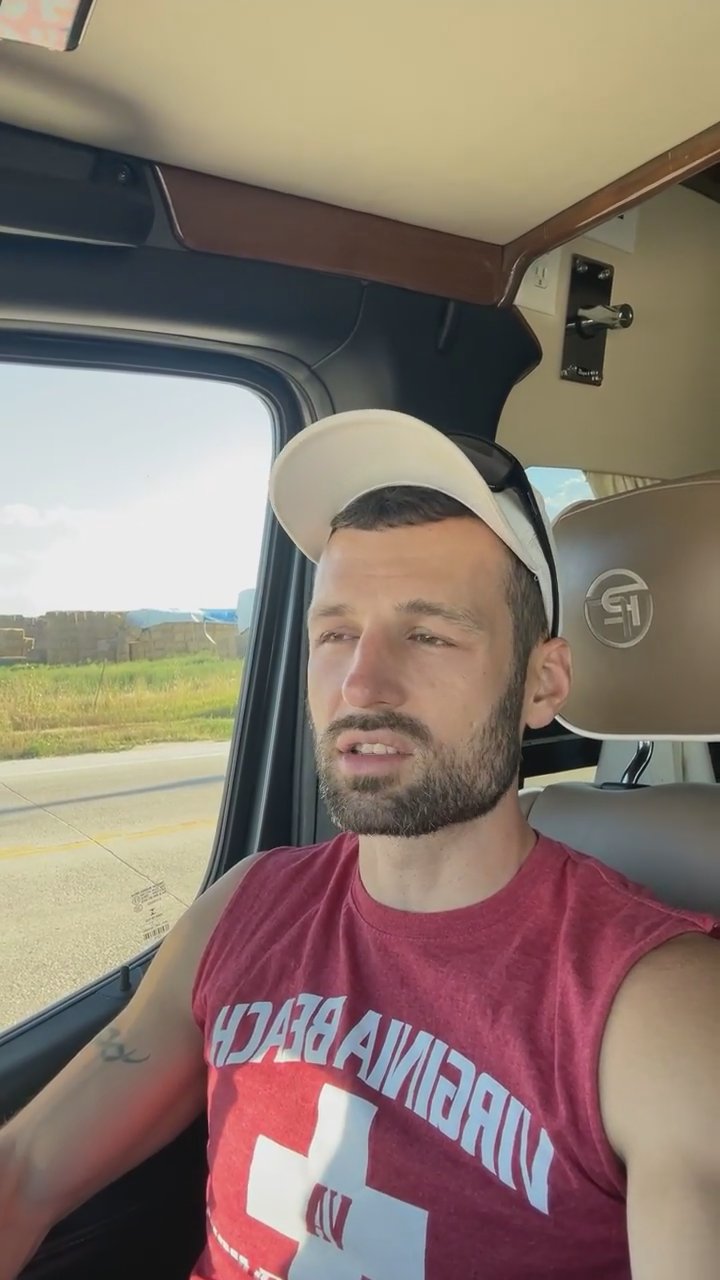
Jason Lennox is your resident recovery champion. He was inspired by Cadre founder Luke to talk about turning negative situations into opportunities. Has been traveling for a little over two weeks. It's still there, you know, it never really goes away.
Jason Lennox is your resident recovery champion. He was inspired by Cadre founder Luke to talk about turning negative situations into opportunities. Has been traveling for a little over two weeks.
The question for me is, how do we turn pain into action? And I thought of three very specific examples of how I've done this in my life. My cousin Scott was killed on his motorcycle about 11 years ago. I turned that pain into a life of recovery.
We find meaning through the pain of loss. It's still there, you know, it never really goes away. Tonight maybe I just turn all that pain into action by way of going to get a bowl of ice cream.
Good evening, Cadre Sphere. My name is Jason Lennox, and I'm your resident recovery champion. I'm excited to be here sharing with you tonight. You know, as I was thinking about this live and what I wanted to share about, I was actually inspired a little bit by our founder, Cadre founder Luke, who shared yesterday about turning what could be kind of negative situations into opportunities. And so he inspired me a little bit. But, you know, I've been traveling for. Hey, good evening. Good evening, everyone.
It's great to see you. Been traveling for a little over two weeks. Started in Minnesota, made my way through South Dakota, through Wyoming, over to Utah, down to Colorado, sorry, Arizona, Southern Arizona. Spent several days there, and then came back up through the four corners. Now in Colorado. Great to see you as well. Speak wonder, but the pain, the thing that Luke talked about was having these negative things happen, and how do we, you know, how do we turn them into opportunities and mine. I want to take just a little bit deeper my question that I've been thinking about and reflecting on.
I've been spending a lot of time in nature and just had some time to reflect, but it's the idea for me. The question for me is, how do we turn pain into action? Yes. It's a beautiful road trip. So how do we turn pain into action? And as I've been reflecting, again, being in nature and just being out and about and being at the place I'm at right now, which I'll tell you a little bit about, holds significant meaning for me, I had to ask myself, how do we turn pain into action? And I thought of three very specific examples of how I've done this in my life.
Three very, very important people, three people that I've lost that probably are the most, just had the biggest impact on me in terms of when that loss happened. And one of them I just want to share with you. I'm right here. Don't know if you can see that. Hopefully Highway 287 and Niwot Road, which is in Colorado. And the significance of this intersection is this is where my cousin Scott was killed on his motorcycle about 11 years ago, not quite 11 years ago. So anytime I come to Colorado, at least this neck of the woods, I always make it a point to get out here and to, you know, just spend some time here and think is a little bit painful sometimes just thinking about replaying the way that that happened.
But he was a very significant person in my life, and so I always make that effort to honor him. And so that's one person. But I want to start and do this chronologically, the three examples. And I think all three of these examples, the reason I shared about where I am, they all kind of converge to here, and they're all going to tie together about how I've turned some of this pain into action. So, first of all, my. My grandma, maybe you've heard me share, if not, my grandma was one of the most significant people in my life, one of the most influential.
We grew up with her. She was just that angel grandma. And just, you know, everything about her I love and miss. And when she passed away, I was actually one week into treatment, and it was a very hard loss for me because she had done an intervention at her house about a year and a half prior. And I left that not saying very kind things to anyone, but especially her. She was the last one to take her chance. And I never went to see her again. I never got to repair that. And I'm one week into treatment and I find out she passes away.
So it hit me so hard. But that pain, that pain was so strong, I almost left that treatment center. But instead, what I ended up doing was, thankfully, with the help of other powers, with the help of other people, I made a decision then to live this life of recovery and do everything I could to try to make things right and not have that experience again where I lost somebody without the ability to be whole and complete with them. So she really early on, in fact, when I wrote my book, they dedicated it to her and realized, like, everything that I got through those early times had so much to do with her.
So that was critical. And so that what's the action out of that? I lived. I built this life of recovery based on that pain that I felt then. And I very well could have gone back to the old life and just left that treatment center like I thought about doing like I wanted to, but thankfully, I didn't. And I turned that pain into a life of recovery. My cousin Scott, who passed at this very intersection 11 years ago, I'll never forget it. I had just had knee surgery. I was sitting on a kitchen chair, and my brother called me and gave me the news.
And I dropped to the kitchen floor sobbing because I hadn't really seen him that much. My cousin grew up kind of idolizing him. And then we connected a little after I got out of school. We spent a lot of time together. He gave me a place to stay. He did things for me when nobody else would. And I was in some of my worst days. After I got into recovery, he Didn't. And so we just kind of drifted apart a little bit. He moved to Colorado and I never came out here, so I didn't get a chance to see him.
And it just really hurt that, you know, again, it felt a little bit incomplete in terms of our relationship. But that pain spurred some action the next fall, the next spring. So he passed away in September of 2014. By March of 2015, I made a trip out here and I said, I'm gonna come see my other cousins, his siblings, and just make a point to come out here and spend time in his area and his home and just, you know, get to know that a little bit better. And I probably back been back 10 to 12 times since again here now and spending a few days with the family.
And so that pain really turned into action, which for me was get out here to Colorado, spend some time here where he was, really get to kind of, you know, spend more quality time with, with the other cousins that were, that are still here. And if you've ever been to Colorado, you know, you know what I'm about to say, you can feel it. It's just different here. The air is different in Colorado and I just absolutely love spending time here. So that was the second one. That's the second example. The third one was much more recent.
That was my aunt, who is probably the closest person in my life. She passed away in March of this year. And one of the things I asked her before she passed away, you know, she was on hospice. We knew she was going. She fought a long battle with cancer, 34 years of some kind. And I remember asking her, if you could give advice to this world, if you could just say one thing, what would it be? And she gave me a one word answer. She said, live. And then she followed up and said, yeah, live, because, you know, we never know when it's going to be our last year, our last month, our last week, our last day or our last hour.
So live and be good to people. And since then we had our funeral in April and I can tell you I've just gone a lot of places. I've done a lot of things. Partly what inspired this two and a half week journey on the road. So again, the pain from that, just taking action from that and honoring her words and her advice and saying, you know, we really don't know when it's the end. We really don't know when it's the end for us. And I'm going to make sure that I do everything I can to live this life and I did a pretty good job of that before.
But I'm telling you, immediately after the funeral, it was Florida and then it was Ireland and then it was Hawaii and back to Massachusetts and the New England coast and then the Outer Banks and now this little road trip. I don't think she'd be disappointed. But those are three examples, at least for me personally, of how I've turned the pain into action. And yes, speak wonder. We find meaning through the pain of loss. It's there. It really is there. We can do something and like Luke was saying, we could take that and let it absolutely destroy us, or we can carry that in, into our own actions and find purpose and meaning in that and change the way we move forward.
And that's what I had to do for the first two losses and even the last one, maybe I just need to do a little more, live a little more. And so that's what I'm doing. And frankly, the pain that it doesn't go away, it doesn't mean that it goes away. In fact, as I've been in nature and as I've been thinking, I had some tears as I was driving up here, partly because I just knew what was coming. Again, it's very difficult to think of some of these things, but I've also been thinking as I've been hiking, you know, what one more little spot at the table with my grandma would look like as we listened to the Tear in my Beer, her favorite song.
And then just what one more little softball game with my cousin Scott would look like. We played softball for many years. We just had a lot of fun. And so I just think about, like I've been thinking about that, what's one more? And so it's creating a little more pain. It's still there, you know, it never really goes away. So how I turn that into action today, I don't know. Tonight maybe I just turn all that pain into action by way of going to get a bowl of ice cream, which I think I'm gonna do after a long hike today, a six hour hike, the most challenging and longest one I've ever done for sure, with a couple old friends.
So, yeah, that's it's pain is gonna happen. It happens to all of us. And for me, I look back at those relationships and I go, I'm grateful that there's something that's painful there because, you know, it means I had significant relationships with these people. And thankfully for the last two, it isn't pain based in regret. It's just pain that exists when we lose people that we love. But it means that, you know, we had people to love. So I'm grateful for that. But again, it's about turning it into action, and we've all got a little bit of that to do.
What can we learn from the people we lose, from the things that we do and the things that we miss out on and the things that don't feel good? That pain that we get, the everyday pain that we get, how do we do something about that to honor it, to change it, to make sure it doesn't happen again? And, you know, I'm just grateful to stay in tune with those things. And maybe that's why we continue to experience this pain. And I come here and I get to feel this again and I get to remember what it was like a little bit to lose somebody so special and hopefully allows me to cherish the moments I have with the siblings and with the other people and, you know, the plenty of relationships that I have today.
So, yeah, that was a long one. But, you know, it's. It's something we all deal with. We all have pain in this world. That's why you're here. It's why I'm here. It's why we all continue to show up here for Cadre. Whether we're consumers, this app, whether we're contributors, we're all just connecting about some sort, some way, shape or form of pain that we're all just trying to get through together. And I think sharing these stories and sharing examples, real life examples of how we get through that is meaningful.
That's how I learned a lot of the things is just listening to the people who've been through what I've been through. So hopefully you can take something from those and those examples and maybe relate a little bit to your own examples in your own lives. But if you're feeling some of that pain now, how do we turn it into action again? I lost Grammy and I said, I'm building this life. I'm doing every d*** thing I can to make sure I honor her and my cousin, you know, immediately, six months later, I'm out here spending time and I haven't stopped coming back.
And my aunt, she said, go live. So I took that as permission to travel the world a little bit and blessed and fortunate to do so. But that's all based on a life of recovery and just continuing to do the right thing and taking these actions that I take. So it's available to all of us and hopefully you can grab something from that, apply it to your own lives. And, yeah, look forward to chitchatting a little more next week. But until then, I hope you have wonderful weeks and turn that pain into action.