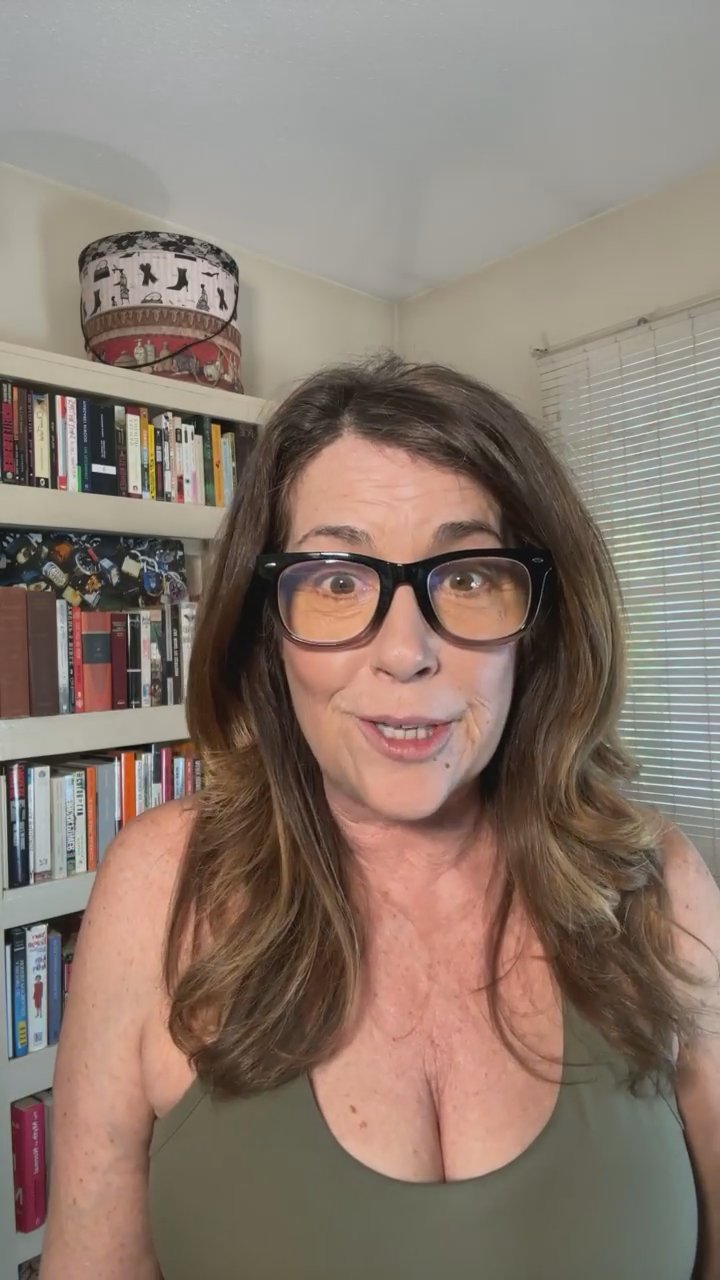
Coming at you on the Cadre app. A new study shows that self censorship is on the rise. He says it stems from fear of negative consequences and desire for social harmony. LZ says comedy can be an easier way to bridge the gap. find some commonality in it.
Tiffany Norton: Happy Sunday. Coming at you on the Cadre app. Sunday fun day. Comedy centered. And I hope you guys are enjoying the long weekend.
A new study shows that self censorship is on the rise. Why do we feel the need to censor ourselves? And we think there's always going to be a better time to discuss something.
LZ: Why do people engage in self censorship? LZ: For certain people, this, they may interact with this concept more than others. He says it stems from fear of negative consequences and desire for social harmony. LZ says comedy can be an easier way to bridge the gap.
You know, even though I've had this epiphany and I've come to this understanding, I also have to keep my side of the street clean. My job isn't necessarily to tell other people their truths, but I hope that I, through sharing my own experiences, that I can. find some commonality in it.
Withholding your opinions because you have a fear of ridicule or negativity. When you do that, what you're essentially saying to yourself is, I don't necessarily trust my own opinions as much as I trust the group. Women, we, we self censor quite a bit.
When there is a power imbalance, we can feel intimidated too much to speak out. It inhibits critical thinking when we have self censorship. Get 20 opinions from a doctor if you get a serious illness.
The higher your level, your education, the more likely you are to self censor. It's hard in life to not have opinions, but when is it the right. Not everybody deserves your story. There are instances where you should self censor to keep yourself safe.
The thing is, if you're in the planning stages and you're part of the planning, you should absolutely be bringing that up. But if you kept your mouth shut, that all comes from self censorship. If you feel like you're not being honored, it makes you mad.
But if we find ourselves and also too, bringing it back to the censorship and censorship of books and materials and all that kind of stuff. I have a sneaking suspicion these are the people that want to ban the books. Navigating change is really, really difficult at times, but it's also worth it.
Greetings, everyone, and salutations, it is I, Tiffany Norton. Hey, Happy Sunday. Sunday fun day. Comedy centered. Coming at you on the Cadre app. I. And I hope you guys are enjoying the long weekend. Hopefully you didn't have to work. I didn't. That was nice because this isn't work. This is fun. I'm not sure how long I'm gonna go tonight. I'm. I'm assuming there's probably gonna be some light attendance, but, you know, I wanted to talk about something that. Hey, Shannon. Hello. Hello. Welcome on in.
I went to get some ice cream with a friend today and we stopped into a bookstore slash thrift store. Hey there. And you know, I was thinking about what's my subject for tonight? And whatever. And I love bookstores. And I found the coolest T shirt and so I had to buy it. I'm not a. I'm not a T shirt person, as you could tell. I almost never wear. But it says I read banned books. I felt really naughty buying it. I'm not kidding. But why I bring that up is because it just kind of dovetails back to a conversation I was having earlier today, actually with a friend about self censorship.
So, of course we, you know, we think of censorship in the. In the context of like, you know, materials that are maybe controversial or ideas or thoughts that are not appropriate for children of a certain age. And people have a lot of opinions about what, what is acceptable content and what is. What are acceptable ideas and ideals to be sharing and which ones aren't. Right. But we're not getting into all of that on comedy centered. It's, you know, it's not that kind of a deal here, but self censorship, why do we feel the need to censor ourselves?
Why do we feel the need to keep our mouth shut when we're feeling a certain way? Right. And we think there's always going to be a different time or a better time to discuss something that maybe is difficult. Difficult to whatever bring up. Right. So I stumbled upon this article and there was a study done and it was done in 2021. And what they're noticing is that self censorship is on the rise and they're correlating a lot of it to social media and it kind of makes sense. And so one of the things they were analyzing was why has this spiked?
And why are people feeling more silenced? Right. And yeah, the social media, we have such hot takes and quick judgments and pop, pop, pop, pop, pop, pop, pop, pop, pop. Right on the hot takes. And that, that what they're saying Is, and this, this is a phrase that, this has been coined by someone, not me, and I didn't catch the name because it was cited in an article anyway. But toxically paralyzed, where if you're trying to discuss a subject that is very charged, let's say it could be a political one, the COVID 19 vaccine could be one.
Right. But we always, at least for me, I'm always bringing things back to the family unit. How do we process stuff in our, in our past and, and move forward? And that phrase, man, toxically paralyzed, I, I know that feeling. Hey, welcome on in, Lauren. I know the feeling of being toxically paralyzed. You're, you're so worried about saying the wrong thing or making the wrong decision that you don't. You just stifle. Okay, so why do people engage in self censorship? Sounds self censorship, if I can spit it out, is.
And I mean, it's kind of obvious, but I think it's worth pointing out this is a coping mechanism. This is a coping mechanism. This is another coping strategy. No different than alcohol is a coping mechanism in a strategy. So is self censorship. Right. And so they were noticing some trends in some situations where this seems to come up quite a bit. And for certain people, this, they may interact with this concept more than others. Right. So self censorship, generally they identify three areas that it kind of stems from.
One is fear of negative consequences. Makes sense. Right? Why do we not want to raise our hand in class? Well, we don't want to look dumb. We don't want to have the wrong answer. We don't want to get picked on for extra homework or whatever. Right. Number two, a desire for social harmony. That makes sense as well. If everybody wants to go and get pizza, and I really don't like pizza, but there's eight of us and seven say they want pizza. I'm not going to be the one who's like, you know, I can't stand pizza.
I've told you 10 times, you're probably just going to go along with it. Right? Oh, what's that, Lauren? Everyone says I say the things no one else will say, but everyone else is thinking. Exactly, exactly. And if you are that person and if you're willing to sit in the uncomfortability of disrupting and not necessarily disrupting in a mean way or harmful way, but disrupting the social harmony and saying, hey, but you know what? We've always gotten pizza. And you know, I don't want it. I want a burger, man.
They don't have it on the menu, you know, like There are other people might join in and go, you know, I don't really want pizza either. I just said pizza too, because someone else said pizza. And so. Yeah, so there's two. Right. So number three, and this is that. That dovetailing under that toxically paralyzed. My humor isn't always taken the right way. Yeah. Sometimes people tell me I need to stop telling the jokes. Well, I'm a comedian. That never stops. Lauren, you want to know the difference between a good joke and a bad joke?
To most people, if it's about someone else, it's a good joke. If it's about them, it's not funny. It's automatically not a funny joke. Or the truth, rather. Yeah, yeah. Making the truth funny. Well, and that's gift, you know, and the truth always does go better with some comedy. I mean, otherwise, why do you think comedy is, you know what most comedies, I mean, unless they're really, just really like straight up slapstickery or whatever. Right. They have some kind of a message, usually. And it is an easier way to bridge the gap.
Right. If you can have a humorous take on, on the commonalities and the frailties of humanity. Right. Instead of just directly at it. Okay, so. But self preservation. Yep. Oh, oh, hey, gotcha. The. But the self preservation ties back, at least for me, back into that toxically paralyzed. I know very often as a child, I. Oh, I wanted to say more stuff, but. But the. But the thing that I just said was so poorly received, I'm not gonna say anymore. Like, yeah, I saw my brother playing with matches out in the garage, but I got yelled at for something else.
So I'll be like, well, I guess I'll leave them in the garage, play with the matches. I'm not. I'm not going to tell them any more bad news. And that's me self censoring really important information that they would probably want to know. Right. And my brother didn't do that. I'm just, you know, I'm giving an example. But when the people around you are censoring and they're not giving you back that honest feedback and they're not really telling you how they think and how they feel, I'm resonating with what you're saying, Lauren, because I feel that way very, very much myself.
Often I get angry with them. It's like, I know you feel. I know you feel something about this. You're not expressing it. And in my opinion and in my personal experience, every time I stuff it and I stuff it down, all I end up doing is making myself feel worse. They don't feel any worse. They don't feel any different. It's like drinking the poison and hoping they die. It doesn't work that way. And. But I've also learned that sometimes when you've gone a whole lifetime pretty much of stifling your opinion, and then all of a sudden you decide to just start sharing with everybody.
Least for me, keep it on me. I have to also be aware of the fact that, you know, not everybody's on my timeline to discuss certain topics. Not everybody's ready to have a conversation about long ago or an incident or something like that. And I have to. You know, even though I've had this epiphany and I've come to this understanding, I also have to keep my side of the street clean. That's. That's my job. My job isn't necessarily to tell other people their truths, but I hope that I, through sharing my own experiences, that I can, you know.
You know, we can find some commonality in it. Right. And definitely some humor, hopefully. Right. Okay, so what are some of the consequences of the self censorship? Right, Withholding all this stuff, right? Withholding your opinions because you have a fear of ridicule or negativity. You know, you're driven, you know, by the desire to maintain the group harmony and to avoid conflict. And if you were raised in a family where you were constantly the. The peacekeeper or the golden child or the one going around everybody, okay, everybody got a drink, everybody have food, everybody fine.
All the people pleasing in that, you're gonna be more susceptible to these types of self doubts, you know, Should I. It'll just be easier if I keep my mouth shut. Well, will it, though? I mean, it might not. And because when you. When you do that, what you're essentially saying to yourself is, I don't necessarily trust my own opinions as much as I trust the group. You're. You're giving away a certain amount of your agency when you withhold, thinking that your information can't be as important, or if it was important, the group is smarter than me, they'll have already thought of this.
I'll look dumb if I bring it up. Right, but they may not have thought of it. They may not have thought of it. There's a. There's a great. Oh, Lord. Yeah, yeah. I'd rather laugh than cry. Absolutely, absolutely. You know, there's a. There's a good book. It's an autobiography by this gal. And I've talked about it before, but it's Called uncultured. And she is a survivor of the Children of God called. And then she went into the US Military and she writes about that experience. And I'm talking again still about self censorship.
And now she's a very confident woman. She, she was forthright in, in, you know, like, sharing a lot of her stuff. But when we keep our mouths shut, especially as women, because we're very much conditioned to do. And I know men are listening in the replay and the restream and all that stuff too, but women, we, we. We self censor quite a bit. And in this instance, right, she was out on patrol in Afghanistan and they could not understand. They, they were. The, the men in the squadron were basically being told by military intelligence that they were good to go to go ahead and conduct this sweep of this village, right.
That it was fine and that, you know, there was no, like, sneak attacks planned or anything, right? And she stopped them and said, do you know, you know, what I've noticed is that there's no children. There's no children on the street. Usually there's kids out playing. And she's not a mother yet at this point. And they're. And the male soldiers are like, well, so what? She's like, they know something's coming. That's probably why they pulled the kids out of the street. Sure enough, right? They were, you know, there was a planned attack.
And I'm not advocating one side or the other. I don't, I'm not. None of that, but would have. Could have gotten the rest of them. Those, those, those other people could have passed on. They could have, they could have. That, that could have ended really, really badly if she had not said that. And the military, of course, it was not highly encouraged for women until recently to like, even go in. And she was in, like, a forward area. And she also worked in the intelligence department, so, you know, when she was speaking out about things as a woman in the military, wasn't always really well received.
But, you know, you might be noticing something no one else is noticing. You know, your, your, your opinion is important too, you know. Okay. Lauren. Yes. It feels like I dominate conversations because no one else is saying anything or raising their hand in group therapy. Yeah, that can be. That can be right. You know, you want to get out there and share and, and, but that's good. I mean, someone has to lead. Someone's got to kick it off, you know, sounds like you're pretty fearless and you, you know, like, going for it.
That's cool. I dig that. I dig that. Let's see. Okay, so one of the situations where this self censorship can really kick in. And this can be, you know, regardless of whether you have high anxiety or any kind of a dysfunctional past or any of that kind of stuff. It's particularly true, though, when there is a power imbalance. Right? Let's say you're perfectly well adjusted and had a wonderful childhood and you have no neurological problems whatsoever. Right. But you're probably still intimidated when you go to a doctor.
You're probably still intimidated when you're meeting an expert or someone at an extremely high level of a profession that you do not have a lot of great information about or practice in. Right? Because the power imbalances you. You realize, going in, like, I don't know as much as I usually do in this room. I'm not leading this conversation. I don't really know as much as this person does. So I'm not gonna. I'm gonna not ask questions. I'm not gonna question what this doctor's telling me because he.
They probably know more or that, you know, I might look dumb. Well, don't do that. Especially if it's a medical situation and people are breezing past things and not fully explaining to you what is being done. I mean, we've heard examples then they've been going on in the news for years where someone goes in for one operation and then comes out with a different operation. It's not that people along the line didn't notice that something was wrong, but more than likely the power imbalance, the surgical team, the nursing team or whatever, maybe the doctor who's.
Or the surgeon is performing it. And, you know, maybe they're very difficult, maybe they're very exacting, or maybe they're one of these people that are just the top of their field and they're so well regarded, almost like a deity, that they're like, well, I feel like, didn't it say she was getting her tonsils out? Now we're working on her foot. Like, I feel like there's something wrong, but I don't want to say anything because he's him or she's her and they're world renowned, you know, whatever.
So stifling that when you, when you self stifle, when you self censor, you're giving that autonomy. You're basically telling someone else, well, I think you might be wrong, but I'm just gonna trust you instead of myself and my own experience, which you can get, you know, that's. That's risky, you know, you know what's good for you. Don't assume a stranger knows what's good, you know, what's perfect for you better than you do, you know, Anyway, so power imbalances. This can really bring this up where we can start feeling intimidated too much to speak out.
Right. It inhibits critical thinking when we have self censorship. Like we're not getting the. We're, we're basically kind of shutting down any sense of curiosity about the topic. We're not considering alternative options as thoroughly, you know, we're saying, oh, nope, this is what the group decided. We're just doing it. Boom. You know, we already said it. We're going for pizza. That's it, Shut it down. We're not entertaining other options. We've already decided, you know, and, and maybe you're, you're thinking, well, I'm thinking critically here.
And, and you know, I don't think that's our best option. But I'm just gonna keep my mouth shut, you know, what's that, Lauren? Get 20 opinions from a doctor if you get a serious illness. Yeah, yeah, yeah. I, I misdiagnoses, especially with neurodivergence. I was not diagnosed with neurodivergence until I was 50. And yeah, most every time I went to a doctor they said you're depressed or you have an anxiety disorder or. Well, actually I have CPTSD Complex Post Traumatic stress disorder and neurodivergence Attention Deficit disorder.
You know, when I, when I was, they, when I was having horrible, horrible monthly cycles for years, I went to the doctors and complain and complain and complain. They're like, ah, it's just your time. It's you know, like you're, you're pre change, blah, blah, blah. And nope, turns out, had a, what do you call it? A cyst the size of a grapefruit. No one looked so. Yeah, yeah, yeah, Lauren, right. Like they, you know, so. And I was questioning and I'm not shy. I, I do question and I do push back. So even then, you know, but again, clearly I did not.
But like the doctor thing, I, I don't think I push hard enough. I don't think I advocated for myself enough. But again, it feels, you know, kind of scary when someone's really smart. But that was the other thing too that I found really interesting in my research. So what would your guess be? Do you think people that, the people that self censor, do you think they tend to be higher educated or lower educated? Do you think they have a higher level of education or a lower level of education? People who self censor can throw it in the chat if you've got an opinion.
Higher or lower level of education? Because I was really kind of surprised by the answer when they, when they put, when I, they sprung it on me. I'll give it a sec. I don't know if anybody's typing, but the fear of expressing an unpopular opinion online, in a group, in a work setting, in a church setting, you know, anything controversial, it really does trigger for you some really old, like at least for me, some old childhood stuff of being rejected and shunned from the group. I mean like you're weird and get out.
Right. Okay, you said don't, you don't know. All right, so they found it an interesting relationship that the higher your level, your education, the more likely you are to self censor. You're more likely to not speak out, even if you're more educated on the subject. Well, why would that be? Because to me that's kind of strange. Right? You'd think that if somebody went to college on a subject, right. Or something, let's just say, right. They would feel more comfortable discussing it than someone who didn't study the subject.
You would think. But it goes back to that we don't want to look dumb. And the, the relationship between, if you've, if you've spent a lot of money and a lot of time on higher education, it's pretty devastating to look really dumb. Right. Like that, like in your mind. And I'm not saying you are, I'm saying like you're, you're, you're so concerned about perceiving being perceived negatively by a group that you will self censor. You don't want to say the wrong thing. I also think part of what could be factored in also there as well is that if you've gone through like a lot of school or you know, things like that, I mean, I have a bachelor's.
Nothing, nothing fancy there. But you, you, you're probably aware that there might be things you don't know. Maybe you got things wrong in school you're used to or you're thinking you're not an expert the subject to discuss it. But I just thought that that was, that was strange. You always hear about how on campuses and in colleges everybody is always saying whatever and you know, like, you know, protesting and being controversial and ban stuff and whatever it turns out. No, it's, they're, they're more likely to, they're more likely to keep their mouth shut unless they're pretty certain, pretty darn sure.
It's going to sound good and it's going to be well received. And so why I kind of, you know, and I'll wrap it up kind of on this. But where the idea came in to me is, you know, it's hard in life to not have opinions, right? We all have them. But when is it the right. It's kind of like pick your battles. I hate using cliches and I was hoping I could come up with something more clever than that, you know, but sometimes you really do. And I think you have to speak to the things that are important to you and for you.
But as we talk about a lot in recovery, not everybody deserves your story. There are instances where you should self censor to keep yourself safe. There are people that don't deserve your story. There are people that are going to hear your story and they're not really going to be empathetic to it. And that's an okay time to keep some things private and to self censor. However, you know, if you keep thinking, well, you know, there's this thing going on at work and I don't really agree and I don't really like it, but I just don't think it's right.
And I know, in fact, I know it's not right, but I don't want to be the first person to say, say something. Well, chances are, if you're feeling that way, other people are too, you know, Other people are too, more than likely. What about ambivalence? Say more about that. Lord, I don't know. I get rambly and I don't know which part about the ambivalence, maybe I, what we're, which, which part of my ramble we're referring to. But because you're not gonna, you know, you're not gonna get better though.
Like, you're not going to get a better understanding of yourself by suppressing yourself for other people and saying, well, I'll save all that stuff for home or I'll tell my, I'll tell only my opinions to like this person or that person or whatever, you know, because from a psychological standpoint, we do know that community is desperately needed by humans. One of the things that reduces our cortisol levels, all those stress hormones, helps lower our blood pressure, is sharing, gossiping, chatting, talking, laughing.
These are all things that have actual, real medical benefits to you. And if you're so worried about sharing your honest experience and your emotions with another person and you're just thinking they're too icky or too strange or weird and I couldn't possibly share these feelings with anybody else. You know that it takes a medical toll on you, that isolation. It. It affects a lot of things. And that's what I love about groups. That's what I love about group sharing and group, you know, therapy and things like that, because I can be worried about my set of problems and humming along, stuck in my own head and, you know, and then.
But when you listen to someone else's story, you temporarily forgive, you know, forget about yourself and you. And you have empathy for another person's experience. And so if you can have empathy for another person's experience, a stranger's experience, can't you give yourself a little empathy too, for your experience? You did what you had to do to survive. Your coping mechanisms were there to keep you safe. They worked. Alcohol worked for me as a coping mechanism for a long time until it didn't work.
And then it took me a long time to accept that it didn't work for me anymore. But I think it. For its lessons, you know, I thank it for being there, but I don't need it right now. I really don't. It's not. It's not a helpful coping mechanism anymore, but stuff like this is. This helps me cope. Yeah. Okay. What's that? Learn. I'm catching up on the chat. Subjective versus objective. Do you think it's okay to share one or the other? Yeah. Well, when you're talking about opinions, here's the thing.
I guess part of it too is, are you being asked your opinion? Is it the appropriate social time to be sharing opinions? For example, you may have a strong opinion that your best friend is marrying the wrong guy, and that's fine. And you may feel very compelled to say something to your friend. Also fine. My caveat would be, don't tell her five minutes before she's walking down the aisle. You know, so timing is everything in life, and you do have to. And you want to begin with the end in mind. If I'm going into this conversation, what do I want the end of this conversation to feel like, look like, sound like?
What is my goal? What is my objective at the end of this? Let's say you're in a work situation and everybody's being really, really, really optimistic about how the numbers are going to go great for the rest of the year, but, you know, a little something that the rest of the group isn't really listening to or isn't really considering, right? And you're like, hey, I mean, we can be optimistic like that, but have you Considered Y or X or whatever. The thing is, if you're in the planning stages and you're part of the planning, you should absolutely be bringing that up, right?
But if you kept your mouth shut and your mouth shut and your mouth shut about it and then everybody goes through with the project and then you use that as a thing afterwards, like, well, you know, I told them they should have gone with X. All right? You know, I, I thought they should have gone with X or I thought they should have gone with Y. But you know, who listens to me, you know, holding with information out of spite too. You know, you're like, well, you know, I'm not gonna help you if you don't help me, you know, and, and, and that's, that all comes from self censorship.
You know, if you feel like you're not being honored, if you feel like you're not being mirrored, heard and honored as another human by another human, you know, it's, it makes you mad and it makes you a little nuts and you get really, I mean I have whole like crazy scenarios in my head. Like, you know, like whole act outs with like karate chops and all that. It's like really, Is that really, is that really where we're going? Like, is it really that big of a deal? Person who cut you off in the parking lot, you know.
But if we find ourselves and also too, bringing it back to the censorship and censorship of books and materials and all that kind of stuff, it is my opinion, in my opinion alone, and this is not Cadre's opinion or anybody else's, but this is my own. I have a sneaking suspicion. People who self censor a lot, people who don't say what they think, people who go along with the flow, people who prefer to defer the decision making of their lives to someone else, be it a spouse, be it a pastor, be it a politician, be it some kind of spiritual leader, guru, whatever they have, you know, like whatever.
I, I have a sneaking suspicion these are the people that want to ban the books. These are, these are the people that are really going hard in the paint on, on, on what, what, what subjects we're going to be allowed to talk, aren't. You know, Cuz to me when every time I watch one of those, those school board meetings online, there's some old lady on there, our children and my time and my day and blah, blah, it's whatever. And I'm like, you know, that's all I think is your childhood sucked. You weren't allowed to read anything, so you weren't allowed to have fun.
You weren't allowed to be creative. You weren't allowed to take music lessons. You had to come home and work every day after school. And so now you. You don't want anybody else to have on either. Screw childhood. That's a weird way to end it. Screw childhood. But you know, like sometimes. And so, you know, we gotta check our own stuff. We gotta check our own stuff. You know, we gotta say what we gotta say, but also we gotta begin with the end of mind. How do I want people to feel? How is it going to be received?
And am I considering the other person's time? Will this be a good time? And maybe just clearing it with them too? And just say, hey, I gotta have. I want to have a conversation. I want to make sure the material is a little heavy. I want to make sure you're in a good spot. And I am. When would be convenient for you, you know, if you really want to resolve it, if you really do want to work it out, you know, just my thought, right? Oh man, it's three. Oh, well, it's 6:32 already. Well, hey, Lauren, Shannon, thank you so much.
I appreciate it. And Lauren, I am here every Sunday, 6pm so if you want to come in and jump right in this group chat, I love it. I love the chat. So come on in, come back and yeah, as always, stay centered. Navigating change is really, really difficult at times, but it's also really, really worth it and you know, takes courage to show up and, and work on it, you know, that's all we're doing. All right, you have a good night. Have a great week. See you next Sunday, everybody.