Hope everybody enjoyed a wonderful weekend thus far. This week is kind of a. Just wanted to pop on and say hello. Your birthday is your own personal, personal growth chart. It's a measurement tool. Staying in the present moment, staying centered and giving yourself a break is most of recovery.
Tiffany Norton: Happy Sunday. Hope everybody enjoyed a wonderful weekend thus far. This week is kind of a. big one, at least for me. Just wanted to pop on and say hello.
Tomorrow is my birthday. Birthdays, at least for me, are tough. Your birthday is your own personal, personal growth chart. Some of the things that have been going on in my personal life have not been going the way that I would have preferred in the last year.
Why do we make such a big deal about birthdays? It's a measurement tool. We all want to be recognized for our intention, Intention of staying sober. But we will judge others based on their actions, based on, and not their intentions.
When there's a misunderstanding as an adult, sometimes, at least for me, it brings you back to that childhood place of not being understood. Listening to other people's experience is one of the things that really, really helps me snap out of it.
Tiffany: A lot of times just venting about something that is upsetting you is enough to snap you out of it. Staying in the present moment, staying centered and giving yourself a break is most of recovery. Navigating change is never easy, but you're putting yourself in the path of different information.
Next weekend is Memorial Day weekend. I'm not sure if we're doing streams next Sunday or not. If not, have a great week. Again, stay centered and take care.
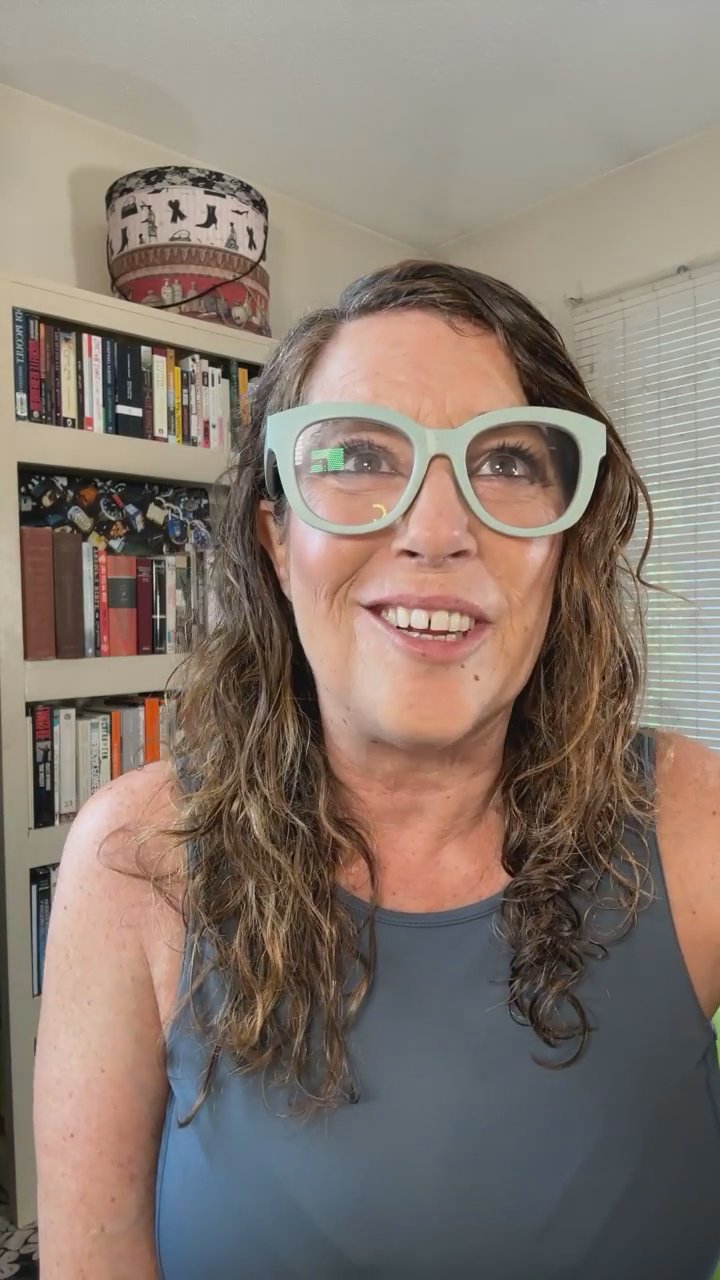
We go, hi, everyone. It is Saturday or Sunday? Saturday, whatever. Sunday. Sunday. Hello. How is everybody? It is I, Tiffany Norton, your host of Comedy Centered. How are you doing? My hair is wet. I. I thought I was gonna have enough time to finish doing my hair before the, the live stream started, but a friend stopped by and so of know, chatting is always more fun than doing your hair. Least I think tonight's probably going to be a short little episode. Just wanted to pop on and say hello. Hey, welcome on in.
It is. It's good to be here again. Happy Sunday. Hope everybody enjoyed a wonderful weekend thus far. I know we're hitting Sunday evening, which is sometimes, at least for me, when I was, you know, early on in recovery, I was kind of found Sunday afternoons and evenings were kind of hard. Right. Because you're kind of like, I didn't do anything this weekend. I don't have anything fun to report on, on Monday. But I could tell you that it doesn't bother me as much it is as it. As it absolutely used to, you know, but this week is kind of a.
A big one, at least for me. Tomorrow is my birthday, and that's gonna. It's kind of what I'm just gonna touch on tonight. Birthdays, at least for me. I don't know if anybody else is gonna, you know, relate to this in the replay or in the live stream, but birthdays are. They're kind of tough, at least. And I'm not saying like, ugh, you know, we hate aging or any of that kind of stuff, but it's another one of these. It's a holiday kind of, but it's a personal holiday to us. And it feels like it's often one of these just what I want to say, like, signpost type moments in our life where we see kind of where we're at.
It's. It's a. It's a measurement. What have we accomplished in the last year? You know, kind of like New Year's is. Right. But, you know, your birthday is your own personal, personal growth chart. And some of the things that have been going on, at least for me, in my personal life, have not been going the way that I necessarily would have preferred, I think, or liked in the last year. But as I'm thinking about it today, on the eve of another birthday, I realized that last year, at this point, I wasn't any happier.
In fact, I was a lot more unhappy even than right now. That sounds great, right, Tiff? Wow, Way to really sell recovery. That sounds like a fun thing, right? But it is relative. And, you know, for. For myself, I have a problem with comparison and measuring myself against other people. And I think we all do. I think it's, you know, of course, we live in a society where that's heavily encouraged, right? Especially, like, at work and whatever. Like, be the best, you know, be all you can be, blah, blah, blah, blah, blah, right?
But birthdays have always been a little bit. As a kid, let's put it this way. As a kid, my parents moved a lot. I went to a lot of different schools. And so I constantly found myself in a situation where I was always starting over, starting in a new school, trying to make, you know, meet new people, fit into new groups, and usually only with kind of moderate success. And because my birthday is at, like, the end of May, it is often a weekend or a time when there's a lot of other activities going on.
Prom, weddings, you know, you name it, right? And so as a kid, every time I would get really excited, you know, for my birthday, like, because, you know, in my family, we didn't. You know, there weren't. I'm not saying they didn't make me feel special, but it was kind of, you know, like, your birthday was your one day that you were special, and the rest of the time you were just kind of like, whatever. So anyway, I would put a lot of excitement and planning and a lot of invisible contracts. I would project a lot of stuff and uber importance onto the actual birth date itself, right?
Oh, hey, welcome on in. And I'm revisiting that on the eve of my birthday and remembering that one of the things when we get really upset about stuff and we're bothered by stuff in child or in adulthood, a lot of times it kind of stems back to childhood, right? And as a kid, in and around my birthday, it happened many, many years in a row. I would invite people to my birthday party, and then no one will come. And that sounds like a real boohoo thing to complain about, but it sounds. It sounds dumb, but I'm gonna be 53 tomorrow.
And having birthdays still stresses me out because I'm like, well, what if no one remembers it's my birthday? What if no one calls? What if no one texts? What if no one wants to do anything? What if no one remembers what if? You know, and all this, what if, what if, what if? And last weekend was Mother's Day, and. And we were off for the transmission for last weekend, and I was in a lot of that same behavior last week on Mother's Day. Like, well, you Know, is my son gonna call and when is he gonna call and what are the plans gonna be and what are we gonna do?
And what I have to remember is that at least for me, and I'll always try to keep it on me when I'm getting stressed out, when I'm feeling that I'm not being recognized or I'm not being, you know, talked to enough or reached out to or. Or whatever. A. I'm probably not doing the same thing. I'm probably, you know, I'm wanting other people to reach out and acknowledge me. I have to ask, am I doing the same thing? I guess. But also, it goes back to childhood, at least for me. I had a lot of birthdays where I would work it all up in my mind, you know, and how many times have we done that?
You know, every. You know, like the. The trip to the Bahamas or whatever you're planning, and it's gonna be this and it's gonna be that. It's gonna be all these things, and then it's actually happening, and then you're disappointed, and then what do you do, you know, and so trying to detach. And the whole purpose of, like, you know, I'm making a leap here, but a. Buddhism is to try to alleviate attachments from things. Attachments from physical things, monetary things, but also people and expectations of how others should, you know, react.
And what I. I think what I noticed about myself, at least in the last week, was I was so ready for rejection. I was so ready for people to forget. I was so ready for to be overlooked that I kind of didn't reach out to people. I kind of made. I was kind of making it happen. I was kind of like. Well, you know, like it was like some little test I was making up in my head. Well, you know, they. You know, if they really love me, they'll reach out, or if they really love me, they'll remember if they really this or they really that and it.
You know, again, this is. You know, these are games we play in our own mind that no one signed up for. You know, whether someone cares about you or loves you has zero do with whether they remember a date on a calendar. You know, that actions, words, how you show up for people, that's. That's what really matters. Right? You know, I've got. For example, there's a real estate agent that sold me a house many, many, many years ago. I'm talking 25 years ago, this guy sold me a house. Every year on my birthday, he sends me an email.
Birthday card, which is really, really sweet and he remembers every year, but that doesn't necessarily mean either that he cares. Do you know what I'm saying? So we get hung up in this idea that if someone knows me or if someone really loves me, they'll know what to do, or they'll know what I like, or they'll know what I think they might, but probably not. This concept that we get sold all the time through movies and whatever, that. That somewhere there's a soulmate that's perfect for you, that's going to absolutely understand you in a way that no other human being has ever understood you your entire life.
Maybe. I mean, that's possible, but I, I kind of feel like that's not probably the plan. They're. Probably the plan is for us to find enough understanding in own selves that we attract other people that want to hang out with us and find out what we're about. But if, if, you know, it's immature of me to think that I will. I will find my purpose or I will find love for myself through other people loving me, through other people experiencing me. And, and, and, and it can't be so, you know, we, we are born into this world alone.
You know, we go through it alone and die alone. Right? So I have to wrestle with that. And why do I. Why do I have these expectations of, of other people? And why do we make such a big deal about birthdays? And again, I think it's just. It's a measurement tool. We sit there and we go, well, another year older. What have I done? You know, and, and. But it, it takes on such a negative connotation when we focus on that there was like some ideal or, or some place we were supposed to be right by now, or, or that there was a better goal or a, A more desirable outcome, that somehow we missed it.
And, and now all the good stuff's over. And, and that's not, that's not true either. You know, we, you know, in a society that's. That's kind of based on, you know, you know, some very superficial things. It's. It. It's easy to get caught up in the idea that the more people acknowledge you or recognize you, the more they love you and the more important you are. And that may be true, but, you know, that doesn't mean that someone's whose birthday isn't remembered or isn't recognized is any less valuable, that.
That has no bearing on it. So why do we think that people should be able to read our minds? Why do we think that other people should just understand. And someone shared with me a long time ago, I don't remember where it came from originally, but often as humans, what we want is people to judge us on our intentions, but not as much on our actions. But we will judge others based on their actions, based on, and not their intentions. So there you go. There's a disconnect right there. I mean, have you ever been in a situation where someone has said, like, let's say it's, let's say it's a birthday.
Let's say, you know, since we're talking about birthdays, oh, it's your birthday. You know what, I was gonna get you something, and I didn't, or, oh, you know, I saw the cutest thing and I thought about buying you for you. I, I couldn't afford it, or I didn't do, but I thought about it. I, I, I thought about buying that for you. You may receive that information of like, well, good story. I don't want to hear about a gift you almost bought me. Where's the gift? Right? But what they're trying to convey to you is, is that there was the intention to buy you a gift.
They were thinking about you. They were thinking that you would like this, and, and maybe they fight, you know, fiscally couldn't afford it, or the timing wasn't, you know, good for the purchase, or maybe they thought they'd have time to order it and have whatever. But, you know, that's, that's what I have to try to remember. There is no, there is no person out there that can read my mind. I, I can't read other people's minds clearly. If I could, that'd be great. I go to Vegas and win a bunch of money, right?
But we all want to be recognized for our intention, Intention of staying sober, our intention of working whatever goals that we have that are, you know, that have going on in our life, maybe to make health better or, you know, exercise or improve our relationships or our financial situation. You know, it may not look a lot of times on the surface like anything is happening, but that doesn't mean that nothing is. And so we don't necessarily. Especially when you're doing the internal work and the recovery work, you a lot.
I think a lot of people leave recovery before the, the good stuff starts happening often because, you know, you don't get any pats on the back. Oh, you're not, you're not, you're not getting drunk all the time anymore. Well, you weren't supposed to anyway. Right. So, you know, you. And, and when, when you're working on stuff about how you feel about yourself and you're unpacking years and years of baggage and going through all this, you know, emotional, these emotional undercurrents, it's, it's, it's easy to get frustrated with the process and, and feel like it's just, you're just not getting enough of the, the accolades and the acknowledgments of, of doing the work.
And that's why, like, comedy centered is a space where, you know, I basically just kind of BS about whatever has been going on in my week. And I love for people to chime in and, and chime in on the chat. Oh, hey, thanks. Change my mindset. Thanks for joining. But, you know, that's why groups are so important. Sharing in group stuff is so important. And even if it's just the chat, even if it's an in person or whatever, just people in your life, close friends. Because honestly, for a long time I thought people could kind of just like, figure it out and they, they should know me and they should be able to understand what I mean by stuff.
And, and the older I get, the more I realize, like, I have a hard time sometimes understanding other people. And I have to remember sometimes people, others have a hard time understanding what I want or what my motivations are. And so I'm trying to have a little bit more empathy for myself in that regard and also for, you know, other people. And a lot of the times too, you know, we think people think about us way more than they actually do. Right. You know, we're all just kind of running around in our own circle thinking about our own stuff, you know, and what, what our needs are and what they're, what's being met and what's not being met.
But, but if you feel like when you're going through your recovery journey that it's, it's lonely and, and you're not getting the feedback that you want, or maybe it doesn't feel like it's moving fast enough or getting better fast enough or it's not where you think you should be. That's, that's. That talk won't help. You know, it really won't. And it's kind of like you wouldn't want to try to force a flower to bloom early. You. Sometimes you can't force that, you know, and if you try to force things, that's essentially a shortcut.
And shortcuts are just long cuts in disguise, you know, and unfortunately, ciphering through the, the pain and then doing it without using, the escape, the escape pod of alcohol or drugs or some other kind of a distraction, you know, it's not easy and it's not fun and it certainly doesn't look, you know, like you're doing anything. And, and I think that's where I get frustrated with myself because it looks like I haven't done anything in the last year. But when I really look back and I look back at like my journal from a year ago and where, where my old noggin was a year ago.
Yeah, yeah, I've done some stuff, you know, and it's not, you know, it's a day to day, it's a day to day occurrence how, how I'm gonna feel about the decisions I've made in my life and that. But you know, it, it trying to, trying to deprogram myself from the idea that there is somebody on the planet that's going to be able to understand me better than me. And of course, when we say it like that, that can't be true, right? There can't be someone who understands you better than you. And so why do we think that they should.
Why do we, why do we think we shouldn't have to express what we need? Why do we think we shouldn't have to share? Why do we think we shouldn't have to ask for help and people should just know, I don't know, conditioning maybe, you know, a lot of things. Maybe we were, you know, not encouraged in our origin family to ask for what we needed or if we did ask for what we needed, we weren't necessarily, it wasn't really necessarily met, well, the request or honored. And so it can make you want to give up on it and think that that's always the way it's going to go, that it will always be denied, that your, that your request will always be brushed aside and you know, hopefully that's.
It shouldn't always be the case. I hope it's not always the case and, but that's why seeking groups using apps like Cadre, joining in communities, or at least having the courage like you're doing now, to put yourself in the path of some different information. Listening to other people's experience is one of the things that really, really helps me snap out of it because I can sit in and stew in my own what if, what if, what if, what if, what if brain all day, but if I stay there, it's just stinking thinking and I will get nowhere.
I will get nowhere. I have to, I Have to move a muscle to change my thoughts. I have to move around. I have to get other input because, you know, my brain's kind of a terrorist. It will. It will just sit there and tell me terrible things about myself and other people. And it's not necessarily based on logic or evidence. It's just, you know, it's my ego being in a. In a. In a bad mood, and I have to recognize when that is true. And maybe when my. Maybe I'm feeling defensive or I'm upset and my ego feels plucked at for.
For a reason, maybe my boundaries aren't being honored or something like that. But a lot of times it's not even anything that major. It's just that that reoccurring feeling, like, from childhood, I felt like my. My origin family didn't really understand me. You carry that feeling out into the world. And so when there's a misunderstanding as an adult, sometimes, at least for me, it brings you back to that childhood place of not being understood. And, you know, no one likes to feel that way. And, you know, like, I constantly, as a kid, felt like I was an alien on this planet.
Like, I was so weird and. And such a weird kid. And it was funny, too, because just talking to my mom about it, I was. I was. We. We had an event. My stepfather, he has a birthday. His birthday was yesterday, and he just turned 99. I know. Ooh, 99. And we had a birthday party for him. But I was trying to remember one of the names of the women that my mom used to work with. And I'm like, you remember she had the daughter Elizabeth, who always called me weird, and then every time we went to her house, she locked me in the closet, right?
Like, yeah, my mom's like, I don't remember locking in the closet. I'm like, yeah, she did. You know, but again, just another example of people don't remember your trauma the way that you do, right? And. But it was. It. It's. It's when you. When you feel like you've been rejected or you. Or not, or misunderstood or not understood or. Or you weren't able to fully express yourself when you were younger. As we get older, we just have to. We have to fight through that. And yes, maybe. Maybe people are disrespectful, disrespecting you.
Maybe they aren't listening to you. Maybe they aren't empathizing with you in the way that you would want them to. Well, then. But you can't control that. So you all. You can really do is empathize with yourself the way that. The way that you wanted, didn't get, you know, it's you. The term inner child is, you know, one that's been around most of my adult lifetime. But I really do picture little Tiffany, like, little. Little me, you know, And. And what would I say to her? You know, what would I say to her with her hurt feelings if they're, you know, after her birthday party again, her, you know, turning 10 and no one came, right?
No one shows up at the birthday party. And then your parents are like, why don't you have friends? Why didn't anybody come to your party? I'm like, I don't know. I invited them. I thought they were gonna come. All right, well, you know, but I'm not 10 anymore, so I have to recognize that. We have to recognize that a lot of these wounds that we carry around that we are so eager to protect from ever being opened, shown, or seen again, you know, if we don't look at them, it's just like a scab that, you know, you.
You. If you cover up a cut and you don't let the cut get air, it's not going to heal. You don't look at it and open it. You know what I mean? And so that's why. That's. That's what this kind of stuff is about. Airing it out, letting the air get in, you know, And a lot of times just venting about something that, you know is upsetting you and getting it out there and giving voice to it outside of your head, just. That is enough to snap you out of it, at least for me. Because when. When. When it's in my head and I don't share with people, it's a feeling.
It's a feeling in my body. But when I verbalize it, I. I'm sharing it and I'm. And I'm discharging it, at least partially. And when, you know, you start doing that, eventually you start feeling better about it. You eventually start also noticing that no one shatters when you really share yourself. No one really falls apart when you disagree or say, you know what? I don't actually really feel that way. It's not quite as devastating as everybody thinks. And we. We spend a lot of time. At least I do, you know, like, if there's a problem, like, I had to re.
I had to reschedule a reservation for a trip that I'm taking next week, and I barely slept. Was having all these imaginary conversations with a person I hadn't, you know, and I'm trying to think of all the counter arguments. Well, what if they say I can't change it? And what if there's a fee? And what will I do? And this and that and the other thing. I reached out this morning on the app. I said, here's the situation. Is there a way I can change the reservation? It's totally cool if I got to pay an upcharge.
And they were like, no, it's fine. No problem. I ruminated on that all night, you know, but that's because I was operating from, you know, past experiences where I've had situations where, you know, I want to change something and. And they won't let me. And. And so now I've got to, you know, think of all my arguments and, And. And work up my, you know, my reasoning and my rationale as to why. And. And, yeah, I did a lot of work for. For nothing. So trying to future tripping, like, trip it out on the future and staying.
Staying in the present moment, staying centered and, you know, giving yourself a break. Yeah, that's. That's most of recovery, at least for me. Yeah. So. Oh, my God, where'd the time go? It's already 6:28. Well, hey, everybody, thank you so much. Again, stay centered. Navigating change is never easy, but you're showing up for yourself. And again, just putting yourself in the path of different information, opening yourself up to different mindsets in and of itself is a radical act. Most people will go out there, go, throughout their entire lifetimes, never questioning anything that they've been told or what they believe about themselves.
And so if you are one of the few that has the courage to dive in and into the deep end and take a look at some of the things that you've been doing in your life on automatic and autopilot and what's working and what's not. And if you're moving towards something and trying to make change and it feels like you've grown to a halt and it's stopped and it's stagnant and it's not going anywhere, don't assume that that's wrong. Sometimes, you know, sometimes things don't go anywhere. Sometimes things just are.
Okay. All right, you guys have a great week again. Oh, next weekend is Memorial Day weekend. I will check with Cadre. I'm not sure if we're doing streams next Sunday or not. I will double check and post in the forum if we are. If not, have a great week. Again, stay centered and take care of.