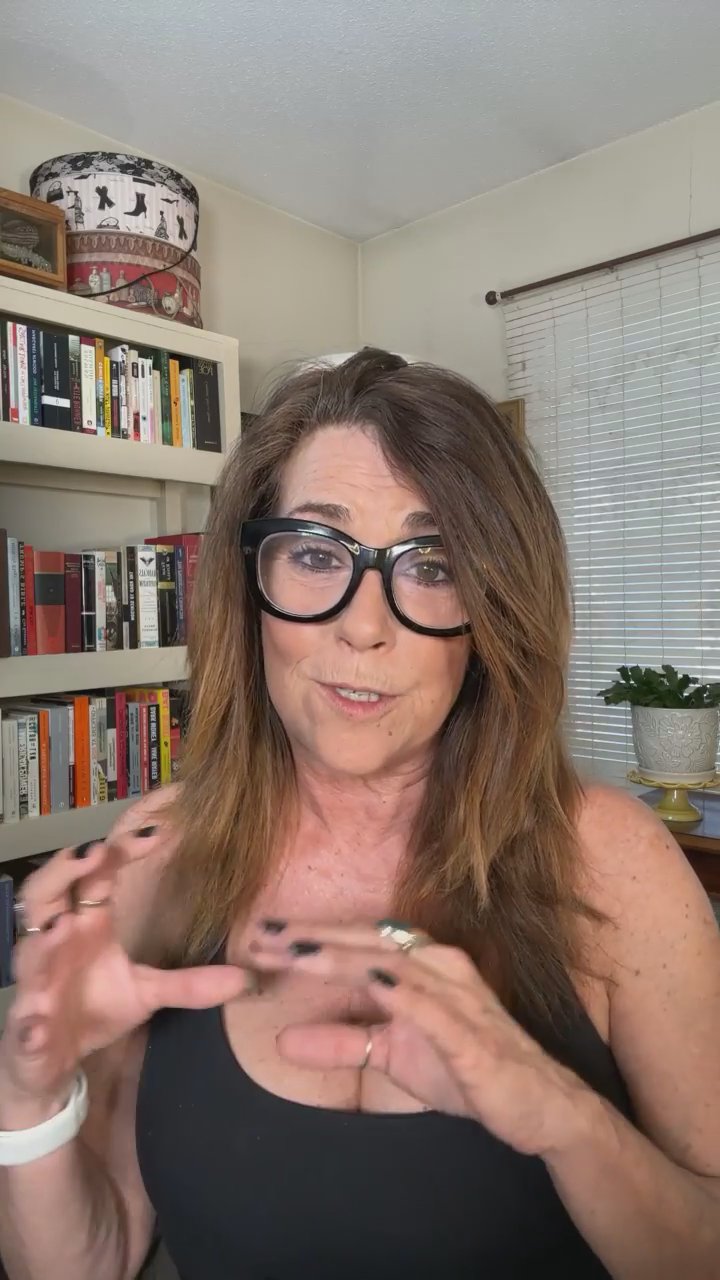
Be prepared to navigate a lot of change. There are many people that identify their value inherently based on their bank accounts. If your identity is attached to your financial net worth and you lose that money, that money is controlling you. It's not counting money.
Carrie Fisher: It feels to me like this country is waking up from a dream a little bit. Fisher: Be prepared for change. Be prepared to navigate a lot of change. And I believe that we are at a crossroads right now where people are starting to wake up.
There are many people that identify their value inherently based on their bank accounts. I worry about the attachment that people have in this country to money. What's hard about when someone's in a group, a highly cohesive group, which we talk about a lot.
The thing we repress controls us, and that's Carl Jung. If your identity is attached to your financial net worth and you lose that money, that money is controlling you. What are the good things in life? It's not counting money.
Group Think Syndrome is basically. an analysis of how colossal mistakes can happen in governments. There are certain types of group dynamics that will greatly increase the odds of bad decision making happening. Here are some symptoms or, or symptoms of groupthink.
The emergence of self appointed Mind guards, members who protect the group. Who would be one of the Mind Guards? Well, that would be corporate media. Part of why people distrust mainstream corporate media is because it serves its own self interest more than it does keeping viewers informed.
Group think syndrome is also corporate America. This is how we as humans operate in groups. One of the hardest things for a human being to cope with is betrayal. I encourage you to speak your truth. But keep your mouth shut when there's something important to be said.
A little rambly at the end, but you know, that's usually actually how comedy centered goes. Hope you have a good weekend, everybody. Just, just don't look at the market tomorrow. Remember, your worth is not defined by your bank account.
Hello. Hello everyone. Hey. It's comedy centered. What's up? What's up? It is Sunday. It is six o' clock. It's Diet Coke time. That's right. It's kind of always Diet Coke time in my house, I guess. But hey, hope you guys had a solid weekend. I did some, I did some out of comfort zone stuff I'm pretty proud of. I, some friends of mine, we went to the Capitol, the Minnesota state Capitol in St. Paul for the, the organized peaceful protest on Saturday. And I would like to report that there was absolutely zero problems, not a single issue.
I had a lot of friends reaching out to me. They were concerned, they were worried, they'd heard stories, they'd heard rumors. And I just want to say I can attest I, I was done in other places but completely, completely chill. There was kids, there was families, there was, you know, people playing music, really inspiring, inspiring speakers and a really, and a lot of creativity and all the signs of course, which is the real reason why I go, because I like jokes. So. But we're, it feels to me like this country is waking up from a dream a little bit.
And I think that we're at a moment in time where many of us feel like we're being stuck in a fight. We didn't pick right. Why is this. My hair is driving me nuts. Sorry guys. You know, we're, we're, we're. I'm feeling from my friends, I'm a deep concern that like this shouldn't be happening. Why is this happening? And someone else will fix it. Someone's going to fix it, you know, or, or the worst is when it, you know, my friends who are really surrendering and saying it's not fixable. Now I don't agree with those sentiments, but I'm, I'm gonna say something that.
Well, we'll see if this ages well or not. But as we sit today, April 6, 2025, the financial markets last week, Thursday and Friday because I, my day job, I work in mortgages and banking obviously we had a massive, massive sell off in the stock market. Huge job. And now as we said Sunday night, the, the Japanese markets and the Asian markets have opened. The Asian markets, I should say have opened the commodities markets and the futures and, and they're already down as well about 1500 points as of about 5:30 tonight.
So what I had planned to talk about was just more like recovery type stuff. But what I think I, what's going to be more important for people and impactful for people to be Listening into the replay going forward this week is be prepared for change. Be prepared to navigate a lot of change. It's coming in hot. And I. I believe that we are at a crossroads right now where people are starting to wake up to the. To the idea that all of this may be good in theory, these ideas, these economic things that they're trying to do, essentially.
But in practicality, the way that they're being executed, it's quite difficult to follow. And I'm already sensing. Welcome. Hey, Carrie, come on in. I'm on kind of a downer subject right now, but I was just talking about. But one of the things that we should bear in mind, and I'm a Gen Xer, right? So I distinctly remember the economic crash in 1987. Now, I was in high school, but I remember it because my father is in securities. That was his. He's an attorney, but he specialized in securities law.
And I remember the devastation that he experienced that day and the anger, you know. And so on Friday, after those big setbacks, I was going around and making some phone calls to just some of the guys in my life that I'm friends with and just checking in on them and seeing how they're doing. And I feel like we're really gonna have to hold some people's hands through what may be coming economically this week. I hope not, but it does happen in the market. And I started thinking about. I'm like, wow, how many corrections have I been through?
Well, like 87. Oh, you're driving. Oh, cool, Cool. I'm glad. Thanks. Thanks for tuning in and listening, Carrie. But 87. I watched the crash. 2,000. We had the dot com bust. Then of course, we had the 28. The 20. The 2008, which was more of a slow roll and slow. Kind of a financial meltdown that was slower. It wasn't all just. And of course, the COVID 19 and then. And now. So one of the things I want to talk about is in this, I'm going to bring it to Buddhism. I'm going to take it from the financial markets and bring it to Buddhism.
Trust me on this. Right? But this goes back to self. We're going to have. There are many people that identify their value inherently based on their bank accounts, right? That is their proof essentially, that they've made the right choices. They've. They've. They've made good decisions and that they're worthy and that, you know, the, the amount of money they have is also the amount of value that they have in our society and in A capitalistic society, obviously, that's quite encouraged, Right. And it seems to be kind of the truth.
But are you a different person when you don't have money? No, you're the same person. But if you've built up a false identity and one of the things that you have consistently prized yourself on and been proud of for yourself is, or about yourself, is your mastery of finance and, you know, your accumulation of wealth. Whenever there's a big shock to a market and a shock to a system like this, it's a shock to people's identities as well. I'm concerned, I worry about the attachment that people have in this country to money.
As if the amount of money you have is, is, is proof that you're better or you're superior or, you know, you know, just more deserving, I guess, is kind of where I'm going with it. But I, I don't believe that's true. But if you've, if you've built this up in your mind, because, for example, there are a lot of reporters and I watch a lot of media, right? And I watch a lot of, like CNBC and Fox and like, not the Opinion Channel, but the actual news channel, Fox, and people are having to now start walk back, walking back and eating their own words.
Because even just a week ago, like, for example, Jim Cramer, who's, you know, Mad Money, he's a, he's been a contributor on cable television in the finance sector since there's been one, right? Pretty much. And he actually has been going around in interviews and saying, I was wrong, I got it wrong. I thought the President was going to do this and he did that, and we might be in trouble, folks. So why am I bringing this up in Comedy Centered? Well, there's going to be a lot of. If things continue to spiral and if we have another week in the markets like we did in the last couple days, I really fear for overdoses.
I really fear for increases in domestic violence, increases in dwi, increases in, you know, all the coping mechanisms. We are here to try to kind of get rid of. Right. When people are under extreme stress, you know, because one of the things. And when I say we've got to hold our other people's hands through some of this stuff, I really do because my heart really does go out to people that are about to have their minds blown that, that a lot of the things that were promised aren't going to come true.
And in fact, our country is going to go through a very, very rough period of time that was largely self inflicted and people are going to question the loyalty to those ideas. But at the same time, and while we want to encourage people to more accurately see some of the things that have been going on at the same time, what's hard about when someone's in a group, a highly cohesive group, which we talk about a lot and I got my group think book here and we're going to talk about that a little bit at the end, but because I've got a couple more passages I'm going to read to you guys.
But when you're in a highly cohesive group where there's almost never any criticism of the, the leader, the charismatic leader, the fact that like a Jim Cramer is saying there's a problem, that's huge. But what I'm afraid of is that people are going to stay stuck because if you've been in one of those highly cohesive groups, you see what happens when someone leaves that group. You see how the other group members treat that person who leave, leaves and it ain't nice. Right. And no one likes the experience of being talked about behind their back.
Right. So let's say some people are real, you know, realizing that maybe this is not the best economic course for our country, but they've personally, because I've had this happen. I've had this in some of my very close relationships. You know, I have friends that have been telling me pretty much non stop for the last 10 years that I'm wrong about my, my viewpoints about economic policy and, and, and Donald Trump knows more about it than I do and maybe does. I don't know the man, right. But I've had friends kind of like aggressively throwing Trump in my face and calling, you know, teasing me and calling me names.
And you know, a lot of people, the first thing that they want to do is they want to be like, well, I told you so you get what you voted for and da, da, da, da. Help our country get out of this, guys. That might be fun for a minute. But you know, then at the same, then you're, you're basically trolling someone. That's really all you're kind of doing. You know, a lot of people's perceptions of what they thought they could count on in this society and what they thought the rules were and what the norms are, they're kind of all up in the air right now.
And so what I've been saying to my friends on the left and, and the contacts I'm keeping with my friends on the right is the, is the fact that as Much as possible, if we can try to a not gloat because this screws us all, this is not good. No, I don't want, I don't want the stock market to go down. This is, this is gonna really, really, really gum up the economic recovery that we already built since the pandemic. And the other thing that people don't seem to talk about in America is that the recession after the pandemic was global.
In the United States, we hold our politicians personally responsible for the economy, but the President is never in charge of the economy. And other countries don't do that. The press doesn't do that. So a lot of this stuff is self manufactured. This idea that there's this American ideal that we know more than the rest of the world, that, you know, we're the leaders, we're the boss, you know, American exceptionalism and a lot of people have bought into that and they've also made that their identity as well.
And it's not your identity. Anything that can be taken away from you isn't really you. You know what I mean? So if the money can be taken away from you, then it's not you. You are you, regardless of material factors. But if you say that I've attached my worth and my identity to this object or this currency or this ideal, you know, when you have, when you're, when you're, when you're, when, when your head cracks open and you start seeing things from a different perspective, it's so disorienting. And it's gonna be really disorienting for a lot, a lot of people, A lot of people are gonna realize that even though they thought that things were gonna work out to their benefit, it really doesn't seem like it's going to, in anywhere near the short term and maybe in the long term.
I don't know. I mean, I understand the idea of like, you know, the United States not wanting to pay for absolutely everything all over the world, but we kind of set it up that way because we wanted to control everything all over the world. So Anyway, we got 15 minutes left. I'm gonna revisit my group think. Oh, here. Okay. I had a couple of wool quotes I wanted to draw. Tom. The thing we repress controls us, and that's Carl Jung. And it's true, the things that we repress are what controls us. So if your identity is attached to your financial net worth and you lose that money, and that's your sense of pride, that money is controlling you, you know, and what you're probably repressing is the sense that if I don't have this money, I'm not a valuable person.
I don't have worth. The money is the proof that I have worth. And that's not true. That's not true. That's not, that's not. That's not at all. That is a. That is an idea that is popular with people that like to sell other people's stuff. You know, what are the good things in life? It's not counting money, you know. So anyway, Group think syndrome. And I may have even read some of these passages in the past, Replay or whatever, but given where we kind of started off with the topic, I think this is where we should go.
So Group Think Syndrome is basically. This is a book that was written about politics and it was written back in the 60s, I believe. And it's an analysis of how colossal mistakes can happen in governments. And they've noticed that there are certain types of group dynamics that will greatly increase the odds of bad decision making happening. Right, Two of these groups. One is when it's a group that's highly non cohesive, basically everybody in the group, if you can imagine, like a cabinet, right? Or like, you know, whatever, like an appellate court or something, everybody hates each other.
No one gets along in the group, so nothing ever gets done. And they don't make good decisions because they don't get along. That's one. That's not what we're talking about. The second one is group think. And that is when the group is so cohesive that there is an Undercurrent and a demand for 100 agreement about anything that the leadership of that particular group likes. And in the embrace of that, people repress very valuable information and dissenting opinions that are important to be addressed.
Especially when you're making military decisions, economic decisions, stuff like this. So, okay, here are some symptoms or, or symptoms of groupthink. Type 1, overestimations of the group, its power and its morality. An illusion of invulnerability shared by most or all of the members, which creates excessive optimism and encourages taking extreme risks. Number two, an unquestioned belief that in the group's inherent morality. Inclining the members to ignore the ethical or moral consequences of their decision.
So the unquestioning belief is in the group itself. It's no longer in you, the person, it's in the group, the larger group, the group think. Okay, Type two, Close mindedness is another type of group think. Collective efforts to rationalize in order to discount warnings or other information that might Lead members to reconsider their assumptions before they recommit themselves to their past policy decisions. Basically a discounting of warnings and new information as it's coming in that should warrant a revisitation of policy procedures.
And you should go, we have this new information. Does this policy still make sense? And in these group dynamics that. That's usually not. That's usually being skipped. Okay. Stereotyped views of enemy leaders as too evil to warrant genuine attempts to negotiate with or too weak or stupid to counter whatever risky attempts are made to defeat their purposes. This is a direct underestim of one's opposition leader, essentially. Right. Okay. Type three pressures towards uniformity. This one is important.
Self censorship of deviations from the apparent group consensus, reflecting each member's inclination to minimize to himself the importance of. Of his doubts and counter arguments. Self censorship of really important information. And why would someone self censor important information? Because of the co. Because of the group. Because of the. I don't want to appear critical of the group. Okay. A shared illusion of unanimity concerning judgments conforming to the majority view, partly resulting from self censorship of deviations, augmented by the false assumption that silence means consent.
So how many times have you been in a work meeting like me? And they ask, are there any questions? And you have a ton of questions, but all the questions you're going to ask are going to put the person who asked you if there are any questions on the spot, they're your leader for that meeting. And asking questions of the leader that aren't necessarily positive in nature, that could necessarily. They could be construed as critical is risky because they may take it personally and they may take it the wrong way.
So what do we generally do? Well, at least what I do is I keep my mouth shut. I don't ask the question in a group setting. If I have a question, what I will do is I will seek the leader one on one away from everybody and ask my question so that it is not on public display. Right. Kind of makes sense. Okay. But the silence makes everybody think they agree. You know, silence is violence, as they say. Okay. Direct pressure on any member who expresses strong arguments against any of the group's stereotypes, illusions or commitments, making clear that this type of dissent is contrary to what is expected of all loyal members.
One more time. Direct pressure on any member who expresses strong arguments against any of the group stereotypes, illusions or commitments. Any. And what they're saying is if you criticize the group, think and the leader, the charismatic leader of this particular group, you are dishonoring the group and you are showing disloyalty to it by even raising the question. Raising the question assumes on your part there may be something that you've thought of that the leader hasn't thought of. And the leaders thought of everything.
Just ask them. Okay, number eight, the emergence of self appointed Mind guards, members who protect the group. Mind guards, members who protect the group from adverse information that may shatter their shared complacency about the effectiveness and morality of their decisions. Who would be one of the Mind Guards? Well, that would be corporate media. Corporate media tells us how we're supposed to feel about things. Right? And so part of why people distrust mainstream corporate media is because mainstream corporate media does seem to serve its own self interest far more than it does keeping its, you know, viewers informed.
They really just want you to buy the bath lotion in between the commercials. That's. They don't, you know, so. But also too, if you get all of your information from non mainstream media sources because they're non mainstream, they probably don't have the legal liability if they print something that's false. And so there's a balance there. There's more checks in accuracy of reporting when you use traditional legacy media. But then also traditional legacy media is owned by large corporations that want to sell you a lot of stuff.
So there mine guards. But we can also take all of these and we can take politics out of it. If I just hit the highlights of these eight descriptors, this also describes quite well being in a relationship with a narcissistic parent, a narcissistic partner. Right. Their illusion. They project an illusion of being invulnerable. You know, they have an un, they require an unquestioned belief in the group's morality. Right? So someone who's controlling, what do they do? The narcissist, of course. They want to project to you that they're completely invulnerable.
And they want you to 100 agree that their morality is the morality of choice and you should follow theirs collective efforts to rationalize in order to discount any warnings about their behavior. Stereotyping other people as enemy leaders, well, those could be just people that the narcissist doesn't want you hanging out with. Like, well, I don't like your friend Trudy. Every time you go and hang out with Trudy, you come back in a bad mood and you don't like me anymore and blah, blah. Right? So group think syndrome is also corporate America.
This is not just politics. This is how we as humans operate in groups. And when you have a leader at the center of a group that's very charismatic and you're drawn to that person. You want to be near that person. You want to absorb their energy, you want to absorb their knowledge. You want them to lead you. You want to. You want. You want all of it. Right? You want more. More and more. Right? But, you know, that's fine as long as you continue to agree with them for always and forever. That's all.
And you know, the easiest way I can explain how the, the narcissistic mind works is because, you know, part of the other reason of discussing some of these items is that one of the hardest things for a human being to cope with is betrayal. And being conned is for sure a betrayal. Thanks, Carrie. Have a great night. I'm glad you popped in. But it. People don't get over being conned easily and. Yeah, anyway, okay, I kind of lost my point. D***. When people, when people. I love engaging in the chat, but I'm so interested in what you guys are saying to me, then sometimes I kind of forget my point.
Oh God. I've only got two minutes left anyway, so I'll wrap this up. But again, group think is all around and when we want to impress others, when we want to blend into the group, when we don't want to stick out, when we don't want to be the one person who says the negative thing and p***** everybody off because, you know, we just want to keep going on with our lives, up, onward and upward. That silence, though, keeping your mouth shut when there's something that's important to be said, something that you feel passionately needs to be expressed, otherwise a mistake could happen or, you know, a, a miscalculation could occur.
I encourage you to speak your truth because part of the reason why some of this stuff is happening is because there's been a lot of people that have surrounded the administration and saying everything you're doing is great. And. Yeah, yeah. So group dynamics, adherence to the group, it can be, you know, when you have to put the group and the group interest above your own self interest, then that's something to really, really consider that for yourself, if that is a healthy mental health space for you to, to hang out in.
Anyway, anyway, all right. A little rambly at the end, but you know, that's kind of usually actually how comedy centered goes. Right? But it is 6:30. Happy Sunday, everybody. Hope you have a good weekend, everybody. Just, just don't look at the market tomorrow. Maybe just maybe, maybe just delete the app for the day or something. I don't know. We'll see. Hopefully it's not that bad. But remember, your worth. Your worth is not defined by your bank account. It's not. It's not. So, everybody stay centered as best as you can.
Navigating change is super, super hard. And, yeah, take care, everybody.