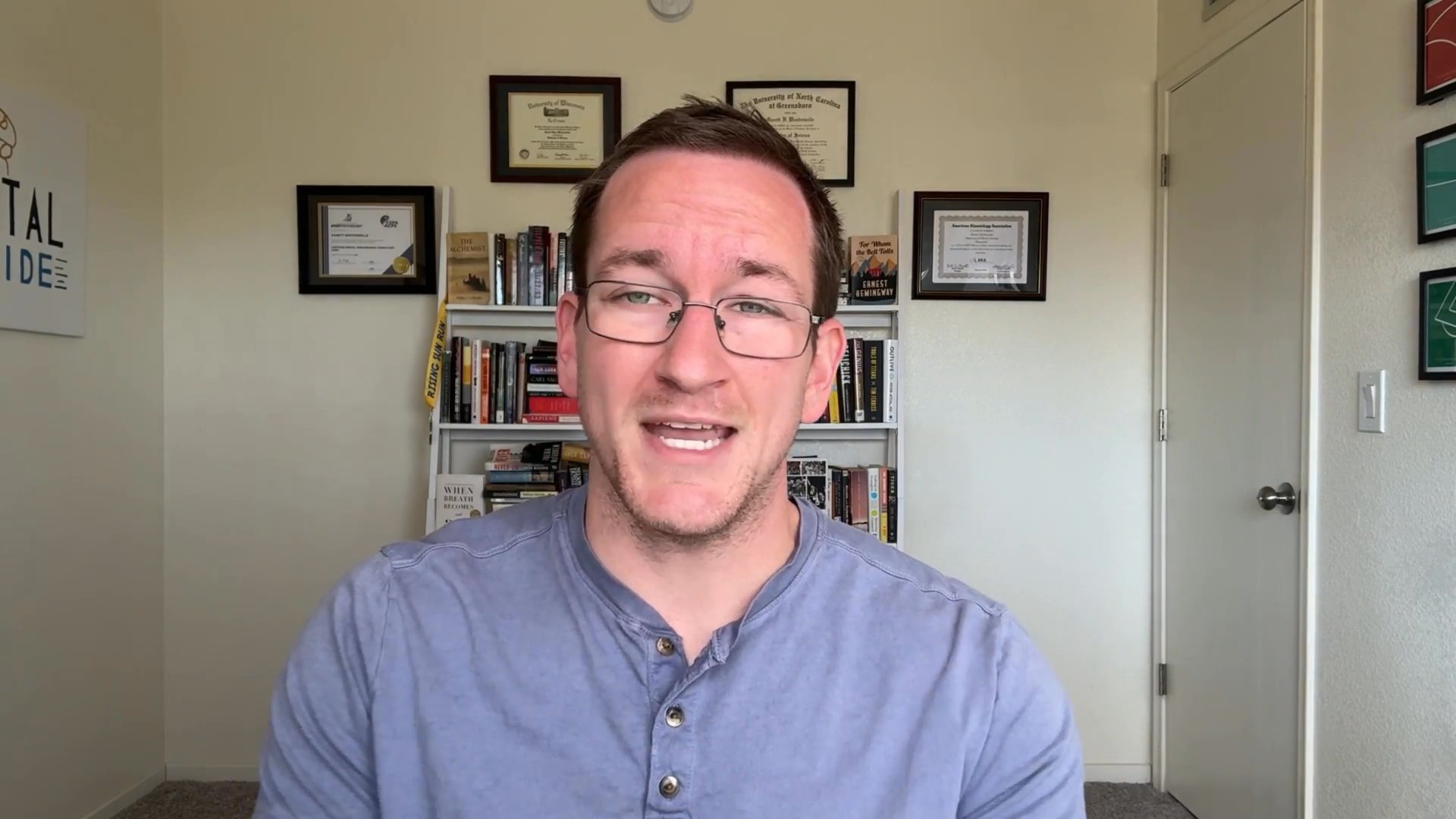
Your breath is your peace and your pause. Regulating your energy sets the thermostat for your home and here are 3 effective breathing practices to help you do that.
As a parent, your energy sets the tone for your children and your household. One of the proven ways to manage and regulate your energy and stress is to be deliberate with your breathing. Here are three strategies you can use to model and practice yourself and also teach it to your children.
As a parent, your energy sets the tone for your children and your household. You cannot teach your children to regulate their emotions if you're not doing the same. One of the proven ways to manage and regulate your energy and stress is to be deliberate with your breathing. So I'm going to offer three different strategies you can use yourself as a parent and as a person overall to model and practice yourself and also teach it to your children. The first strategy is called box breathing. This is where you breathe with a certain cadence and in doing so, it sets syncs your brain and body so that you can regulate your nervous system and calm your mind.
If you're someone like me who struggles with focusing when doing a breathing exercise, box breathing is great because it limits those distractions because you have a mental target to focus on as you breathe. So how do you do it? Well, like I said, you're breathing in a rhythmic cadence. And a common way to do that is to do a 4 second inhale, 4 second hold, 4 second exhale, and 4 second hold. You can follow that pacing in your head. And a helpful way to image that is to focus on a box. Hence why the strategy is called box breathing.
So what that looks like is inhale for four seconds, hold for four seconds, exhale for four seconds, and hold for four seconds. This four second count is common, so you can try it out. But feel free to add or subtract the timing. I'll be honest, when I first tried box breathing, four seconds was too long. I felt like I was going to pass out after a few rounds of it. So I adjusted mine to three and I was able to build it up over time. So make it your own. But this is a great tool used by elite athletes to quiet their mind and body.
So you can use it too. As a parent. The second strategy I got for you is called gratitude breathing. We all could use a little more gratitude, and there's a lot of great benefits of that emotion. But overall, our thoughts drive our emotions and our physiology. So this breathing strategy utilizes an intentional thought to drive the emotion of gratitude. And experiencing gratitude is helpful because research shows one of the most powerful positive emotions that we as human beings can experience experience.
It offsets any physiological effects of negative emotion that you might have. So if you're stressed throughout the day, anxious, nervous, whatever that might be, breathing through gratitude can enhance our mood. So let me show you how to do it. First off, consider a thought that would help evoke the target emotion of gratitude. This can be a phrase, an image, cue, quote, a certain scent or sound. I'll give you two examples. For me, I like the phrase be where your feet are because it helps me feel present and grateful for the moment I'm in.
I'm not thinking about the past or the future. I'm locked into the present moment. I've also used the image of my closest friends sitting around a crackling campfire, because that image and those sounds make me feel grateful. So whatever that thought is for you, that helps you feel the emotion of gratitude, play it on repeat over and over again as you breathe for a few moments. It's obviously targeted at gratitude, but you can use these proactive thoughts to generate whatever other positive emotions you would like with these same principles.
The third strategy is what's called the physiological side. So I learned this one from Andrew Huberman, a neuroscience professor at Stanford. It was one of the most popular podcasts in the world right now, the Huberman Lab podcast. But he calls it the best way to combat stress in real time. And it's a super efficient strategy. To perform it, you simply take a deep inhale through your nose, followed by another quick inhale. Then you're exhaling slowly and completely through your mouth. In other words, you're doing a double inhale with a long exhale.
So it would look like the first inhale is longer than the second. Get a full, complete breath in that second one. Think of it as another small sip of air that you're getting. That long exhale through your mouth. Nice, slow and controlled. And this combat stress and any anxiety in real time. You can repeat it multiple times, but. But the beauty of this technique is that it's very efficient. It only takes 1, 2, or 3 to be shown that it can bring down your levels of stress and allow you to feel more calm.
Regulating yourself through breathing is a gift to you and a gift to your children. You're always constantly pouring energy from your cup into your kids. So breathing and regulating your emotions and energy is a way to refill your cup.