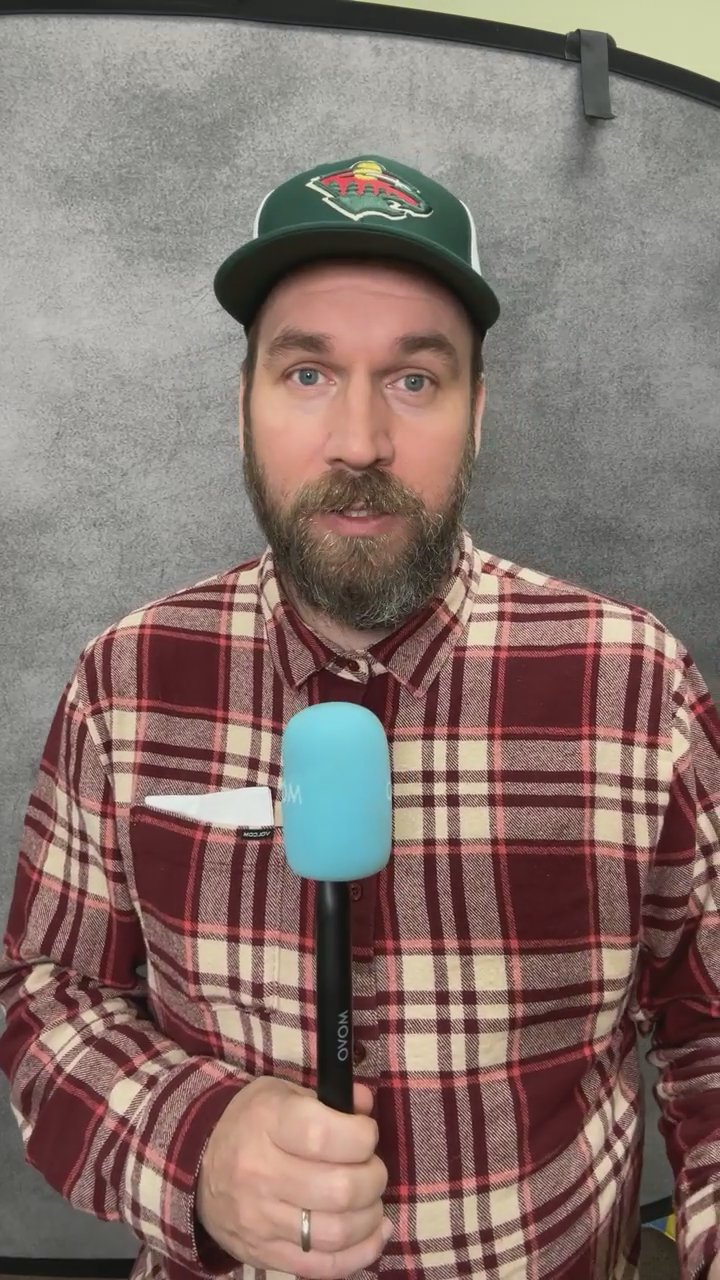
Pastor Seth Perry is in recovery from addiction. He also has bipolar disorder. Leah said people often minimize their struggles in comparison to try to not invalidate others struggling. Shannon said comparing, comparing your struggle to another person is a tough thing to do.
Pastor Seth Perry is in recovery from addiction. He also has bipolar disorder. Let me know how you're doing today.
Where do you notice mental health stigma the most during this season? We'll call it the holiday season. Luke, if you have an answer to the question, let me know. I have some answers.
Leah said people often minimize their struggles in comparison to try to not invalidate others struggling. Shannon said comparing, comparing your struggle to another person is a tough thing to do. But definitely understand that people are all walking their own unique path and that's something.
For me, I notice stigma in feeling afraid to answer honestly in how I feel about the holidays. I don't see my truth as a downer, but others don't know what to do with it. JC had a different answer. He said busyness of work leads to repression and hiding.
Sometimes to help with mental health we have to cut toxic people out during holidays. I myself do not do well when it's the whole family. Small, actionable steps are the key to us making progress. That's my goal for this week.
Hello, everyone, and welcome to Talk Stigma. My name is Pastor Seth Perry. I'm in recovery from addiction. I have bipolar disorder, and I've been living well with bipolar disorder for over 15 and a half years. Welcome, Jules. Let me know how you're doing today. I'd love to hear from you. And the question for today, and you can answer it, Jules, is where do you notice mental health stigma the most during this season? We'll call it the holiday season. We're looking ahead at the new year. We're looking ahead at a very busy time of year for many people.
Time off of work, maybe getting together with family. And so I wanted us to consider for just a moment, where do we see mental health stigma the most? Where do you notice it the most during this season? So go ahead, put in your answer. I put up a post a little bit earlier on Instagram and on Cadre on the post page, and I got some. Some answers. And Luke, if you have an answer to the question, where do you see mental health stigma the most this season, let me know. So this week I'm wearing a Minnesota Wild hat.
I'm from Vancouver, British Columbia. The Vancouver Canucks played the Minnesota Wild in St. Paul this week. And I was at the game and I saw my hometown, my hometown team lose. So a friend I went to the game with bought me this hat. So, yeah. And appreciate it, Luke. Thank you so much. Much appreciated. So I got a little stigma of the other team on my head today because I was wearing a Canucks hat at the game and the Canucks lost. So. So in honor of the loss, I'm wearing this Minnesota Wild hat.
All right, so where do you notice mental health stigma the most this season? Go ahead and answer that as we go. But I have some answers that I've got right here from some folks both on Instagram and on Facebook and on Cadre on the post page. And if you're not using the posts, the community tab on Cadre, go ahead, check it out. I put posts up there regularly and I often get ideas for what I'm going to talk about Sunday. So first of all, we had Leah. She said people often minimize their struggles in comparison to try to not invalidated others struggling.
So that would be someone comparing, comparing their struggle to yours or minimizing how their struggle is or saying, oh, hey, that's not that bad. You know, I could see that happening, you know, at the Christmas dinner table where someone would say, look, you know, it's not that bad for me. I know that, you know, let's say your addiction recovery or how about a mental health condition or how about your feelings around the faith community that you grew up in? And so hi Shannon, how you doing? So yeah, Leah said people often minimize their struggles in comparison to try to not invalidate others struggling.
So yeah, comparing, comparing your struggle to another person, that's a tough thing to do. I think maybe if you're invited to compare, go ahead. But definitely understand that people are all walking their own unique path and that's something. So I'm glad you're here, Shannon. Shannon's reply to my post this week about mental health stigma during the holidays. For me, I notice stigma in feeling afraid to answer honestly in how I feel about the holidays or how I am spending the time over the holidays.
I don't see my truth as a downer, but others don't know what to do with it. And I love this answer. Shannon, thank you so much for that. And Lindsey, welcome to the stream as well. I'm answering questions about mental health stigma during the holidays. Tell me about your mental health stigma during the holidays and where do you notice mental health stigma the most during this season? And so again, Shannon's answer was for me, I noticed stigma in feeling afraid to answer honestly how I'm feeling about the holidays or how I'm spending the time.
I don't see my truth as a downer, but others don't know what to do with it. And I am in the same boat as you, Shannon, because I don't fly home for the holidays and I don't attend the big family dinner. In fact, my wife and I spend our time in on Christmas Day. We don't do anything. And my wife has said do not cook a dinner. We're not having a whole bunch of people over cook one thing today. So cook one thing. You know, you don't have to worry about that. So I'm spending my time that way. But a lot of people will be like, what, you're just staying at home with your dogs on Christmas?
Well, why don't you come to our family, get together, come and hang out with our family. We're, you know, I know you live far away from your hometown, you know, and we say, well, no, I actually really like that day where I stay in my pajamas the whole day. We maybe watch a show and make a casserole. And I say casserole. I live in Minnesota. I know they call it hot dish, but I say casserole. All right, so I'm making a casserole this Christmas. I'm making a vegan egg bake with hash browns on the bottom and then a vegan egg mixture on top with tomatoes and vegan cheese and peppers and a few other vegetables in there.
So it's gonna be good. JC says. For me, I notice stigma and feeling afraid to answer honestly how I feel about the holidays or how I'm Wait a second. That's the exact same answer. Let me see here. Sheesh. Sheesh. JC had a different answer. He said the busyness of work and the year end pushing and projects, the assumptive expectation to do and push and accomplish during the end of and beginning of the calendar leads to a lot of repression and hiding and coming up with acceptable excuses to crawl back into bed and to soften into the couch.
And you know what, Recently I have been on the couch. There have been a few few days where, you know, I'm dealing with my oldest dog, my 16 and a half year old dog. He's going through end of life and that's been tough. So there have been a few days this week where I have been at home on the couch, working from home, softening into the couch and I need to understand the direction that that behavior goes and I need to counteract that with activity and being around people that are going to support me.
So there you go. And one other comment from Facebook because I posted my my question up on Facebook, Tina said boundaries are broken. Sometimes to help with mental health we have to cut toxic people out during holidays. Sometimes the healthy boundaries get broken doing due to going to holiday parties. And that is true. Okay. So I've always been pretty specific about where I go, who I go and see and who I spend time with. Since I got clean and since I entered mental health recovery actively because I was a train wreck and I kind of participated in the family circus.
And that's basically the way that my life was all the way through my 20s until I was 29 when I got clean. And then I realized I don't have to be at home. I have a great family. There are really awesome people in my family and there's still some old behavior in my family. And so what I do is I have cut it up, compartmentalized all those relationships where I can say hey, I can do a one on two visit where I visit two people in my family. I myself do not do well when it's the whole family. I myself do not do well when I'm in a room with 10 plus family members.
I feel it. I get a lot of, you know, memories flooding back and some trauma from my past. And so that's why I have said I do best in small groups, and that's okay. So that's my conversation for today. I'm grateful that you've all joined, and I just want to let you know, hey, it's been good hanging with you today and. And just do this for me over the next little while. So we're at the 8th right now, so we have 14 plus. So we got 17 days until Christmas. So. Yeah, thank you. It's been great being here, Shannon.
So we got 17 days. So I. I have been saying this a lot in my sermons recently. Do one thing right. Do one thing. So last week it was, you know, do one thing to be compassionate to another person, and today it was do one thing to have empathy for another person. One thing. Okay. Don't be overwhelmed by the positive actions that you can have in your life at this time of year. I think that small, actionable steps are the key to us making progress. And so myself over the next week, I'm going to exercise empathy once and I'm going to exercise compassion once, and I'm going to see what that gives back to me.
And that's my goal for this week. I'll check in with you next week about that goal. And between now and then, have a wonderful Sunday. Have a great beginning to your week tomorrow. And just remember, one actionable step. See you later, Cadre. I'll be around. Check the community tab.