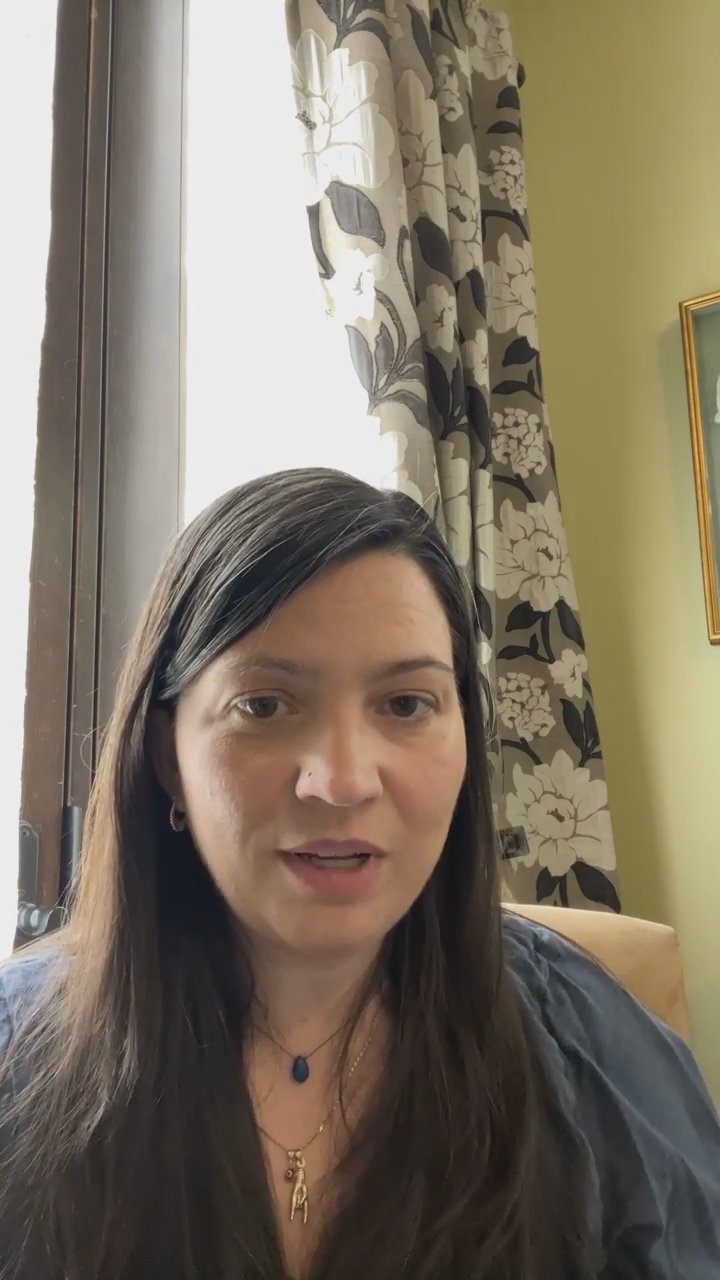
Marigold is a grief wellness platform rooted in food, culture, and rituals. The Marigold way is five pillars: warmth, digestion, rejuvenation, pleasure, and ritual. Rebecca shares her thought process about grief and Father's Day this year.
Marigold is a grief wellness platform rooted in food, culture, and rituals. The Marigold way is five pillars: warmth, digestion, rejuvenation, pleasure, and ritual. Rebecca shares her thought process about grief and Father's Day this year.
What pillar of the Marigold way calls to you? Is it pleasure? Maybe ritual digestion? What experiences are you holding on to that you haven't really processed? I hope that you're finding ways this summer to bring a little pleasure and ease into your days.
Hey, everyone, it's Rebecca here from Marigold. And if you don't know, Marigold's a grief wellness platform rooted in food, culture, and rituals. And I wanted to bring you along today on my thought process about grief and Father's Day this year. And I want to offer you a framework that you can use in any kind of grieving situation. And I just am using Father's day as an example so you can really see how I'm thinking about this. Hi. Welcome. Thanks, everyone, for joining. So, in my family, we lost my father in law in November.
So this will be our first Father's day without him. And we have kids, too, so it will be Father's day for my husband, and it was his father that we lost. So I know it's going to be a hard one. And I'm anticipating what type of. Well, not type, but I'm anticipating that there's going to be grief on many levels for many different people in the family, including, you know, grief at my. For my kids experience, grief in my husband's experience, my own experience, grief for my mother in law. And, like, how am I going to be part of kind of holding space for that, really?
I can't really orchestrate anything or. Or fix anything, per se, but I'm planning to be supportive and hold space because I know it's going to be a difficult day. And at Marigold, we have created a framework called the Marigold way. And we often come back to this framework when we're thinking about, you know, when things are really hard to handle, when life is overwhelming, when things are really in flux and change, when you're in a deep transition, like grief and depression and sadness, these things that kind of pull you out of your body and mind as you normally expect to be.
And so the Marigold way is five pillars, and we suggest that you tap into anyone that seems to speak to you. So we have warmth, digestion, rejuvenation, pleasure, and ritual. And I'm gonna go through my thought process on how I'm going to integrate the Marigold way to give me a framework so that I can be a supportive family member and space holder in a day of big grief. So, warmth. I'm planning to not only cook warm food for that day, but make sure that the family eats. I don't know about you, but especially since the pandemic, oftentimes, I think it's easier for us to, like, stay in the house and not go do anything and kind of, like, eat around here and there and not, like, specifically all sit down to have a meal together and coming back to that kind of ritual of sitting together to have a meal and making sure that everyone is getting fed and thinking about, you know, what's going on the plates instead of just snacking.
I have a couple teenagers, and we can get through the day sometimes without really sitting down together. So I'm planning to make sure that we're eating together that day and that we're eating warm, easily to digest foods, and not just chips and crackers and kind of dry stuff that doesn't give you that grounding sensation. And I'm hoping that, you know, being together like that will create a sort of warmth in our conversation and our environment. And then digestion, I kind of just touched on, like, eating warm, easy to digest food really supports your body in being able to handle big emotions.
And I don't want anyone feeling like they can't digest that day. It's going to be hard enough. So I'm planning to think about what we're eating and drinking and make sure that it's warm and nourishing and easy to digest. So that might mean, like, not drinking any alcohol, you know, or not overdoing the coffee. And not to say that those are bad things, but they do affect your digestion, and it makes it a little harder to digest. So one of the things that I know is that I'm going to avoid food specifically for me and my family, that make it harder to digest.
Just to support this emotional day and then rejuvenation, I made a plan to go out to an outdoor event space, and I got us tickets for something fun to do. So I'm really hoping that being outside in nature, doing something playful and being together as a group will offer some rejuvenation. And, you know, amidst the backdrop of loss and grief and play is really a big way of finding all of these things. Warmth, rejuvenation, pleasure, you even can often digest a lot of things through play. I mean, just look at art therapy and play therapy and some of the ways that we approach trauma healing in children.
It comes with a lot of play, and that's really important. So I'm definitely centering play and pleasure on this day. And after rejuvenation, we have pleasure. So I'm hoping again that, you know, being outdoors, eating good food, warm conversation, togetherness, that this all brings pleasure for everyone. And then finally, ritual, this will be different for everyone. But in my household, we keep an ancestor altar where we have everyone's photos who's passed away in the family and every day, I have a ritual of offering coffee and tea to our ancestors, and it makes me feel like I'm still recognizing them, remembering them, and just giving an offering of my.
My gratitude and something that's pleasurable to me, to my ancestors. And I feel, energetically that they enjoy that. And for Father's day, since it's our first one without my father in law, I got him a card, and we're definitely going to be, like, sharing some of our food at his altar space in front of his picture, lighting some candles, and just recognizing him. And I'm hoping that we'll sit down in the evening and just share some memories, tell some stories about him, because storytelling and my experience is hugely transformational, and it really supports digestion of an experience.
So I'm hoping that, you know, I can give each of my kids time to tell a story or a memory and let my husband and his mom talk about their favorite memories and experiences of him. So in this way, I feel like, you know, of course, not everything is going to be tended to on that day, but there I have a way of creating sort of an invisible scaffold for something that feels really heavy. And I know that will be held in these practices. So if you want to try this out, too, I really want to hear, like, what speaks to you?
What pillar of the Marigold way calls to you? Is it pleasure? Maybe ritual digestion? A lot of people are really interested in the digestive aspect, and I want you to think about digestion, not just as physical and how we digest what we take into our bodies, but emotional digestion. You know, what experiences are you holding on to that you haven't really processed? I know we've got a lot of them, and there are ways for us to kind of titrate that digestive experience of things we've been through that are.
That we're holding on to. We have a video on Cadre about the Marigold way, where we go a little deeper into each pillar of the Marigold way, if you want to check that out. But in the meantime, I'm wishing you all the best energy for this weekend. I hope that you're finding ways this summer to bring a little pleasure and ease into your days. And just know that grief can be handled with joy and vibrance. And we at Marigold are really hoping that for you and hoping to support that in your experience.
Thank you, everyone, for joining, and we'll see you next week at Marigold grief Gathering. Bye.