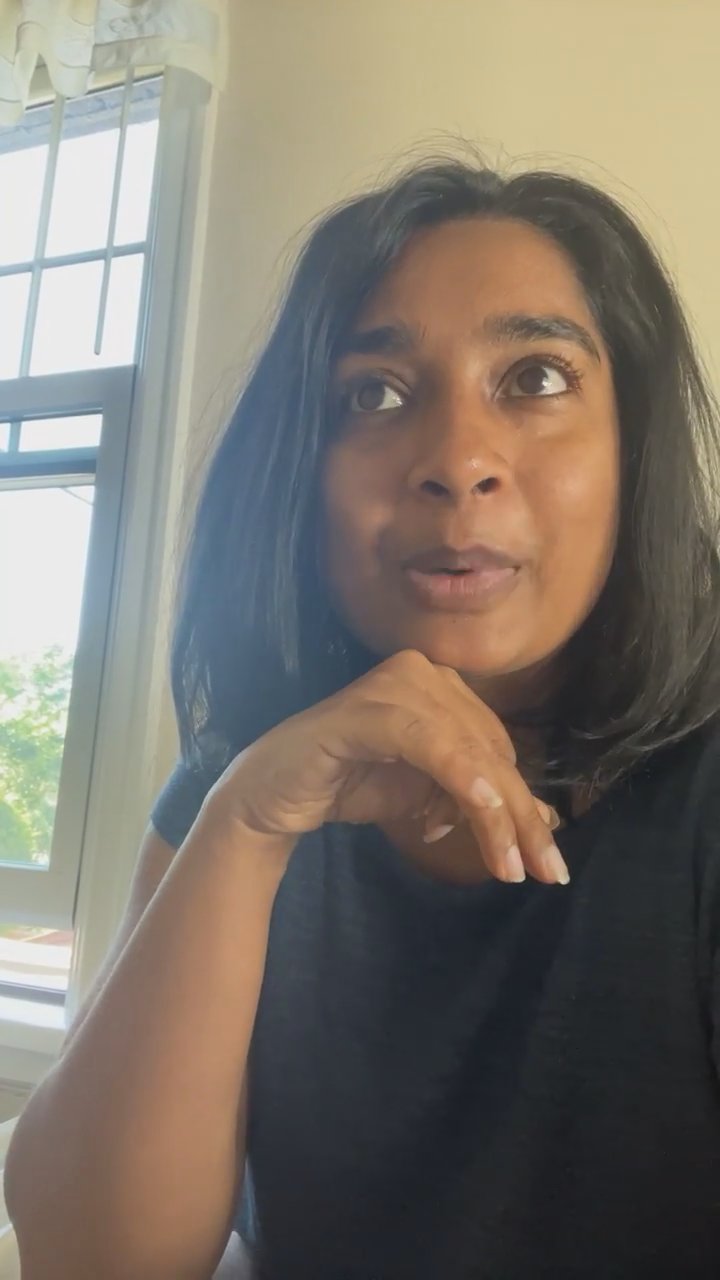
People are very afraid of being vulnerable because it's not a safe space. And what happens when you are vulnerable.
Roshani Kavate: Vulnerability is being in touch with my emotions. How do we tap into that vulnerability and not shut down and project a sense of strength? People are very afraid of being vulnerable because it's not a safe space. In what ways are you practicing vulnerability?
For me, vulnerability has been, you know, speaking up calmly but just sharing. Vulnerable that other people may get upset, vulnerable that others may have different opinions of me. I just need to share what's on my mind.
So I hope you'll reflect on what vulnerability means to you and how you, you know, practice that. And what happens when you are vulnerable. Maybe it's really frightening at first, but then is there a sense of release?
Hey, everyone. This is Roshani Kavate from Marigold. Today I wanted to share a little bit about the power of vulnerability. While we're grieving, it feels like this feeling of, you know, we're unsafe. We're not sure how we will navigate the path, who's there with us? It can feel really vulnerable, but a lot of us feel like vulnerability is bad. It feels unsafe. And I'm just curious, how do you think about vulnerability and grief? Is it your superpower? Does it feel like it's overwhelming? What does strength mean?
Right? So, thinking about the idea of strength versus vulnerability, I'm always amazed how narrowly we define strength. It can seem strength means, you know, not feeling the feelings. But I think vulnerability is deep strength because we're really open to feeling ourselves, all the sensations. We're open to different ideas. And grief is, I think, one of the greatest paths where vulnerability is. Is front and center, because our idea of our, you know, the idea of safety can be shattered. And loss brings that sense of vulnerability that.
This idea that we had of, you know, our loved one or even for ourselves, our, you know, our health, maybe if things are not the same anymore. So how do we tap into that vulnerability and not shut down and project a sense of strength? That's not really strength for me. Vulnerability is being in touch with my emotions. It's letting myself feel things. Right. So many of us are afraid that if I show my emotional, you know, spectrum, like, all the feelings I feel, then that's something to be worried about, especially in the workplace.
I think it's really. People are very afraid of being vulnerable because it's not a safe space, and there's a fear that you can be judged for it. Right. We only have, you know, we have to appear either confident or we have to, you know, have the sense of everything's. We have everything together. You can't just show up as your true self in that day. So it is really curious to think about where can you be vulnerable, and with whom can you be vulnerable? And maybe there are certain friends you can't be your true self with, maybe with your family.
You have to be a certain way. So it's interesting to think about where in your life can you be vulnerable? What does that look like? And this affects people across different gender expressions, too. We have this sense of, you know, how each person can act, can behave, can navigate loss. And I would love for us to broaden the definition of vulnerability and how we navigate that, how we can, you know, especially with kids, if you're raising kids, if you're around kids, it's so important to teach them to feel and to name feelings, to make sense of it and to not feel like, you know, they can't cry over something or they can't be upset over something.
And so often we say, you know, oh, like, you know, it'll be fine or get over it. Um, so in what ways? I want you to think about, in what ways are you practicing vulnerability? You know, what does that mean for you? And vulnerability is not just tears. It can be a broad spectrum of things, right? It can be saying no when you are afraid of saying no, when, you know, the other person or people who you're saying no to may not like the answer, but even then, you're choosing to say no because you're putting your feelings first.
It could be. It can look like, you know, choosing what you want to do. Speaking up. A lot of times we don't speak up again because of fear. And that's seen as, you know, oh, you're flexible. You could do anything. You can go with the flow. But maybe you have different ideas for your life or different choices you want to make. So how do you speak up? That's being vulnerable, right? Speaking up, being an activist and speaking truth. When people are not like there. Many folks may turn a blind eye to what's happening, but you're seeing and speaking up and saying, this is how I see it, and we should all care about this.
That can be one way of practicing vulnerability. It could be, you know, doing what's not expected of you, but doing what you want. When we're grieving, our capacity is so different, right? What we can say yes to, the energy we have, the capacity we have, even what we start to value. I think when we enter the grieving path, the things we value are different. We value time differently, we value friendships differently. We value what we do for work differently, because we know that life is full of fragility.
There's no guarantee, right? So we see things as more valuable, that our time here on earth is for different reasons. It's not necessarily, you know, we're operating in an automated way, but we're thinking, okay, how can I be more mindful? How can I be more intentional? And that's. That's vulnerability, because we're questioning things that are usually not questioned, right? We are raised with the belief that we should all get an education, get a job, you know, make money, things of that nature.
But what's. What's more than that? It's serving our communities. It's taking care of people and there's no productivity, you know, attached to that. But there's so much richness, there's so much connection, there's so much value, there's opening ourselves up to other people. Heartbreak, love, all the possibilities that exist when we are vulnerable. So I would like to leave you with a few questions, not answers, but a few questions on defining what does vulnerability mean to you? You know, where can you be vulnerable and how do you practice vulnerability?
Because that's a practice for me. It's, you know, it's been like in communicating with honesty, usually if I disagree or don't like something, I just don't say anything. And it's a way of, you know, not speaking up is a form of coping mechanism. So we can just sort of go quiet and not express our voice and, you know, just let others take space. But for me, vulnerability has been, you know, speaking up calmly but just sharing. This is my experience, this is how I see it, this is what I'm comfortable with.
This is what I'm not comfortable with. So in that way, I'm being vulnerable. Vulnerable that other people may get upset, vulnerable that other people may not, you know, may have different opinions of me, but that's okay. I just need to share what's on my mind. So I hope you'll reflect on what vulnerability means to you and how you, you know, practice that. And what happens when you are vulnerable. Like, how does it feel? Maybe it's really frightening at first, but then is there a sense of release, a sense of, you know, like, being proud of yourself, being like you're cheering yourself on, accepting, you know, and valuing your own experience too, and not always thinking about other people's feelings first, but also what is important to you.
So I want to leave you with that again. My name is Rushni Kavate, co founder of Marigold, and I hope you will have many moments to think about what being vulnerable means. And even if you can observe that in your day to day life, in your interaction, in your workplace, in your relationships. Alright, talk soon.