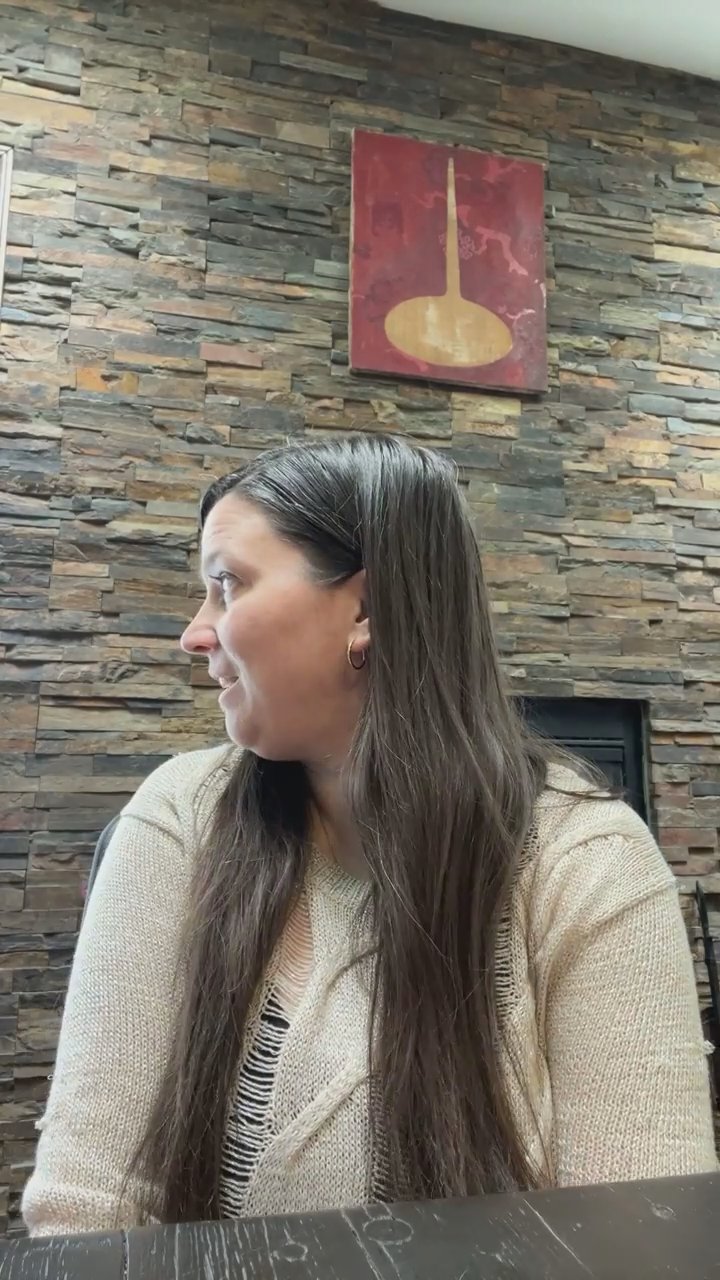
Natalie is a neonatal nurse at a local hospital. She talks about our resistance to processing grief. She shares some tips for helping yourself enter into the grief processing space. The first thing is creating a sense of safety in your physical space.
And I want to offer you a really marigold flavored idea that can encapsulate this whole thing. I invite you to make cooking a sort of allegory for processing emotions. Let us know what you make, what your grief is craving, and what you made of it.
Hey, everyone. Happy Friday. How's your day going today? I hope that you're finishing up the week with some rituals in place to kind of help you wind down or even just release all the energy from the week and that you're gearing up for some rejuvenating and relaxing activities over the weekend. I wanted to come on today and talk about our resistance to processing grief. I talk about grief a lot, and it can become easier to talk about grief than to actually be in grief. And I wanted to share, like, a little system that I have for helping myself enter into the grief processing space, because it's very common to have resistance, to know that it's there on your shoulder, that you're grieving something and you just don't want to look at it.
It hurts too much or it feels too big and it's, you know, you have to process it. But it's hard to go into that space for myself and, you know, the patients that I work with at work. I'm a neonatal nurse, and I'm on the bereavement committee at my hospital. Hi. Welcome. And being in the bereavement space at the hospital, I have to kind of manage a very acute situation that people are in where. Where they're needing guidance on grief and bereavement in the moment, because it's so big and so acute in that moment.
So I wanted to share with you some of the things that I do to help enter the space of grief processing and then come back out. So the first thing is creating a sense of safety in your physical space. So orienting yourself to the room you're in or to the space you are, if you're outdoors, maybe. And this can be helpful when you're getting really anxious and overwhelmed too, just to give your body and your brain just pure data information on where you are in time and space. So I may look around the room and look at the wall next to me on my left and then the wall next to me on my right, and just think, like, data points, like, okay, that wall is, like, about 10ft away from me, and that wall is about maybe 8ft away from me.
And I'm sitting on a chair, and it feels kind of soft, but firm in the back. And the wall behind me, it's about 3ft away. And just be very sort of not nuanced. Sorry. Sort of just straightforward about it. Taking the data of where you are, what's going on around you, what colors do you see, and just let your, like, animal body orient to where you are. That helps us create a space that feels safe and that processing can feel more able to flow in. So once you've oriented yourself to the space, create some parameters, so you don't want to just, like, go wandering into the wild world of processing your grief with no plan in place, especially when it's feeling really heavy, really emotional, and you have a lot of unknowns in that experience.
So I like to give either a time limit or some kind of parameter for myself where I know that this is what signals the end of this period instead of just letting myself go, because sometimes that doesn't feel safe to my nervous system. So, for example, I might give myself the opportunity to write three pages in my journal without stopping, and then at the end of three pages, it's done, and I just make myself stop. And that helps you kind of titrate the processing, right? And you can deal with that little bit that you've let out and kind of started to explore in that moment.
Or you might want to set a timer for, like, five minutes or 1 minute and just allow what comes up. It can feel super scary to just allow your grief, allow your sadness when you don't know if and how it will ever end, right? So giving yourself some type of parameter that feels, like, productive enough to you that you feel like you're actually going into the grief process, but also, you know, there's an end to it. And so you're not left with those kind of eternal anxieties of, you know, this might never leave my body or my heart.
And then to get yourself out of that process, once you've finished the time limit or the page or, you know, whatever you've chosen to be the kind of expression vehicle, I recommend doing some type of action after that to help, like, diffuse it from your body and let that energy transform into something else. So let's say that you just spent five minutes journaling. You may want to read it. You may not want to read it and just put it away. But maybe something came up in the journaling that inspires you.
Like, maybe the thing you're grieving is related to something that inspires you to action. Like, I never want to see this happen again. And you choose to, like, look into volunteering for a certain organization if that type of action feels too big, which oftentimes that might be after lots of processing, but you can put it into an action such as cooking or going on a run or dancing or singing or even crying, screaming, something that physically you're letting that energy out and letting it have closure?
This doesn't always have to be super, super emotional. It might be something that is just part of your creativity. So an action that you might take might be like creating a painting or something that kind of gives you that beautiful closure to all the emotions that have come up, and you're allowing them to be released and then be transformed. So I'd love to hear if any of that is resonating with you. And if you feel like. Have you ever created parameters around processing anything? Even anger, sadness, a celebration, even?
I feel like we often just let things pass and notice them momentarily, but we don't take time to process it and let it become part of the fabric of our soul. You know, sometimes that happens accidentally rather than intentionally. And in grief work, I find that the more intentional we can be about our processing and being truthful about our experiences, the greater wisdom shows up within us and the more ability we have to help other people and to live a more vibrant life on the other side of that.
Speak wonder. Thanks. You said I've never created parameters. I like this idea. Yeah, it's an interesting take on allowing your emotions to kind of wash over you and then let them go to not hold onto it for the rest of the day. And I want to offer you a really marigold flavored idea that can encapsulate this whole thing is perhaps you think of a recipe, a dish, a dessert, or something that relates to that which you're grieving, whether it's a person, a situation, and go through the process of making that food from start to finish.
And when you're ingesting it and digesting it, you're actually going through the physical process and the spiritual process together. So I really invite you to make cooking a sort of allegory for processing emotions, and I would love to hear how that goes for you. And if you're watching this later and you've taken that advice, let us know what you make, what your grief is craving, and what you made of it. Thanks so much for being here with me today. We'll see you next week on the grief gathering.
Have a wonderful weekend. Bye.