How much can you learn from a relapse. What’s really the point of investigation? What’s the most important thing to do?
Chris: If you relapse, you're gonna find out really quick that you need your crew. After the relapse, ask people, get as much information as you can. Don't spend a ton of time on investigation of your relapse.
The couch is where we beat ourselves up. Isolation is where you beat yourself up because no one else is there. If the opposite is going to help you get out of your house, get off the couch. Go sit with people. Don't start talking about yourself.
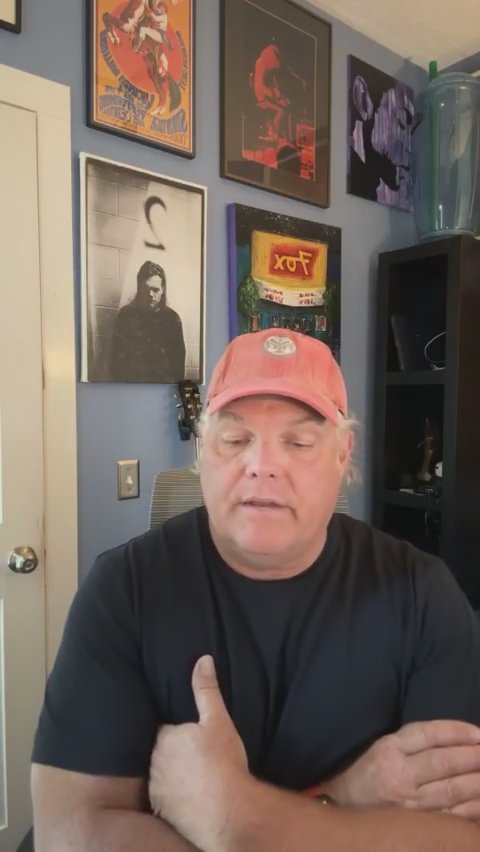
Hey, guys. Chris here from Cadre. Just signing on to talk about something came up this week. It's generally with me about early recovery, things to do, not to do, things to look out for, how to make hope out of nothing, how to make sense out of crazy. So today, in the last few days, I had a couple of conversations about relapse. It happens all the time in my program, and there's a lot of. There's a few common things that people do around relapse, and I want to dispel a couple of those things and maybe give us two or three things that make a lot of sense to do right after a relapse.
It doesn't matter how much time you had. It could be right out of treatment, it could be five years later. There's contexts that are different when you have a lot of time or not, but. But I think there's things that are ubiquitous that are relevant to everybody. And the first thing is that if you relapse, you're gonna find out really quick that you need your crew. So if you didn't build a crew and you don't have your group of people, your girls or your guys to go to and sound things off, you're gonna wish you did.
So once again, I'm gonna remind you that you need your crew. Go find your crew, go out there as soon as you get out of treatment and start building your crew. I often say to my new sponsees, if I take one, tell me the top three people in this town that you would call if something happened and tell me their last names, also and tell me their phone numbers. So it's important. So the first thing I would say is, don't spend a ton of time on investigation of your relapse. Don't try to figure out what happened.
It's healthy and it's good to take an, to analyze it a little bit to talk to your friends. I would say, more importantly, ask your crew, what did they see? Did they see something coming? And they might have even said something to you like, hey, man, we see something coming. I like this analogy of if you're sitting with a group of people and one of your sober friends is running right past you full speed towards a thousand foot cliff, but you're a good hundred yards away from that edge, and you stick your foot out and trip them.
Yeah, they face planted and they fell down and they're going to be p*****. But they didn't hit the edge. They didn't make it to the edge. You raised the bottom. I'm a big believer in when you surround yourself with people in recovery, that you have a responsibility to tell those people on your crew what's true and what you see. And so if you have a problem, you can go to them and say, what do you see? Did you see me slipping? Did you see me talking? Now, you know, this thing is cunning and baffling, as they say in the big book.
So there's not necessarily going to be an answer, but it's super healthy to ask, what am I showing you guys lately? Or girls? So get back to the people. After the relapse, ask people, get as much information as you can. Some people would say, just get back on the horse and go, and you'll figure out some stuff. As time goes by, maybe it'll dawn on you. But I would say that you need to get back to the people and just say to them, hey, I know I slipped. I don't know why. I'm not sure about this. I'm not sure.
Don't hit them over the head with every theory in the world that you have about what happened or bugging everybody. I don't know what happened. I'm going to figure it out. So it's a waste of invest, it's a waste of time. It's a giant investigation of nothing. You're just not going to get really great information once you've done a few things to check on yourself and ask about your recent past. But asking them what they saw, super helpful. You know, just turning around and going to 14 meetings a week is not necessarily going to, you know, refill your sobriety or bring it back up to the level that you.
That it was. Now you have to start over and you have day one, and you don't get to feel good about the number of days you had, which is real and relevant, but not that important. There's not a whole bunch of people who get up every day and look at their number of days sober and compare it to yours. That's really not happening. Most people are thinking about themselves. So get off of the shame spiral about how many days you lost and get busy putting it back together. And the first three things I would say to do is to go to a bunch of meetings and tell people you relapsed, stand up, raise your hand.
This is what happened. Be prepared to have a lot of opinions. AA is full of opinionated people and they're, you know, people are complex and they're gonna say stupid s***, and you're gonna be okay. Put it out there. Put put it right out on the table. Let people say what they think. Let the, you know, the person in your AA meeting who talks about themselves incessantly, tell you what they think, even though it's incredibly annoying. Put it out there and hear the feedback. Put your routine back together with a couple of new things.
Let's look at the routine you were doing before these meetings, this sponsorship thing, this service work, this fellowship and fellowship is the term we use for socialization, socializing with people outside of AA. So if you're going to dinners or you're going to coffee shops before meetings, after meetings or something on Sunday, barbecues or whatever, if you're not doing any of that, you're missing half of the medicine. Really, most of the medicine in recovery is in the interaction with other alcoholics and addicts, even though even the annoying ones.
So I would really like to leave you guys with something poignant here. Don't beat yourself up. And if you want to stop beating yourself, I know you probably are. A lot of us do. Get out of that shame. Put the baseball bat down and start. Stop smacking yourself around. And if you want to do that, get off the couch. The couch is where we beat ourselves up. Isolation is where you beat yourself up because no one else is there. Think about it. If you were standing out in the middle of the community hitting yourself with a baseball bat, someone would probably come up to you and say, hey, you might want to stop doing that.
It doesn't look like it's serving you very well, so you can do it alone. If the opposite is going to help you get out of your house, get off the couch. Go sit with people. Call three people you know from AA. Here's a, here's an easy prescription. Call three people you know that are sober. Say, can I set up a coffee with you 20 minutes on Wednesday at noon? Set up another one. Whatever time you can do, go. And here's the trick. When you sit down with those people, don't start talking about yourself.
Ask them what's going on with them. Say, hey, man, what's up with you? Talk to me about you. I'm so sick of talking to myself, about myself that I want to hear. I need to hear something else. So tell me what's going on with you? You'd be surprised how helpful that is to you to not talk about you, right? I know it seems backwards. So, anyway, lots of great ideas around everything to do with recovery here on Cadre. There's other people who sign up. So sign up and sign on to Cadre and look for some experts in whatever area you're looking for.
I hope that was helpful and we'll see you next time. It.