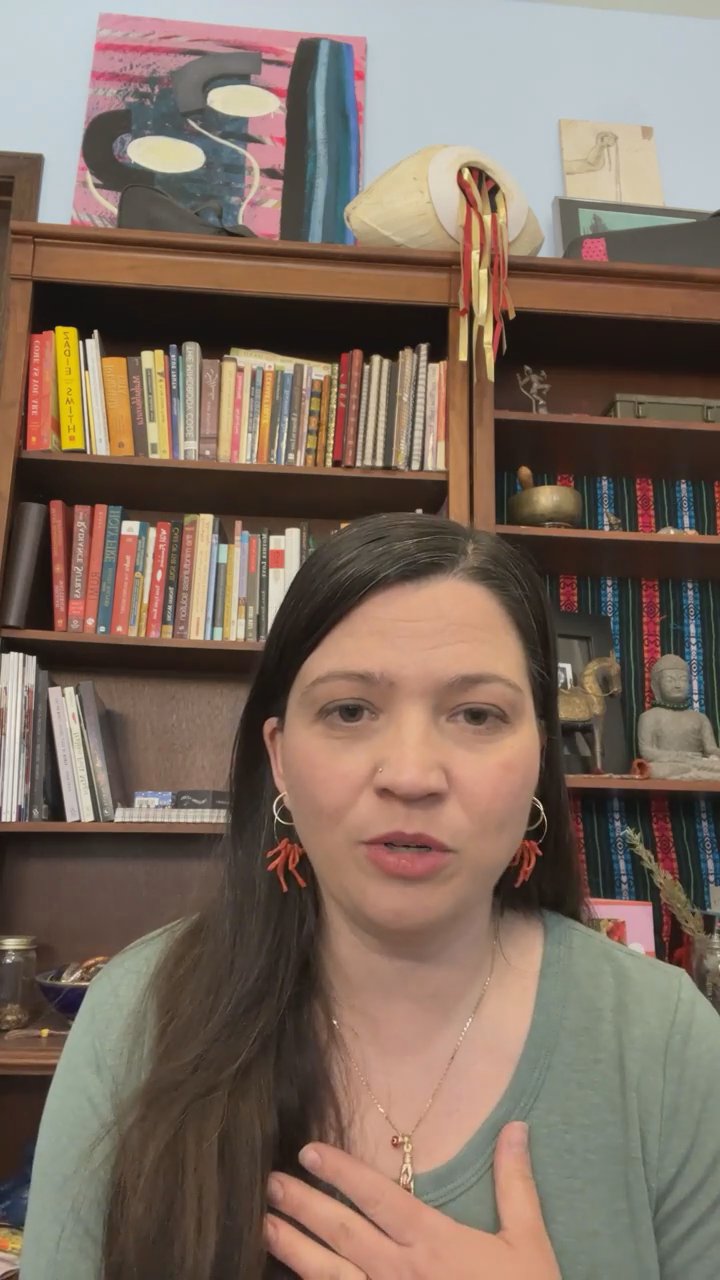
Here from Marigold. And I'm coming on this morning to talk about expectations with grief. All kinds of expectations. And just to reintroduce myself, I'm co founder of Amerigold, which is a grief wellness platform. We root all of our education and events and experiences in storytelling, culture, and ritual.
At Marigold, we often ask ourselves, what is our grief craving? I believe that letting our roles and expectations kind of go before our true response to grief can kind of keep us stuck. So I really encourage you today to just say hi to your grief. Allow it to come sit with you and ask it what it's wanting today.
One of the traditional healing approaches in italian culture is drumming. Even in playing a musical instrument, it opens up a creative freedom that's not often present in this expectation we have of ourselves. Try to bring it back to the present moment when we're grieving.
Here from Marigold. And I'm coming on this morning to talk about expectations with grief. All kinds of expectations. And just to reintroduce myself a little bit, I'm co founder of Amerigold, which is a grief wellness platform. And we root all of our education and events and experiences in storytelling, culture, and ritual, because we find those three aspects of approaching grief so important in normalizing grief and getting to our true bottom of things, like the true roots of grief and the true roots of our healing in our grief experience.
Hi, everyone. So glad to see you here. Good morning. So, yeah, I was coming on today because I've been thinking a lot about our expectations with grief. Hi. Speak wonder. I think that we kind of put a lot of expectations on ourselves, but we also carry these inherent expectations of what we think our role, like, the way that our roles in life should act. Right? So, for example, I'm a mother, I'm a daughter, I'm a sister, I'm a nurse, I'm a wife. All of these things come into the way that I might express my grief in my life, especially the ones that carry a lot of responsibility, like being a mother or a nurse.
I found myself in a lot of ways, like, holding some things back, because I'm like, oh, I'm a mom. I shouldn't show this in front of my kids, for example. But I see a lot of people doing this in my patients and clients, you know, based on who they're around. We kind of bounce our reactions off of other people, and we give these expectations, like, the front row seats in how we handle our grief sometimes. And I just wanted to give you some tools for kind of combating that so that we can normalize grieving and have a more true experience when we're coming up with grief, I believe that letting our roles and expectations kind of go before our true response to grief, it can kind of keep us stuck because we box ourselves in and we kind of stay in that place because we're not letting the grief process and express itself in the ways that it wants to.
So, at Marigold, we often ask ourselves, what is our grief craving? And I really, really love this question. And I come back to it almost every day because we carry big griefs and small griefs, and every day it's changing. It's processing, like a grief that I have from 15 years ago. It's still with me, of course. Right? And now I have perspective from that experience. Might be craving something I never would have imagined. So the reason why we ask the question, what is your grief craving is because we can, you know, internalize our grief and go through it using our minds tools all day long, and we definitely will get somewhere using the mental tools that we have and really thinking about it and putting things into perspective.
That's all really helpful. But I find that I can talk myself into or out of things a lot of times using the mental tools that I have. But when I ask my grief, what are you craving? I really often come up with some surprising things, like, gosh, right now I'm dealing with the grief of my oldest child being about to graduate high school and move out of the house. Some of the things that I'm craving are connection in these ways that we didn't really express before. Like, my oldest child and I have been playing music together, and we didn't really do that growing up.
But now that he's older, he's playing bass, and he keeps asking me to learn drums to all these songs that he wants to play. And it's really challenging to me because I'm more of, like, a quiet, reserved person, and it's opening a whole new doorway for me. And I'm starting to crave that rhythm. And, like, it makes me feel more alive, and it makes me face the grief that I have with so much more courage and vitality. And I would never, ever, ever have gotten there by thinking hard about it. You know, it takes us.
Grief itself kind of takes us out of the present moment and brings us back to the past, to something we want to remember, or even to the moment of loss. It often takes us to the future, where we're thinking about the expectations that we've lost. Right. So I really encourage you today to just say hi to your grief. Allow it to come sit with you and ask it what it's. What it's wanting today, and really, like, be open minded about what comes up. And if any of you that are here can take a second to think about what is your grief?
Or even, like, the dominant emotion that you're feeling right now, what is it craving? Or what is the message that it has for you, it might really surprise you. I'm going to take a second and think about what my grief is craving today. Hmm, interesting. I got this image of green tea, which I don't drink very frequently, but it is really comforting to me. Maybe that's something I need going into the weekend. Warmth is also one of the things in our Marigold way. You can go back and watch our video on the Marigold way, but the first step in approaching grief is, in the Marigold way, is warmth, and warmth, I believe, really, like, brings you into your body and helps you become present because you can really feel that temperature change when you're ingesting something warm.
And of course, warmth is comforting. Like warm conversations, warm thoughts, and, yeah, that's coming up for me today. So even if you're watching this later, I would love to know what is your grief craving, and how does that kind of give you just a different perspective on the expectations that you have when you're approaching your grief? Oh, sorry, my doorbell's ringing. Speakwonder says, it's so interesting you mentioned drums. Lately, I've been looking for a drum circle. Oh, maybe that's what your grief is craving.
Yeah, it's really interesting. And since I've started playing drums, I do a lot of ancestral work and, like, learning about my ancestry. And I found that one of the traditional healing approaches in italian culture and southern italian culture, where my family comes from, is drumming. I'm sure a lot of you have heard of the tarantella. That dance is actually like a village based or community based grief and trauma processing dance. And in a lot of the cultural practices in southern Italy, the women would drum this kind of frantic beat while the person who's being healed and witnessed in community is doing this dance where they're processing their pain and trauma.
So I found that super interesting. And I'm not surprised that my ancestors may have led me to this by being open, to being challenged and understanding what cravings are coming up in my body. The thrum of drum beats echoing my heart. Yes. Yes. I learned the tarantella on the piano. That's so awesome. I'm really loving what music is giving me access to in my body. And I think a lot of you can understand that kind of as people who are trying to, like, present ourselves as professional and we have a lot of responsibilities, we might kind of tamp down those more wild aspects of ourselves.
Even in playing a musical instrument, it opens up a creative freedom that's not often present in this expectation we have of ourselves as professionals and guides and people who are responsible teachers, healthcare workers, even, you know, just your role within your family. Sometimes being the oldest, you have these certain expectations of you, and it cuts you off from this kind of wild healing that's available inside. So thank you so much for being here and exploring this with me. I'm definitely going to keep working on this thought and, you know, how to kind of honor and also subvert the expectations that we have in our lives and the expectations we create for ourselves, try to bring it back to the present moment when we're grieving.
I love being with you here on Friday mornings, and we hope to see you again next week for the grief gathering. Take care, everyone, and thank you so much for your shares.