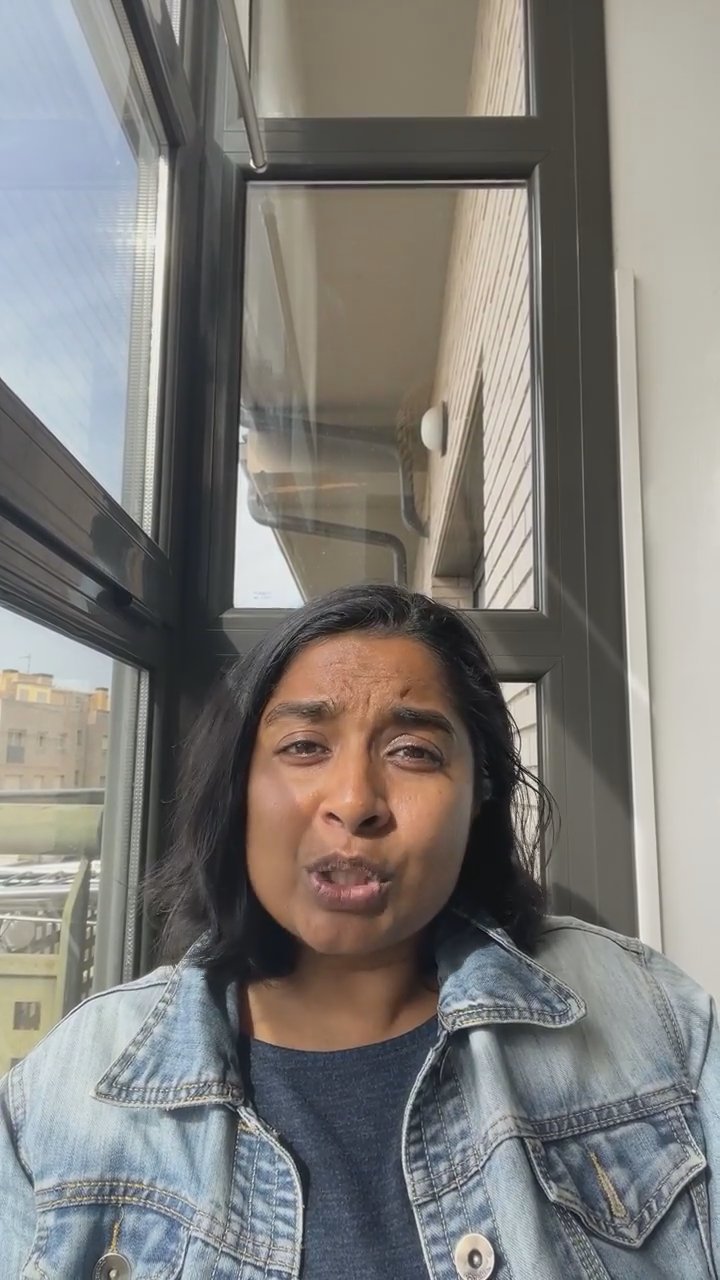
Marigold is a grief wellness platform rooted in ritual, storytelling and culture. Roshni is co founder of Marigold. Grief can take on so much of your sense of identity. She says creating virtual, intentional spaces to build that community can also be important.
Marigold is a grief wellness platform rooted in ritual, storytelling and culture. Roshni is co founder of Marigold.
Grief can take on so much of your sense of identity. What does it mean to reimagine your identity when you are grieving? How do we let that not overwhelm and make it seem that we're so isolated?
Griever: I am multitudes, right? I am many parts. Like, I have many interests, hobbies. I enjoy many things, and that I cannot be placed in a box. So I feel like we have to be the ones to embrace all parts of us.
Roshni Kavate: What would it feel like to really embrace your identity as a griever? She says creating virtual, intentional spaces to build that community can also be important. If you want to add anything in the chat box about how you're embracing your grief identity, she says.
Hi, everyone. Welcome. Good morning. My name's Roshni. I'm the co founder of Marigold. Marigold is a grief wellness platform rooted in ritual, storytelling and culture. And for today's livestream, I wanted to talk about something that I've been thinking a lot about is what is, you know, like, your identity when you're navigating grief, does that take on your whole sense of identity, who you are, and how to recreate a new identity? I know that you can't just recreate your whole new identity in 20 minutes, but I thought I'd give it a try, or at least plant some seeds for what it means to embrace being a griever as an identity.
And also, what are some ways to not lose yourself and think about who you want to be as a person. Hi, everyone. Good morning. I see a few guests here. So we're talking about your identity when you're a griever, how that takes on so much of your, you know, of who you are. And it can feel like, you know, is that the kind of person I am? And there's sometimes a, like, a lot of negativity surrounding it. Right. People are afraid of people who are grieving. So what does it mean to reimagine your identity when you are grieving?
For me, I find that, you know, it's almost like a community, right? Like, you. When you are grieving, the people who are also grieving become your friends. You have, like, a secret code language. You don't have to do small talk. You can kind of talk about the, like, deep stuff. Like, how many times do you go to a dinner party and people are talking about mostly unimportant things? And do you want to talk about, like, loss, death, like, your own grief story, how you're doing? And no one's game for that.
And I know that I haven't been invited back to many, like, parties and things because people are like, oh, like, she's the sad one. But it's not really about sadness or being negative. I think for so many of us, like, identifying as being a griever, it means it's probably the first time in our lives that we're questioning a lot of things, right? Like, taking stock, like, questioning societal systems. And I almost see it as, like, sometimes, you know, when you're in a horror movie and this person's going, like, screaming.
That's how I feel sometimes is when I'm grieving, it's like I can see things so clearly, and I would just want to tell the world, this is how it is, and this is not how things are, so it's that dissonance. I think that's why it can be so unnerving, is you can see things that other people can't. And, you know, everyone's just kind of going about their daily life, and. And you're the one recognizing, you know, the toll of loss, the way systems are not set up to support us. So how do we let that not overwhelm and kind of make it seem that we're so isolated?
So I'd love to hear if folks are joining, you know, if this resonates with you, of how you've embraced your identity as a griever but also reimagined your identity. Some things I've thought about is that it's not one identity. I am multitudes, right? I am many parts. It doesn't have to be like, this is my only way of existing. Like, I have many interests, hobbies. I enjoy many things, and that I cannot be placed in a box. And I think that's always nice to explore, is what brings you joy and what are you passionate about?
What are your values? For me, like, social justice is really important, so I can, you know, find a lot of community in that aspect. I love tennis. I love watching movies and being out in nature and swimming. So it just makes me feel like I don't have to be boxed into one group or another. And that's what I encounter, is people want to sort of box you in. They cannot hold that. We can be this, like, contrasting personality. Like, we can be interested in many things that we are inconsistent, but also we're complete.
So I feel like we have to be the ones to really embrace all parts of us. Parts that are challenging, parts that are really wonderful and creative and parts that are difficult, you know, kind of all of that. So, for me, I've been doing, like, a self inventory is who, what, like, what kind of identities, what affinities do I have, and do I even identify with that? A lot of times, I think there's a sense in how you see yourself and a sense in how the world sees you. And I navigate this a lot as, uh, person of color.
You know, I'm kind of going about my day to day life in a certain way, but then the way I experience the world is sometimes very different, and it kind of surprises me, shocks me. So I have to kind of get grounded and know, who am I as a person? What are my interests? What are my values? What do I stand for? What do I not stand for? So getting clear on that, then it gives you just a wide range to pull from that. You can build this, like, cross sectional community. So you're tied into many different interests, and it's okay for, you know, a chunk of time to identify being a griever as a core, central part of your identity.
I think I resisted that for a long time. I thought, you know, that doesn't, you know, sound very enticing. You know, I don't know if I'm gonna lose friends. That's a big one, right? People see that and they're like, oh, that, you know, that's. That table is out there. It's sort of like that lunchroom feeling where you feel you're going to be ostracized or you have to, like, sit far away from others. But the more I was just honest and open and just showed up in the way I wanted to, I noticed the people who responded to that were my friends.
And if they didn't, that's okay. I don't have to try so hard. And that's what's I think at the end of the day is you do not have to be someone else that you don't want to be, and you are not, because grief can be very overwhelming at times, exhausting. But I think at the end of the day, it really is one big part of how I built community. If it wasn't for that, I don't think I would have had the friends that I do now, the connections that I do now. And it has brought so much meaning, like, the group of friends I have because of this identity, I feel like we can solve anything, we can talk about anything, and I don't have to be shy about my own internal process that I'm going through in life.
So, you know, that's what we need is, like, more courage and bravery where we can be ourselves, right? Like, we don't want to go around and pretend to be a certain way when we're not. And that just builds a culture of shame. So what would it feel like to really embrace your identity as a griever? And that can, you know, and in what ways can that show up safely again? Your own safety is really important. I know that grief is not welcome everywhere, especially in the workplace. It can be, you know, very stressful, very tricky.
Who do you tell? You know, how do you talk about it? And who can you be safe around? So thinking about, you know, how to make more of your life and more of your interactions a safe space where you can kind of share honestly and be yourself. I think that's, like, that's a good exercise to start kind of imagining, thinking, dreaming, and also think about who else is part of that process that you don't have to do this by yourself. And you're not the only one going through with it either. And that's why it's really great if you're vulnerable.
I think it opens up this space for vulnerability from other people, too. And that's a great way to lead, especially if you, you know, if you are in a workplace and are like a manager or if you have some power to set the. Kind of set the stage for, you know, greater connection. And I think we all have power to, like, build more empathy and vulnerability through our identity. And expressing that is really crucial. So I see a few people that have joined. Yeah, please, if you want to add anything in the chat box about how you're embracing your grief identity, would love to also continue this conversation, you know, offline in the chats.
I'm just taking a moment. The sun's, like, really hitting my face. It's so nice. And especially, you know, being in a place like this, like, within the Cadre app, there's so many great conversations happening. So I would say if you're feeling shy, you know, reach out to people. Everyone here is really so supportive and welcoming and so open. So I think, like, even finding the spaces as a first step, because there's an understanding that, okay, you know, these things can be talked about here. It may not, you know, you probably can't do it in your workplace, but this is a virtual space.
It would be great to also have a physical space, you know, where you can do that. A lot of times, like at home, within our families, it can be tricky. But creating virtual, intentional spaces to build that community can also be really important. So you don't feel like you're lonely, that you're doing this all alone on your own. Well, I look forward to continuing the conversation of how you're embracing, you know, all parts of yourself and just know that, you know, there's always someone out there that really admires you and thinks you're a wonderful and brave and an amazing person.
And I hope that's reflected back to you, that you can hear that from others. And most importantly, that you know, that about yourself. That as a griever, it is amazing what you're doing. So thank you for showing up and being vulnerable, open, honest, and being out and about in the world just as you are. Again, my name's Roshni Kavate. I'm the co founder of Marigold. So see you next week and check out our videos. We've been talking a lot about rituals. You know, how to support your body through grief.
So I'll talk to you soon. Take care. Bye.