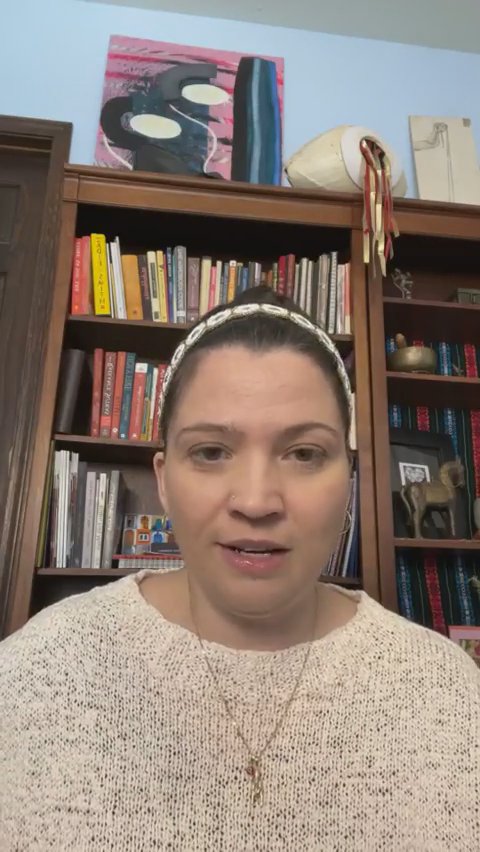
Join as we hold space for grief & discuss different aspects of the journey
Rebecca Cadre: My whole livestream today was about telling your story. She says it's so important to tell your story when you're in the most early and acute stages of grief. She encourages you to not judge this as a beautiful storytelling process, but let it be so messy.
How has storytelling come up for you in your grief journey? How do you feel about your ability to tell a story purely from your own perspective? Letting yourself tell an unedited version of your story is very empowering.
I worry a lot about how everybody else is feeling. Maybe you find yourself being too unedited and then people are reactionary towards you. I would just love to continue this discussion on the power of telling your story. I find it a really powerful entry into grief processing.
So hope everyone has a wonderful weekend. Grief gathering next Friday at 10:00 a. m. Central. So talk soon.
Hey, Cadre, it's Rebecca here. I'm so embarrassed, but I just did a whole livestream, and it wasn't recording, so I wanted to just come back on 15 minutes later and check in with you all about your Friday. And my whole livestream today was about telling your story. I wanted you to kind of get a sense of, like, why. At Marigold, we focus on storytelling, culture, and rituals so much, because we find that these elements of. Of approaching the grief experience are so transformational, and we don't want to be stuck in grief and sadness forever.
Right. I mean, grief is a state of being, and it's good to be there and feel it all, but ultimately, we want to kind of learn something, take something from it, and be able to move freely through our lives. So telling your story has so much power in the grief journey, and I wanted to offer you two different ways to kind of tell your story, and I wanted to give you a sort of timeline along with it, because I think we can give ourselves a lot of judgment in the idea of telling a story and making it feel like it has to be like art, you know?
And it has to be something that is polished and beautiful and has some type of takeaway at the end. And I wanted to, like, disband that idea because it's so important to tell your story when you're in the most early and acute stages of grief as well. I'm a nurse, and I work in the neonatal ICU, and as you can imagine, a birthing person who has just given birth to their baby and found out that something's going on with the baby, where they have to be separated on different units immediately after each, you know, just separating their two other bodies from each other is an instant wall of grief.
It's so intense to have to process and accept that event. And so as a nurse and, you know, as the baby's nurse, I find that parents often trust me pretty quickly, and they're open to telling their story. And once I've oriented them to the space and, like, the situation and given their nervous system a chance to relax and understand why they're here, why their baby's here, what happened, what's going to happen, what are their support options right now? Once we have that out of the way? I really encourage people to tell me their birth story, and I find this, like, as important of a step as, like, taking their blood pressure or any of their vital signs.
Telling that story initially allows us to transcend this place of this, like, stuck, hard fear and the unknown in this initial story, in the acute phases of grief, where there's shock and a lot of fear going on, I encourage you to not judge this as, like, a beautiful writing process. Right. Or a beautiful storytelling process, but let it be so messy. Write down a jumble of words on the back of a napkin. Write down, you know, three minutes of free writing in a notebook, if you have it. Tell your story through your tears to your therapist, a nurse, a healthcare provider, your best friend, your mom, someone that you feel completely free talking to.
And the reason why I encourage you to just be messy is because a lot of times in this initial phase of storytelling, you're going to blurt out a lot of details. You might remember, things that people said to you in the moment that, you know, the moment that caused this grief journey to begin, whether it's a loss or a huge change, you know, write down everything or speak everything that you can, sensory wise and memory wise, and get it out of you. Because later on, once you apply time and distance to this experience, those details give you a really raw but really true gauge on your mindset in the moment, and you get to kind of use the wisdom you've gained from time and distance to balance, you know, those fretful and scared thoughts that might have been occurring in the beginning.
And once you've got that time and distance, like, say, a year later, let that storytelling process be transformational. Let it be messy, but let it be transformational, because now you've had a chance to kind of look back at those initial thoughts and those initial words, and you can create something of it. You don't have to, but I find it a very healing process, at least in my own experience, in my own life, to have that perspective and to blend, like, the initial messy storytelling with the wiser, more experienced perspective of later self.
So, yeah, I want to know, how has storytelling come up for you in your grief journey? I especially want to know, how do you feel about your ability to tell a story purely from your own perspective? Because I know in my experience, I tend to be worried about the people around me a lot. So I've found myself curating my own story without even thinking about it, leaving out something that someone said, like something a nurse had said to me that really hurt my feelings and really changed my experience.
I'll leave it out in the storytelling because I don't want to bring bad energy to her and I don't want to hurt her feelings. Or, you know, a lot of times when you've been through something hard, people will say things in care that end up hurting you because they just can't understand what you're going through. And those little phrases really stick with us, right? And this happens a lot in the reproductive world, in the hospital. You know, people have pregnancy losses or even infant losses, and it's just people, people's nature to want to try to fix things for you.
And they'll say things like, maybe they're in a better place, or, who knows? Everything happens for a reason, and those things can really stick with us forever. So writing down those phrases actually helps them to not lodge inside your body's memory, keep you stuck in that place of hurt. Letting yourself tell an unedited version of your story is very empowering. I would love to hear how that comes up for you guys. I wonder, because I think that's just part of my personality, is that I'm kind of people pleasing tendencies.
And I worry a lot about how everybody else is feeling. But are there any of you out there who don't have that problem? And, like, maybe you find yourself being too unedited and then people are reactionary towards you? Yeah. I would just love to continue this discussion on the power of telling your story and how that lands for you. And we'll keep talking about this. I find it a really powerful entry into grief processing. So hope everyone has a wonderful weekend. Hi, Anna. Good to see you. And we'll see you here.
Marigold. m.. Central. So talk soon. Bye, everyone.